

Commercial Carpet Cleaning
Steam cleaning, encapsulation, or agitation and steam for heavy soil, chosen for each floor around your hours.
Explore commercial carpet cleaning →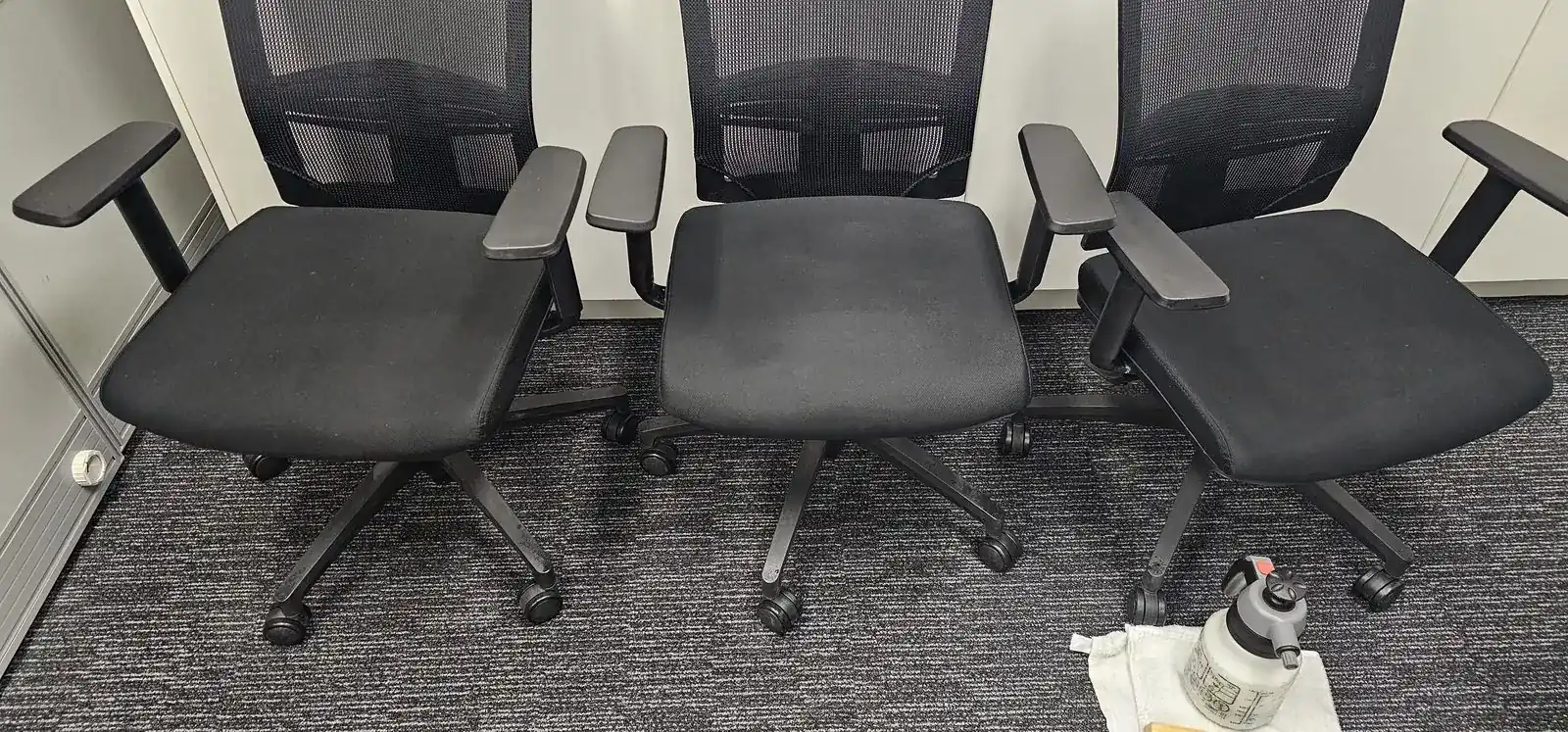
Office chairs, reception couches, breakout sofas, booths and fabric partitions cleaned any day of the week, at a time that suits you. We match the method to each fabric, take out the grime and odour that daily use leaves behind, and treat every stain for its cause.
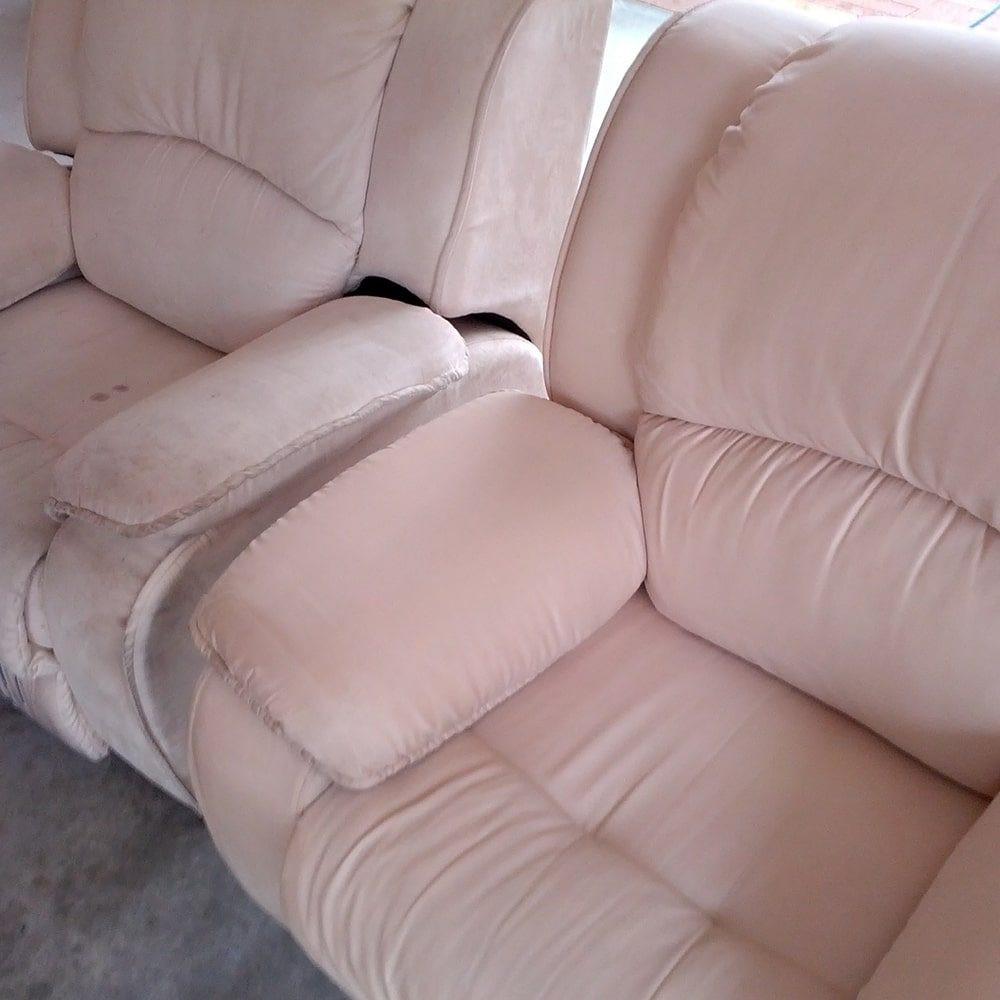
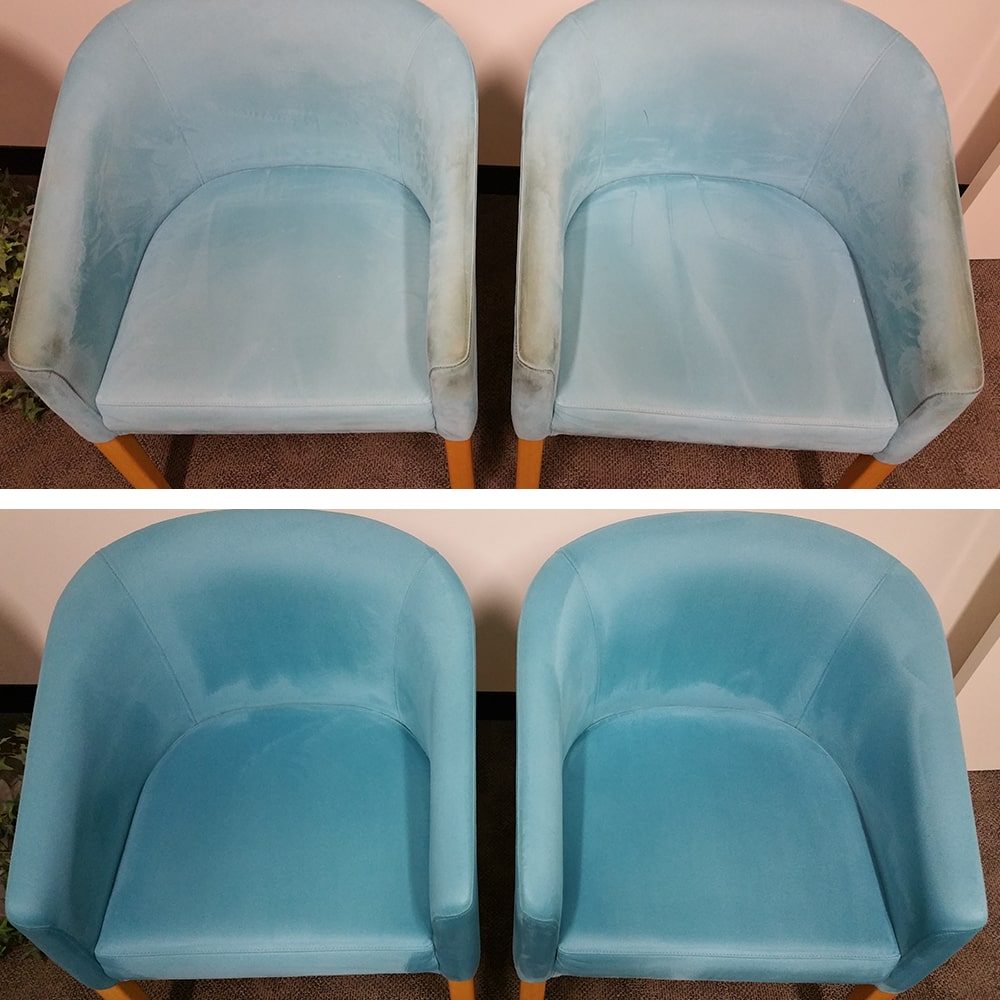
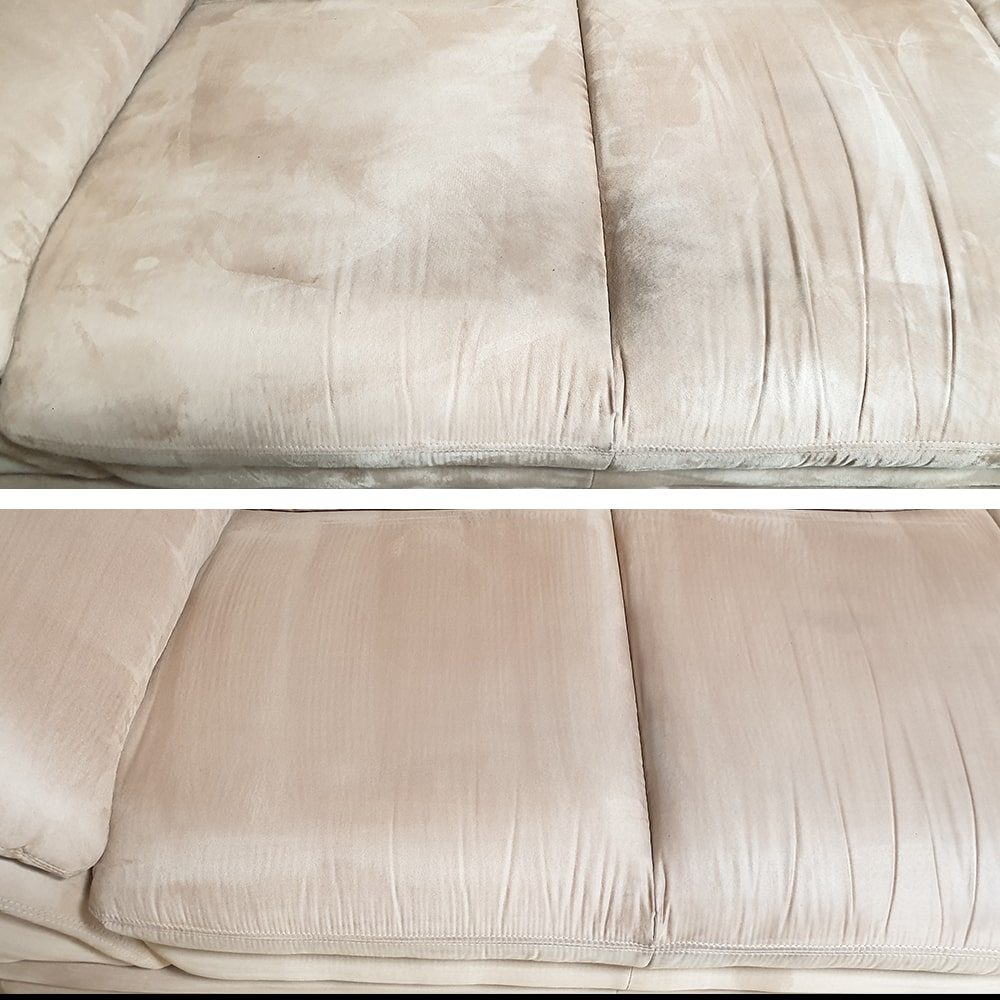
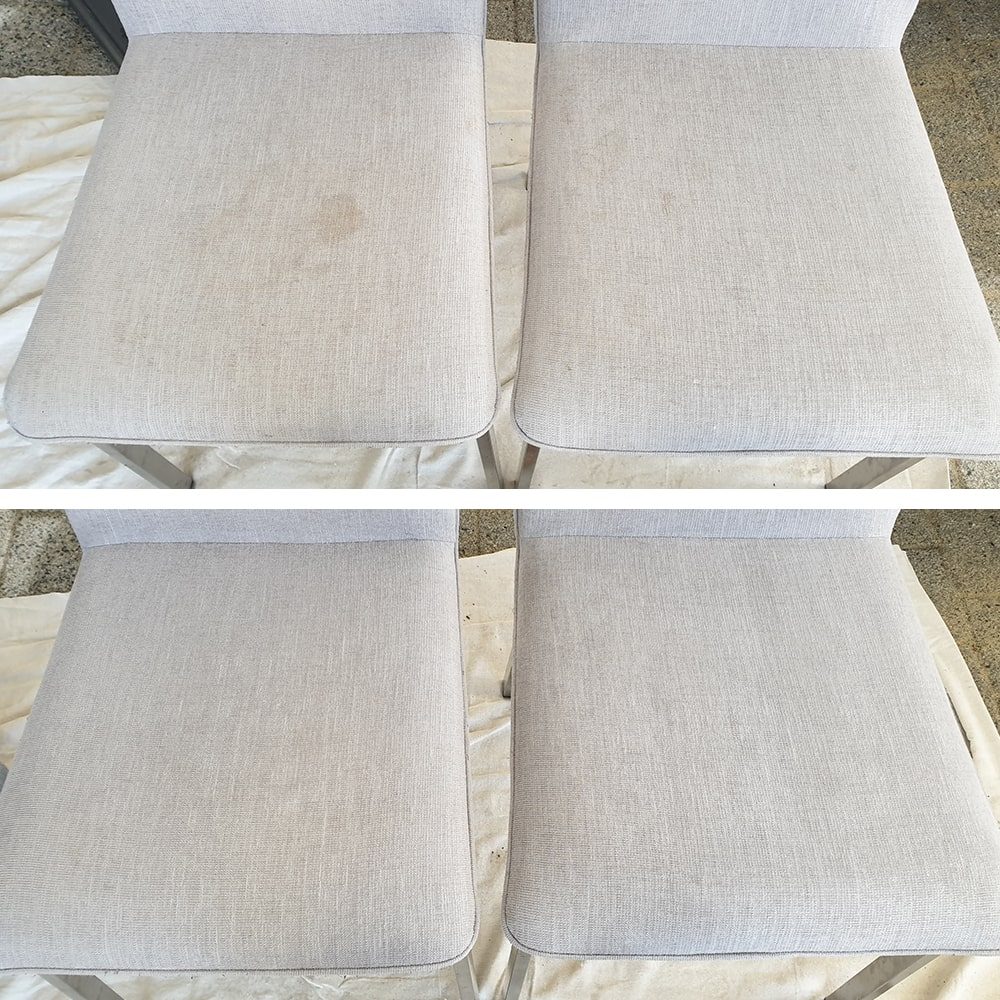
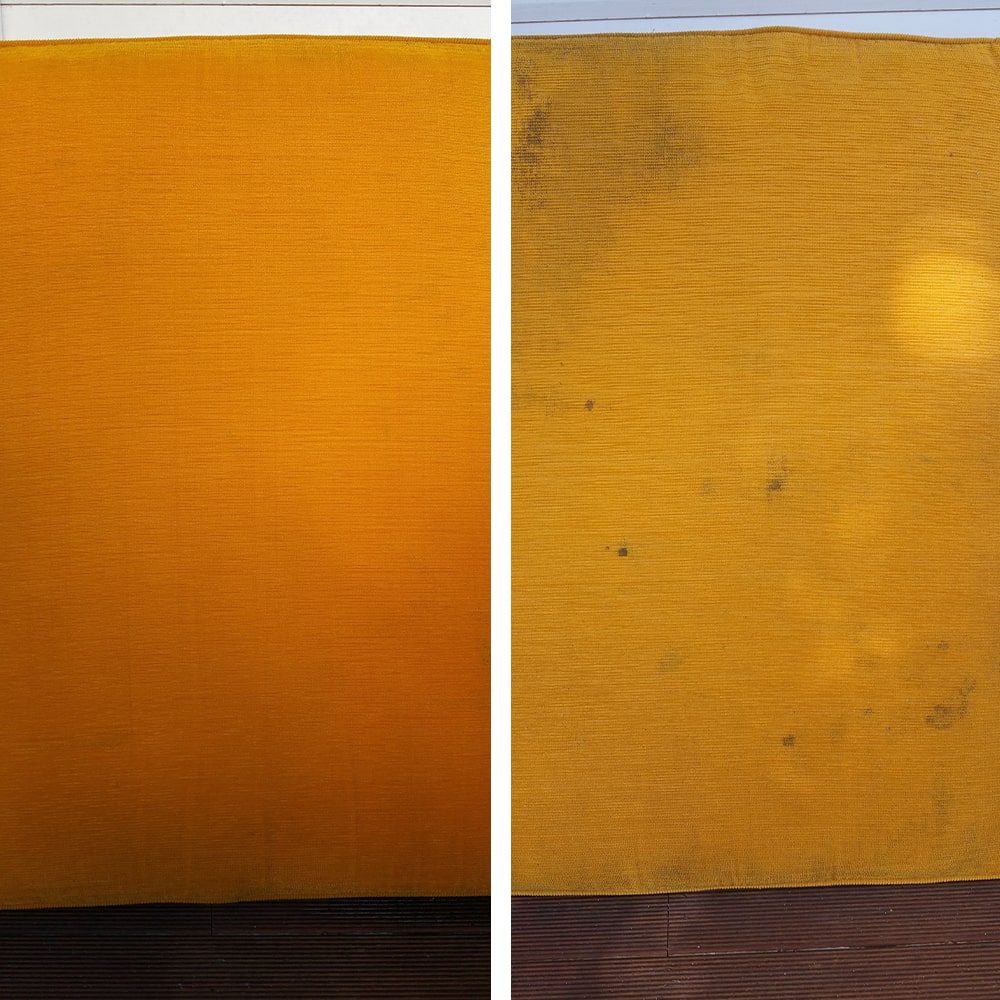
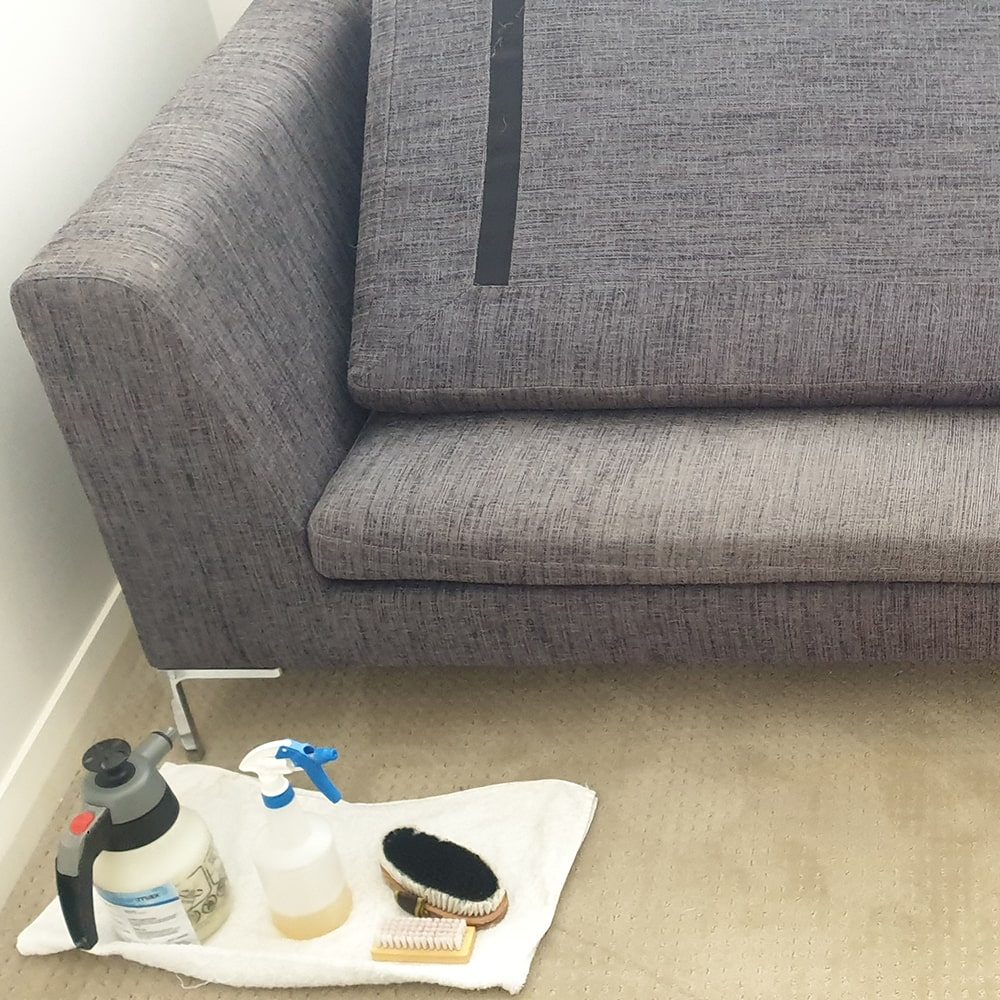
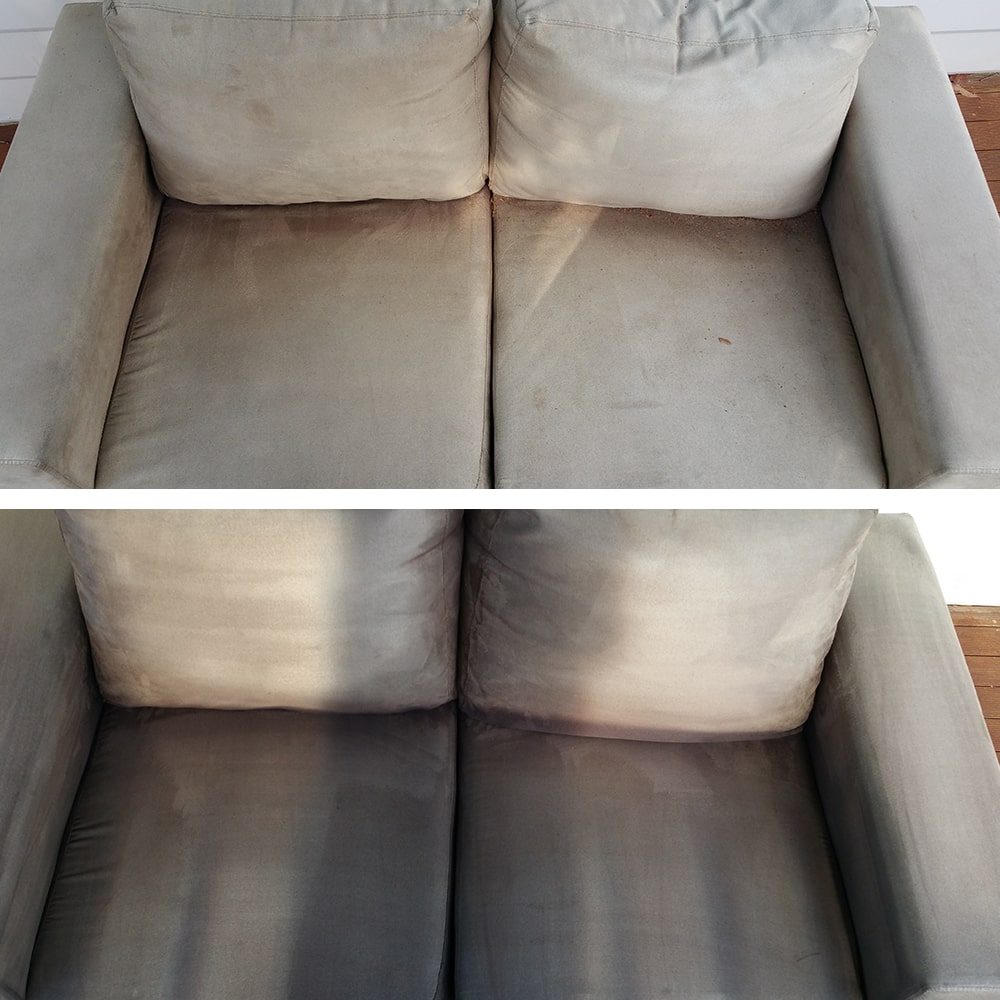
Your seating is the most handled surface in the building: staff sit in the task chairs all day, visitors judge reception from the lounge they're shown to, and a boardroom chair is the first thing a client touches. We take the body oil, dust and spill residue out of the weave, the stale smell goes with them, and chairs you were about to write off give you years more use. Lounges and dining chairs at home get the same method and the same care. Call and we will give you a cost estimate for free over the phone.
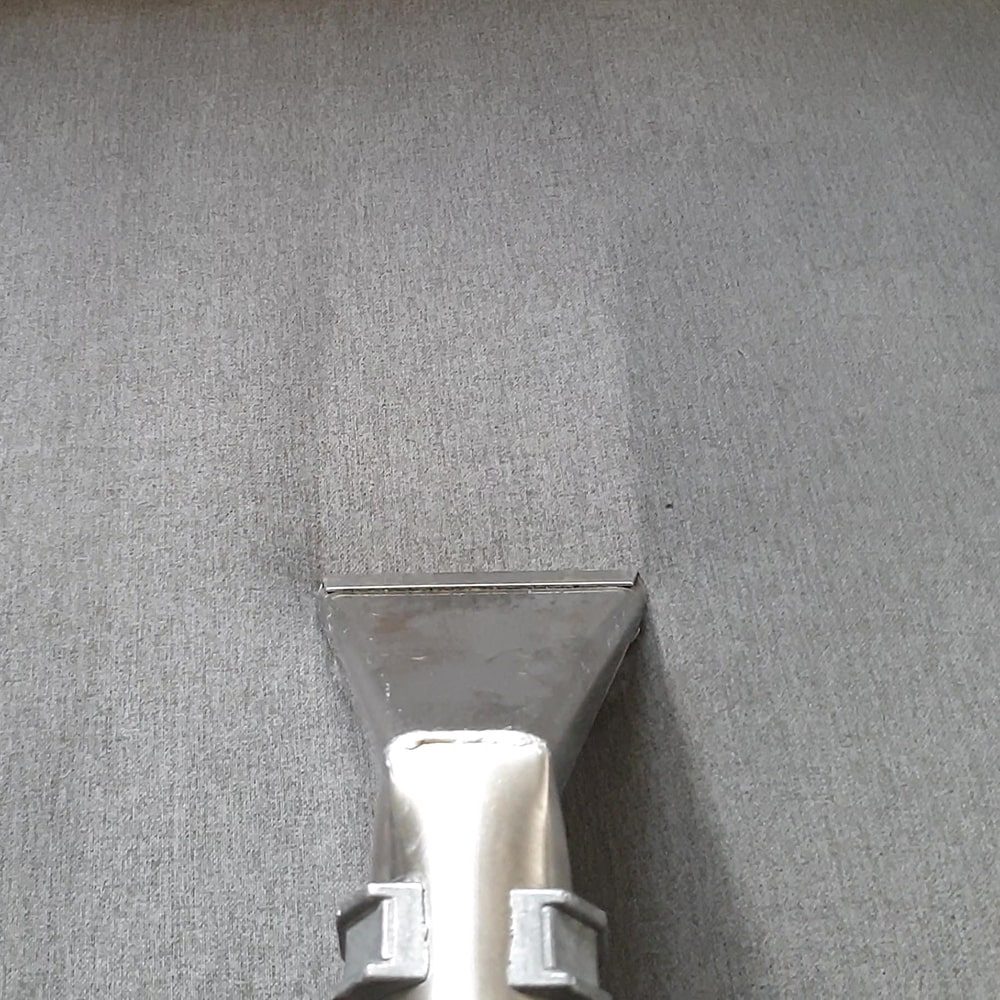
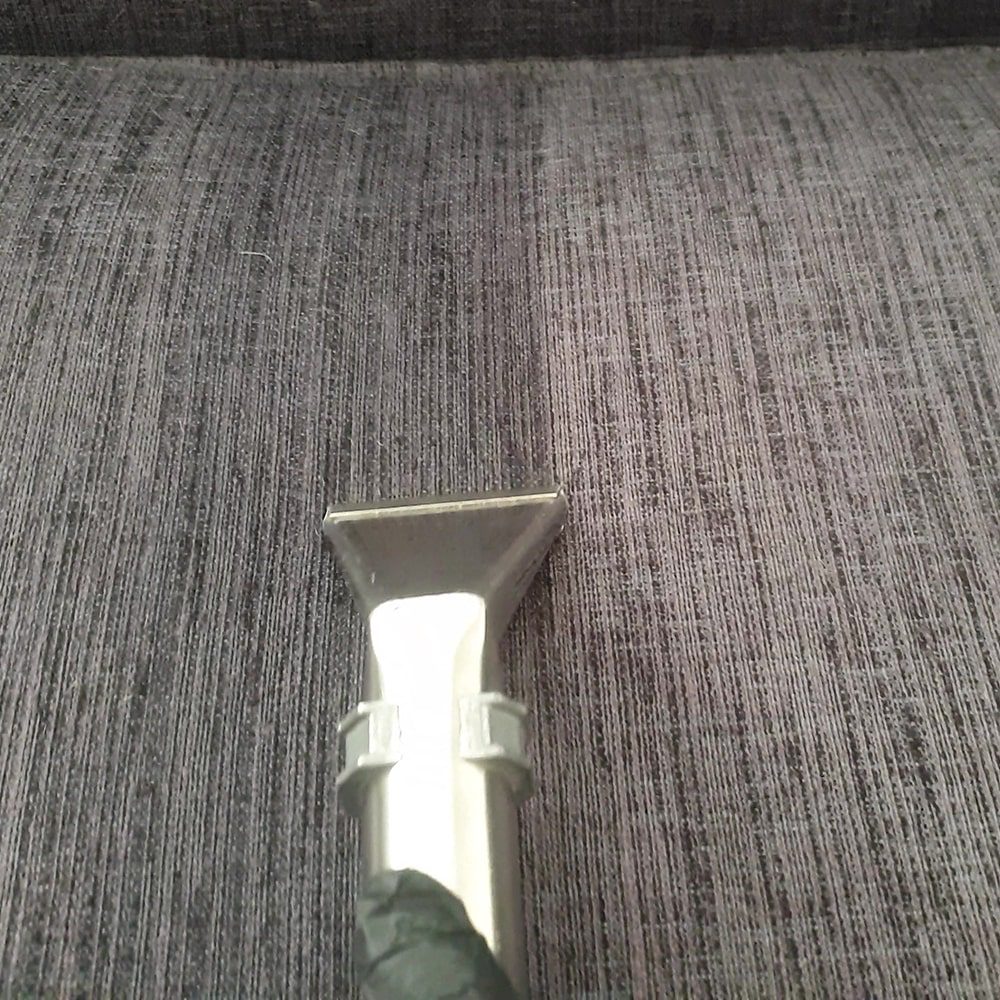
The hand tool runs at a fraction of the carpet wand's pressure and recovers its rinse in the same stroke, so the fabric is cleaned through the weave while the foam stays dry.
First comes the fibre, and the cleaning code wherever there is one. Then we choose the products, heat and moisture that fabric can take. Wool is cleaned with WoolSafe-approved products, and we carry water-based and solvent spotting agents for every kind of mark.
You choose the time, any day of the week, and each room is booked around its 3 to 8 hours of drying, so nobody sits on damp fabric. We send our own police-cleared team, never subcontractors.
We price each chair, lounge and screen in writing after a free site visit. If anything isn't right after your clean, tell us within 14 days and we'll come back and set it right, at no extra charge.
Count them up with us, free
We come out, check each fabric and give you one written price with a figure for every piece. You choose the day and which pieces come first.
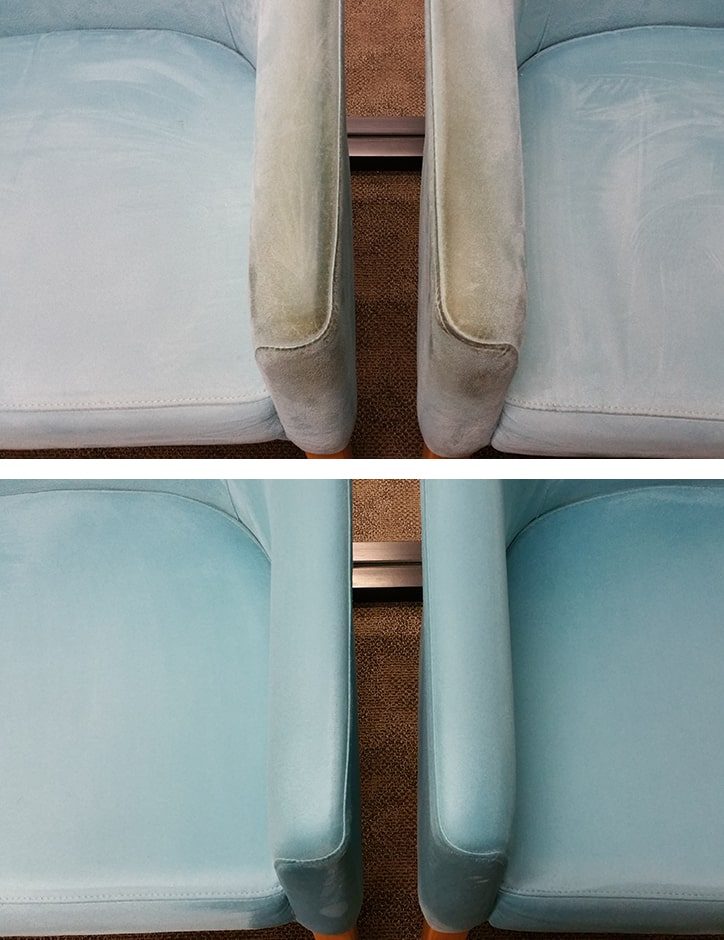
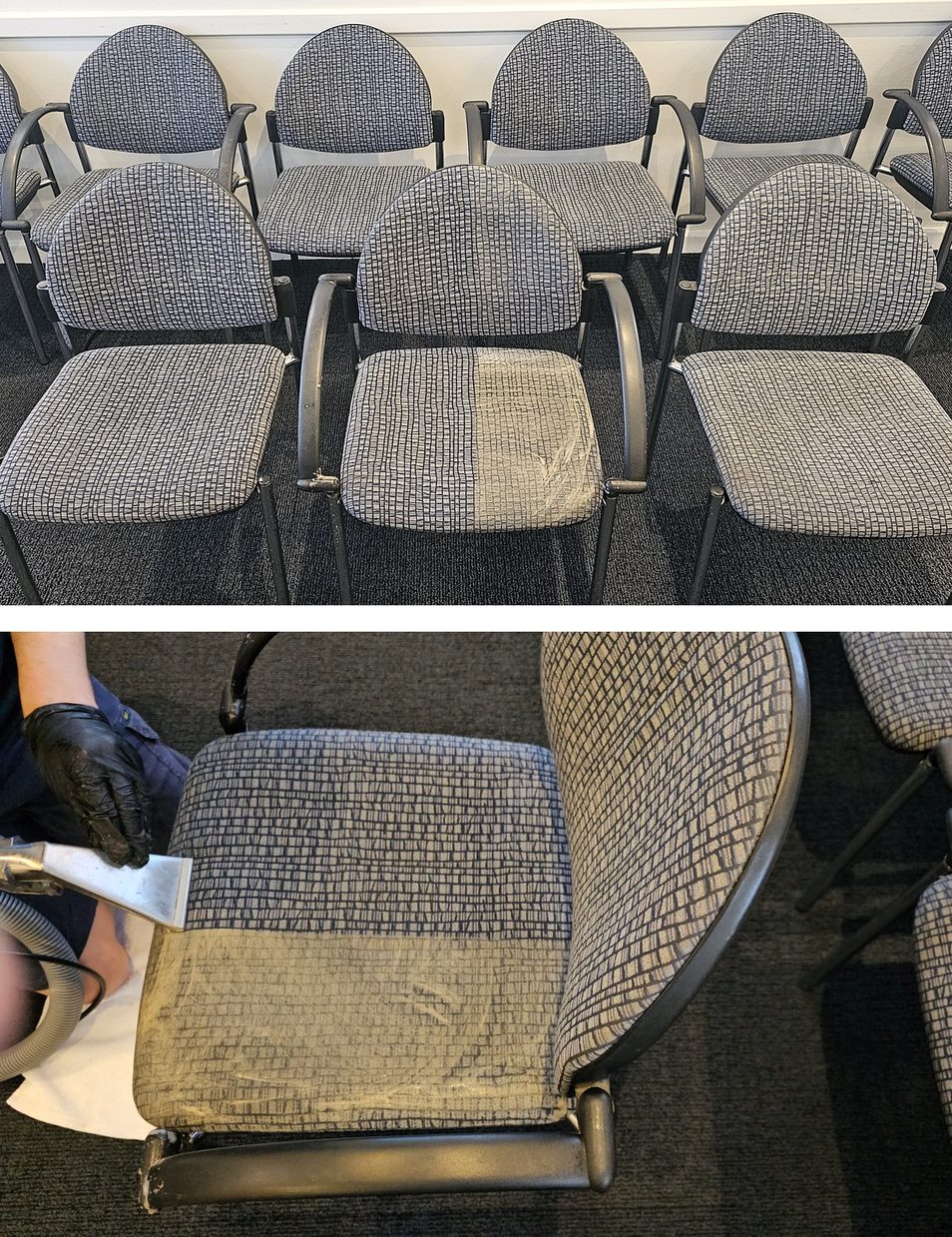
At the quote, we settle three things: when each room can spare its seating, how we get into the building, and how long each piece needs to dry before anyone sits on it.
Any day of the week: a weekday, a weeknight, a weekend or a quiet day between functions. We clean each room while its seating can stay out of use until it's dry.
We note the keys, alarm codes and parking we'll need on the quote visit. If your building requires a Safe Work Method Statement, we provide ours.
Each chair is returned to its own desk and each lounge to its spot, with the cushions the right way round. When the building is closed, we finish by turning off the lights, locking up and arming the alarm.
Upholstery takes 3 to 8 hours to dry, depending on the fabric, the cleaning method and the conditions in the room. We leave the fabric damp, never wet.
Book both on one visit
The van and the machine are already there, so the carpet can be cleaned in the same booking, each area priced on the same written quote; our commercial carpet page covers how.
Most upholstery has a cleaning code on its label. The code tells us what the fabric can safely take, so we read it first. Labels on older contract furniture are often missing, and the Association for Contract Textiles notes that the codes don't tell a cleaner everything. So we never rely on the code alone. Our process below opens with that check, made on every fabric before it gets wet.
The code is usually on a label under the seat, or on the fabric supplier's specification sheet. The IICRC's S300 standard for professional upholstery cleaning includes an inspection before and after the clean. We inspect every piece both times.
Water-based cleaning is safe. It's on many contract fabrics, and it allows the widest choice of products.
S means solvent only: water can leave rings, shrink the fabric or make the dye run. We clean these pieces with solvent-based products.
Water-based or solvent cleaning is safe. We use water-based cleaning for ordinary dirt and a solvent spotter for oily marks.
X means vacuum only, with no water or solvent of any kind. It's rare on the seating we clean, and we only vacuum these pieces.
Missing labels are common on older contract furniture. With no code to go on, we work out the fibre ourselves and clean to suit it.
We identify it ourselves
Tell us the pieces and we read the fibre on the visit, code or no code, and quote the products and moisture each one can take.
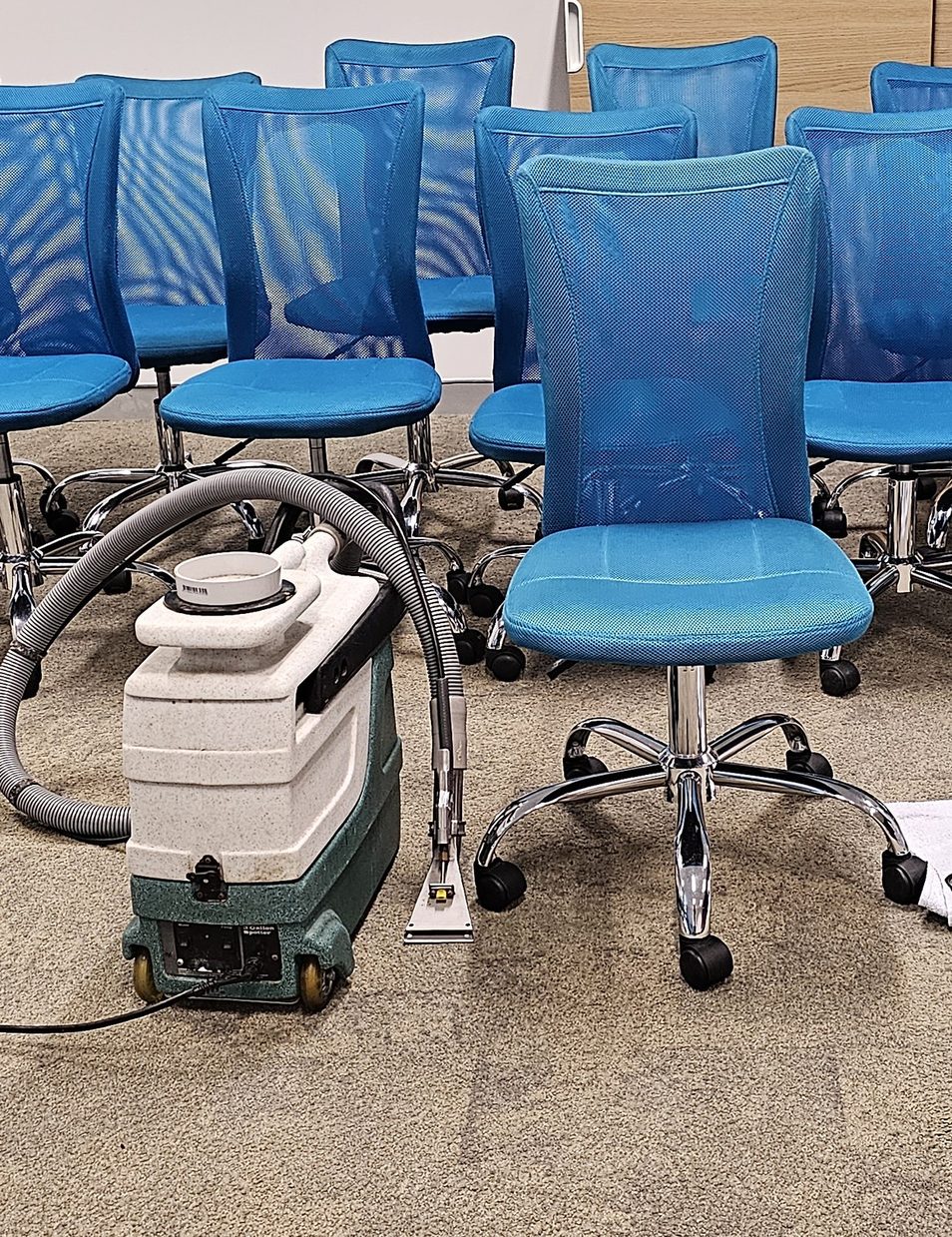
Seat foam holds water, and water left in it wicks marks back to the surface and slows drying, which is why upholstery takes more care than carpet. Where a piece has a cleaning code we read it first, and either way we identify the fibre and check the padding: together they tell us which products, how much heat and how much moisture that piece can take. Ask for the free visit and the method for each piece is set before the booking.
We read the cleaning code where the piece has one, and identify the fibre and how the piece is made: the weave, any pile, the backing and the padding. We also note the soiling, the marks and any existing damage, such as fading, pilling, loose seams or tears, and point it out to you before we start.
Each fabric is then tested on a hidden spot with our cleaning solution, to check the dye won't run. The test decides whether the fabric is cleaned with water-based products, with solvent, or with very little water.
We lay drop sheets where we work, so nothing drips onto your carpet or hard floor, and take loose cushions off lounges so every surface can be reached.
Our upholstery hand tools connect to whichever machine reaches the room: the truck-mounted unit in the van, or a portable extractor carried up to higher floors.
Dust turns to a paste once it's wet, so every piece is vacuumed thoroughly before any liquid goes on. A soft brush loosens the dust in the weave as we go.
On office chairs, most of the soil collects where the seat meets the back. On lounges, it collects under and behind the cushions, so we vacuum the deck underneath as well.
Wool and wool blends get gentle products with no high-alkaline chemistry, because alkalinity causes alkali damage that weakens a protein fibre and leaves it harsh. Polyester and olefin take a stronger pre-spray for oily soil.
It goes on heaviest at the armrests, headrests and the front of the seat, where oil from skin and hair builds up, and it stays on long enough to break that oil down, never long enough to dry on the fabric.
The first job is to work out what made each mark, because coffee, ink, grease, blood and dye respond to different chemistry. Our van carries water-based and solvent spotters, so every mark gets the one that suits its cause.
We work the spotter in by tamping and blotting, never rubbing, because rubbing spreads a mark and roughens the fabric. Marks that remain after the rinse get a second treatment.
Agitation loosens the soil a spray alone won't shift, so we brush the pre-spray down into the weave by hand.
Brush pressure changes with the fabric: velvet, chenille and microfibre are brushed in the direction of the pile, and delicate weaves get a lighter touch.
Each stroke sends a fine rinse into the fabric and vacuums it back out before it can reach the foam, and that recovered rinse carries the loosened soil and the pre-spray out of the fabric. It's hot water extraction, the method we use to steam clean carpet, on a head small enough to follow a seam.
Where the cleaning method and the fabric allow it, we finish with a neutralising rinse. This rinse is mildly acidic: it neutralises any alkaline pre-spray left in the fibres and leaves the fabric slightly acidic, so it dries soft and is less prone to cellulosic browning and dye bleed.
Strokes overlap so no edges or rings are left, and dry passes with suction only draw out extra water.
Not every fabric is rinsed. Fabric with an S code is cleaned with solvent-based products, which dry quickly and don't swell the fibre the way water can. Fabrics that mark when wet, and most fabric panels, get low-moisture cleaning: a light mist of solution worked in with a soft brush, so the fabric barely gets damp. Vinyl gets a wipe-down, never a rinse.
A fabric with a pile is brushed in one direction while it's damp, so it dries evenly. Flat weaves are left smooth, with no marks from the tool.
Each piece is then looked over: seat, arms, back and every seam. When a mark won't come out, we stop there, because working it harder would damage the fabric. A spill that soaked into the foam can wick back up to the surface as the fabric dries. Call us if one shows up and we'll come and look at it.
We stand loose cushions on edge so air reaches both sides and space the pieces apart. Air movers go on any seating your staff need back early, and leaving the air conditioning on speeds up the rest.
We tell you at the quote how long each room's seating needs to dry, and nobody should sit on it while it's still damp.
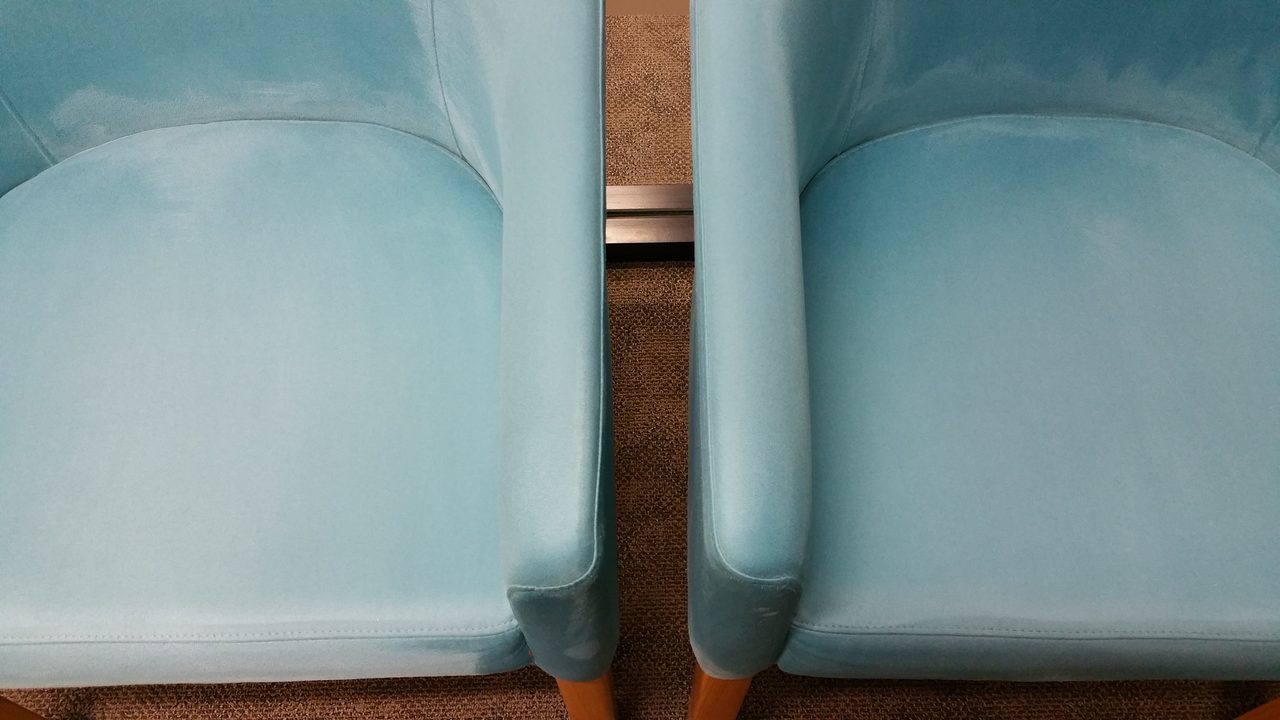
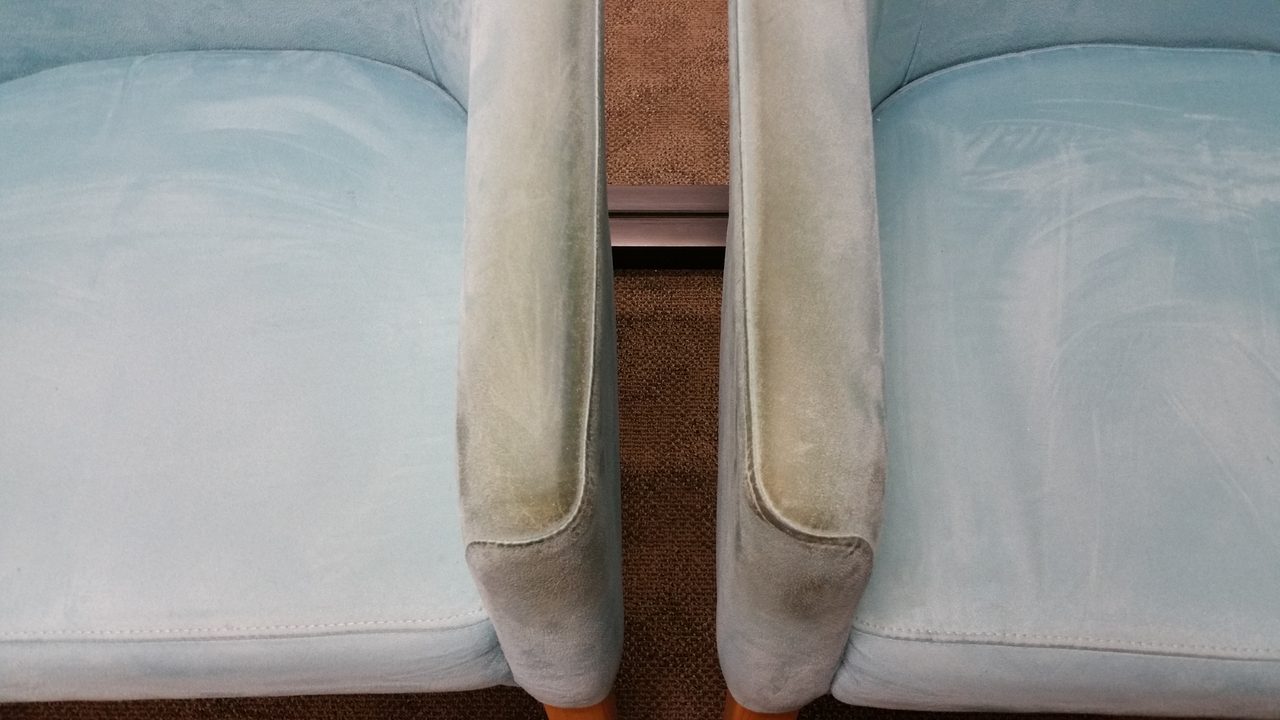
On upholstery we swap the carpet wand for a hand tool: a narrow stainless head that sprays the rinse into the fabric and draws it straight back through a vacuum slot. It runs at a much lower pressure than a carpet wand, so the rinse cleans the fabric without soaking the foam.
That low pressure is what makes it safe for seating. Very little water is left behind for the foam to take up, so the fabric is cleaned right through the weave and the seating dries in hours, not days.
The narrow head reaches into seams and around arms that a carpet wand can't, and its vacuum slot pulls the rinse straight back out.
Low pressure and heat set for each fabric mean wool, viscose and fine weaves are cleaned without stress on the fibre.
The hand tool runs from the same truck-mounted or portable extractor as our carpet wands, so your seating gets the same strong suction as your carpet.
Strokes overlap across the whole piece, and fabric with a pile is brushed one way while it's damp, so it dries one even colour.
We bring it to the quote
Tell us your pieces and we bring the right head for each fabric, and you see the tool before anything is cleaned.
Each fibre reacts to water, heat and cleaning products in its own way. The result also turns on the time since the last clean, what was spilt and any product already tried on a mark. These fabrics cover most of the seating we clean in Perth offices, clinics and venues.
Polyester and olefin clean most easily of all. Both are made for heavy use and handle a thorough rinse well. Olefin holds onto oily soil, so we use a stronger pre-spray on olefin armrests.
Nylon is hard-wearing and cleans well. Strong oxidising spotters can strip the colour from dyed nylon, so we treat ink and dye marks on it with care.
Pure wool and wool-blend fabrics clean well at low moisture and moderate heat, with WoolSafe-approved products. High-alkaline chemistry and chlorine bleach are kept off it, and so are over-wetting and high heat, which shrink and felt the fibre.
Microfibre cleans well when the whole panel is done evenly. Cleaning a single mark leaves water rings and flattened patches, so we always clean the whole panel at low moisture.
These pile fabrics crush and mark easily. We clean in the direction of the pile with as little water as possible, so they dry without shiny or flattened patches.
Cellulose fabrics need the most care. Cotton and linen are natural cellulose fibres, and viscose is regenerated cellulose made from wood pulp. The risk with all three is cellulosic browning, a brown discolouration that rises to the surface as the fabric dries when there's too much water, alkaline residue in the weave or slow drying. All three swell and shrink when over-wet, many carry dyes that bleed in water, and viscose loses much of its strength while it's wet. Some can be cleaned at low moisture and some can't be cleaned safely. We tell you which at the quote.
This construction is common on healthcare and aged care seating. A backing layer stops liquid reaching the foam, so we use little water and extract thoroughly, leaving nothing trapped against the barrier.
We wipe vinyl clean with a vinyl cleaner, never soaking it. We don't use solvents on vinyl, because they strip the plasticisers that keep it soft. Grime collects in the stitching and seams, so that's where we focus.
Send us a photo of the label
Tell us what the piece is and where it sits, and we say on the visit how it cleans and quote it with the rest.
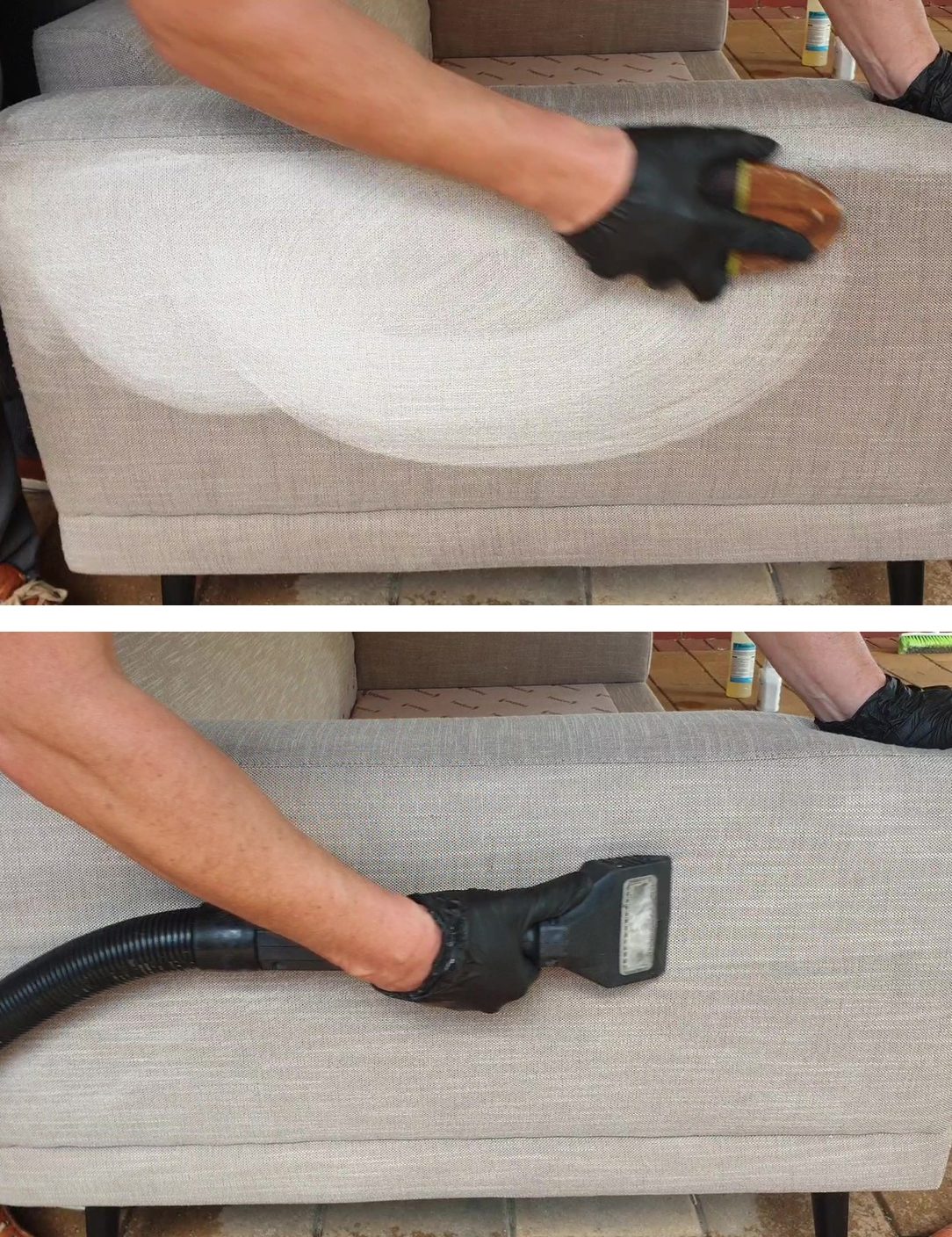
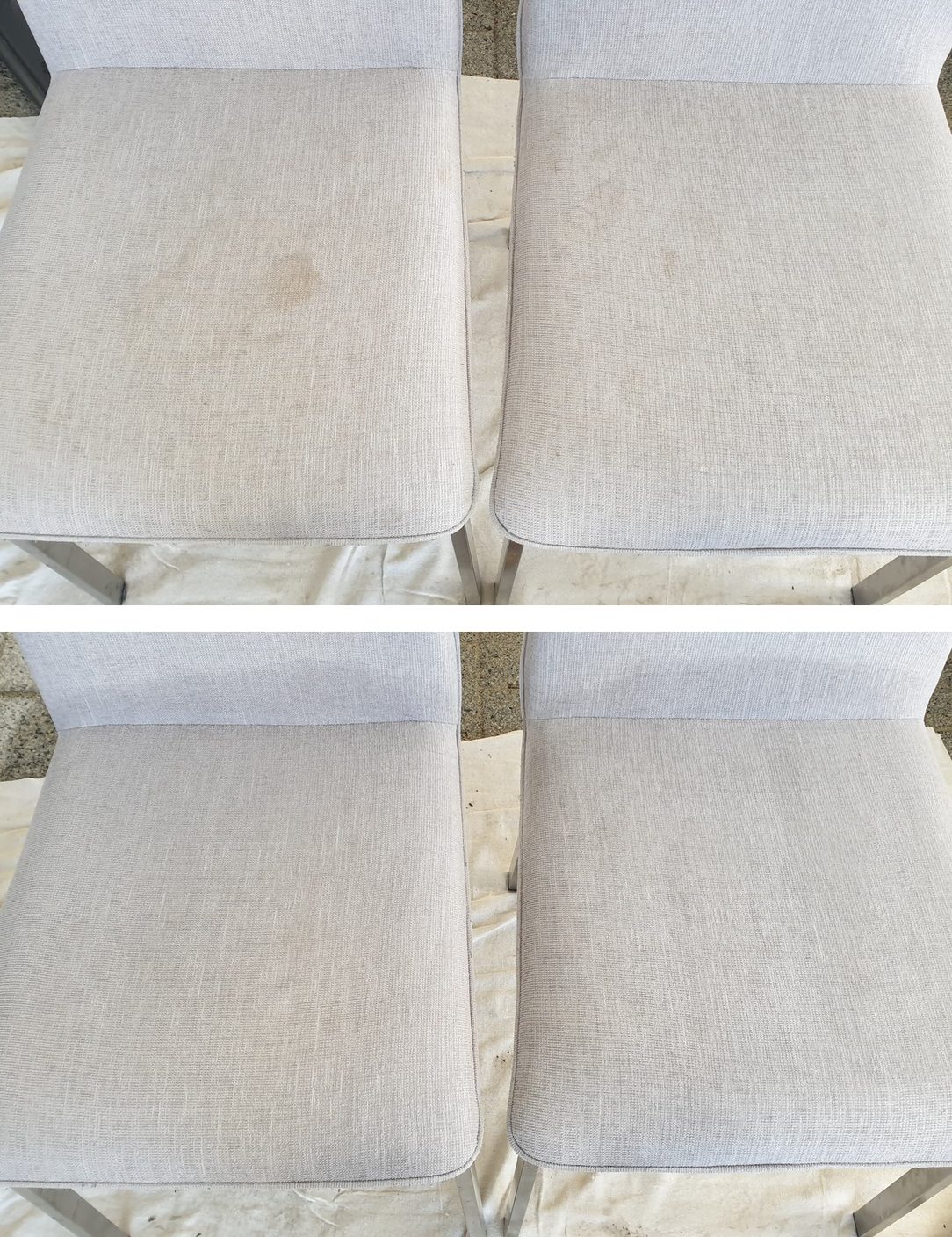
Body oil, dust and spill residue make up most of the soiling on office and venue seating, and a professional clean takes most of it out. Fading, pilling and wear are changes to the fibre itself, which cleaning can't undo. We've listed the marks we're asked about most, with the result each one usually gets.
The most common soiling on office seating: skin oil from hands, arms and hair, with dust bound into it. Our pre-spray emulsifies it and the rinse recovers it, so in most cases it's gone after one clean.
Dissolved soil and residue move to the edge of a wet patch as it dries and stay there as a ring, the tide line. On a fabric that can take water, an even clean and controlled drying usually remove it.
Caught recently, these marks often clear completely. Age, heat or a household cleaner can set them, and then they may only lighten.
Results vary with the ink and the fabric: some marks clear completely and some only fade. Indigo rubbed off new jeans onto pale fabric (dye crocking) is a dye transfer, not soil, so it lightens with treatment rather than rinsing out.
Blood gives the best result treated fresh and cold: heat denatures its protein and sets the mark. Older marks usually lighten substantially but can leave a faint shadow on pale fabric.
A smell held in the fabric goes with the clean. Urine or vomit that has soaked into the foam may need more than one treatment, and sometimes the foam insert has to be replaced by an upholsterer.
The fibres themselves are faded, pilled, torn or worn through, and fixing them means repair or re-covering, not cleaning. We note any we find at the inspection and show you.
We tell you before we start
Book the free visit and we look at each piece, say what will come out and what won't, and the price in writing covers only the work worth doing.
A Perth office with about 30 task chairs asked us to clean them along with the carpet rather than replace them. The chairs were in reasonable condition with years of life in them, so the work was in the fabric, not the frames.
We booked the job for a Saturday with the office closed. Every chair was vacuumed along its seams, pre-sprayed where body oil collects on the armrests and the front of the seat, rinsed with the upholstery hand tool and set apart to dry, and the carpet was steam cleaned in the same visit. The office opened on Monday with clean chairs and a clean floor, for far less than new seating would have cost.
Perth, about 30 task chairs, plus the carpet
Chairs in reasonable condition, the soiling in the fabric
Seams vacuumed, pre-spray on the armrests and seat fronts, hand-tool rinse, carpet steam cleaned the same Saturday
Clean chairs and carpet for Monday, for far less than new chairs
Keep them, cleaned
Tell us the count and the fabric. We quote the lot as one job and clean them when the floor is empty, dry again within 3 to 8 hours.
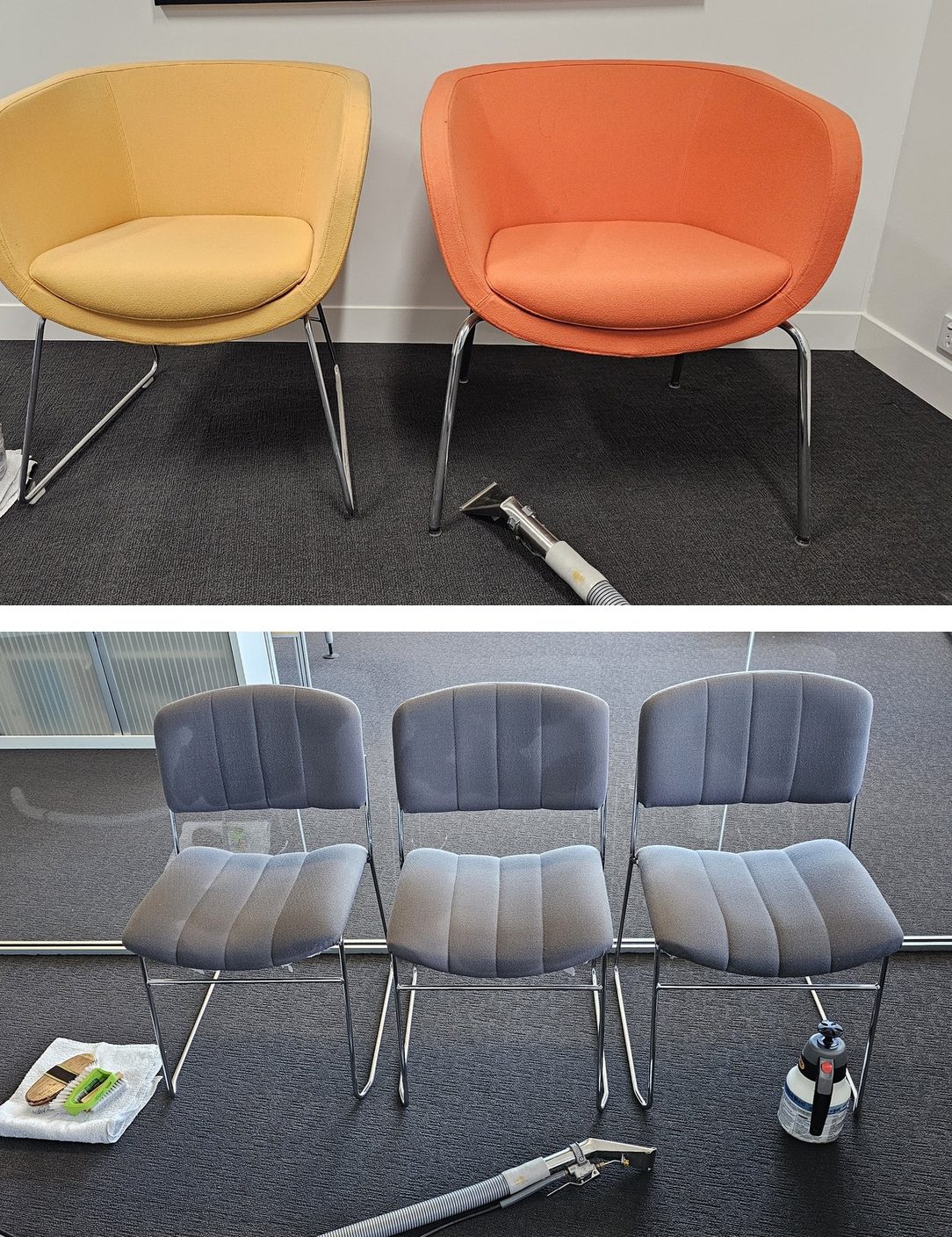
Five kinds of fabric and vinyl furniture make up most of our upholstery work. Soil collects in different places on each, and the best time to clean each one is different. Tell us which of the five you have and the visit prices each of them.
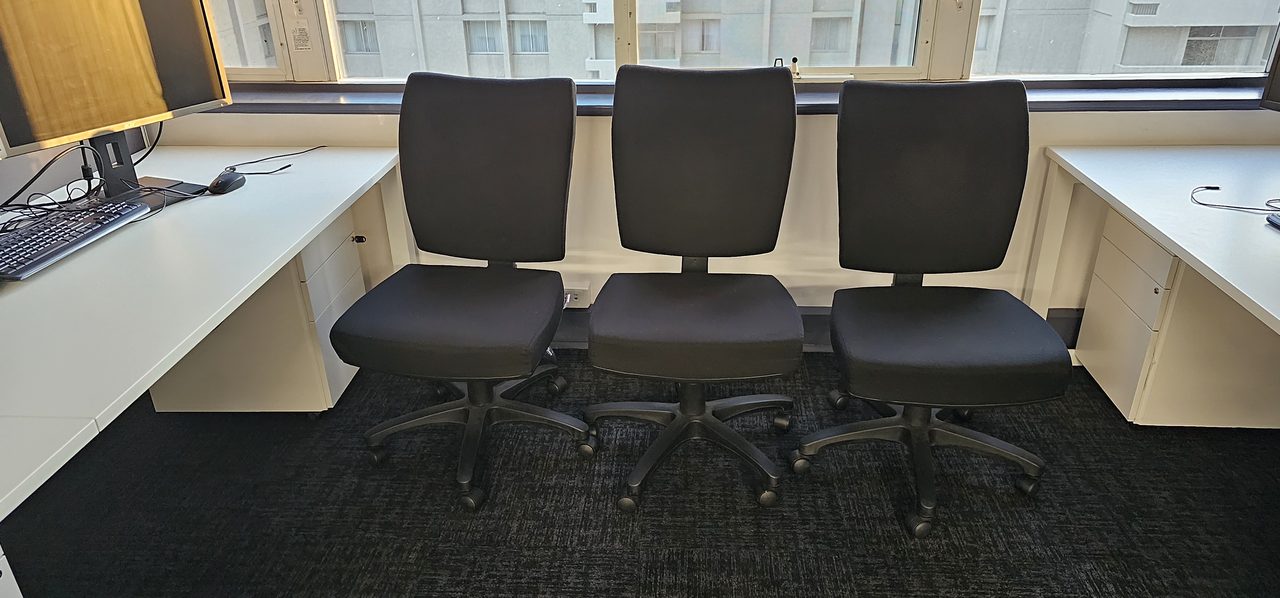
Office chairs get more use than any other furniture in the building. The chairs at occupied desks carry most of the soiling; those at spare desks need far less work, and we price them accordingly.
We clean the seat, back and arms. Fabric backs get a full clean and mesh backs a light one. The seat gets the most work, because the foam under it soaks up spills.
You can have the most-used chairs cleaned now and the rest later. On a coworking floor, where people share chairs, clean them all together so they stay the same colour.
Give us the chair count and the hours the floor is empty, and the quote comes back with the drying time for each room.
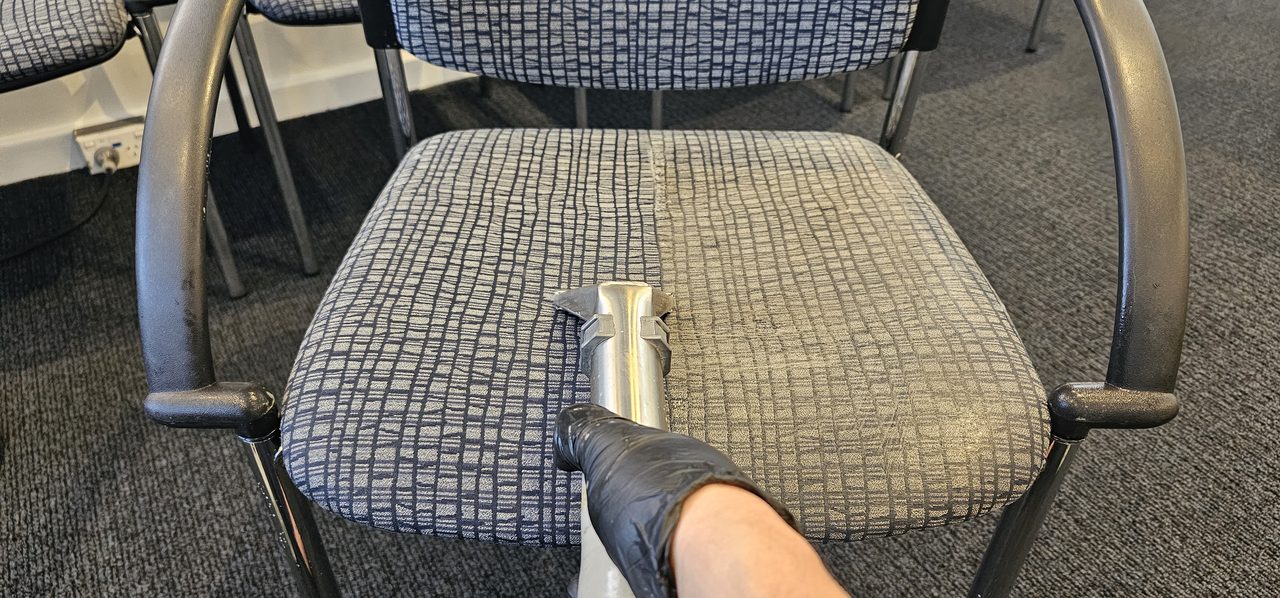
Visitors sit in your reception and see the seating up close. Dark fabric can look fine from across the room and still be dirty when someone sits on it.
Waiting rooms in medical centres and aged care homes get more spills than most, and many have both fabric and vinyl seating. We clean both in the same visit, and leave out fragrance when a clinic asks.
Ask for the lounge to be done first on the visit, so the piece your visitors see is dry before the doors open.
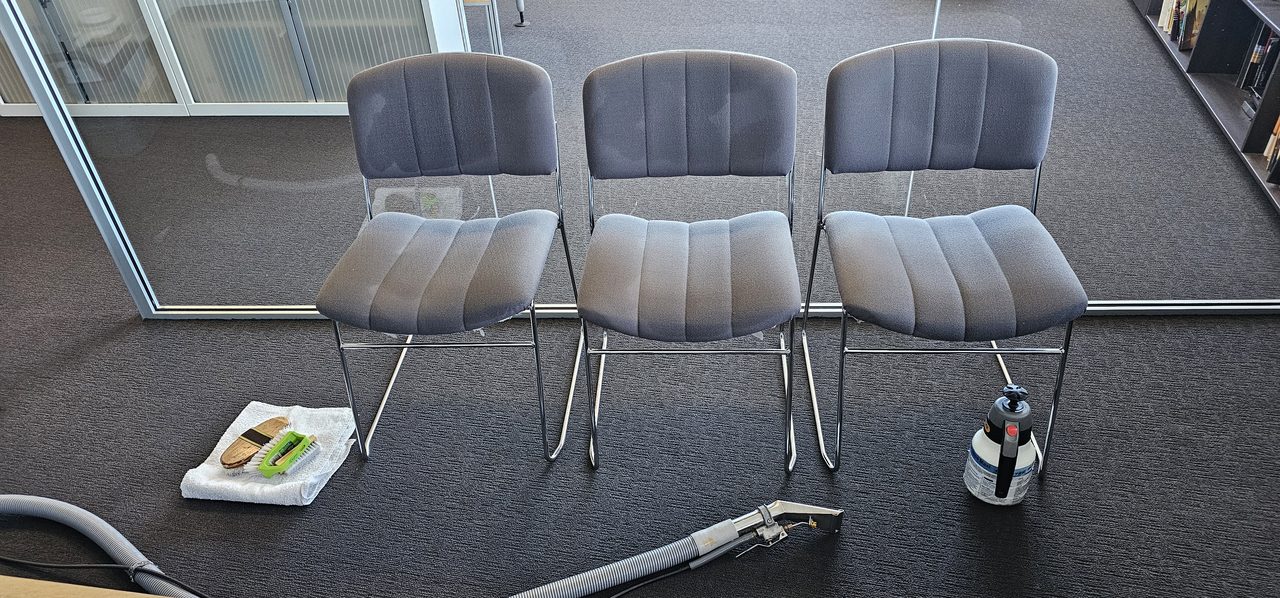
The most expensive seating in a building is usually around the boardroom table, and many of those chairs are covered in wool blends or designer fabrics. Those fabrics get lower heat and less moisture.
Fine weaves and pale colours show every mark, so we treat each coffee ring and ink mark on its own before the rinse.
Give us the date of the next meeting and the chairs are dry and back in place before it.
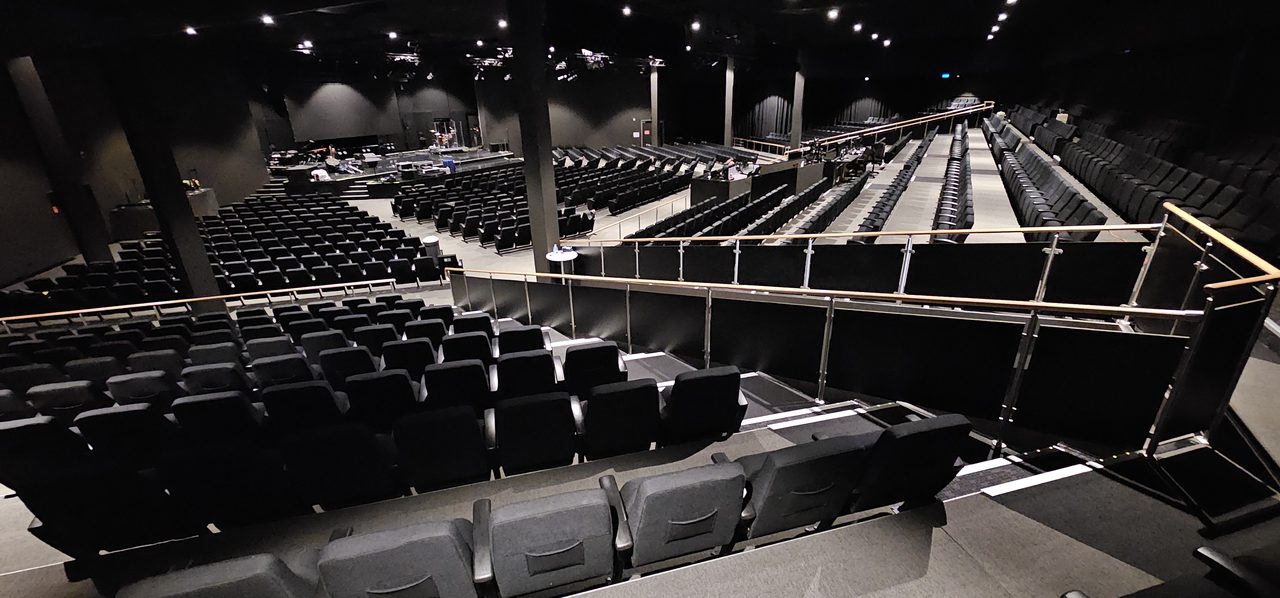
Venue seating is cleaned in long runs: a whole function room of chairs, or every row of a cinema.
Cinema seats, church pews and club lounges are cleaned on dates that suit your events. We schedule the clean ahead of the date the room must look its best, so just let us know when that is.
Booths and banquettes in restaurants and hotels collect food and drink as well as the usual soiling. We give the seams and the gap between seat and back the most attention.
Send us the seat count and the hours between bookings, and the rows are done inside them.
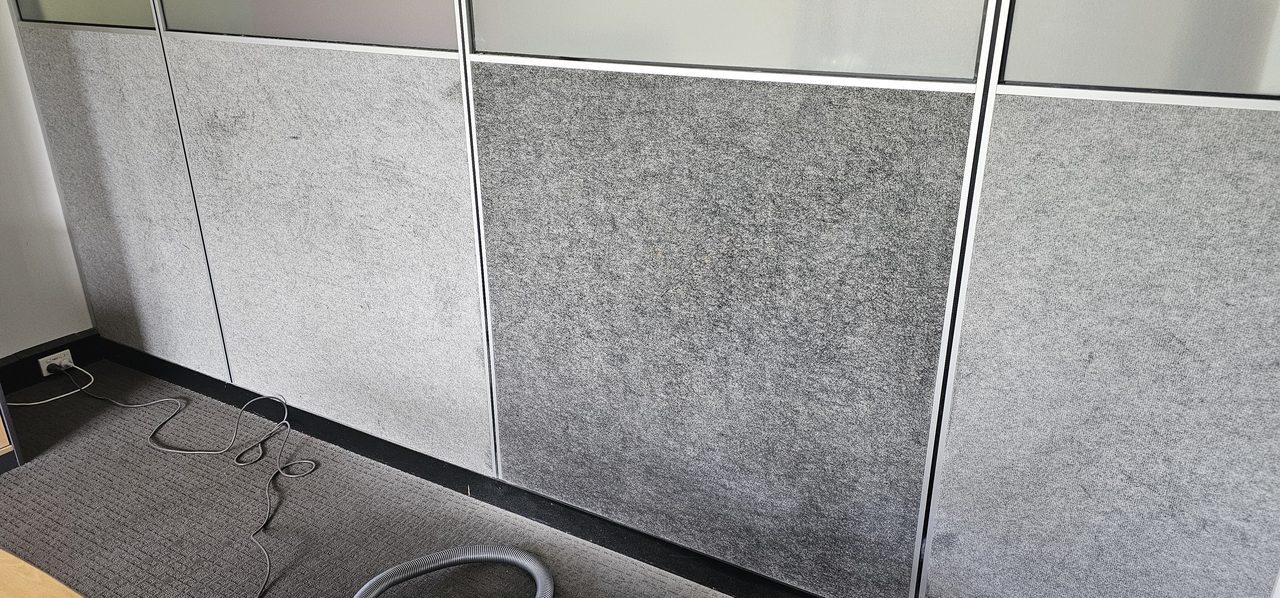
Acoustic panels and workstation screens are upholstered, and we clean them where they stand.
Most are covered in polyester or wool-blend fabric over a board or acoustic core. We clean them with the desks still set up. We use very little water and work from the top down, so nothing runs onto the fabric below.
Once that dust film is out, the fabric shows its own colour again.
Point us to the screens at the quote and they're added to the same price as the chairs.
If your seating needs the same, the free quote is below, or see more of our work.
★★★★★
Thank you for the outstanding work. Our carpets and office chairs look fantastic. A reasonably priced service compared to what the previous carpet cleaner charged us.
★★★★★
Zoran made our carpets look amazing. He kept us very informed throughout the whole process and was very helpful with other cleaning tips or tricks. Definitely recommend.
★★★★★
An exceptional service! I didn't know carpet cleaning could be done so professionally, and Zoran's knowledge of the correct chemical combinations to remove stains from various fibres/fabrics was quite surprising. No chit-chat, no problems, just the relevant questions and explanations. I would recommend Zoran's services to anyone. Thank you.
★★★★★
Zoran is a master at his profession. 2nd to none. I rang a few others before contacting CCCP and all of them wanted well in excess of $500 to do the job. Zoran gave me a quote which I found to be very reasonable and so I booked him in. He knew everything about stain removal and answered every questions I had. The job was completed in a timely manner and he even worked along side another contractor that was there for another job. I am 100% satisfied with the work from Zoran. Highly recommended.
★★★★★
The whole experience was great, from the initial communication, the planning and the carrying out of the job. There were no issues at all. It was well priced and Zoran did a really good job. I will definitely call him again next time :)
We price upholstery by the piece, so the free visit is a count of your seating: we check each fabric, and its cleaning code where there is one, and note any ink or soaked-in spills.
A three-seat lounge takes longer to clean than an office chair, so the price depends on the type of each piece as well as the number.
Contract polyester cleans quickest. Wool blends and cellulose fibres such as cotton, linen and viscose take longer, with lower heat and less moisture, and seating that hasn't been cleaned for years takes longer again.
General soiling is included in the clean. Ink, dye from jeans and spills that have soaked in need extra treatment and take extra time.
Cinema rows, pews and booths fixed to the wall are cleaned where they stand. Working along a row seat by seat takes longer than cleaning chairs that can be moved.
Cleaning one closed-off section at a time, or spreading the work over several visits to fit around rosters or sessions, adds set-up time compared with doing it all at once. A loading-dock booking or a site induction adds time too.
We add up your pieces at their per-piece prices. A few pieces come to our $385 minimum, GST inclusive, which covers the travel, set-up and those first pieces; beyond that the total is the sum of your pieces. Add or drop pieces and the written quote changes with them; otherwise it's the price you pay. Ask for yours below and the count is done on a free visit. At home the count is done over the phone. Describe the pieces and the cost estimate costs nothing.
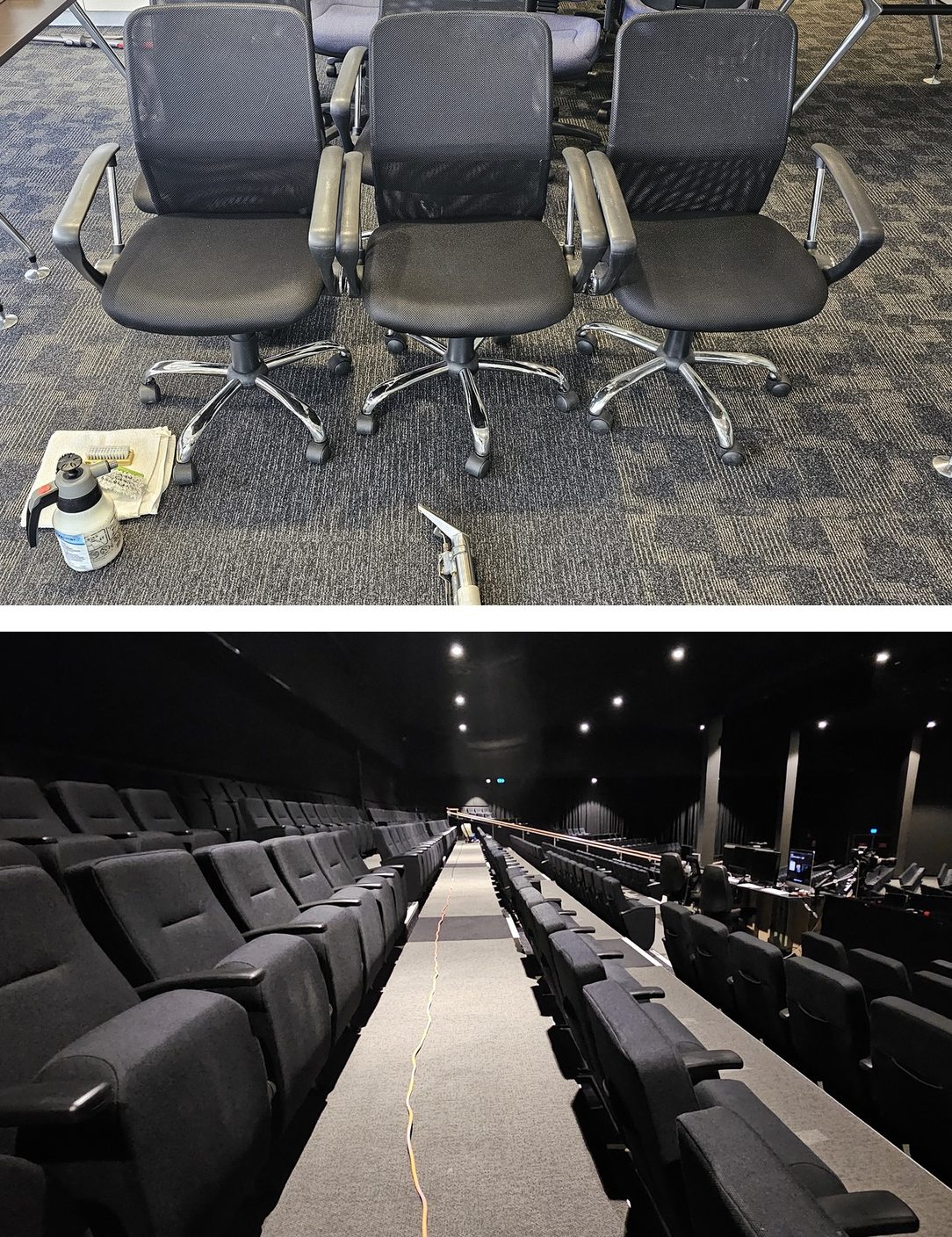
Seating picks up body oil, crumbs and spills every working day, and over time sunlight fades it and uneven use wears it. These five habits slow all of that down between professional cleans.
Once a month, with a soft brush attachment, along the crease and seams where crumbs and grit collect. Grit left in the seams wears the fibres.
Hold a dry cloth against the spill straight away and let it draw the liquid up. A spill rubbed into the fabric goes through to the foam, and the rubbing roughens the weave.
Overspray from furniture polish and all-purpose cleaners dries on fabric as a tacky film that holds dirt, so the seat greys faster.
Turn lounge cushions every few months, so both sides wear and fade evenly.
Close the blinds against strong afternoon sun. UV light breaks down fabric dyes, and that fading is permanent.
Treat it before it reaches the foam
Coffee, wine or vomit that gets through the fabric into the foam wicks back up as the cushion dries and leaves a ring on the cover. Take the seat out of use and blot the fabric with a dry cloth. A prompt call lets us treat it while most of it is still in the cover.
We also clean carpets, rugs, tiles and grout for Perth workplaces, and we restore water-damaged floors. Mention the rest when you ask for the quote and it goes on the same visit.
Steam cleaning, encapsulation, or agitation and steam for heavy soil, chosen for each floor around your hours.
Explore commercial carpet cleaning →Walkways that stay grey after vacuuming, rinsed with hot water and extracted until the oily soil is out.
Explore carpet steam cleaning →Individual marks identified and treated by type, from coffee rings to ink.
Explore carpet stain removal →Under your seating, the wool carpet is rinsed cooler and finished slightly acidic so its colour and pile last.
Explore wool carpet cleaning →Our pressure spinners flush grey grout clean and vacuum the dirty water straight back.
Explore tile and grout cleaning →We assess and quote every rug on its own, and its weave decides how we clean it.
Explore rug cleaning →Wet carpet gets fast extraction, air movers and dehumidifiers, then a full clean.
Explore water damage restoration →Ask us directly
If your question isn't answered here, call us. You'll get a straight answer about your carpet and your premises, with no obligation.
A price for each piece. A handful of chairs costs our $385 minimum, GST inclusive, the same as for carpet, and that minimum covers travel, set-up and the first pieces cleaned. Past a handful of pieces, the per-piece prices take the total beyond it, and the minimum is part of that total, not added to it. What each chair, lounge or booth costs comes down to:
The quote is free. We come out, count your seating and check each fabric, then send you one written price, and that figure stays fixed unless the job itself changes. Our pricing guide has more on the minimum charge.
Any furniture on your premises covered in fabric or vinyl. The pieces we clean most often are:
We don't clean curtains or blinds.
Yes. On a large floor, we split the chairs across several visits to fit around your rosters, each booked for whichever day and time suit you. If your office carpet is due as well, we'll clean both while we're there.
If the building is closed when we finish, we check that no lights are left on, lock up and set the alarm.
Usually 3 to 8 hours after cleaning. Where your seating falls in that range depends on the material, the method we use on it, and the temperature and airflow in the room. Fabrics cleaned with solvent or with very little water dry at the quicker end, because there's little moisture to lose. Deep lounge cushions take the longest, since foam holds water, and drying slows right down in cold, still air, such as an unheated building in winter.
Air conditioning shortens the wait, and air movers cut it further; tell us at the quote which rooms you need back early. Your quote gives the drying time for each room, so you know when it can be used again. Nobody should sit on a piece until it's dry.
Most fabric seating can. On upholstery, steam cleaning is the same hot water extraction we use on carpet, scaled down to a hand tool. The tool takes its rinse back out as it goes, and the pre-spray and loosened soil leave with it. It works far more gently than our carpet wand, with the heat and moisture set for each fabric, so the foam underneath doesn't get soaked.
These pieces are cleaned another way:
The method is decided for each piece once we've checked the fabric.
We advise at least one professional clean a year, and more often where the seating gets heavier use. How much more depends on:
Reception, waiting-room and breakout seating usually needs cleaning more often than the desk chairs. At the free quote visit we recommend how often each area needs doing, and you decide. Between cleans, blot any spill straight away so it doesn't soak into the foam.
By hand: we wipe vinyl down with a cleaner made for it, never soaking or rinsing it, and give the stitching the most attention, because that's where grime builds up. We never use solvents on vinyl, as they draw out the plasticisers and leave it stiff.
A clean brings back the colour and the feel of the surface. It can't mend vinyl that has already cracked or begun peeling, and if we find any, we'll show you before we begin.
Each code changes the method, and we clean both: S-coded fabric with solvent-based products, X-coded fabric with a vacuum only.
S means solvent only. Water on these fabrics risks rings, shrinkage or running dye, so we use solvent-based products instead. They lift oily soil well and dry quickly without swelling the fibre. X means no liquid of any kind. We vacuum those pieces thoroughly with a soft brush, which removes the dry soil but not spills or stains. X codes are rare on office chairs and lounges.
Many older contract chairs have lost their label. In that case we identify the fibre ourselves and choose the method from what we find.
Fabric shrinks only when it's cleaned the wrong way, and shrinkage has two causes. Cellulose fibres such as cotton, linen and viscose swell as they absorb water, so an over-wet weave draws in and a fitted cover can pull tight or open at a seam. Wool shrinks a different way: heat, moisture and rubbing together felt the fibre. So before anything gets wet, we identify the fibre, and that decides the products, the heat and the moisture. Wool and wool blends get cooler water and WoolSafe-approved products. For cotton, linen and viscose we use low-moisture cleaning or solvent, which doesn't swell the fibre. Dry passes with the hand tool then draw out the extra water, so the fabric doesn't stay wet for long.
Any fabric that can't be cleaned safely is named at the quote and left out of the job.
They won't, because each fabric's dye is tested before we start and the result decides how that fabric is cleaned. Some dyes bleed when they get wet, so we apply the solution we intend to use to an out-of-sight area, such as under a seat cushion, and blot it with a white cloth. If the colour moves, we clean that fabric at low moisture or with a solvent-based product. If neither is safe, we'll say so and leave that piece alone.
Contrast piping and dark trims on pale seating get extra care, because a bleed would show there first. We also keep the drying time short, since dye is more likely to travel in fabric that stays wet.
Almost nothing, and it's safe: once a piece is dry, your staff and visitors can use it as normal. The products are chosen for the fabric they go on, and the safety data sheet for each is in our van for you to read while we work. The rinse extracts the pre-spray along with the soil, so the seating doesn't feel sticky and doesn't attract dirt back.
Clinics, childcare centres and teams with scent-sensitive staff can ask us to skip the added fragrance. Just ask, and we'll list the products going on your furniture before we begin.
Most come out, because a water mark on microfibre is a tide line left in the fabric, not damage to the fibre. Water spreads through the fabric, carries soil, old detergent and minerals to the edge of the wet patch, and leaves them there as a ring when it evaporates. The pile inside the patch also dries lying a different way, so it catches the light differently.
We clean the whole panel from seam to seam with very little moisture, or with solvent where the fabric is coded S, as many microfibres are. Then we brush the pile one way while it's still damp, so the panel dries to one even colour and texture.
Until your next clean, leave any new mark alone rather than dabbing at it with water. Most of these rings start when someone wets just the mark.
Yes, with nothing taken down: we work on wall panels and workstation screens around the desks as they're set up. The fabric is usually polyester or a wool blend stretched over an acoustic core that shouldn't get wet, so we keep the moisture very low and work each panel from the top down to stop drips reaching the fabric below.
Over the years these panels collect a grey film of dust that vacuuming won't shift. Removing it is one of the quickest ways to brighten an older fit-out. We've written up the whole process in our guide to cleaning fabric partitions and acoustic panels.
It removes any smell held in the fabric, which is where most stale seating odours come from. Body oils, sweat and spilt food and drink build up in the weave, and the oils turn rancid as they oxidise, which is the stale smell of a well-used chair. Extraction takes them out rather than covering them with fragrance.
Some smells go deeper. Urine and vomit that soak through to the foam leave residue the rinse can't fully reach, so they can take a second treatment, and occasionally an upholsterer has to replace the foam. When an odour survives a thorough clean, its source is the foam or something else in the room, and we'll tell you which. We use the same approach on carpet, explained in our article on tracing an odour to its source.
Medical and aged care seating is regular work for us, and we fit around your patients and residents. In medical centres, we clean once the last patient has gone or on a weekend. In aged care homes, where residents are there all day, we work one area at a time at hours your staff choose, so a lounge is only out of use while it dries.
This seating is often a mix of fabric and vinyl, and we clean both together. Much of it also has a moisture barrier under the fabric, so we keep the water low and extract it thoroughly, leaving none against that layer. Our team holds National Police Clearances and follows your sign-in and infection-control procedures.
Cleaning costs a fraction of replacement. Most chairs that look tired only need a clean: the frame, mechanism and foam often have years of life left, and the grime in the fabric comes out. In one Perth office, the owner had about 30 chairs cleaned along with the carpet on a Saturday instead of buying new ones, for a fraction of the cost.
Replacement makes sense for a chair with torn fabric, a broken frame or foam that has collapsed. Call Zoran on 0460 815 038 before you order new chairs, and we'll go through them with you and pick out the ones worth keeping.
Almost all of the venue seating we clean is done outside trading hours, fitted around your calendar:
If there's an event or opening you're working towards, give us the date and we'll book the clean ahead of it. Booths get extra attention in the seams and the crease where the seat meets the back, because that's where crumbs and spills collect.
Very little. Our team does the lifting and carrying, and each piece ends up where it started. A few things make the visit smoother:
For the order we work in on the day, our cleaning day guide takes a typical visit step by step.
The furniture changes with the building: waiting-room lounges at a medical centre, pews in a church hall, stacked chairs at a function centre, rows in a cinema. Every industry below links to its own page, with the details for that kind of building.
Your kind of building not listed? Tell us what's in it and we quote the seating after a free look.
A rough count of chairs, lounges and booths is enough to start, plus a note of the pieces that worry you most. A proper count and a check of each fabric happen on the site visit, and the written price follows. For a date that's close, ring Zoran direct on 0460 815 038.
Book your chairs, lounges and screens with one call. We clean them on the day and at the time that suit you.