
Steam Cleaning vs Encapsulation: Which Is Right for Your Business?
Steam cleaning versus encapsulation for Perth commercial carpets: what each one does at fibre level, real dry times, costs over a year, and how to choose.
Read ArticleHow encapsulation polymers trap soil, why the vacuum finishes the job, what each machine does, and where low-moisture cleaning fits a Perth office.
Encapsulation is a low-moisture clean for commercial carpet that is lightly soiled. Its detergent carries polymers that surround the soil in the upper pile and dry into brittle crystals. The vacuum then lifts those crystals out with the soil locked inside, leaving nothing in the fibre. It suits offices, corridors, retail floors and venue foyers wherever the soil is light and sits near the surface.
If you have read our piece setting steam cleaning against encapsulation, you will know the two do different jobs. This article goes deeper on encapsulation itself: what the polymers do, what each machine contributes, how much solution is the right amount, why the vacuum matters more than most people realise, and where the method runs out of road.
It is worth saying at the outset that encapsulation is not a cheaper substitute for hot water extraction. It is a different method for a different soil level. We recommend the one that suits your carpet when we inspect it.
The clever part of encapsulation is the cleaning solution, which contains polymers. A polymer is simply a long, chain-like molecule, and the ones used here are designed to do something specific: surround each particle of soil and then dry into a brittle, crystal-like shell around it.
The solution is worked into the carpet, where surfactants break the bond between the soil and the fibre and lift the dirt free. The polymer chains then wrap around each loosened particle. As the water evaporates, those chains draw together and lose their flexibility, hardening into tiny crumbly crystals that hold the soil inside, isolated from the fibre.
The crucial property is that the dried polymer is non-tacky. Ordinary detergent residue stays soft and slightly sticky in the pile, so every footstep afterwards presses fresh soil into it. Encapsulation polymers dry crisp and friable, crumbling under mechanical action rather than smearing, so there is nothing left for passing dirt to grab. Once the vacuum has lifted the crystals, nothing is left in the fibre for new soil to cling to.
Encapsulation works in stages rather than in a single pass. The solution is applied and agitated into the pile so every fibre in the treated area gets contact. Then it is left to dry, and during that window the polymers crystallise around the soil they have captured. Nothing is extracted on the day; the mechanism is chemical and mechanical rather than hydraulic.
The final step is vacuuming, and it is where the trapped soil actually leaves the building. As the carpet is vacuumed over the following days as part of normal cleaning, the brittle crystals, with the soil locked inside, are lifted away. Your routine vacuuming becomes the removal stage of a professional clean.
Dry sand and grit are lifted out mechanically rather than turned into a wet paste by a solution.
A light, even application that dampens the tips and upper pile only.
Brushes work the solution into the pile so every fibre in the area gets contact.
The polymers draw together and harden around the soil they have captured.
Routine vacuuming over the following days lifts the brittle crystals, and the soil inside them, out of the building.
This is why encapsulation suits lightly soiled carpet, where the soil sits in the upper pile within reach of the polymer and the brushes. Once the crystals are vacuumed out, the fibre is clean and holds nothing that would attract new soil.
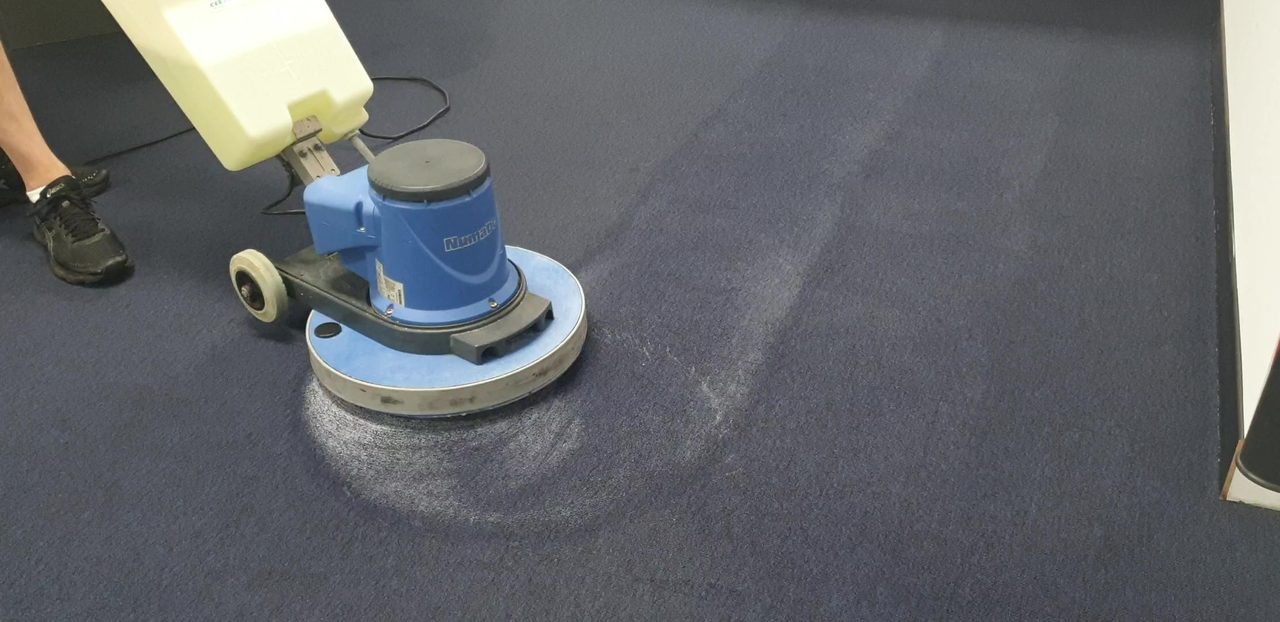
Encapsulation is unusually sensitive to how much product goes down. Every encapsulant has a dilution ratio set by the manufacturer to put a specific quantity of polymer on each square metre. Mixing it stronger does not clean better, because the ratio is already set to surround the soil a lightly soiled carpet holds. The same applies to volume: a light, even mist that dampens the tips and upper pile is what the method is built around, and flooding the carpet only pushes drying time out towards extraction territory.
Dwell time matters in the other direction. The surfactants need a short window, usually a matter of minutes, to release the soil from the fibre before agitation. Working too fast means agitating a carpet where the bond has not yet broken; leaving it too long, particularly on a hot Perth afternoon with the air conditioning off, means the solution starts crystallising before the brushes reach it.
Our technicians measure every batch against the label and mist it on evenly. Measured that way, the polymer surrounds the soil, dries to crystals and leaves with the vacuum, so nothing stays in the fibre.
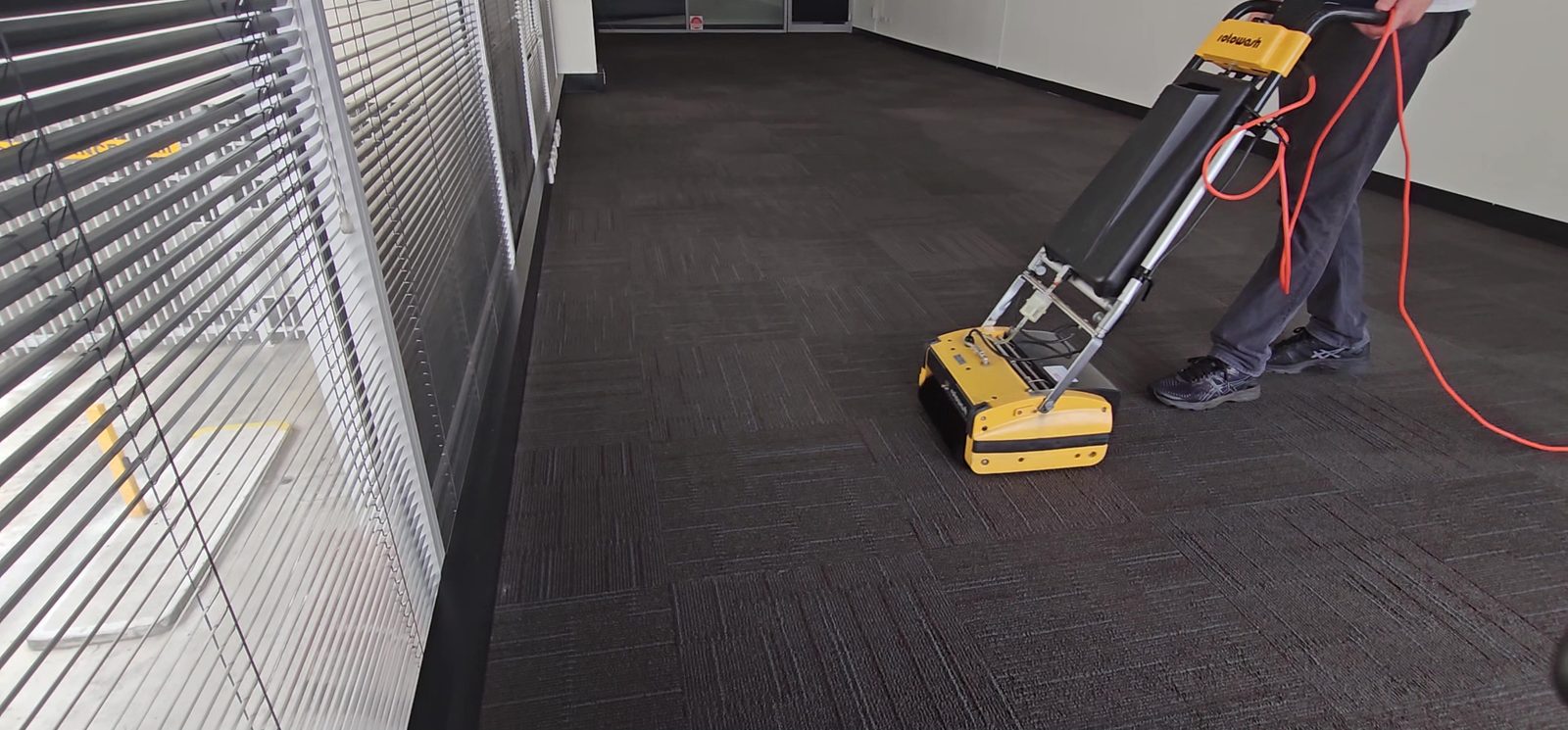
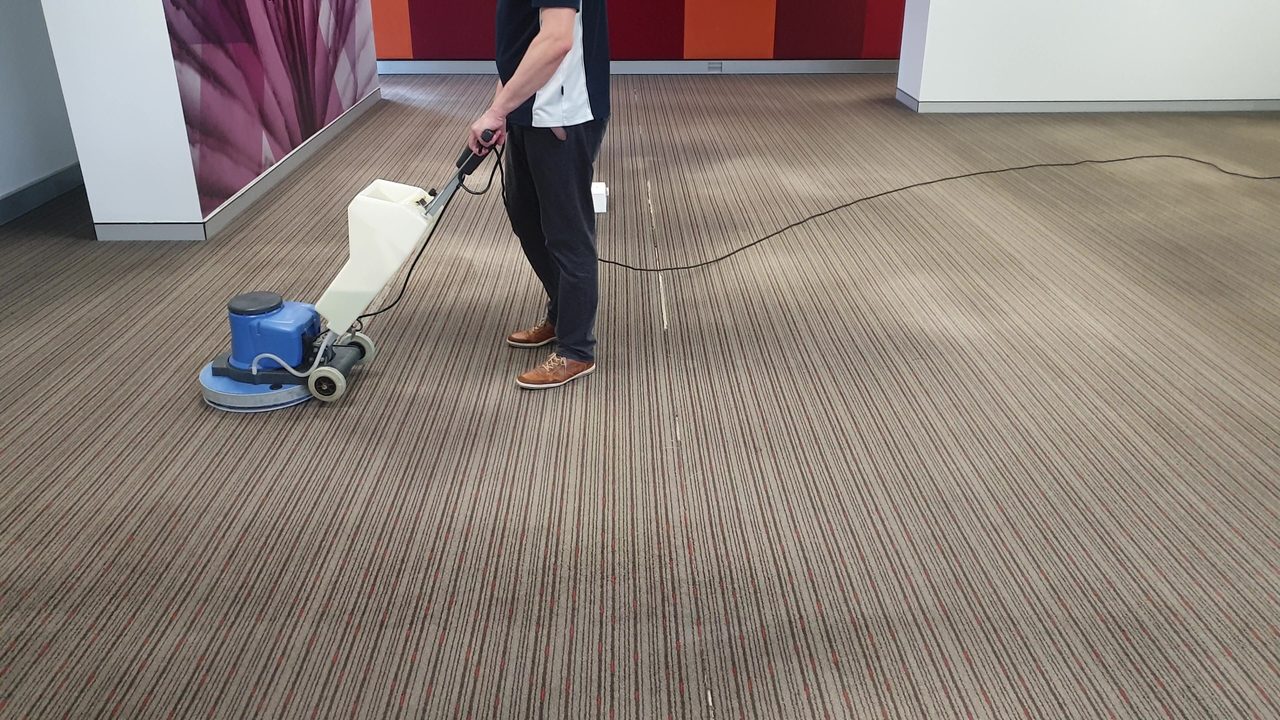
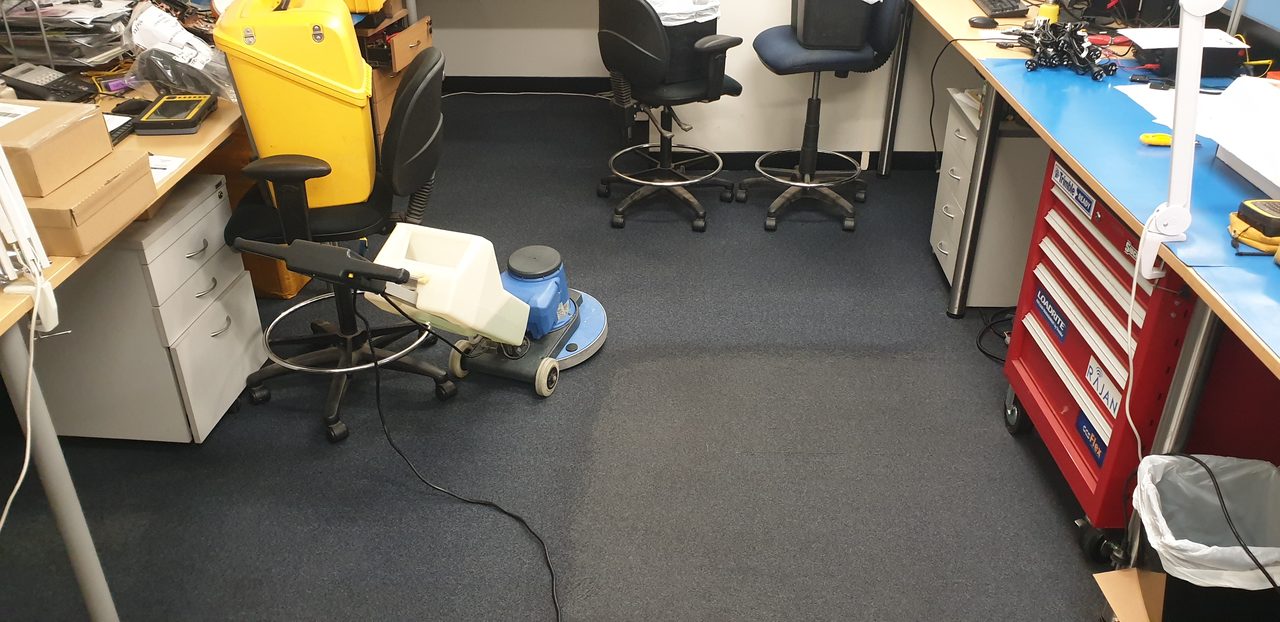
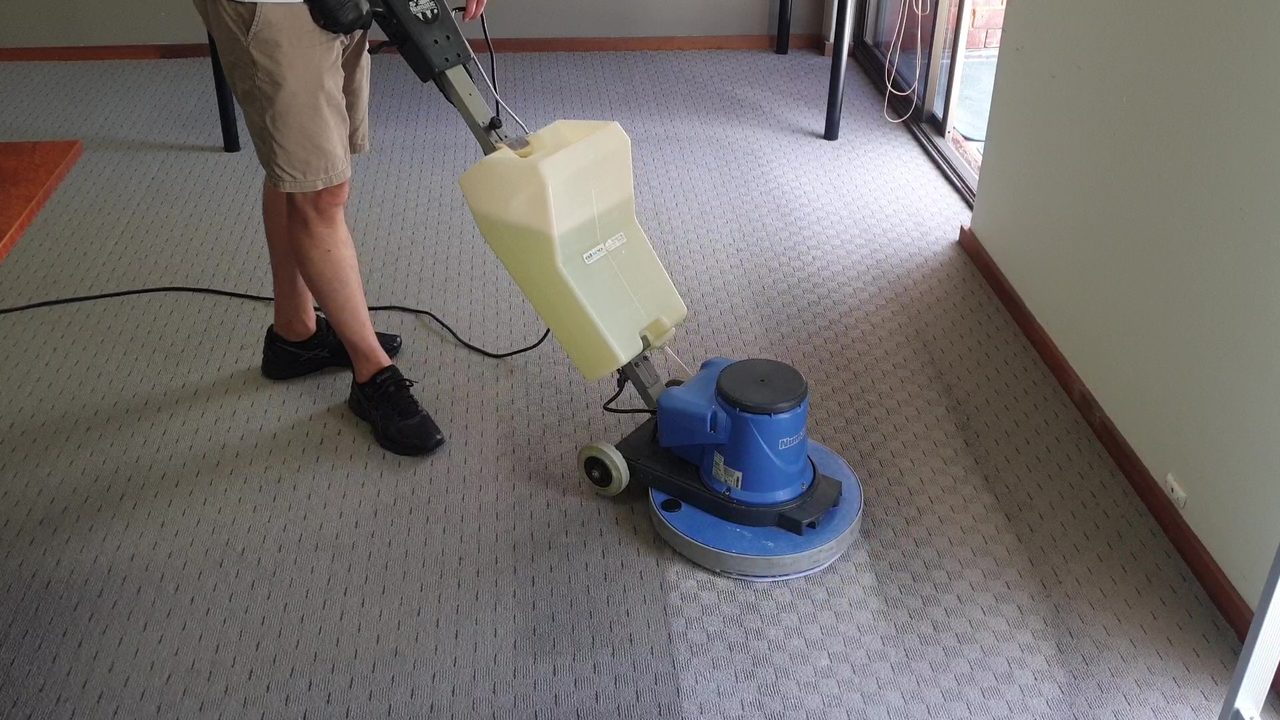
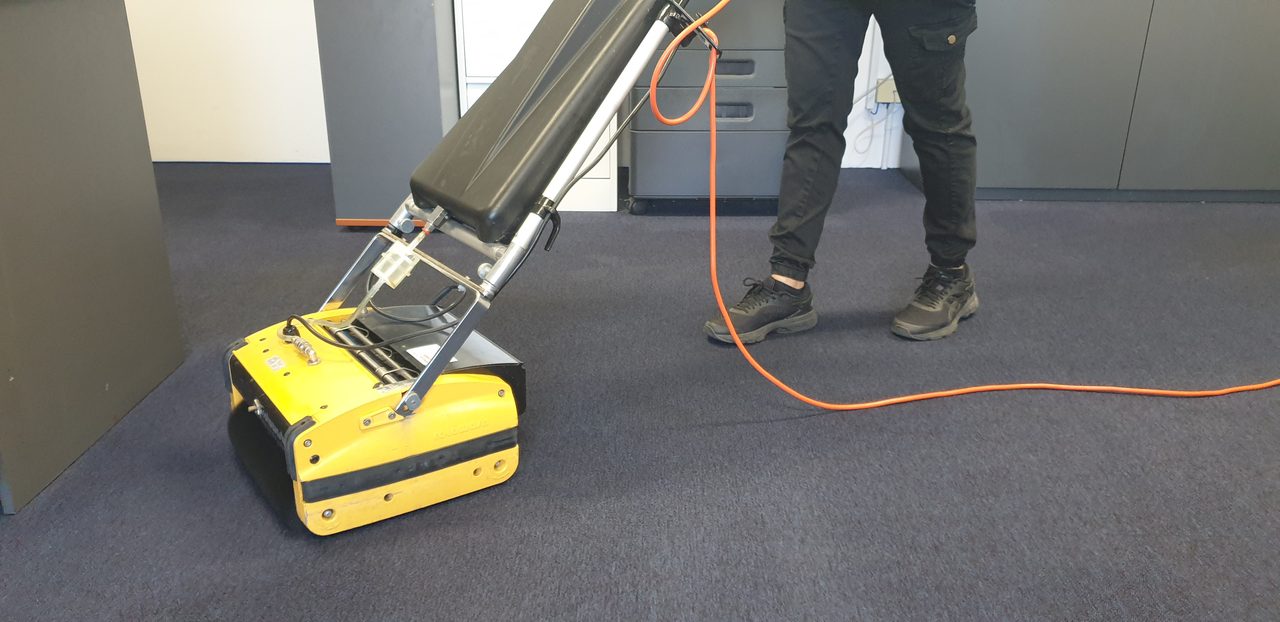
Agitation is half the method. The solution has to be distributed evenly and driven down into the pile, not just laid across the tips, and the machine chosen decides how well that happens. Three main types are used in commercial work, and they behave quite differently.
For most commercial floors a counter-rotating cylindrical brush machine is the right choice. Rotary machines have their place on dense cut pile, while bonnet work is best treated as a quick appearance fix rather than a genuine encapsulation clean.
Encapsulation dries quickly for one reason, which is how little water goes down. Where hot water extraction rinses right through the pile and then draws the solution back out, encapsulation applies a controlled, small amount of liquid to the surface and upper pile only, and what little goes down has almost nothing left to give back.
Foot traffic can return within an hour or two. Steam-cleaned carpet, by contrast, needs 4 to 8 hours to dry. The soil in your carpet decides which of the two methods we recommend, not the drying time.
Light soil in the upper pile is what makes the short drying possible. Carpet carrying heavier soil or a spread of different stains needs a steam clean, where each stain is pre-treated and the pile is rinsed and extracted down to the backing. Its drying hours are part of doing that job properly.
If there is one thing to take from this article, it is that the vacuum is not an afterthought. Encapsulation does not remove soil on the day; it prepares the soil for removal. Skip the vacuuming and you have paid for a clean whose final stage never happened, leaving crystallised soil in the pile until foot traffic grinds it back down.
We vacuum thoroughly before we start, because dry particulate soil, and in Perth that means a great deal of coastal sand and red dust off the easterly, should be lifted out mechanically rather than turned into a wet paste by a solution. Anything left in the pile consumes polymer that should have gone to work on the bonded, greasy soil the vacuum cannot reach.
Encapsulation does not remove soil on the day; it prepares the soil for removal.
After the clean, the building's own vacuuming takes over, so the most useful conversation is often about the after-hours contractor rather than the cleaning itself: an upright with a working brush bar over the treated lanes for several nights, not a quick pass with a tub vacuum. Brush condition matters more than suction figures, and a monthly check of belts, brushes and filters protects the clean you paid for.
Every low-moisture method has a ceiling on how much soil it can carry away, and the polymer sets it. A given quantity of encapsulant can only surround a given quantity of dirt. Once the soil load exceeds what the polymer can wrap, the surplus stays in the carpet and the result looks improved rather than genuinely clean.
Used on carpet past that ceiling, encapsulation leaves the heavier soil behind. The soil that survives is the oily, bonded kind at the base of the tuft, which is exactly the material that abrades fibre and dulls it permanently.
You can see when a carpet is past the ceiling. Soiled walkways reappear in the same lines within days of a clean. A dry white towel rubbed hard into a walkway comes up grey. That carpet needs hot water extraction, with each stain pre-treated and the full depth of the pile rinsed and extracted. We tell you so at the inspection.
Encapsulation still carries a reputation in some quarters for leaving residue, and the reputation has a real origin. Traditional carpet shampoos, which encapsulation replaced, used high-foaming detergents that dried sticky in the pile. Carpets cleaned that way re-soiled fast and often looked worse a month later than before the clean, and a generation of building managers learned to distrust anything that was not extraction.
Modern encapsulants are a different class of chemistry. The polymer is engineered to dry brittle rather than tacky, and the crystal is meant to be vacuumed away. Encapsulation does not leave a residue behind. Mixed to the label and followed by the vacuum, it takes the soil out and leaves nothing in the fibre.
| Traditional carpet shampoo | Modern encapsulant | |
|---|---|---|
| Detergent | High-foaming | Polymer-based, with surfactants |
| How it dries | Sticky in the pile | Brittle and friable |
| What happens next | Re-soils fast, often looks worse a month later | Crystals vacuum away with the soil locked inside |
| What stays in the fibre | Sticky detergent residue | Nothing once the crystals are vacuumed |
The chemistry changed. The reputation it inherited did not.
The second myth is that encapsulation is just a cosmetic pass with a bonnet, which confuses the method with one of the machines sometimes used for it. Done with proper agitation, correct dilution and follow-up vacuuming, it genuinely removes soil from the building. Done as a pad wiped over a pre-sprayed floor, it mainly moves soil around, and it is fair enough that people who have only seen the second version are sceptical.
Encapsulation is at its best on the synthetic loop and low-level cut pile that dominates commercial floors, because those constructions hold soil near the surface where the method can reach it and release the crystals readily when vacuumed. It is a poor match for anything deep or dense, where soil sits well below the reach of a brush.
Wool deserves particular care. Woolsafe accreditation exists precisely because wool is unforgiving of the wrong pH, excess moisture and heavy agitation, and while low-moisture work can suit a wool commercial carpet, it needs a product cleared for wool and a lighter hand on the machine.
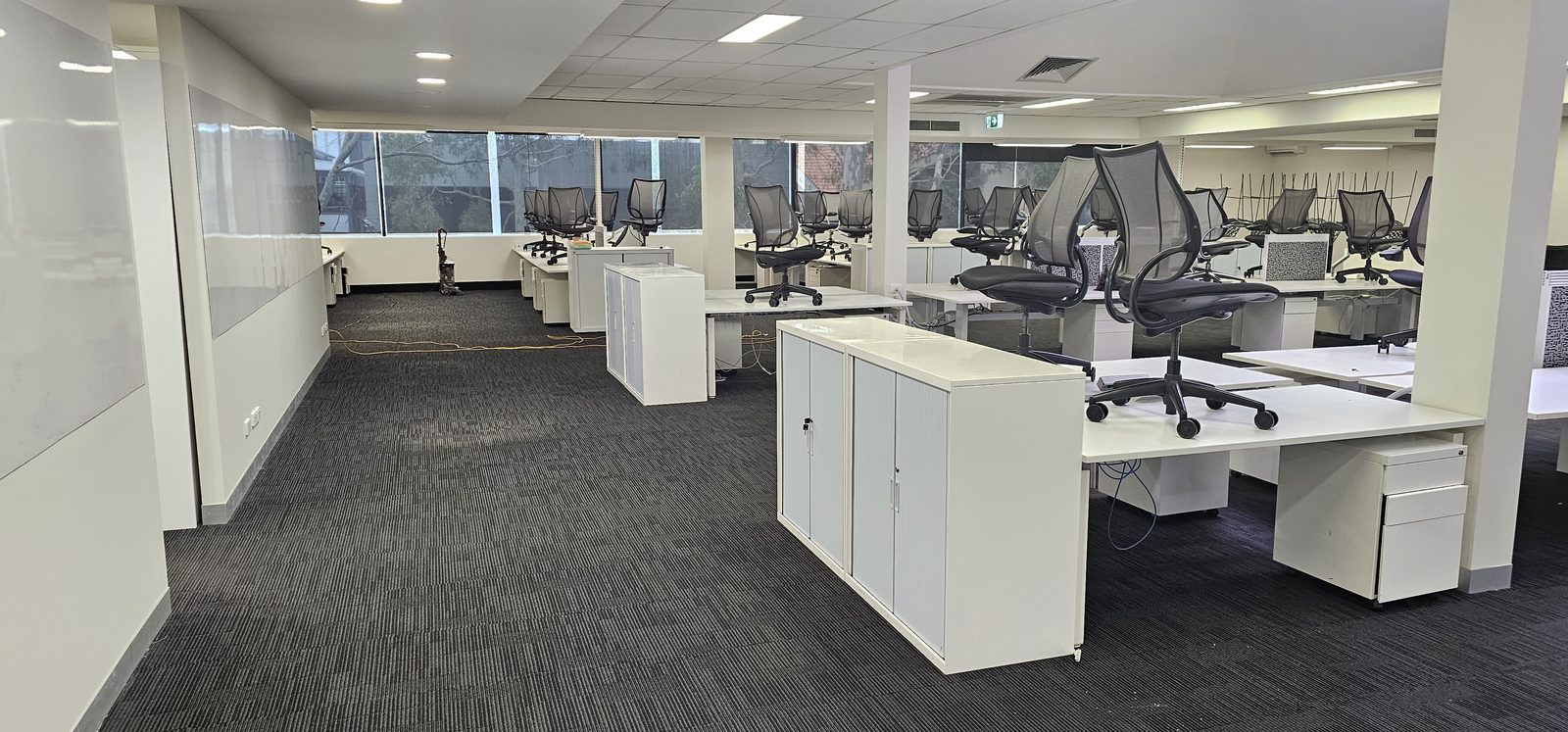
Carpet tiles, now standard in Perth office fit-outs, are an especially good match. Their bitumen or PVC backing does not want repeated saturation, and soaking tiles over and over can soften adhesive, curl edges and let moisture sit in the seams where nobody can see it drying. Low-moisture work sidesteps that: the solution stays in the pile rather than reaching the backing, and the dimensional stability of the floor is left alone.
Tiles also give you a repair option broadloom does not. Your installer can swap a permanently marked tile for one from under a storage unit, which is why keeping spare stock from the original fit-out is worth the shelf space. On an open-plan floor laid in tiles, the soil on the walkways decides whether we recommend encapsulation or steam cleaning at the inspection.
Perth summers dry carpet quickly; a June or July cold snap does not. Wet winter weeks bring higher indoor humidity, closed windows and buildings running heating rather than fresh air, and in those conditions a heavily wetted carpet takes noticeably longer to release its moisture than the same carpet in February.
That matters for three reasons. A slow-drying floor stays a slip risk longer. Damp carpet in a warm, still room is where musty odours begin, particularly in internal corridors and lift lobbies with no window. And the wetter the pile, the greater the chance of wicking, where soil or backing tannins travel back up the fibre as it dries and reappear as a mark that was not there when the cleaner left.
On lightly soiled carpet, encapsulation avoids most of that risk because it puts far less water into the pile. Heavier soil still needs a steam clean in winter. Air movers plus the building's own air conditioning keep its drying within the usual hours. Rain also turns car park grit and construction limestone dust into a slurry that is tracked straight onto the entrance carpet, so mat wells and the first few metres inside the door work far harder in July than in January.
The method for each area is set when we inspect your carpet. Encapsulation suits lightly soiled carpet, where the soil sits in the upper pile. For heavier soil and many different stains, hot water extraction gives the thorough, deeper clean, with each stain pre-treated and the full depth of the pile rinsed and extracted. One floor can need both, because an entrance and a quiet perimeter rarely carry the same soil.
As a minimum, we advise professional cleaning once a year. Entrances, corridors and the walkways to lifts and kitchens often need more than that. The timing and the number of visits are your choice. When we come out to quote, we suggest a frequency for each one. Many buildings book their steam clean late in spring, when the wet season has finished tracking grit indoors and dry air makes for the shortest drying times.
If you are putting carpet maintenance out to contract, a few lines of specification prevent most of the problems described above. Vague wording such as regular carpet maintenance lets a contractor bonnet the walkways twice a year and call it maintenance. Naming the method, the zones, the frequency and the vacuuming obligation gives you something you can hold to.
Measuring the result does not need instruments. Photograph the same three points on the floor, in the same light, after each clean and again at the midpoint of the cycle, and the trend tells you whether the interval is right. Add the dry-towel test in the busiest lane, and note how many weeks pass before the lanes are visible again.
Encapsulation earns its place on lightly soiled commercial carpet. Its polymer wraps the soil near the surface of the pile, dries to crystals and leaves with the vacuum, so nothing stays in the fibre to attract new soil. The pile is dry enough to walk on within an hour or two.
It is also worth being clear about the limit. A heavily soiled floor, or one marked by many different stains, needs hot water extraction, which treats each stain and rinses the carpet through its full depth. Ask for a free on-site visit. We'll inspect your carpet and tell you which method suits it.
Steam cleaning versus encapsulation for Perth commercial carpets: what each one does at fibre level, real dry times, costs over a year, and how to choose.
Read ArticleHow Perth's dry summers and wet winters set the timing of vacuuming, encapsulation and deep cleaning, plus budgeting, records and working around tenants.
Read ArticleCarpet tiles or broadloom: how backing, adhesive and format change cleaning, repair costs and make-good in a Perth commercial fitout.
Read Article