
Encapsulation Carpet Cleaning: The Low-Moisture Method Perth Offices Rely On
How encapsulation polymers trap soil, why the vacuum finishes the job, what each machine does, and where low-moisture cleaning fits a Perth office.
Read ArticleCarpet tiles or broadloom: how backing, adhesive and format change cleaning, repair costs and make-good in a Perth commercial fitout.
Most facility managers inherit their floor rather than choose it. The fitout was signed off before you arrived, and now it is simply the surface you are responsible for keeping presentable. That is fine until something has to change: a coffee machine leaks, the walkway in front of the lifts darkens with compacted soil, a lease ends, or the board asks why the carpet budget looks the way it does.
The format of your carpet quietly determines the answer to all of those questions. It sets how much water a cleaning method can safely put into the floor, what a repair costs, whether wear can be redistributed or only replaced, and what your make-good exposure looks like.
This article is not a case for one over the other. Broadloom is not obsolete and tiles are not automatically the smarter buy. What matters is knowing what each format gives you and what it costs you downstream.
Broadloom is carpet manufactured on a wide roll, laid out, trimmed to the walls and joined at seams where the room is wider than the roll. In commercial buildings it is usually installed one of two ways. Direct glue-down bonds the carpet straight to the slab with a permanent adhesive, which is stable and suits heavy trolley and castor traffic. Double-stick glues a separate underlay to the slab and then glues the carpet to the underlay, which costs more but gives noticeably better comfort and acoustic performance.
Modular carpet tiles are pre-cut squares or planks with a rigid, dimensionally stable backing. They are normally laid on a release adhesive: a tacky product that holds each tile firmly but never fully cures, so a tile can be lifted by hand and put back down without losing its grip. That single property is why tiles behave so differently once the building is occupied.
The installation method is not a detail. It decides whether your floor can be opened up for cabling, whether damage can be dealt with in isolation, and how the floor responds when a cleaning wand puts moisture into it.
Ask what a carpet is backed with and you have effectively asked how wet it can safely get. Carpet tiles are built on backings designed to stay flat and square: bitumen composite, PVC, or a cushioned composite, usually with a fibreglass layer inside for stability. Those backings are essentially impermeable, so water applied to the surface cannot drain away. It either comes back out through the pile or travels sideways to the tile edges and sits at the interface with the adhesive and slab.
Broadloom is different. Its secondary backing is either a synthetic weave, which is stable and tolerant of moisture, or jute, a natural fibre used in better wool and wool-blend carpets. Jute is the one to identify before anyone cleans: it absorbs water, shrinks as it dries, and can release cellulosic browning up through the pile, which shows as tan discolouration that looks like a stain but is coming from underneath.
The sequence is always the same on a first visit: identify the format, identify the backing, then choose the method. Getting that order wrong is how a routine clean becomes a repair job.
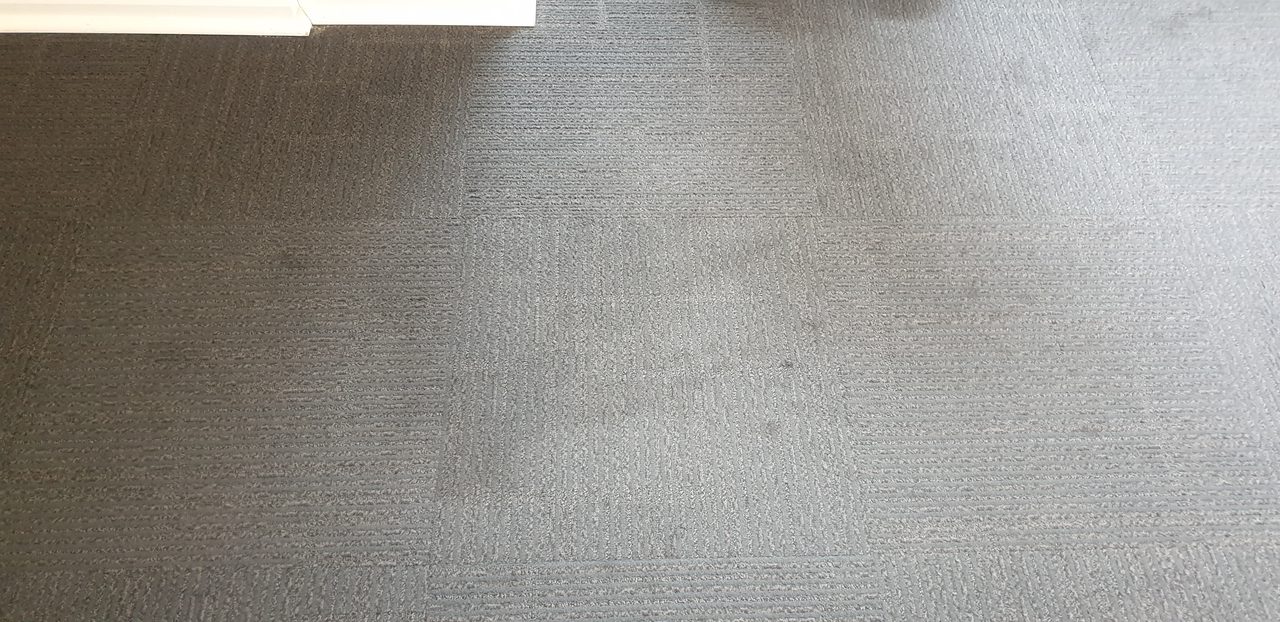
Truck-mounted hot water extraction is the deepest clean available. Heated solution goes into the pile under pressure and is drawn straight back out by a vacuum powered from the vehicle, flushing soil out of the base of the fibre. On glue-down broadloom with a synthetic backing over a sound slab, that is close to ideal conditions: the carpet takes the water, recovery is strong, and the result is a genuine reset.
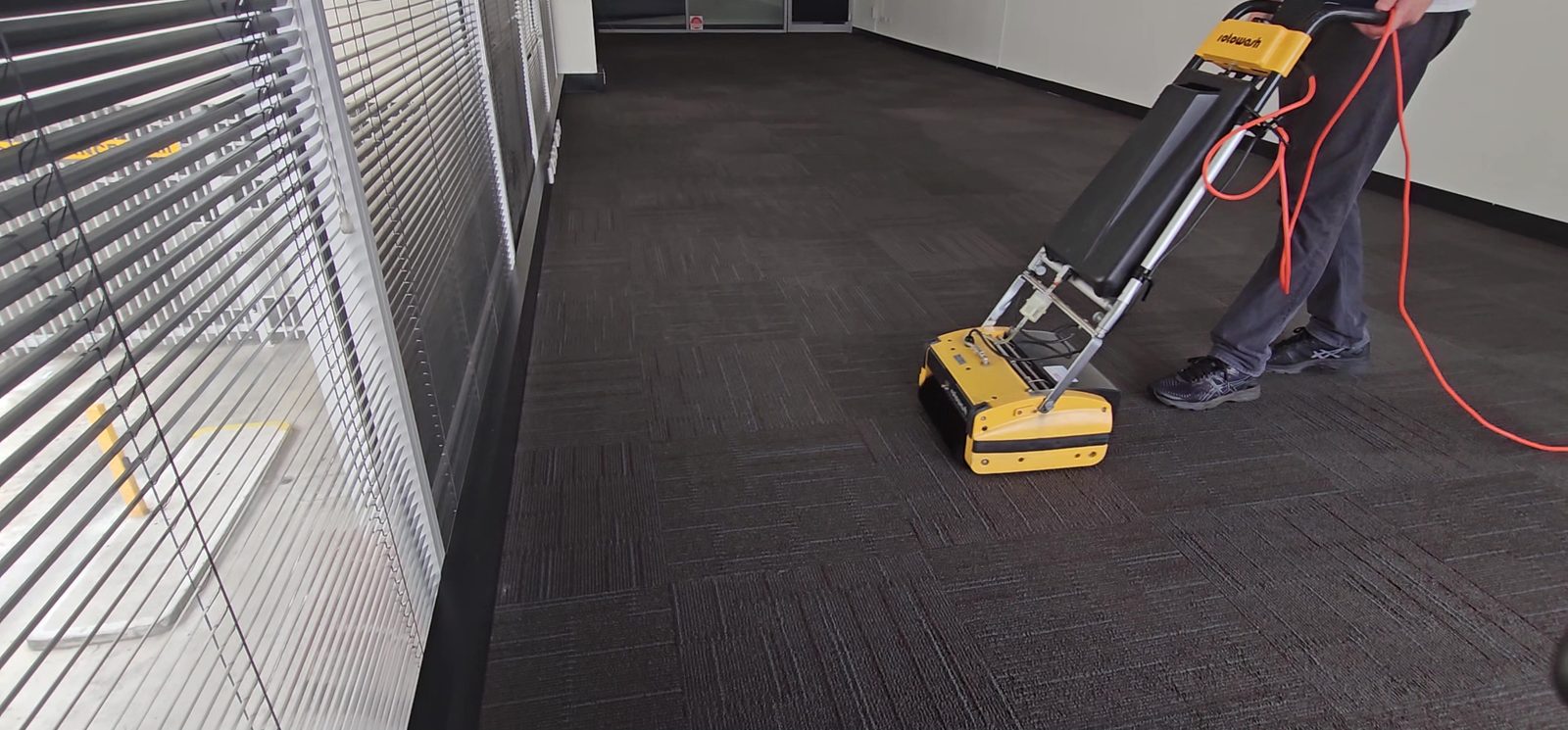
On carpet tiles it is still possible and often the right call, but it has to be done by someone who understands what is under the pile. That means lower solution flow, more dry passes, care not to flood the joints where water runs straight to the tile edges, and air movement afterwards so nothing lingers at the adhesive line. Done carelessly, you get edge curl, softened adhesive and tiles that no longer sit tight to their neighbours.
| Under a truck-mount | Glue-down broadloom | Carpet tiles |
|---|---|---|
| Conditions | Close to ideal over a sound slab | Workable, but the backing is waterproof |
| Technique | Normal flow, strong recovery | Lower flow, more dry passes, joints kept dry |
| Afterwards | The carpet takes the water and gives it back | Air movement so nothing sits at the adhesive line |
| Done carelessly | Delamination from repeated over-wetting | Edge curl and softened adhesive |
Both formats can be truck-mount cleaned. The difference is that a tile backing will not let water drain away, so every drop has to be recovered.
There is a physical point as well. A heavy wand dragged aggressively across tiles on release adhesive can nudge them, and once tiles start to shift you get gaps at the perimeter that never quite close again.
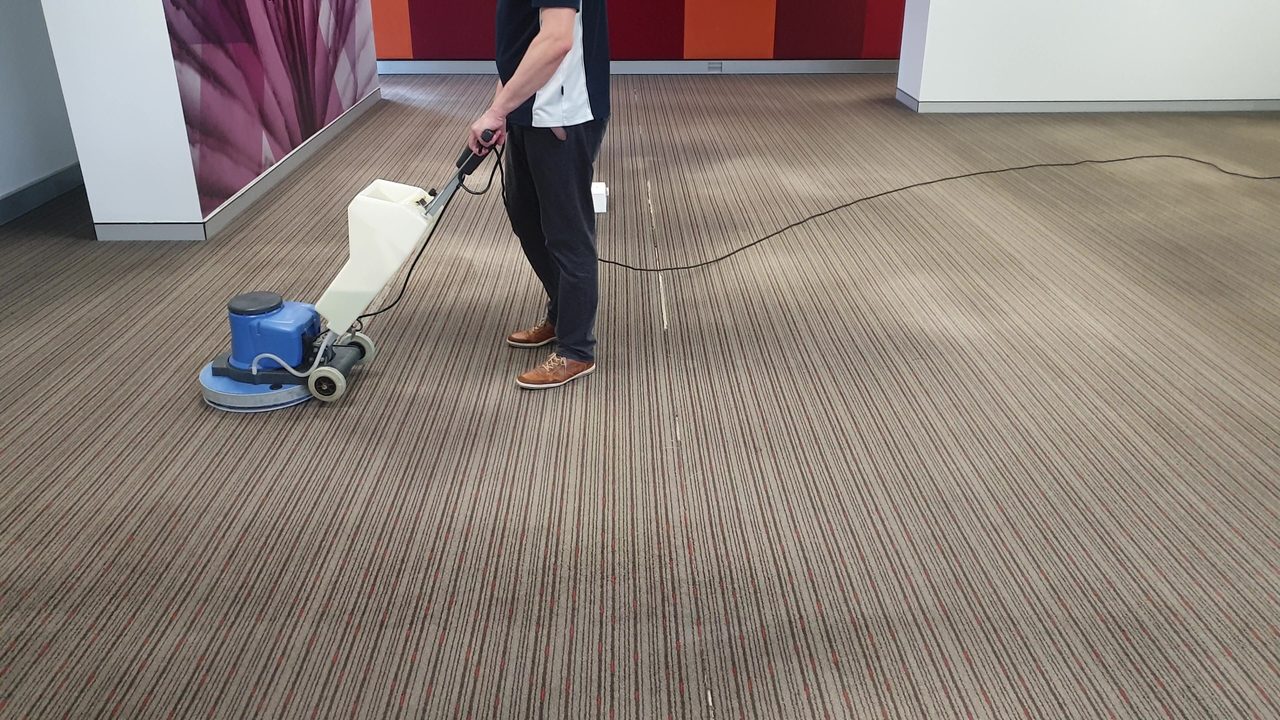
Encapsulation applies a small, controlled amount of polymer solution to the surface and upper pile, agitates it with a brush machine, and lets it dry into brittle crystals that routine vacuuming then lifts out. Because the water never reaches the backing in any volume, it removes the moisture problem that tiles create. That makes encapsulation a good fit for tiled floors that are lightly soiled.
Broadloom takes encapsulation well too, particularly the dense loop piles used in offices and corridors. On lightly soiled jute-backed carpet it is often the safest option. Cut pile responds less predictably; the agitation can leave the surface looking slightly fuzzed if the machine is wrong for the carpet.
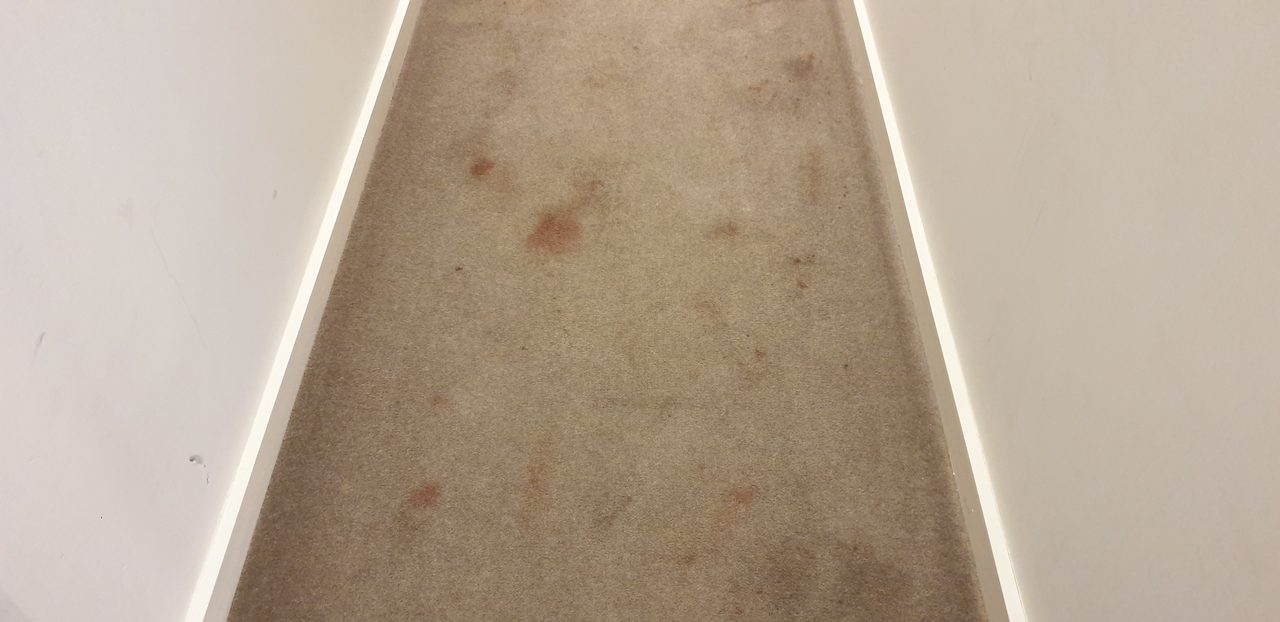
Format alone does not decide the method. Encapsulation suits lightly soiled carpet. Hot water extraction is the deeper clean for heavier soil and many different stains, with each stain pre-treated first. We recommend the method when we inspect your floor.
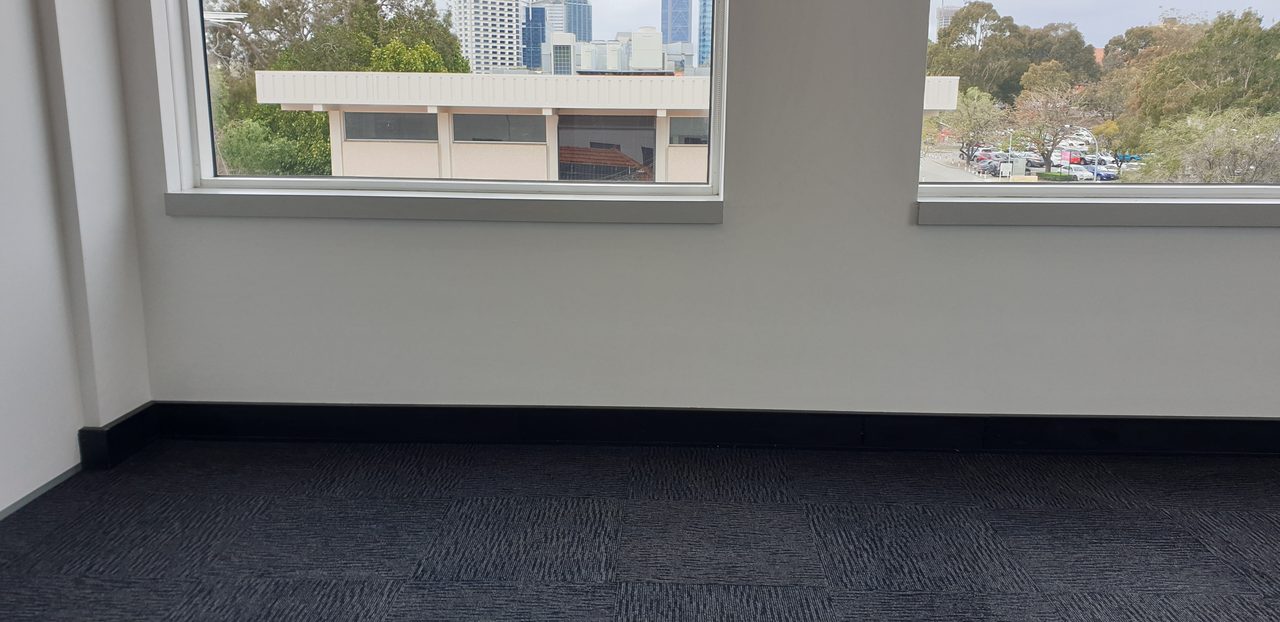
Modular carpet was designed to be moved, and this is the biggest benefit that goes unused in the buildings we visit. Wear in a commercial floor is not even. A narrow lane from the lift lobby to the kitchen carries a large share of the building's footfall, while tiles under a bank of desks or inside a store room may barely be walked on for years. Rotating the two evens out the wear and buys extra years of acceptable appearance.
The catch is timing. Rotation works when you do it early, while the lane tiles are showing the first signs of dulling and pile crush. Swap them then and the wear spreads across the floor and nobody notices. Wait until the lane is ruined and all you achieve is moving a wreck to a quieter spot and putting an obviously fresh tile in a high-visibility position.
The layout pattern matters as well. Quarter-turn installations, where each tile sits at ninety degrees to its neighbours, hide rotation almost completely. Monolithic layouts, where every tile runs the same direction, show a rotated tile as a lighter or darker square because of pile direction.
Wait until the lane is ruined and all you achieve is moving a wreck to a quieter spot.
An attic stock is simply spare tiles from the original installation, kept aside for future repairs. It is the cheapest insurance in the whole fitout and it is routinely thrown out by the first contractor to tidy the store room. If you have spare boxes, label them with the product name, colour, dye lot and installation date, and put that record somewhere that survives staff turnover.
The reason it matters is dye lot drift. Carpet is dyed in batches, and two runs of the same product code made years apart will not be an exact match. Even where the colour is tightly controlled, a brand-new tile dropped into a floor walked on for six years reads as visibly newer, because the installed tiles have softened in colour and lost a little pile height.
Storage conditions count too. Keep spares flat, indoors and out of direct sun. A stack left in a metal store shed through a Perth summer can soften a bitumen backing enough to distort the tile, and a tile that will not sit flat is no use to anyone.
Damage is where the two formats diverge most sharply. A toner spill from a photocopier, a dropped soldering iron in a comms room, an ink cartridge in reception: on a tiled floor these are a ten-minute job. Lift the tile, put down a spare, and the area is back in service immediately with no adhesive cure time and no floor closure.
The same damage in broadloom is a genuine repair. It means cutting out the affected section, sourcing carpet that matches, seaming the patch in with adhesive or heat tape, and accepting that the join will usually be findable. Getting a patch to disappear is skilled work, and it depends entirely on having matching carpet available.
Most of the time there is no matching carpet, which is where the cost escalates. Without an offcut, the realistic choices are living with a permanent mark or replacing the whole room so the floor reads as one surface. That is the difference between a spare tile and a capital line item.
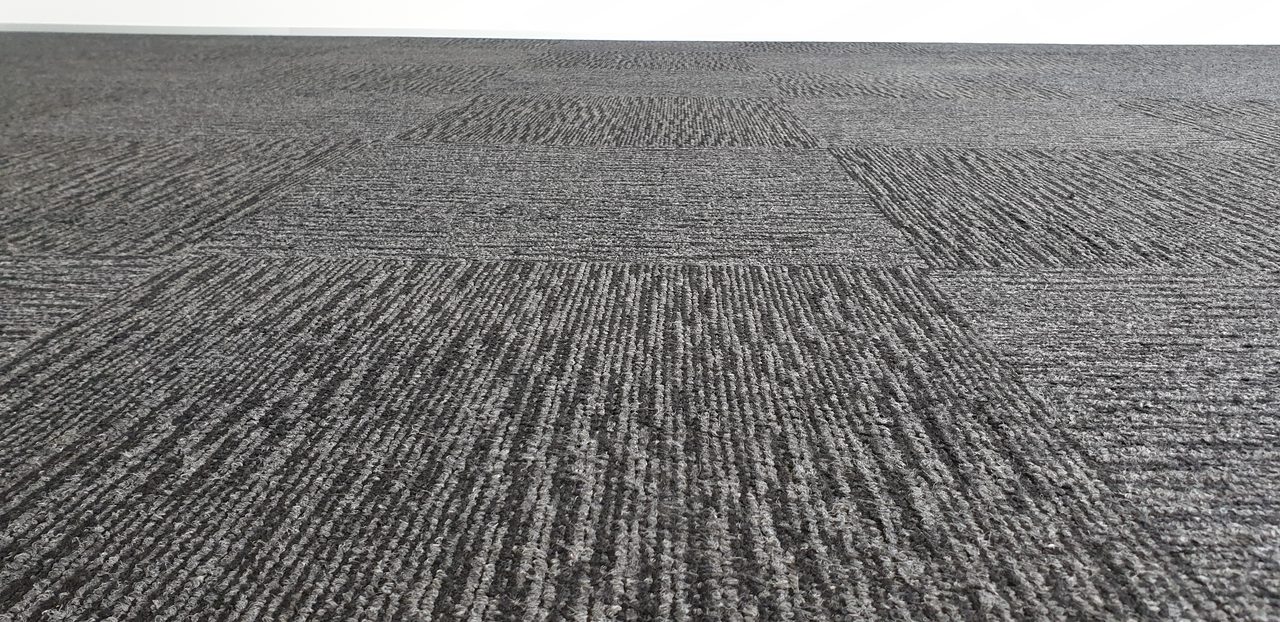
Both formats have characteristic failure modes, and knowing them lets you catch problems while they are still cheap. Broadloom fails at the seams and the edges. A seam under regular trolley traffic can open or peak into a visible ridge, and doorway thresholds fray where the carpet is cut and clamped. Repeated over-wetting can delaminate the secondary backing from the primary, which shows as soft, spongy patches that never quite recover.
Tiles fail at the perimeter and at the corners: edge curl from moisture or heat, corner lift where a vacuum or a chair has caught the edge, and gapping, where tiles migrate under castor traffic and open small gaps against the walls. Tiles also telegraph the slab, so any lump or patch repair beneath a thin tile eventually shows through.
Most of these are fixable if you see them early. A lifting corner can be re-bedded before it tears; an open seam can be re-glued before it frays. What turns a small fault into a replacement is six months of foot traffic working at it.
Ageing looks different in the two formats even when the fibre is identical. Broadloom wears as a continuous gradient, so a traffic lane becomes a soft-edged darker path that fades into the untrodden carpet. It is forgiving to look at, but when the lane finally gives up there is nothing modular to do about it.
Tiles wear as separate squares. A busy lane becomes a run of noticeably duller squares against crisper neighbours, and those hard edges make the contrast more obvious than the same wear would be in broadloom. The upside is that the same edges are what make rotation and replacement possible.
It is worth separating two things that look similar. Pile crush is fibre lying flat under load, and much of it lifts back with proper agitation and a deep clean. Fibre loss and abrasion are permanent. A lot of floors we are asked to look at are written off as worn when they are mostly crushed and soiled. Density and twist in the fibre predict how a carpet ages far better than whether it came on a roll or in a box.
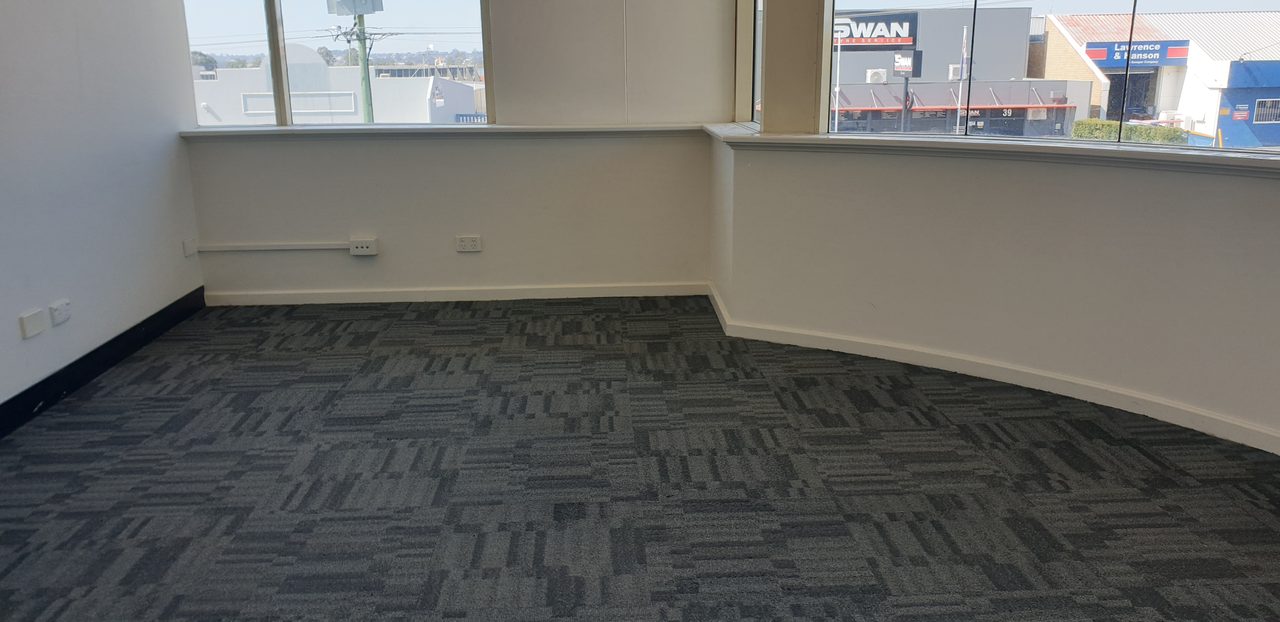
Where quiet matters, the installation method counts for more than the format. Broadloom over a good underlay in a double-stick install is the most comfortable and the best at absorbing impact noise, which is why it still dominates in boardrooms, function rooms, hotel corridors, churches and theatres. We have cleaned theatre carpets at a Fremantle cinema, and in that sort of space the acoustic contribution of the floor is part of why it was specified.
Cushion-backed tiles close much of that gap and give you modularity as well, at the cost of slower drying after any wet clean. Hard-backed tiles direct-glued to the slab are the firmest and the least acoustically helpful, but they are the best surface for castor chairs, trolleys and anything with wheels, because there is no soft layer for a wheel to sink into.
That is the real trade-off in an open-plan office. A softer, more comfortable floor is also a floor that fights task chair wheels and shows their tracks sooner. Many offices resolve it by specifying firmer flooring under the desking and reserving the quieter build for meeting rooms and executive areas.
Make-good is where format turns into money on a spreadsheet. Commercial leases commonly require the carpet to be professionally cleaned before the keys go back, with the premises handed over in a defined condition and sometimes with evidence supplied, but the wording varies a great deal. Read what your own lease actually says well before the exit, and get an ambiguous clause checked by somebody who reads leases for a living rather than assuming the usual wording applies.
Whatever the obligation turns out to be, keeping dated invoices and a record of every clean through the term is the difference between a straightforward handover and an argument over the outgoing condition report.
Wording varies a great deal, so confirm anything ambiguous with your property manager or adviser.
Dated invoices and a record of every clean through the term settle disputes over the condition report.
On tiles, replace damaged squares in the weeks before inspection so the floor reads as one surface.
Leave time for a second attempt on a stain before the keys change hands.
With tiles, the position at exit is strong. Damaged tiles can be swapped out discreetly in the weeks before inspection, the floor reads as consistent, and a professional clean does the rest. Any remaining attic stock is a genuine asset worth raising in the negotiation rather than leaving in the store room.
With broadloom, damage that cannot be cleaned out generally becomes a replacement discussion, because there is no way to isolate it. That is an argument for dealing with spills and burns properly when they happen. It is also an argument for booking the exit clean early enough that if a stain needs a second attempt, there is time before the keys change hands.
There is no universal answer, but there are defensible defaults by space. Ask how much traffic the area takes, how likely damage is, how much presentation matters, and whether the floor will need opening up for cabling or churn during the lease.
Perth conditions push the decision in a few consistent directions. Coastal sand is abrasive, so entry zones take a hammering regardless of format and need barrier matting more than a particular carpet. Red dust from the east and limestone dust from nearby construction grey a floor faster than most managers expect. In a wet winter, buildings with poor entry drainage carry moisture well inside the tenancy, which makes drying performance a real specification criterion.
If your floor is already down, the useful work is knowing what you have. Find out the format, the backing, the product name and whether any attic stock survived, then write it into your building records alongside your cleaning history. That information decides which methods are safe, what a repair will cost, and whether rotation is available to you.
If you are specifying a new fitout, think past the install price. Tiles win on repairability, floor access, wear redistribution and make-good exposure. Broadloom wins on acoustics, comfort and the seamless look some spaces genuinely need. Match the format to how each space will be used rather than applying one answer to the whole tenancy.
| At a glance | Broadloom | Carpet tiles |
|---|---|---|
| Repairs | Cut out and seam in matching carpet | Lift the tile, drop in a spare |
| Wear pattern | Soft-edged gradient along the lane | Duller squares with hard edges |
| Redistributing wear | Not available once the lane goes | Rotate quiet tiles into the lane |
| Typical failures | Seams, thresholds, delamination | Perimeter, corner lift, gapping |
| Acoustics and comfort | Best of all, on underlay | Cushion-backed closes much of the gap |
| Wheeled traffic | A softer floor fights castor wheels | Hard-backed and direct-glued is the best surface |
Check each row against your own floor plan. Most tenancies end up wanting one format at the front of house and the other behind it.
Zoran owns and runs Commercial Carpet Cleaning Perth. The business is an IICRC Certified Firm. On wool floors you are dealing with a WoolSafe Approved Fibre Care Specialist, because that is Zoran's own certification. We are equipped for truck-mounted hot water extraction, low-moisture encapsulation and agitation ahead of extraction for heavily soiled floors. We work across the Perth metro area, seven days a week including after-hours and weekends, with work from $385 (GST inclusive). If you would like a walk-through of your floor and a straight assessment of what it needs, call 0460 815 038 or email commercialcarpetcleaningperth@gmail.com.
How encapsulation polymers trap soil, why the vacuum finishes the job, what each machine does, and where low-moisture cleaning fits a Perth office.
Read ArticleSteam cleaning versus encapsulation for Perth commercial carpets: what each one does at fibre level, real dry times, costs over a year, and how to choose.
Read ArticleDeferring carpet maintenance does not save money, it moves it. Here is the real cost stack, the arithmetic, and how to build the business case.
Read Article