
A Twelve-Month Carpet Maintenance Calendar for Perth Buildings
How Perth's dry summers and wet winters set the timing of vacuuming, encapsulation and deep cleaning, plus budgeting, records and working around tenants.
Read ArticleDeferring carpet maintenance does not save money, it moves it. Here is the real cost stack, the arithmetic, and how to build the business case.
It helps to stop thinking about carpet cleaning as a cleaning expense and start treating it as asset maintenance, because that is what it is. Commercial broadloom and carpet tile are a substantial capital item with an expected service life, and everything you do or fail to do between installation and removal either protects that life or shortens it.
When the floor gives out early, the invoice for new carpet is only the first line. Underneath it sits a stack of costs a facility manager absorbs without ever attributing them back to the maintenance decision made three years earlier.
The single biggest destroyer of commercial carpet is not spills. It is the fine, dry grit that gets tracked in on shoes and settles deep into the pile. Every footstep grinds those particles against the fibre like sandpaper, cutting and scoring the filament from the base up. That is why traffic areas turn dull and matted long before the rest of the floor shows any age at all.
That dullness is not dirt in the way most people picture it. A scratched fibre stops reflecting light cleanly, so it scatters light instead and reads as dull and grey even after cleaning. This is the point that matters most: abrasion is mechanical damage to the fibre, not soiling on top of it. Cleaning removes soil. Nothing removes a scratch.
Vacuuming lifts loose surface soil and should never be skipped, but a light commercial vacuum cannot pull embedded grit out of a dense low-pile carpet. That grit sits at the base of the tuft where airflow barely reaches. Getting it out requires periodic deep extraction with enough pressure and vacuum recovery to flush the base of the pile.
So when a deep clean is skipped, the abrasion never stops. The fibre loss from that year is banked permanently, and you can clean the carpet beautifully in year four and it will still look worse than a maintained floor.
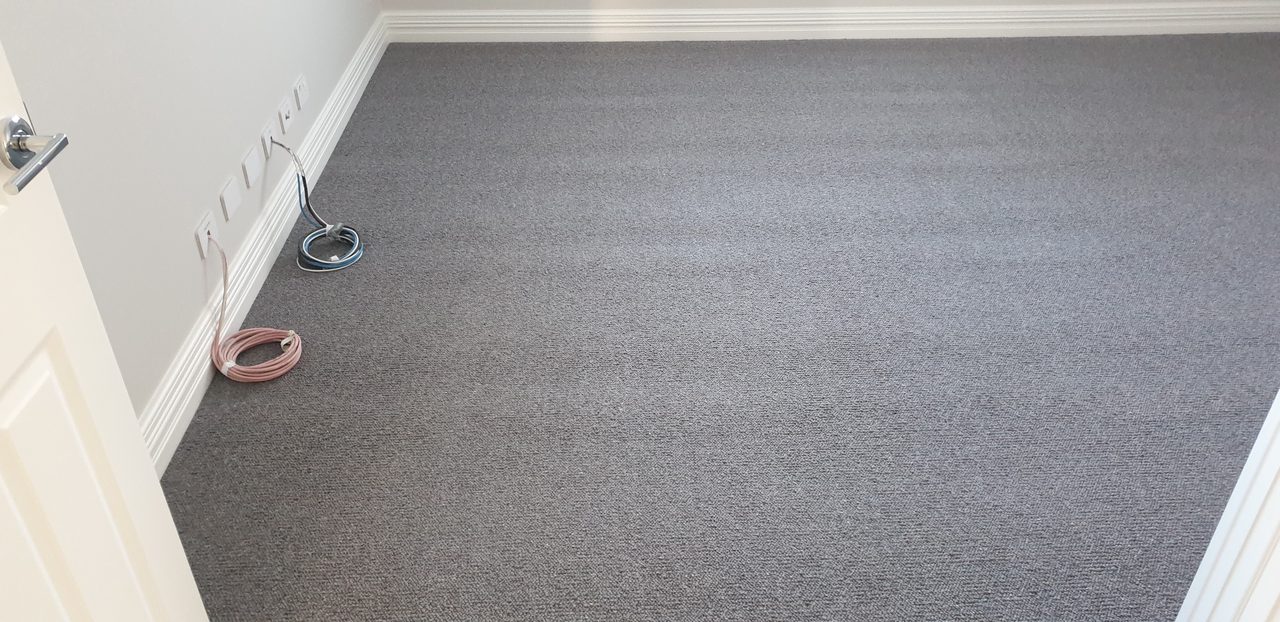
Perth buildings deal with a soil profile that is unusually hard on carpet. Coastal sand is quartz, angular and hard, and it travels a long way inland on shoes, in bags and on the wind. Red dust blown in from the east arrives fine enough to work straight into the pile, and limestone dust from construction across the metro area is gritty and clings to everything within a block of a site.
The hot dry summer months are the abrasive season. Everything tracked in is dry, loose and free to migrate, so soil travels further into the building and deeper into the pile. Entry mats fill quickly and, once saturated with sand, stop catching anything at all.
| Soil | Where it comes from | Why it is hard on carpet |
|---|---|---|
| Coastal sand | Carried a long way inland on shoes, in bags and on the wind | Quartz: angular and hard |
| Red dust | Blown in from the east | Fine enough to work straight into the pile |
| Limestone dust | Construction sites across the metro | Gritty, and clings to everything within a block of a site |
Three different sources, one shared property: every one of them is hard enough to cut the fibre it lands on.
Winter flips the problem rather than solving it. Wet shoes carry a slurry of soil past the entry and print it into the carpet, where it dries in place and bonds. Winter is also when drying is slowest, which is exactly when an untreated spill becomes an odour problem. A building that skips maintenance is exposed in both seasons.
You do not need invented statistics to see the shape of this decision. Compare two costs over the same period. On one side, regular professional cleaning at whatever frequency your traffic justifies, for as many years as the carpet is meant to last. On the other, the full replacement cost of that floor area plus the cost stack above, brought forward by several years.
Work it out for your own building using your own real numbers, then ask a single question: how many cleans fit inside one replacement? For most commercial floors the answer is a lot of cleans, spread over a lot of years. That is the entire argument, and it does not require a fabricated figure to make it.
There is a structural reason this decision keeps going the wrong way, and it has nothing to do with anyone being careless. Cleaning is an operating expense, scrutinised every quarter and held by someone measured on keeping it down. Replacing a floor is capital expenditure, approved through a different process, often in a different year and by different people.
So deferring maintenance produces a visible saving in the budget being watched and creates an invisible liability in a budget nobody is looking at yet. The person who saves the money is very often not the person who later has to find the capital. That is not a moral failing, it is an accounting boundary doing exactly what accounting boundaries do.
| Regular cleaning | Replacing the floor | |
|---|---|---|
| Budget line | Operating expense | Capital expenditure |
| Reviewed | Every quarter | A different process, often a different year |
| Shape of the cost | Small and recurring | Large and one-off |
| Who carries it | Whoever is measured on keeping it down | Usually different people, later |
| Disruption | After hours, no downtime | Areas out of service, furniture decanted |
Deferring a clean does not remove the cost. It moves it across this line, at an unfavourable exchange rate.
The practical fix is to name the transfer out loud. State plainly that the saving is not a saving, that it moves a small recurring operating cost into a large future capital one at an unfavourable exchange rate. Finance people understand that sentence immediately, because it is the language they already think in.
A single skipped year rarely looks like much at the time, and that is what makes it dangerous. The floor is slightly duller, the traffic lanes slightly more defined, the soil load meaningfully higher. Nothing has failed and nothing triggers a complaint.
But the following year starts from a worse baseline. There is more embedded grit in the pile from day one, so abrasion runs faster through the second year than the first. Any spill from the skipped year has had twelve months to oxidise and set, and soil ground into the fibre is harder to release than fresh soil, so the eventual clean recovers less than it would have.
Cleaning removes soil. Nothing removes a scratch.
That is the compounding: each deferral makes the next period worse and the eventual recovery less complete. Two or three skipped cycles in a high-traffic entry can move a floor from maintained to permanently marked. Once it looks bad enough, the internal argument shifts from whether to clean it to whether it is worth cleaning at all, which is how buildings end up replacing carpet that regular cleaning would have kept in service for years more.
First impressions in a commercial space are formed fast, and flooring covers more visual area than almost anything else in the room. A reception with dull, matted traffic lanes tells clients, tenants and prospective staff something you would never choose to say out loud about how the business is run and how carefully it looks after what it owns.
For retail, hospitality and venues this is directly commercial, because the space is part of the product. We have cleaned the auditorium and foyer carpet at a Fremantle cinema, where neither presentation nor turnaround time is a nice-to-have. The same applies to West Perth office receptions and a Midland tyre business.
For offices leasing space, tired common areas make it harder to attract and retain tenants, because prospective tenants read the common property as a proxy for how the whole building is managed. For strata and property managers, presentation at inspection or handover can move a result. Carpet is one of the few maintained assets where the standard of care is visible to everyone who walks in.
Carpet acts as a filter, holding dust, allergens and fine particulate out of the breathing zone. That is a real benefit and one of the reasons carpet still makes sense in offices. But a filter only works until it is full, and a neglected carpet is a full filter disturbed by every footstep across it.
Staff notice this before anyone measures it. Dusty air near a heavily trafficked lane, a faint stale odour in a meeting room, hay-fever-like complaints clustered in one part of the floor. None of it produces a formal report, and all of it drags on how people feel about the workplace.
In healthcare, aged care, childcare and schools the stakes are different again. Cleanliness there is part of duty of care and infection control, not just presentation, and a documented cleaning schedule is part of the evidence trail audits expect. Skipping maintenance in those environments carries a risk that has nothing to do with how the floor looks.
A fresh spill is usually a straightforward spotting job. Left to dry and be walked over for a fortnight, it oxidises, wicks up from the base and bonds to the fibre, at which point it may be a permanent mark rather than a stain. The gap between an easy fix and an impossible one is often just a few days of nobody acting.
The same logic applies with far more force after a water incident. A burst pipe or roof leak extracted and dried properly within a day or two is a manageable event with a known cost. The same water left sitting in the carpet and underlay leads to delamination, persistent odour and damage reaching into skirtings and subfloor. The cost difference is enormous. Response time decides it.
Perth's wet winter makes this worse than most people expect, because ambient drying is slow exactly when leaks are most likely. We are IICRC certified and Woolsafe accredited, and the work divides fairly evenly between floors on a maintenance cycle and the calls that come in the same week something went wrong. What a wet floor gets is decided by the fibre, the backing and how long the water has been standing in it, and that judgement is made on the carpet rather than over the phone.
Two contractual exposures sit quietly behind a neglected floor, and both surface at the worst possible moment. The first is the carpet manufacturer's warranty. Commercial warranties generally assume the floor will be maintained, expect periodic professional cleaning by appropriate methods, and expect something to prove it happened. A wear claim on a floor with no maintenance history is a difficult conversation.
The second is your lease. Most commercial leases oblige the tenant to maintain floor coverings during the term and hand the premises back in a defined condition, fair wear and tear excepted. Fair wear and tear covers the ageing a maintained floor would normally show. It does not comfortably cover damage caused by not maintaining it, and that distinction is where make-good disputes happen.
The uncomfortable version is a tenant who saved a modest amount each year by skipping cleans, then meets a make-good claim for full replacement because the carpet can no longer be brought back. At handover the landlord's position is easy to state and the tenant's is not, because neither side can point to any cleaning record. A tenancy that can produce dated invoices for every year of the term is arguing from evidence, while one that cannot is arguing from assertion, and assertion loses.
If you need approval, the case has to be built in the language of whoever signs it. Nobody in finance is moved by an argument that the carpet looks tired. They are moved by asset life, deferred capital and contractual exposure.
Frame the proposal as protecting an installed asset with a known replacement cost and a defined service life. Show the replacement quote, the cleaning quote, and what regular cleaning costs across the remaining life of the floor. Then point at the lease clause and the warranty condition, because those two documents turn a discretionary spend into a risk mitigation.
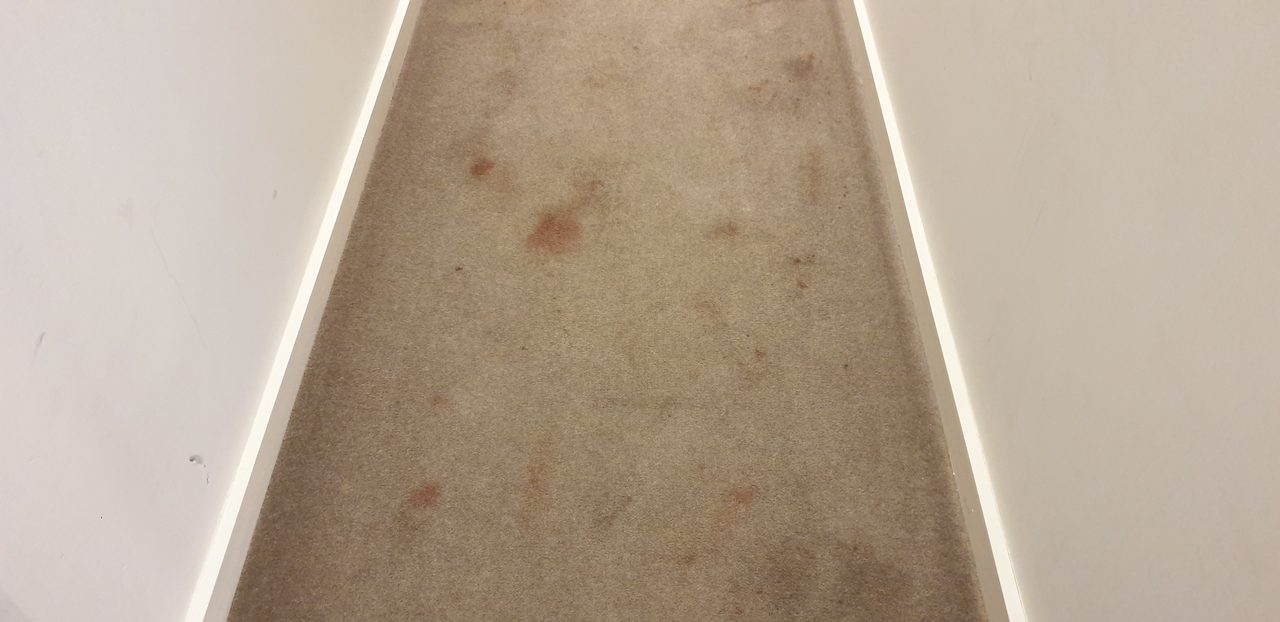
Evidence is what carries it. A photograph of the traffic lanes against a protected area under a desk makes the abrasion argument instantly, without a word of technical explanation. An honest assessment from someone who has actually inspected the floor beats any general claim, which is one reason we quote after a walkthrough rather than over the phone.
You do not need a complicated model. Divide the floor into a few zones by how hard they are actually used, not by how they appear on the plan. Entries, lift lobbies, corridors and reception carry the soil load. Meeting rooms and open-plan areas sit in the middle. Private offices and storerooms sit at the bottom.
Assign each zone a frequency that matches its traffic, then price the whole year in one go. Heavy zones might warrant several visits, mid zones fewer, light zones an annual refresh. That single annual figure goes into the budget and stays stable enough to defend year on year. Each zone's method comes from our inspection. Light soil suits encapsulation, while heavy soil and many different stains call for hot water extraction.
Timing matters as much as frequency. Work scheduled after hours or on weekends means no disruption to trading, staff or students. Commercial Carpet Cleaning Perth is owner-operated by Zoran, open 7 days, and offers after-hours and weekend service across the Perth metro area.
Divide it by how hard each area is actually used, not by how it appears on the plan.
Entries, lift lobbies, corridors and reception carry the soil load; private offices and storerooms carry the least.
Heavy zones several visits, mid zones fewer, light zones an annual refresh.
One annual figure goes into the budget and stays stable enough to defend year on year.
After-hours and weekend work keeps trading, staff and students undisturbed.
If you are not sure what your building needs, a walkthrough and an honest assessment is the starting point. We provide free quotes, with pricing from $385 (GST inclusive) and the final figure depending on the size and condition of the job. Call 0460 815 038 or email commercialcarpetcleaningperth@gmail.com.
Neglecting commercial carpet does not save money. It defers the cost, multiplies it, and moves it into a budget where it will hurt more. Grit keeps grinding whether or not the clean is booked, spills set, and presentation slips.
The unrecoverable part is worth repeating, because it is the part most people underestimate. Soil comes out. Abrasion does not. Every month a floor runs with a heavy grit load, it is spending fibre life that no future clean can give back. That is why when a floor gets maintained matters more than how hard it is cleaned.
Modest, well-targeted cleaning is one of the better-value decisions a Perth facility manager can make. It extends the life of an expensive asset, protects your position under the lease, and turns an unpredictable capital event into a planned operating line. That is a far easier item to defend at budget time than a replacement nobody saw coming.
How Perth's dry summers and wet winters set the timing of vacuuming, encapsulation and deep cleaning, plus budgeting, records and working around tenants.
Read ArticleWhat make good really means for carpet: cleaned, repaired or replaced, fair wear and tear, condition reports, and the timeline that keeps costs down.
Read ArticleMost Perth buildings run their entrance matting too short and pay for it in worn traffic lanes. How the three-zone system works and how to audit yours.
Read Article