
Make-Good and End-of-Lease Carpet Obligations for Tenants
What make good really means for carpet: cleaned, repaired or replaced, fair wear and tear, condition reports, and the timeline that keeps costs down.
Read ArticleHow to run carpet across a portfolio: walk-through scoring, lease recovery, condition reports, vacancy-window cleans and a budget you can smooth.
A facility manager with one building has one carpet story to follow. A property manager with twenty has twenty, all at different chapters: a West Perth floor recarpeted for the last tenant eighteen months ago, an Osborne Park office still on its 2014 tiles, a Fremantle tenancy where nobody can find the ingoing report and the carpet is keeping its own counsel. Most carpet advice quietly assumes a single asset with a single history. Manage a portfolio and that assumption collapses on the first spreadsheet.
The instinct is to impose one rule across everything, because one rule is administrable. The problem is that carpet does not wear by the calendar; it wears by traffic and by the grit that traffic grinds into the pile, and both vary from one building to the next. A uniform portfolio-wide cycle overservices the newest carpet, underservices the oldest, and spends the difference in exactly the wrong places. What a portfolio needs is not a better calendar but a way of letting each building tell you where it sits.
This guide is about running carpet across many buildings at once: triage, lease mechanics, records, contractors, vacancies and budgets. Where your portfolio includes strata-titled buildings, the lobbies and corridors belong to the owners collectively and follow their own funding rules, which we have covered separately in our guide to strata common property. Everything here concerns the buildings and tenancies you control directly.
You are already inside these buildings for inspections, tenant meetings and leasing walk-throughs, so the cheapest data collection available is to attach a score while you are there. Four minutes per building is enough: stand at the main entrance, walk the principal circulation route, look into the worst tenancy you have access to, and write down a number from one to five with the date beside it. The scale matters less than using the same scale everywhere.
| Score | What you are seeing | What it means for the money |
|---|---|---|
| 1 | Uniform colour, pile stands up, entrance matches the corridors | Regular cleaning only |
| 2 | Traffic lanes visible when you look for them, entrance slightly darker | Keep up regular cleaning and recheck in six months |
| 3 | Lanes obvious from the doorway, spots that survived the last clean | Book a restorative clean this budget year |
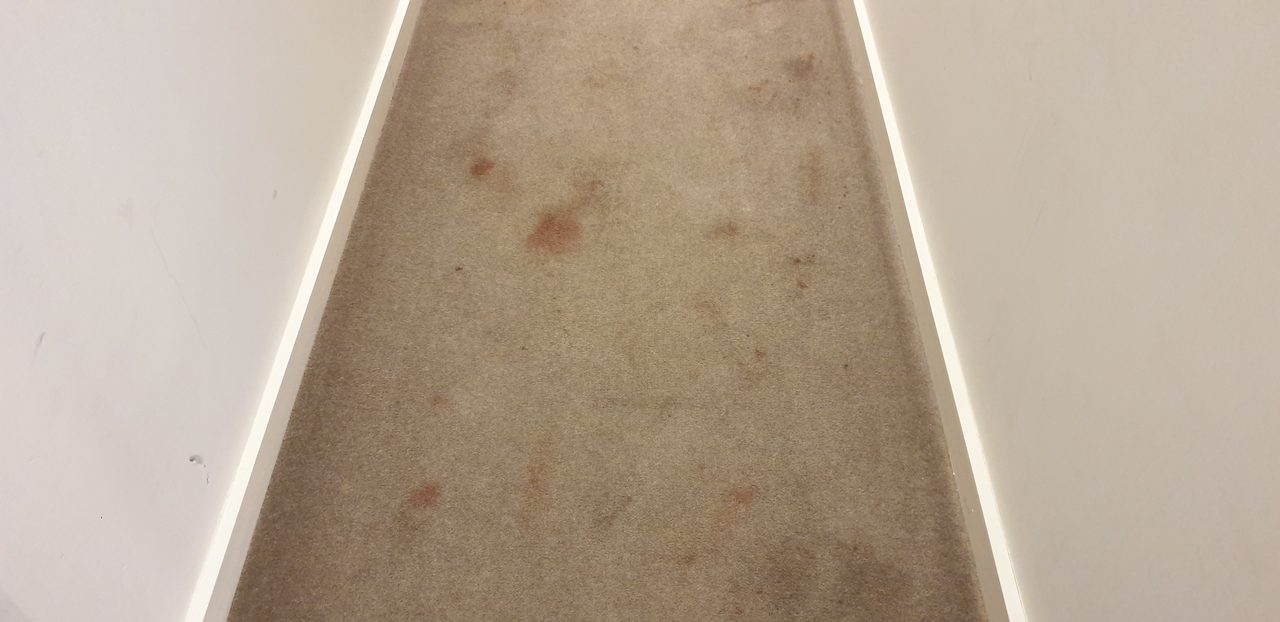
| 4 | Compacted soil in the walkways, shading that cleaning no longer removes | Cleaning buys presentation, not recovery; start pricing replacement |
| 5 | Delamination, rippling, permanent staining across open floor | Replacement in next year's plan; clean only for inspections |
Four minutes per building, dated, in the same hand every time.
Two disciplines make the number worth having. Score the entrance separately from the open floor, because entrances fail first in every building and can drag a score down while the rest of the carpet is fine. And keep the scoring in one hand, or at least on one written rubric, so a three in Cannington means the same thing as a three in Joondalup. A score that drifts with the scorer is just an opinion with a number attached.
Once every building carries a dated score, ordering the spend stops being advocacy and becomes arithmetic. This matters because the building that shouts loudest is rarely the building that needs the money. A tenancy with a vocal office manager and score-two carpet will generate more emails than a quiet Midland warehouse office sitting at score four, and without the scores, the emails win.
Worst-first is the right order for restorative money because of where the cliff sits. Carpet at score four is approaching the point where cleaning recovers appearance but not condition; carpet at score five is past it, and every dollar spent there is a presentation dollar rather than a maintenance dollar. Spending on the fours before they become fives is the highest-return decision in the portfolio, because it defers replacement, and replacement is the number that actually frightens a landlord.
The equally important rule is what worst-first does not mean: it does not mean stripping regular cleaning from the score-one buildings to fund the rescue. Withholding maintenance from good carpet is not a saving, it is a deferred cost accruing interest, and it is precisely how a score-one building becomes a score-three building unnoticed. Restorative money goes worst-first; money for regular cleaning goes to every building.
Nobody reads a commercial lease for pleasure, but the cleaning clauses decide whose money you are spending, so read them before the budget is set rather than after a reconciliation is challenged. The common pattern in Perth commercial leases is that cleaning of shared areas — lobbies, common corridors, lift cars — is a recoverable outgoing spread across tenants, while carpet inside a tenancy is the tenant's to keep clean during the term. But leases vary enormously, gross and net leases treat outgoings differently, and a pattern is only a pattern.
The second distinction worth holding onto is maintenance against capital. Cleaning is maintenance of an existing asset and generally sits comfortably in recoverable outgoings where the lease allows for it. Replacing carpet is capital expenditure, and most leases will not let you recover it through outgoings no matter how the invoice is worded. Trying blurs a line that tenants' accountants are paid to notice.
Where portfolio managers actually lose money is less dramatic than a disputed reconciliation. It is paying for tenancy cleans the lease already obliges the tenant to fund, because arranging the work was easier than enforcing the clause; and it is absorbing damage costs that were recoverable, because nobody documented the cause while the evidence was fresh. Both leaks close with process rather than argument.
Fair wear and tear is the decline that happens to carpet even under a careful tenant: traffic lanes forming along the desks, uniform dulling, the entrance darkening faster than the floor behind it. That is the landlord's slow cost, priced into the rent. Tenant damage is different in kind, not merely degree — the planter box that sat leaking on carpet for a season, drag gouges from an unpadded relocation, a dye spill, an iron. Wear arrives everywhere, gradually; damage arrives somewhere, on a date.
The distinction is usually settled at exit, when the tenant's make-good obligations fall due — we have written a full guide to that from the tenant's side of the table. From your side, the job is simpler and starts years earlier: know what the make-good clause actually requires of carpet, and hold the evidence that separates the tenancy's damage from the building's ordinary ageing. Which brings us to the paperwork that decides every one of these conversations.
Almost every carpet dispute at the end of a lease is really a dispute about what the carpet looked like at the beginning, and only one party is in a position to hold the answer in advance. A condition report with dated photographs — taken at ingoing, repeated at periodic inspections, closed out at exit — is the currency both sides trade in. Without it, the argument is memory against memory, and memory reliably favours whoever is not paying.
The habit that gives the record its force is the same viewpoint, repeated. Two photographs taken from the same doorway three years apart settle in one minute what a month of correspondence cannot, because the change is visible rather than described. It is the same logic that makes before-and-after photographs persuasive: the pair does the arguing. A folder of miscellaneous carpet photos, undated and taken from wherever the photographer happened to be standing, is nearly worthless by comparison.
Portfolios accrete contractors the way sheds accrete tools. Every building arrives with an incumbent, every incumbent has a relationship with someone, and five years later you are managing six cleaning suppliers with six invoice formats, three definitions of a deep clean and no way to compare a job in Midland with a job in the CBD. None of them is necessarily doing anything wrong. The arrangement is what is wrong.
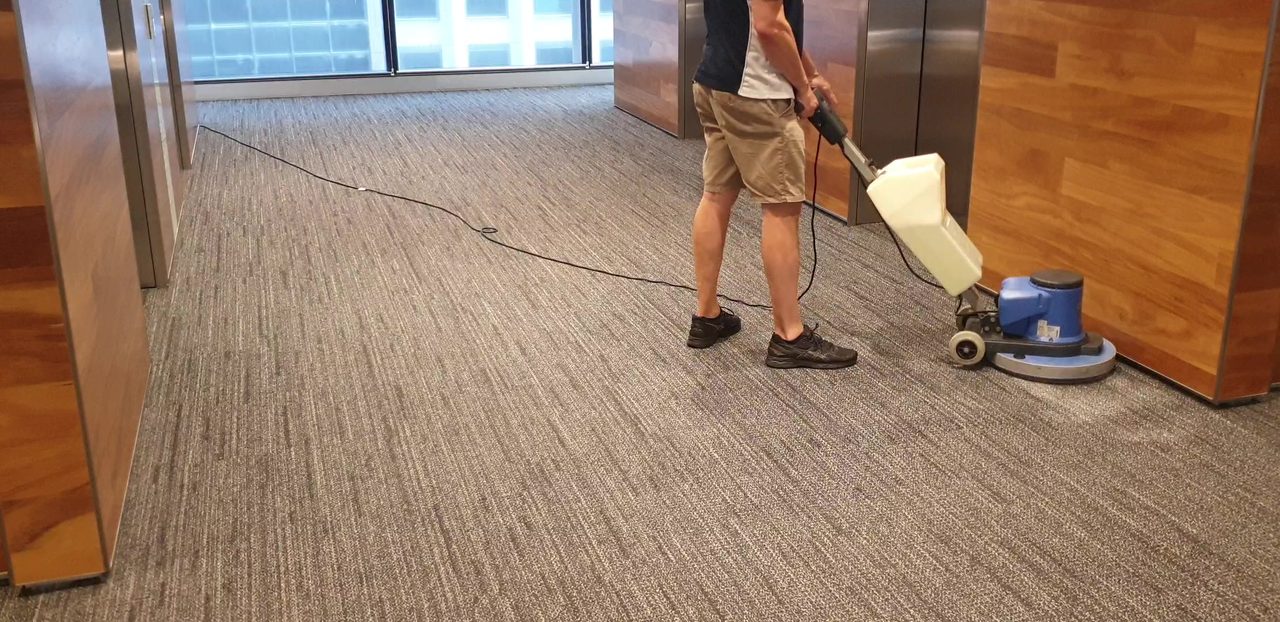
Consolidating commercial carpet cleaning with one contractor across the portfolio buys three things that per-building arrangements cannot. Pricing leverage, because twenty buildings on a schedule is a different proposition from twenty separate jobs and is priced accordingly. A single standard, because the same technicians and methods produce the same result in every building rather than six local interpretations. And one report format, so every visit in every building files identically, and your walk-through scores have an independent record to sit beside.
The caveats deserve airtime too. A portfolio spread from Fremantle to Joondalup needs a contractor genuinely willing to travel it, not one who quietly deprioritises the far ends. And consolidation should never mean the scoring stops: your own four-minute number is what keeps any incumbent honest, including us. Consolidate the work; keep the verification.
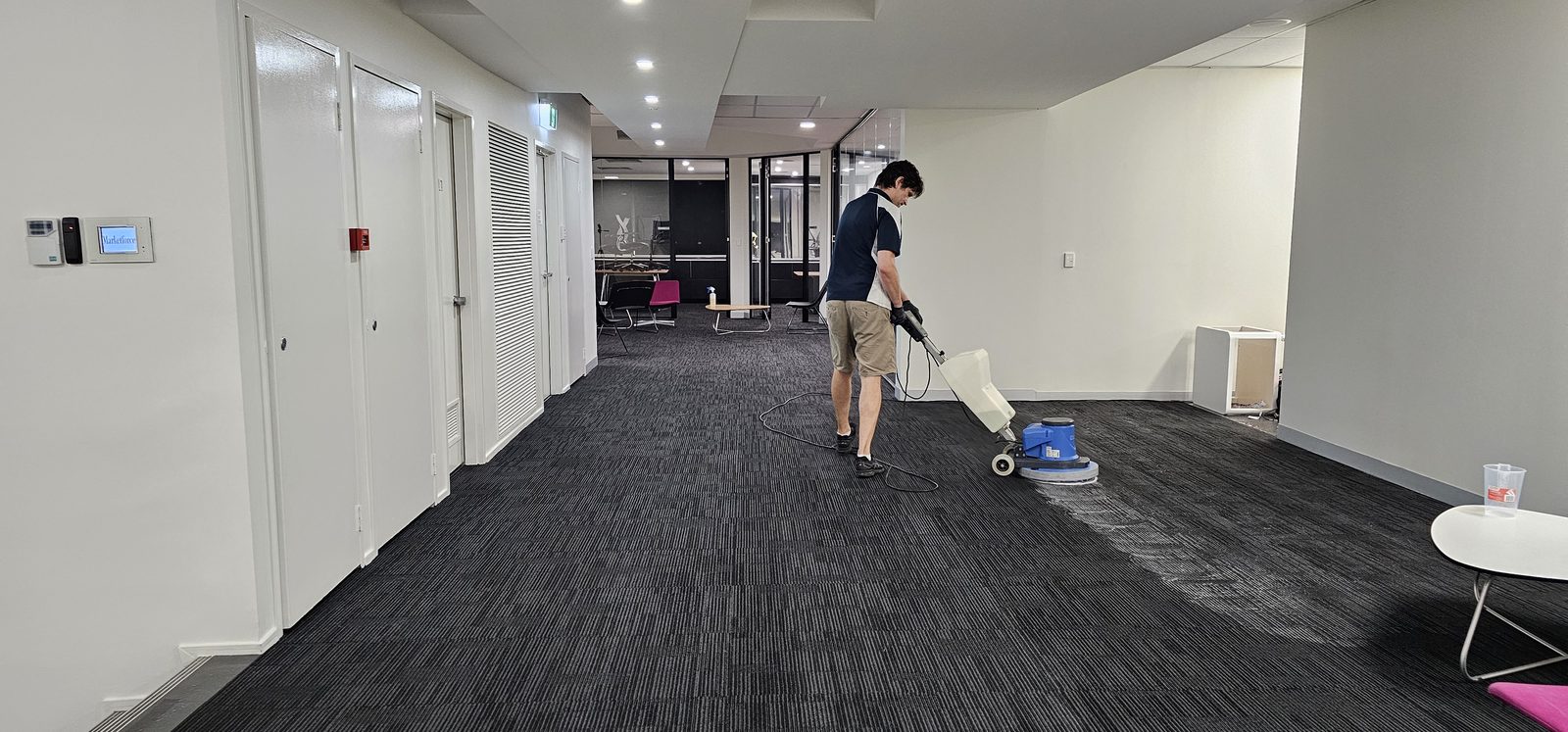
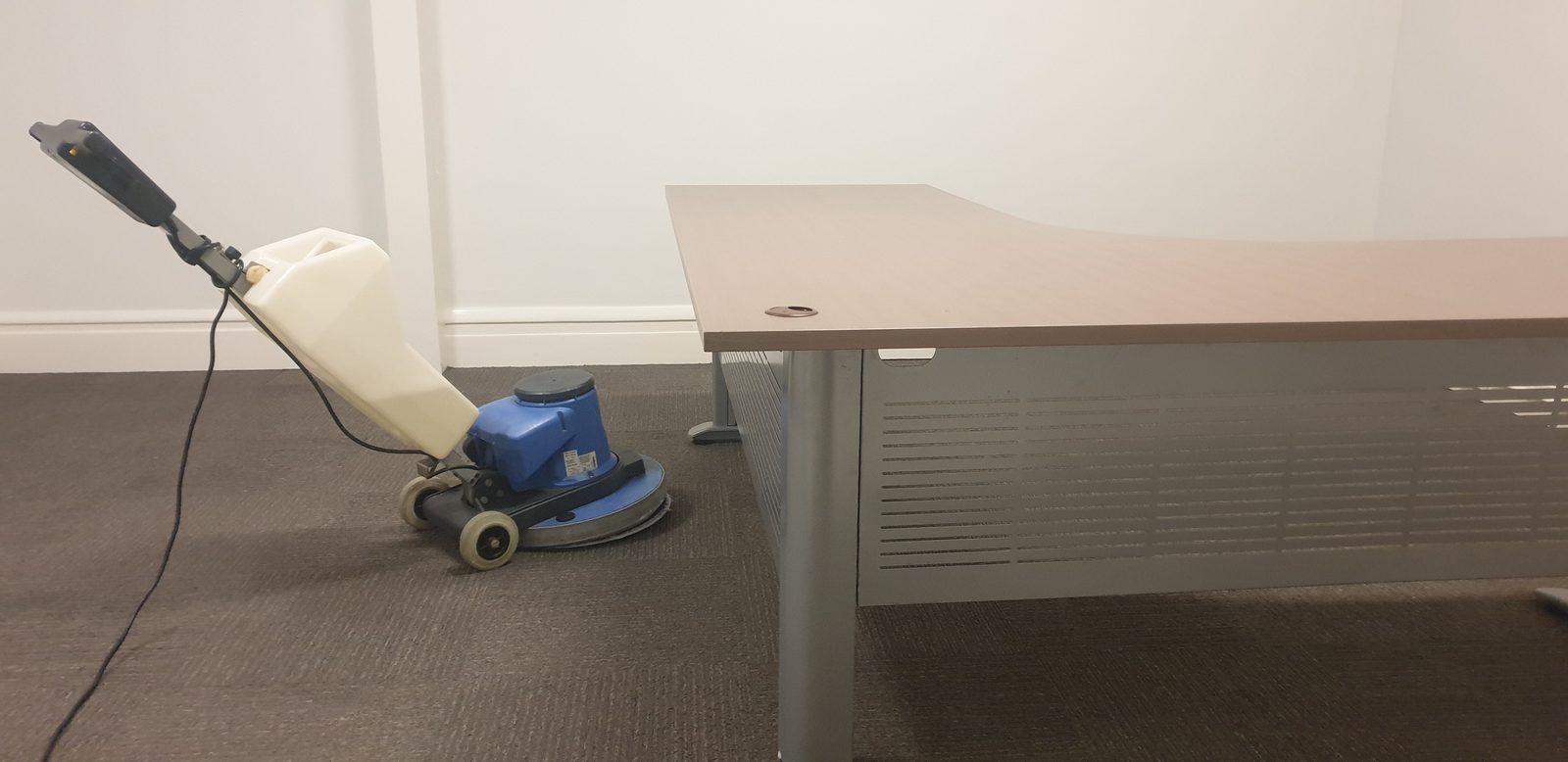
In an empty tenancy nothing has to be worked around. No furniture to lift and shuffle, no after-hours premium, no drying deadline before staff arrive at eight — the doors can stay locked and the windows open for as long as the carpet needs. It is the one slot where truck-mounted hot water extraction can run at full depth across every metre of the floor, including the areas that have sat under desks and filing cabinets since the fit-out went in.
The presentation argument is at least as strong as the technical one. Prospective tenants walking a vacancy cannot assess the chiller service history or the roof membrane, so they read what they can see, and carpet is the largest surface in the room. Soiled walkways in an empty tenancy suggest a tired building and an absent manager; a uniformly clean floor says the opposite, at a cost that barely registers against a single week of leasing incentive.
A prospective tenant cannot see the roof membrane or the chiller logs, but they walk the carpet within three steps of the door.
The mechanics: book the clean the day the vacating tenant confirms an exit date, and sequence it last, after the make-good trades have finished. Painters, electricians and defit crews undo carpet cleaning comprehensively, so a tenancy often needs a presentation clean even where the outgoing tenant's own make-good clean was done properly, simply because the trades came through afterwards. Time it just ahead of leasing photography and the first inspections, and in a wet June allow a day of genuine drying with some airflow before the agent starts walking people through.
The budget that works is built from the bottom up: a figure per building per year, driven by its score, then aggregated. Regular cleans for every building, restorative money for the fours and fives and an allowance for incidents. To put honest numbers against each line you need a current sense of what cleaning costs per square metre by method, and quotes gathered against a written specification rather than a phone description. A budget assembled as one round figure for the whole portfolio is not a budget; it is a guess wearing a spreadsheet.
Smoothing matters almost as much as the total. A portfolio that books everything into June to spend the budget before year end, or crams the work into the December shutdown because tenants are away, is competing with every other manager doing the same and paying peak prices for rushed slots. Spread the scheduled work across the calendar instead. Carpet cleaned in winter dries with air movers running. A February evening in Perth dries almost anything by morning.
Hold a modest contingency for the events that do not consult the calendar — a burst flexi hose in a tenancy kitchen, an unplanned vacancy that needs presenting within a fortnight. If the contingency goes unspent, it becomes the happiest line in the reconciliation: money that pulls next year's worst building forward a quarter. Never cut regular cleaning to top up the contingency, because a year without regular cleans costs more than it saves.
Most of the carpet correspondence a portfolio generates is the same handful of emails sent to different tenants, so each can be written once and reused for years. Three templates cover nearly everything, and templating them does something beyond saving time: it makes your requests consistent across every tenant in every building, which is what makes them defensible. Tenants compare notes.
Sent the day a tenant reports a spill. It tells them to blot with white paper towel and never scrub, to keep supermarket foam cleaners away from commercial carpet, and who to call for a professional spot clean. Quietly, it also creates a dated record of the incident, which matters if the spill resurfaces as a stain claim at exit.
Sent the day a tenant gives notice. It states what the lease requires of carpet at handover, notes that dated ingoing photographs exist and will be the benchmark, and asks for a receipt for professional cleaning. Expectations set early are met; expectations set in the final week are argued.
Sent to tenants ahead of each scheduled clean: the date, the hours, how long the floor will be damp, and what to lift off it before the technicians arrive. Written once, dates changed forever.
A fourth email writes itself if the contractor reporting is set up the way the earlier section describes: the annual summary to each landlord, attaching the visit reports and the year's scores for their building. It takes minutes to assemble from good records, and it answers in advance the question landlords ask most, which is what the maintenance line actually bought.
The sequence for taking control of a portfolio's carpet is front-loaded but short. Over the next month of visits you were making anyway, score every building and date the scores. Pull the cleaning, outgoings and make-good clauses from each lease into one summary sheet, so the who-pays question is answered once rather than per incident. Then audit the condition reports: note every tenancy with no ingoing photographs, and establish a dated baseline at the next periodic inspection. A baseline cannot recreate the ingoing record, but it caps how far any future argument can range.
With the scores and the leases in hand, the rest follows in order: one written specification, quotes gathered against it, restorative work booked worst-first, regular cleans spread across the year, and the three templates saved where your successor will find them. None of this is glamorous. All of it is the difference between carpet as a recurring argument and carpet as a managed line item.
If you would rather test this than adopt it, pick the two buildings that generate the most complaints and walk them properly before the next budget round. An hour on site per building is usually enough to separate the floors that need regular cleaning from the floors that need replacing, and it turns an argument about carpet into a written number somebody can approve. Ask for a walk-through and we will meet you there.
What make good really means for carpet: cleaned, repaired or replaced, fair wear and tear, condition reports, and the timeline that keeps costs down.
Read ArticleHow WA strata schemes fund common area carpet cleaning, where the lot boundary sits, and how to write a specification that makes three quotes comparable.
Read ArticleDeferring carpet maintenance does not save money, it moves it. Here is the real cost stack, the arithmetic, and how to build the business case.
Read Article