
The True Cost of Neglecting Commercial Carpet Maintenance
Deferring carpet maintenance does not save money, it moves it. Here is the real cost stack, the arithmetic, and how to build the business case.
Read ArticleHow WA strata schemes fund common area carpet cleaning, where the lot boundary sits, and how to write a specification that makes three quotes comparable.
It usually starts as a cleaning enquiry. Someone notices the lobby carpet has darkened down the middle, a quote gets emailed around the committee, and the real discussion begins. Is this an administrative fund expense or does it need owner approval? Who signs it off? And why is one quote half the price of the other?
We clean common areas across the Perth metro area for strata managers, building managers and councils of owners. The buildings that handle it well are rarely the ones with the largest budgets. They are the ones where the common property boundary has been settled, the cleaning sits in the budget as a named line item, and the specification is clear enough that three quotes can genuinely be compared.
This article deals with the money, the approvals, the record-keeping and the access realities rather than cleaning chemistry. We clean carpet; we do not read leases for a living. The specifics of your scheme, its by-laws and the boundaries recorded on your plan are for your strata manager to confirm.
In most schemes, the carpeted areas everybody uses and nobody owns exclusively are the responsibility of the owners as a whole. That is the test worth applying first: if a resident, a tenant, a courier and a visiting tradesperson all walk on it, it is almost certainly common property, and almost certainly the busiest carpet in the building.
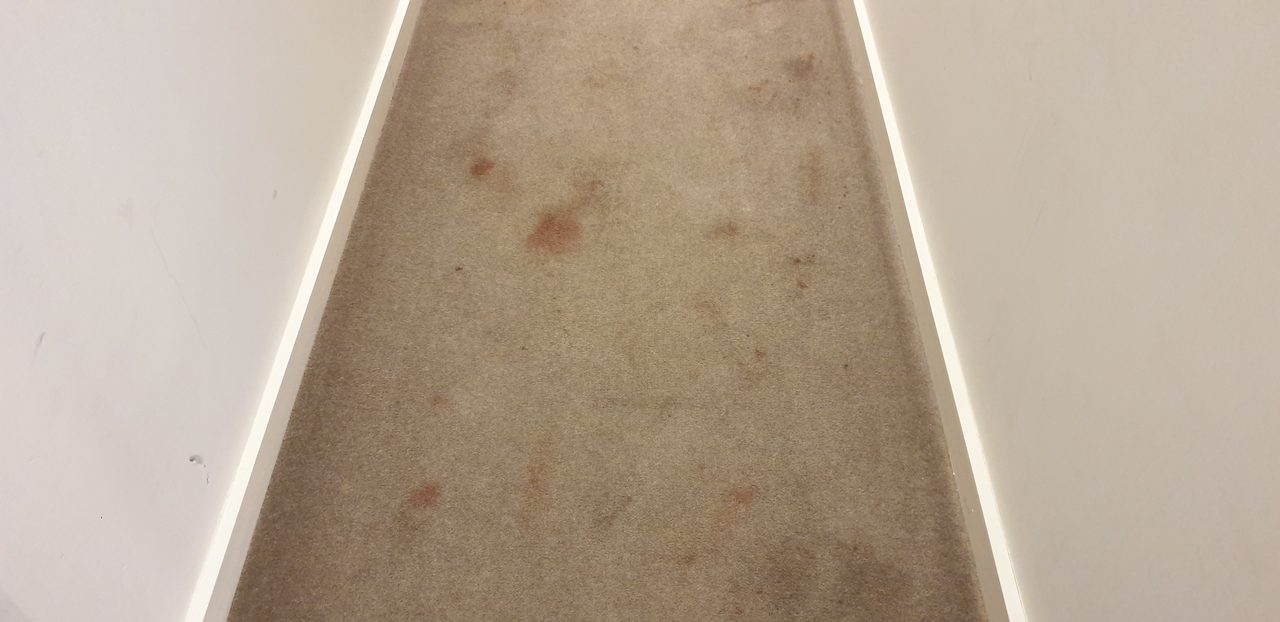
These areas carry a soil load out of all proportion to their floor area. A ground floor lobby in a Perth apartment building takes coastal sand in summer, wet sand in a wet July, red dust when the easterlies blow, and limestone dust whenever there is construction nearby. It arrives on shoes and concentrates in the first few metres inside the door and in the lift car, which is why those two areas look tired first.
The boundary decides who pays, so be precise about it before a job is booked rather than after an invoice lands. Carpet inside a lot's front door is normally the owner's problem and the corridor side of that door is normally the scheme's. The trouble sits in the cases either side of that line.
Exclusive use arrangements can hand a section of corridor or a private lobby to one lot, usually shifting the maintenance obligation with it. Damage caused by an identifiable party — a lot owner's overflowing washing machine, a removalist dragging a wardrobe, a contractor spilling paint — is often recoverable from them rather than absorbed as a general expense. In commercial strata, the point where a tenancy fit-out meets the common lobby is frequently unclear on the plan even when it looks obvious in the flesh.
| Carpet or event | Normally paid by |
|---|---|
| Inside a lot's front door | The lot owner |
| The corridor side of that door | The scheme |
| Corridor or lobby under exclusive use | Usually the lot holding it |
| Damage by an identifiable party | Often recoverable from them |
| Where a fit-out meets the common lobby | Frequently unclear on the plan |
The last three are the ones that produce arguments. Your strata manager confirms what your plan and by-laws say.
Two habits save a lot of argument. Settle the boundary in writing, ideally in the minutes, before the work happens. And ask your contractor to quote and invoice lot work separately, so a visit that crosses the boundary does not produce one invoice nobody can allocate. We split quotes by defined area for exactly this reason.
Broadly, schemes run two pots of money. The administrative fund covers recurring operating costs budgeted annually. The reserve or sinking fund covers long-life capital items forecast years ahead, so that when they need replacing the money is already there and owners are not hit with a sudden special levy.
Cleaning maintains an asset the scheme already owns, so in most schemes it belongs in the administrative fund alongside general cleaning and lift servicing. Replacing common area carpet is capital, so it belongs in the reserve fund forecast. Keeping the two separated is not just bookkeeping tidiness; it is what lets you argue that a modest annual expense protects a much larger future one.
The awkward cases are the middle ground. A one-off restorative clean of badly neglected carpet, a restoration after a water event, or a deep clean forming part of a scheduled lobby refurbishment can each be argued either way, and insurance may be in play if an incident caused the damage. Put those to your strata manager before committing, because the fund the money comes from can change the approval you need.
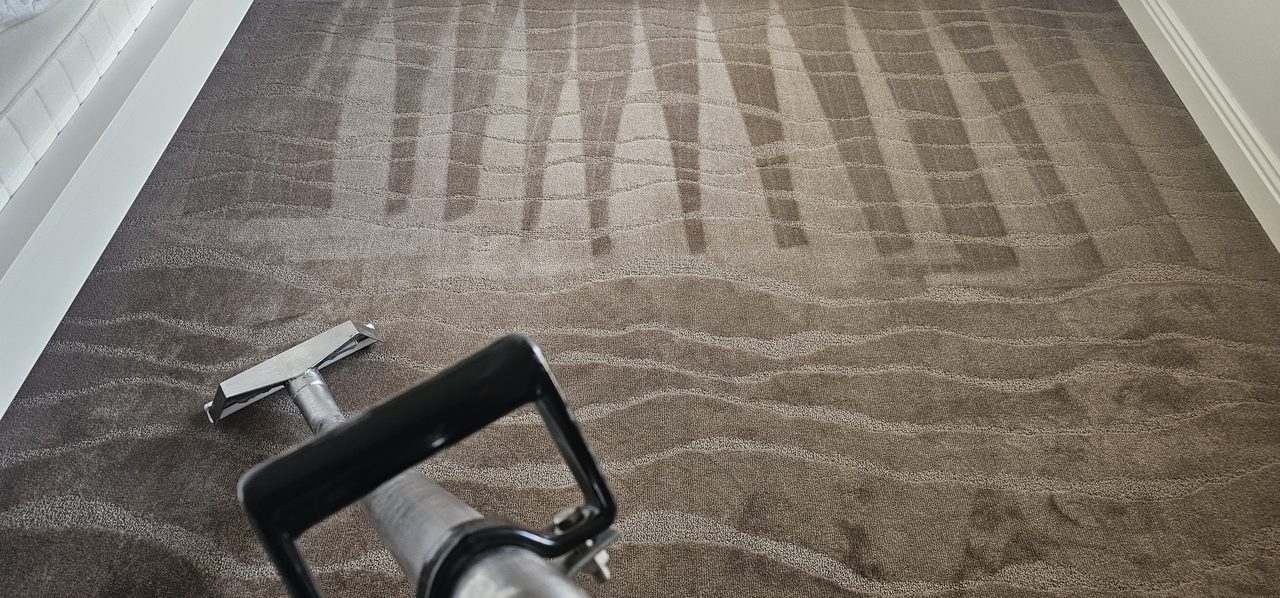
The mechanism matters, because it makes the budget argument honest rather than promotional. What destroys commercial carpet is not spills, it is fine dry grit. Shoes drive those particles into the yarn and saw at it from the base up, which is why traffic areas flatten and darken while carpet two metres either side still looks nearly new. Vacuuming lifts loose surface soil but will not reach grit that has settled into a dense commercial pile; that takes periodic deep extraction.
The consequence for a strata budget is specific. You cannot replace only the worn lane through a lobby, because the new carpet will not match, so the whole area goes. A lane that fails early pulls forward the replacement of a far larger floor area, and a far larger draw on the reserve fund than the lane itself would suggest.
Frame it plainly at committee level. Regular cleaning is a real recurring cost and it will not make carpet last forever; what it does is remove the abrasive shortening its life. Over the life of a reserve fund forecast, a small annual line item that defers a large capital one is an easy proposition, and the result is visible to every owner walking through the front door.
The single most useful thing you can do is get a quote before the budget is drafted, not after. A committee approving an expense already inside the budget is answering an administrative question. The same committee approving an unbudgeted expense is answering a political one, and the answer is far more often "let us look at it next year".
Name the item on its own rather than folding it into general cleaning. "Common area carpet maintenance" as a discrete line survives scrutiny better than a lump sum, because owners can see what it buys, and it makes year-on-year comparison possible, which matters when you are defending the number at a third AGM in a row.
The line item converts every future clean from a decision into a routine act of administration.
Once the budget is approved at the AGM, the committee can generally act within it without going back to owners for each visit, and that is the whole point. The line item converts every future clean from a decision into a routine act of administration. Without it you are chasing an out-of-session approval or deferring, and deferral is how a lobby reaches the state where cleaning no longer fixes it. Where you can, get pricing on a fixed term so the budget figure holds for the year.
Most strata quote comparisons fail before the quotes arrive, because the request said "please quote to clean the common areas". Three contractors will interpret that differently and price it honestly, and you end up comparing three different jobs. A specification need not be long; it needs to remove the interpretation.
Start with a schedule of areas by level, each with a measured square metre figure. Measure once and reuse the figures; it takes an afternoon and permanently improves every quote you receive. Then state frequency per area, because a lobby and a fifth floor corridor rarely justify the same cycle, and say what happens between visits when something gets spilled.
Be explicit about the parts contractors quietly drop. Stair edges and nosings take far longer per square metre than open floor and are the first thing to vanish from a thin quote. Say whether furniture is moved, what call-out response time you expect, and what hours the work may be done in.
When one quote comes in dramatically below the others, the usual explanation is scope rather than efficiency. One contractor has priced low-moisture encapsulation on the lobby only; another hot water extraction across every corridor. One has counted the stairs; another has not. One includes two spot call-outs a year; another charges each at a minimum rate. One has quoted after-hours access; another assumes a weekday morning and will re-price once told the building requires evening work.
GST is the other frequent mismatch. A figure quoted exclusive of GST sitting beside one quoted inclusive looks like a real difference when it is not. Our pricing starts from $385 GST inclusive, and we quote per defined area so a committee can line our numbers up against someone else's without doing arithmetic first.
List the areas, the method, the stairs, the call-outs and the access hours each quote actually includes.
Convert every figure to GST inclusive before you compare them.
Work out the price per square metre per visit for each defined area.
Total the same areas at the same frequency across a full year.
Normalising is simple. Convert every quote to a rate per square metre per visit and to an annual total for the same areas at the same frequency. Once the scope is genuinely identical the cheapest quote may well be the right one, since plenty of good operators are competitive. You cannot know that until the comparison is fair, and a committee that awards on an unfair one usually pays in variations later.
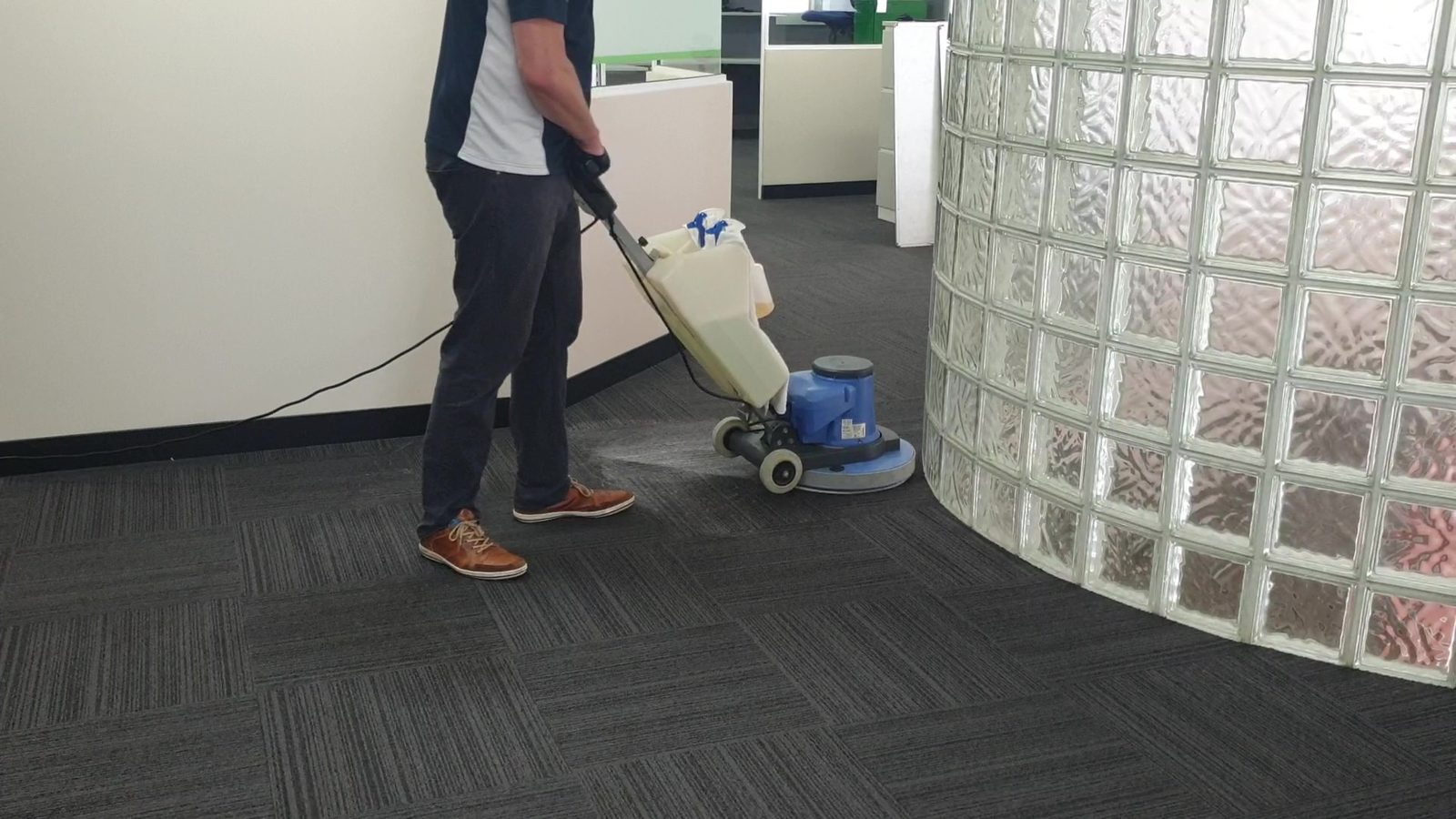
On paper a strata clean is straightforward. In practice the building decides how it runs. Truck-mounted hot water extraction needs the van within hose reach, meaning the loading dock or the closest legal kerb, and basement height clearance in CBD towers and apartment buildings frequently rules a truck-mount out entirely. That changes the method, and a contractor who has not looked will discover it on the day.
Lifts are the other constraint. Above the floors our truck-mount's hose can reach, we carry portable extraction equipment up in the lift. Cleaning the lift car itself means taking it out of service, which in a single-lift building means notifying residents properly and working fast. Protection blankets, a service key and a booked window are all worth agreeing in advance.
A commercial tower can usually be cleaned overnight. A residential building cannot. Truck-mounted equipment running at the kerb below bedroom windows at six in the morning will generate complaints regardless of the result, and most residential schemes have expectations, sometimes formal and often customary, about working hours. Mid-morning to early evening is generally the workable window, and it is worth confirming what your building permits.
You also cannot close a corridor the way you close an office. Circulation space has to stay usable, so the approach is working half a width at a time, keeping a dry path, and putting wet floor signage at both ends and wherever someone enters, including lift doors and stair landings. Residents will walk on wet carpet if you let them, usually carrying shopping.
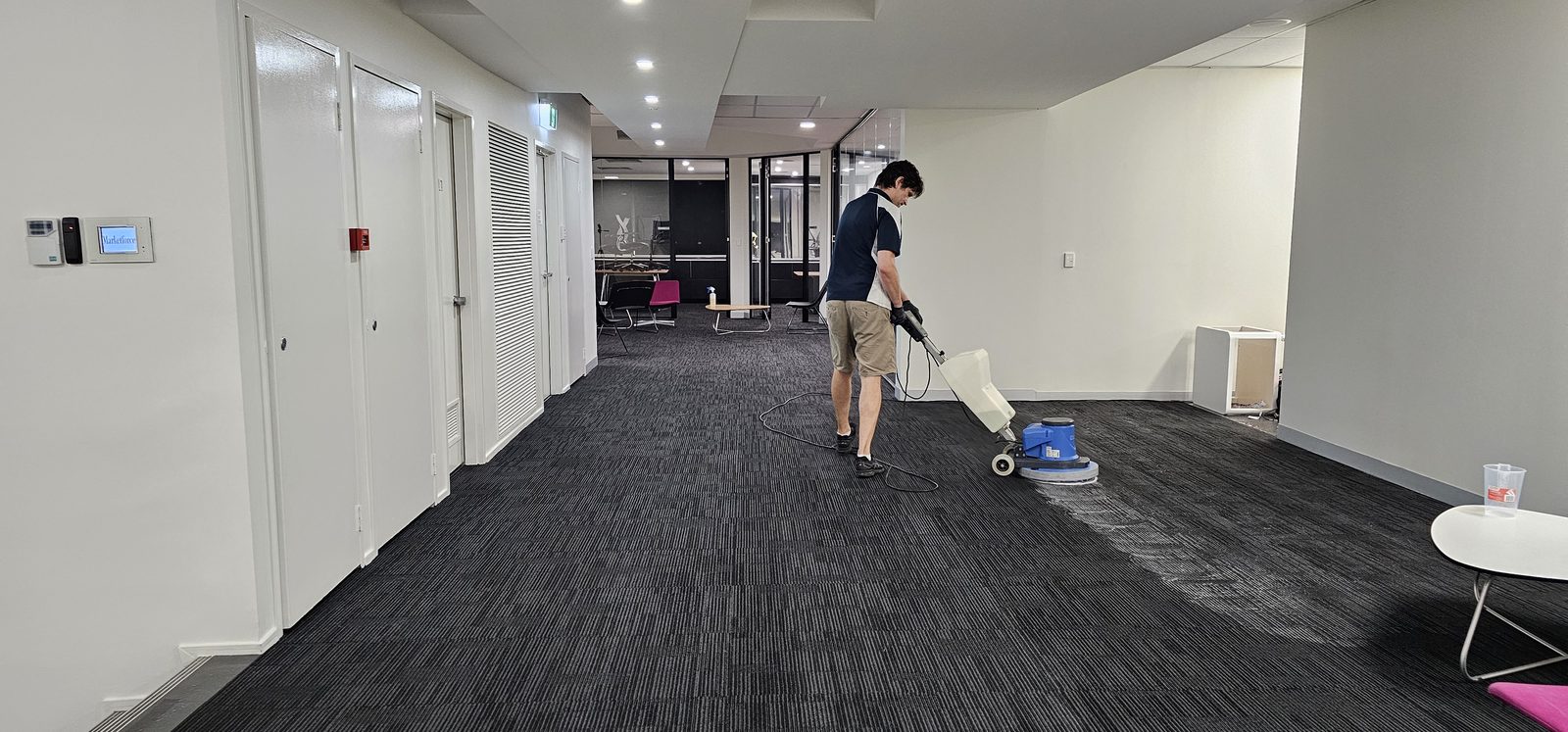
Drying is the constraint people underestimate in a Perth winter. Internal corridors have no sun, often no cross-ventilation, and in July they hold moisture for a long time. In winter we run air movers in internal corridors to keep the drying on track. Where corridor carpet is lightly soiled, low-moisture encapsulation is often the method we recommend at the inspection.
A hot water unit lets go on level four at six on a Friday evening and the corridor is saturated. This is where governance either works or does not. Most schemes give the strata manager a delegated emergency spending limit precisely so nobody waits for a committee meeting while water migrates. Know that limit before you need it, and who is called when the figure exceeds it.
The sequence matters more than the paperwork in the first hour. Make the area safe, stop the water and get extraction started, because the cost curve steepens quickly. Water travels under skirtings, into lot doorways and down through slab penetrations. Carpet extracted promptly is a manageable event; left two days it becomes a delamination and odour problem with a much larger bill attached.
Photograph everything before extraction starts and record the cause, because the cause determines who ultimately pays. A building services failure usually sits with the scheme and may be an insurance claim. A lot owner's appliance is often recoverable from that owner, and a contractor's error belongs to their insurer. A spill in a lift lobby follows the same logic on a smaller scale, and deserves prompt attention for a different reason: it is the one piece of carpet every owner sees. We carry water damage extraction and structural drying capability, are insured to $20 million, and work seven days.
At some point an owner will ask what the carpet line item actually bought. It is a fair question and deserves better than a recollection. The buildings where this is a non-event are those where the record was added to after every visit, not assembled the week before the AGM.
Make reporting part of the specification rather than a favour asked for later. A short dated report per visit naming the areas, the square metres, the method and anything the technician noticed is enough. Before and after photographs from the same viewpoint carry more weight at a meeting than any description, and give you an honest year-on-year picture of whether the cleaning is holding the standard.
Store it with the strata records, not in an individual's inbox. Committees turn over and managers change; the value of the record is that it outlasts the people who created it.
A building with retail or food tenancies at ground level and apartments above generates wildly uneven soil loads. The ground floor lobby may take more traffic in a week than a residential corridor takes in a year, and food tenancies add grease and dropped food tracked into the lift car. Cleaning both at the same frequency is either wasteful upstairs or inadequate downstairs. Setting a cycle for each area puts the money where the soil is.
Cost apportionment in these schemes can also differ from a purely residential building, since usage varies so sharply between the two components. How that is handled depends on your scheme's structure and by-laws, so it is one for your strata manager rather than something to assume.
| Ground floor lobby and lift car | Residential floors above | |
|---|---|---|
| Traffic | More in a week than a corridor takes in a year | Far lighter |
| Extra soil | Grease and dropped food from food tenancies | Ordinary foot traffic |
| One cycle for both | Inadequate | Wasteful |
Set the cycle per area, not per building.
Commercial strata brings a third party in. Tenants generally carry fit-out and internal cleaning obligations under their lease, sitting alongside the strata company's obligations for common property, so one corridor can have a landlord, a tenant and the scheme all holding an interest. Mapping that once, in writing, prevents the familiar situation where everybody agrees the carpet needs cleaning and nobody agrees whose budget pays.
The work here is front-loaded and then largely runs itself. Measure and schedule your common areas by level so you have square metre figures that never need recalculating. Settle the boundary in writing with your strata manager, including any exclusive use areas, so the allocation question is answered before an invoice tests it. Write one specification and send the same document to every contractor you approach.
Then get the quotes early enough to reach the draft budget, present the item as a named line, and set the reporting format at the start so the record builds itself. That sequence turns carpet from a recurring argument into a managed asset, and gives whoever sits on the committee in three years a file that explains itself.
If you would like a walkthrough and a measured quote with a price for each area, written so it can be compared against others, we work with strata and building managers throughout the Perth metro area, Joondalup to Fremantle. Commercial Carpet Cleaning Perth is an IICRC Certified Firm, owner-operated by Zoran, whose WoolSafe credential is Approved Fibre Care Specialist. We work seven days. Call 0460 815 038.
Deferring carpet maintenance does not save money, it moves it. Here is the real cost stack, the arithmetic, and how to build the business case.
Read ArticleThe questions Perth facility managers can put to any commercial carpet cleaner about certification, insurance, quotes, site walks and method.
Read ArticleHow to set commercial carpet cleaning frequency by zone, traffic and sector, and build a Perth maintenance schedule that protects the carpet.
Read Article