
What Actually Happens on Cleaning Day, From Site Walk to Lock-Up
An hour-by-hour walkthrough of a commercial carpet clean in Perth: the site walk, access, the clean in sequence, drying, the final check and lock-up.
Read ArticleThe questions Perth facility managers can put to any commercial carpet cleaner about certification, insurance, quotes, site walks and method.
Ring around for a commercial carpet clean and the prices can differ by hundreds of dollars for what sounds like the same job. The quotes you get back can be per room, per square metre or a flat charge, so they rarely compare directly. The price of a commercial clean is set by the measured area, the fibre, the carpet's condition, the access and the method. A quote that leaves one of these out is pricing a different job.
A carpet clean is hard to judge on the day it is done. Over-wetting leaves the carpet damp when your staff arrive and can draw cellulosic browning up from a jute backing. A short rinse leaves detergent residue in the pile. The residue is sticky and holds new soil, so the traffic areas show dirt again within a week. Alkaline chemistry on wool causes dye bleed. Browning and dye bleed are permanent. Every one of these faults shortens the life of your carpet.
The questions below work with any carpet cleaner you are considering, us included. Each one has an answer that shows commercial experience. We give you our own answers as we go. You do not need every answer to be perfect, but the way a cleaner responds tells you a great deal.
A commercial clean happens in a working building. Staff, tenants and customers use the floor until the clean starts. The building has security, alarms and lift bookings. The carpet has to be dry and safe to walk on when the doors open again.
That makes a commercial clean as much about running the job as cleaning the carpet. We work around your trading hours, tenants, security and lift bookings. We time the clean so the carpet has its drying hours before your staff return. Our paperwork is ready before the job starts.
| What to ask about | Your question | An answer that shows experience |
|---|---|---|
| The site | How will you work around our tenants and security? | Access times agreed ahead, keys or passes arranged, lock-up and alarm on exit |
| The schedule | When can you do the work? | Seven days, at the time you choose, around trading hours and lift bookings |
| Who is on your floor | Will the person I speak to be the one on site? | Named people with police clearance, inducted where your building requires it |
| Paperwork | What can you send before the job? | Certificates of currency, certification and a SWMS |
| First reply to your brief | What do you need to know to price it? | Fibre, broadloom or tiles, access, lift, lock-down time and parking |
A cleaner who has done commercial work answers all five without hesitating.
You can test any cleaner on this in a two-minute phone call. Describe a 900 square metre floor to be cleaned over two nights and listen to what comes back. A cleaner who knows the work asks you questions. What is the fibre? Is it broadloom or carpet tiles? Is there a goods lift, when does the building lock down and where can the van park? Those questions are the job being scoped.
No licence or formal qualification is needed to clean carpet in Australia, so independent certification is the clearest proof of training. Ask whether the technicians who will be on your site are IICRC certified. The IICRC is the international standards body for the cleaning and restoration industry, and certification means training and testing in fibre identification, cleaning methods and the safe use of chemicals.
The second question is WoolSafe training, which matters if you have wool or wool-blend carpet. Wool is common in boardrooms and higher-end fit-outs across Perth. Alkaline cleaning agents can cause dye bleed and cellulosic browning on wool, so wool needs WoolSafe-approved products and lower heat.
Then ask to see the certificate. A certified cleaner can send a copy the same day. IICRC Certified Firms are also listed on the IICRC Global Locator, so you can check the business name yourself. Years in the trade count too, but they are not an independent standard and you cannot verify them over the phone. You will find our IICRC Certified Firm listing there under Perth. We clean to the IICRC S100 standard.
Any cleaner working inside your premises should carry public liability insurance. Ask to sight the certificate of currency rather than accept a verbal assurance. If a machine gouges a wall, a chemical marks a threshold, or a coupling fails on an upper floor and the water finds the tenancy below, you want their insurer covering it.
Products liability sits alongside it and covers the chemistry itself, which matters because cleaning chemistry touches a surface people sit on and crawl on. Commercial Carpet Cleaning Perth holds $20M public and products liability insurance and carries workers compensation for its team.
Many buildings also require a contractor induction or evidence of insurance lodged with a facilities portal before anyone gets past the lobby. Ask early, so the documents are lodged and the security pass is issued well before the night of the clean. We send our certificates of currency and our SWMS to your building manager on request.
Once you understand how a quote is assembled, the spread between prices stops looking mysterious. It starts with measured area, then adjusts for fibre and construction, then condition, then access and hours, then method. Two of those five inputs can move a price by a third on their own.
Area is the base and condition is the multiplier, because a carpet untouched for three years needs more pre-spray, more dwell time and a slower pass. Access is the hidden cost. A ground-floor suite with the truck ten metres from the door is a different job to a level fourteen tenancy, where portable equipment comes up in a booked goods lift.
Every other adjustment works off the measured square metres.
Wool or synthetic, broadloom or tiles, changes what method is safe.
A carpet untouched for three years needs more pre-spray, more dwell and slower passes.
A ground-floor suite with the truck at the door is not a level fourteen tenancy.
Encapsulation for light soil, steam cleaning or agitation and steam cleaning for heavier soil, recommended at the inspection.
So when you compare quotes, check that each one prices the same scope. Look for the same measured area, a method that suits the soil and the same inclusions, such as spot treatment and moving furniture. Our minimum charge is $385 GST inclusive and is part of the job's price. Above it we price per square metre after a free on-site visit, where we measure your floor with a laser measure.
Ask each bidder to state the area measured, the method, what is included and what is excluded. Then compare the quotes on those four lines. The gap usually explains itself.
For anything beyond a small suite, ask for a site walk before you accept a price. A proper walk takes longer than you expect, because the cleaner is measuring the floor, checking the fibre and asking questions you had not thought of. On our walks we measure the floor with a laser and recommend the method for each area before we quote.
Watch what gets checked. The edges and joins show whether the floor is broadloom or carpet tiles. A hand run through the walkway tells soiled pile from worn pile. The two look alike, but only soiled pile improves with cleaning. The entry points show what is coming in, because coastal sand, red dust on the easterly wind and limestone dust from building sites behave differently in the pile.
The site walk is where you learn what cleaning will and will not fix.
The limits should be named on the walk, before any work starts. A dark line along the windows or skirtings is filtration soiling and often does not fully lift. A dark patch by the printer is toner and needs its own spot treatment. We tell you on the walk which marks are likely to stay, so you know what to expect before you accept the quote.
This is the most revealing question in the list, because the right method depends on the fibre and the soil. We recommend the method at the inspection, once we have seen the carpet. Ask any cleaner to explain the choice in plain language. A sound answer names a method for each area and the reason for it.
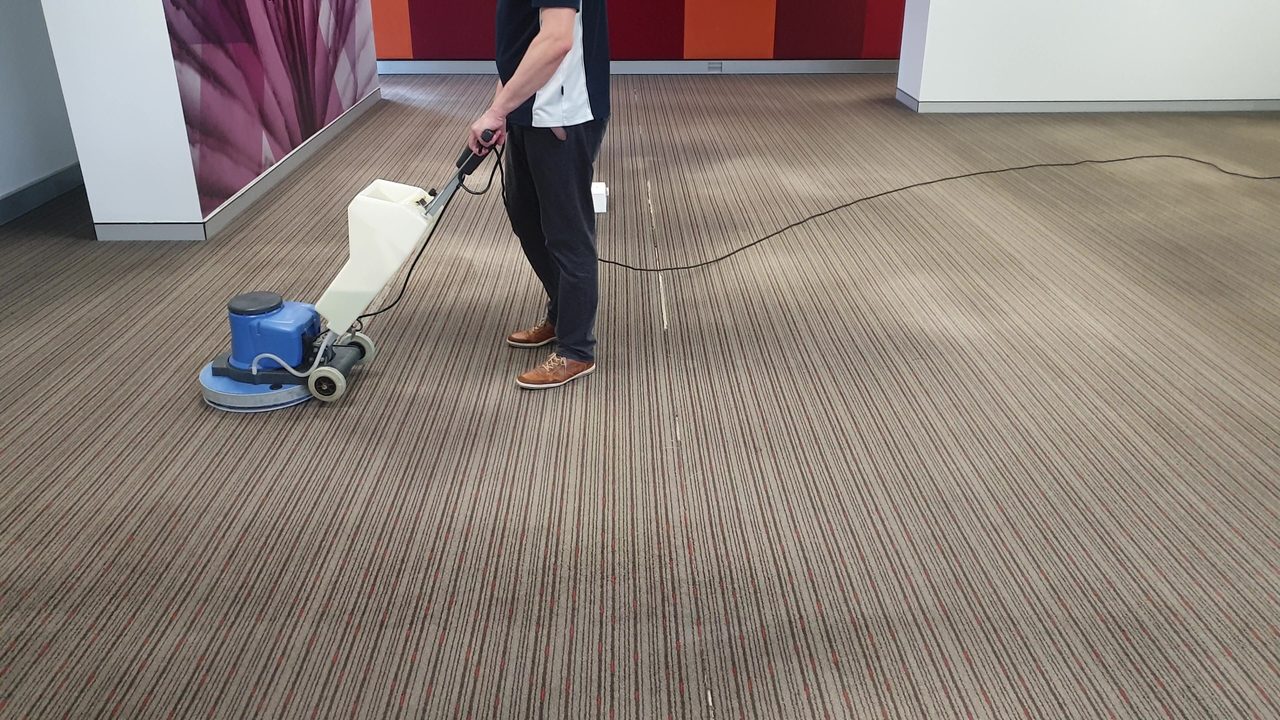
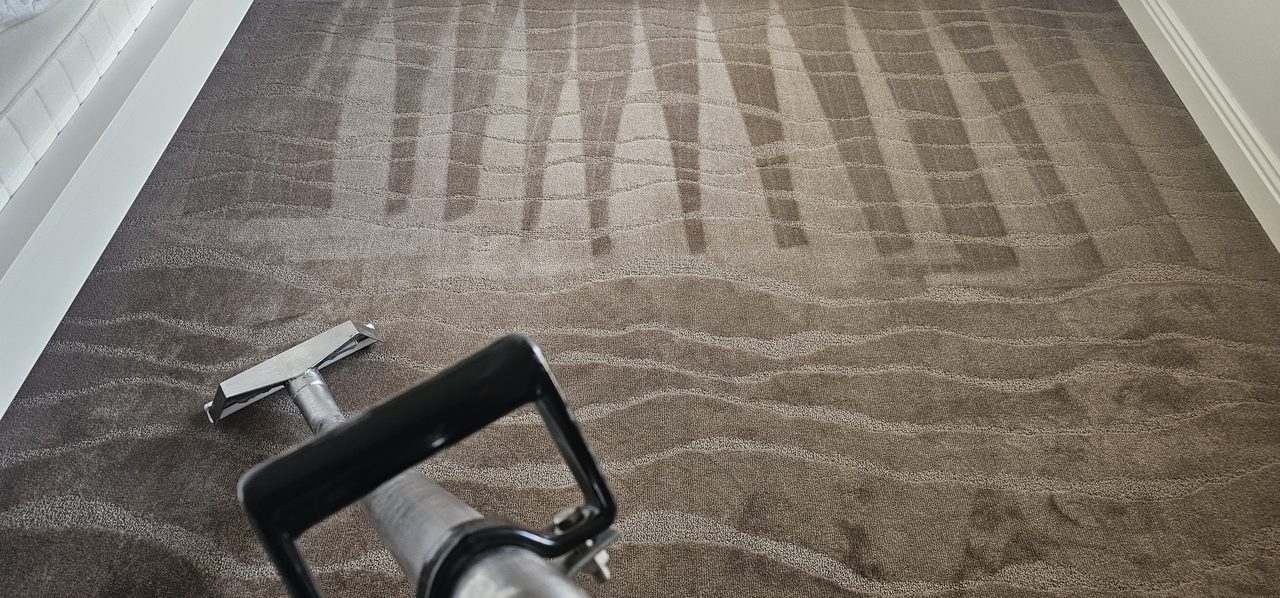
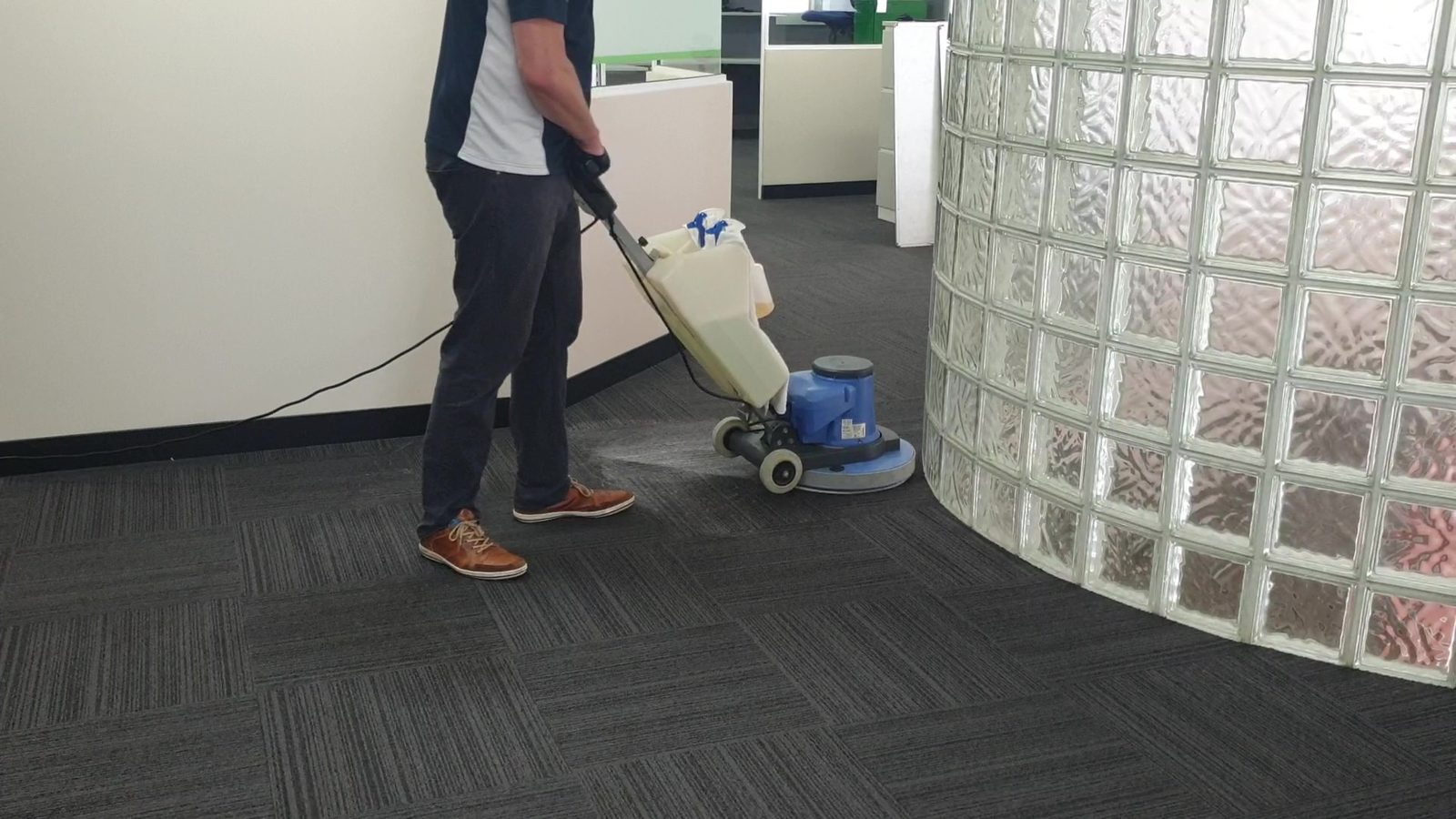
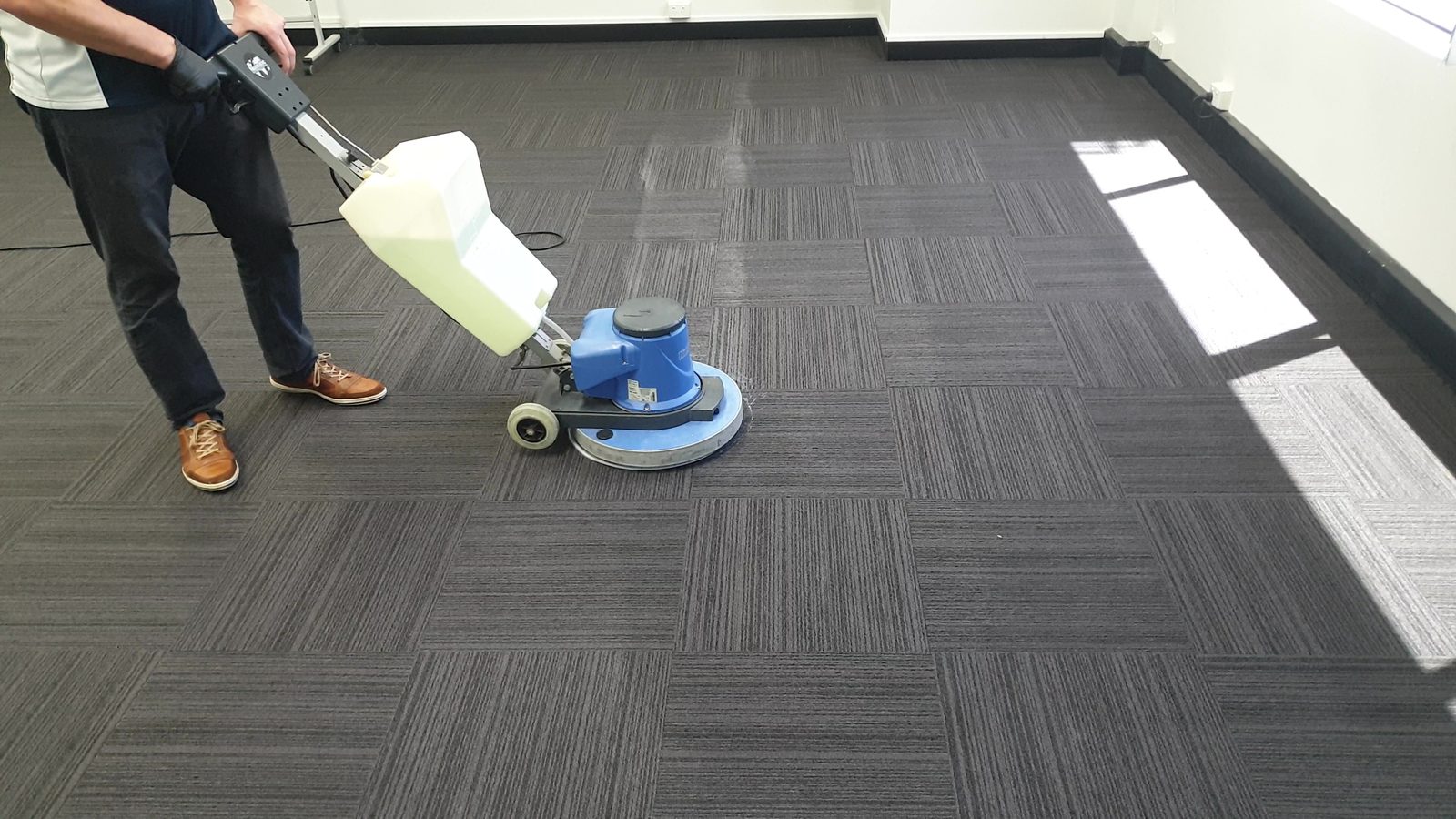
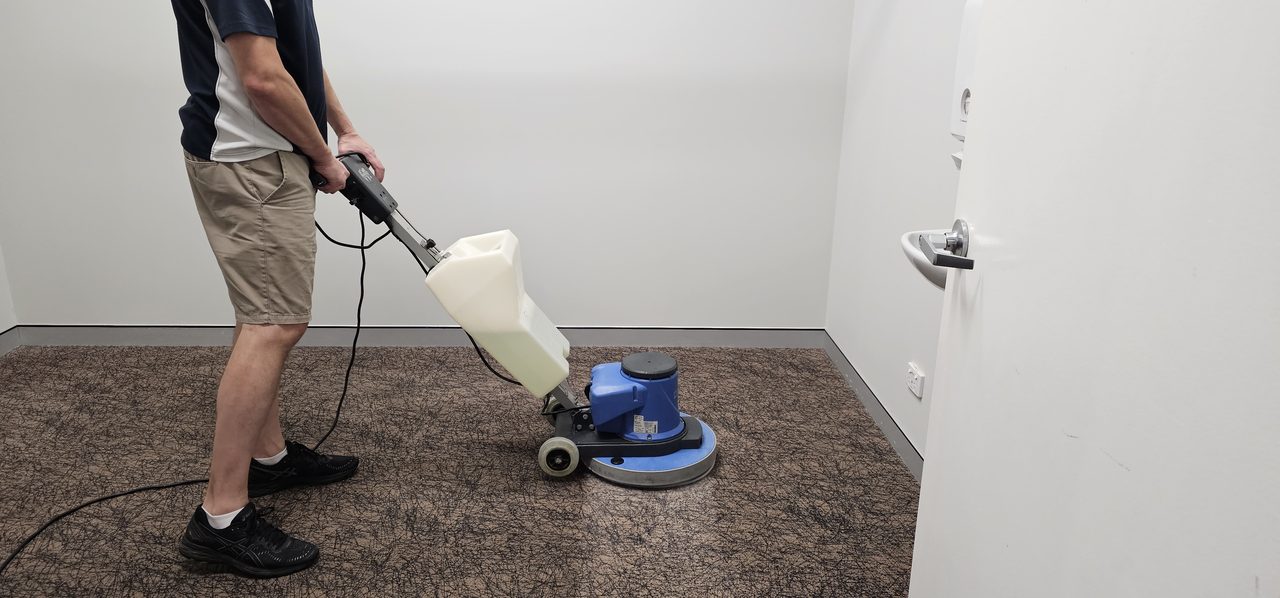
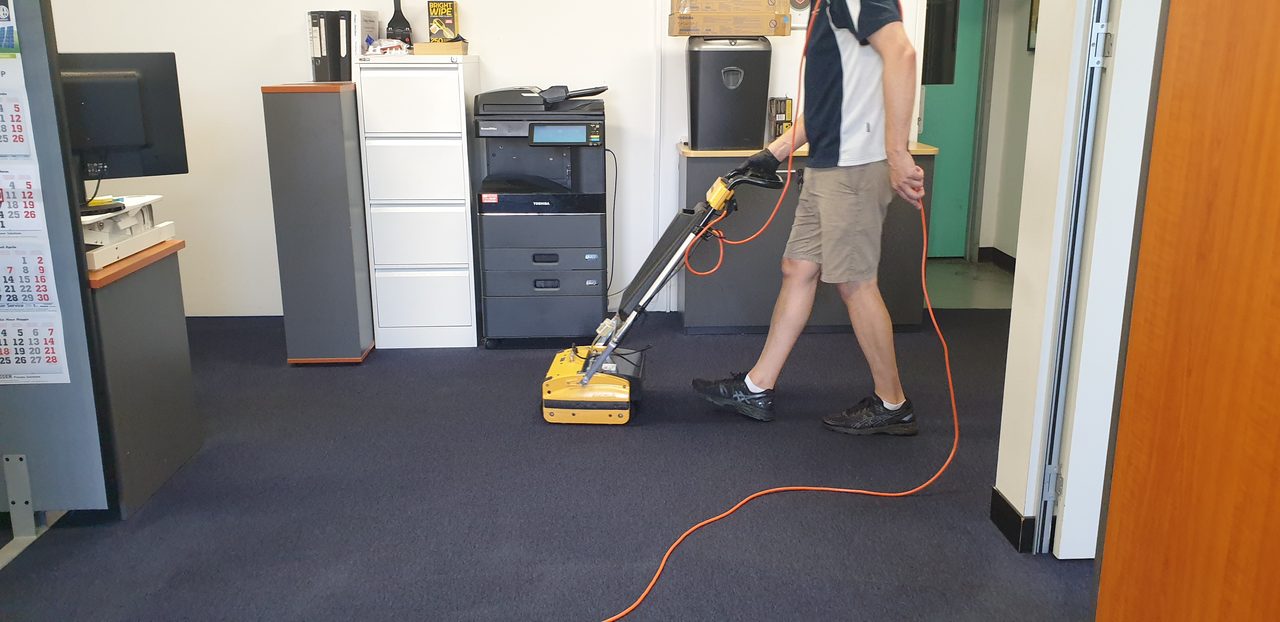
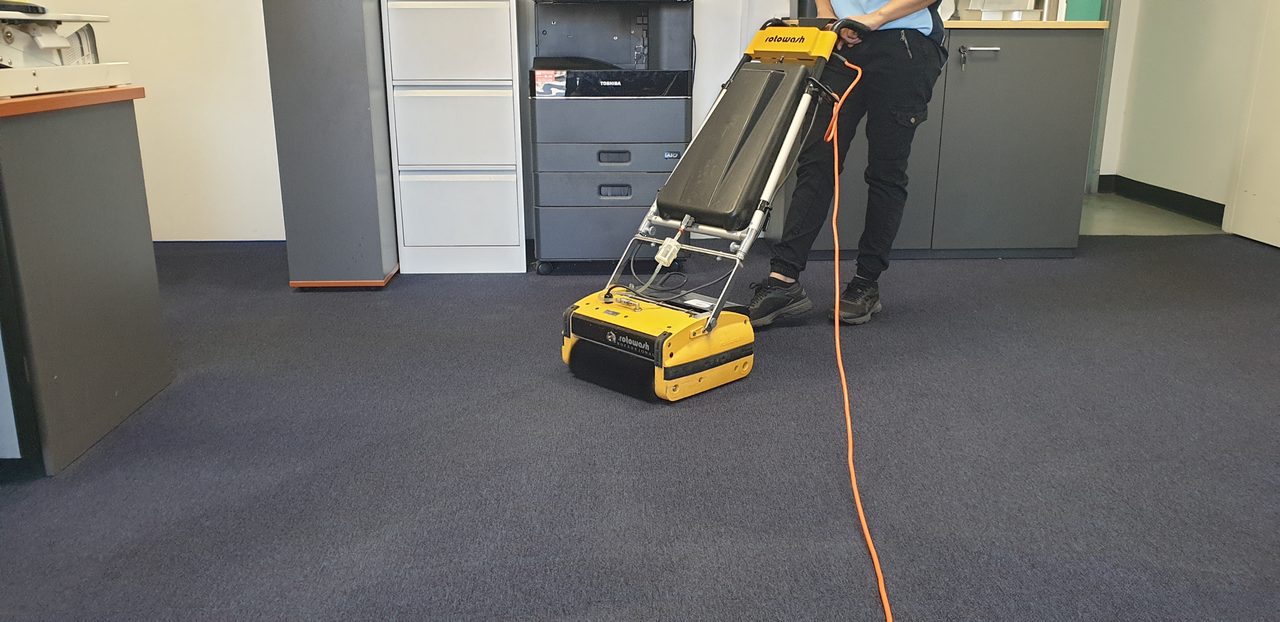
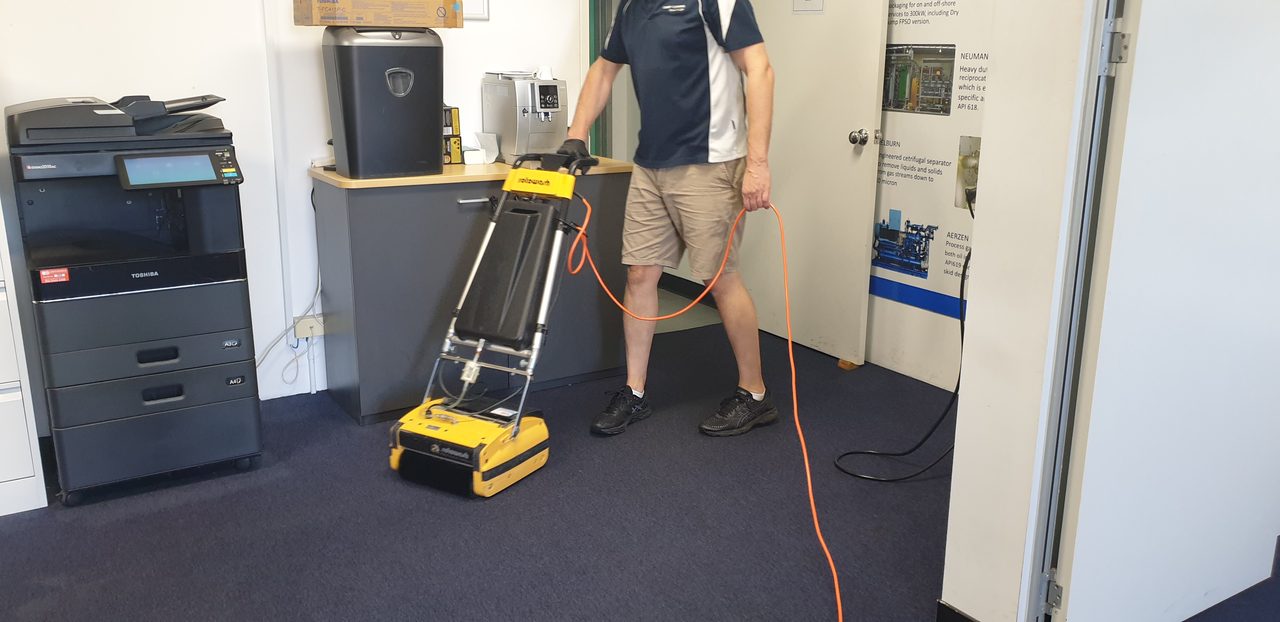
We use three methods. Carpet steam cleaning, also called hot water extraction, is the thorough clean for carpet with heavy or varied staining. A truck-mounted unit gives the most heat and suction wherever the hose can reach. Encapsulation uses little moisture and suits carpet that is lightly soiled. A scrubbing machine works the solution into the pile, the solution crystallises around the soil as it dries and the soil is vacuumed away, leaving nothing in the fibre. Agitation and steam cleaning is for heavy soil. A scrubbing machine such as the Rotowash loosens the soil first and the steam clean then extracts it. Spot treatment is a separate pass done by hand.
A good answer sounds like a decision made from what the cleaner saw on the walk. Steam cleaning on this floor, because the soil is heavy and the stains are many and varied. Encapsulation on the level above, because that carpet is only lightly soiled.
Beyond certification and insurance, these questions test experience. None are trick questions. Each one needs the person answering to have done commercial work often enough to give a specific answer.
Listen for detail. A useful answer names the fibre, the soil, the method and the limits for your floor. It also tells you what could delay the job. An answer that stays general or keeps returning to the price has not answered your question.
The willingness to say no is among the strongest signals of competence you will get. Cleaning removes soil. It does not restore fibre that has been abraded away, reverse dye damage, or lift staining that has bonded to the yarn. So we never promise that every mark will come out. We give you our view of what will lift, what will improve and what is likely to stay.
There is a real category of marks that improve without vanishing. Old bleach spots have removed colour rather than added it. Some ink and food colouring is permanent. Filtration soiling along skirtings responds slowly. A dull traffic area is sometimes soil and sometimes pile that has lost its twist. Only the soil responds to cleaning.
| The mark | What cleaning does to it |
|---|---|
| Old bleach spots | Nothing. The colour has been removed, not added |
| Some ink and food colouring | Nothing. Permanent |
| Filtration soiling along skirtings | Improves slowly, may never fully lift |
| Dull traffic areas | Lifts if it is soil, not if the pile has lost its twist |
| Abraded or dye-damaged fibre | Nothing. Cleaning removes soil, not damage |
The rows that read "Nothing" are the ones worth settling before the invoice arrives rather than after it.
Ask the question directly on the site walk and write the answer down. It removes the most common cause of dispute after a commercial clean, which is the gap between what was hoped for and what was possible.
Dry time is not a detail in commercial work; it is the scheduling constraint. A floor still damp when staff arrive is a slip risk, an odour risk and a re-soiling risk, because damp fibre grabs everything walking over it. Ask for a realistic figure rather than a stock answer.
Perth makes this interesting twice a year. Through a dry summer, warm air and low humidity mean carpets give up moisture quickly. Through a wet winter, humidity sits high, buildings are closed up, and the air conditioning that would carry moisture away is switched off outside trading hours. That is the season where extraction quality, air movers and a planned drying window matter.
Access is the other half. We work seven days including after-hours and weekends, because most commercial spaces cannot close a floor mid-week, and because a cinema, a function room or a workshop is only available in the gaps between what it normally does.
Most bad outcomes show up in advance, in the quote and the conversation. The first warning sign is a price per room. In commercial premises a room can be a single office or a whole open-plan floor. The cost of a clean is set by the measured area and the carpet's condition. When the price does not match the work, the result is extras added on the day or a rushed clean. A short dwell time, cold water and a weak rinse leave oily soil deep in the pile. As the carpet dries, that soil wicks up to the surface.
The second is paperwork. Before you book, you should have the scope in writing, a current insurance certificate, proof of certification and a business name that matches the invoice. Being asked to pay in full before the job is done is a warning sign.
The third is the conversation itself. Pressure to book on the spot, no wish to see the site, a promise that every mark will come out and no method named are signs of a sales pitch rather than a quote.
You do not have to bet the whole building on a first impression. The most sensible thing a facility manager can do with a new contractor is hand over a small, real piece of work and watch how it goes. A meeting room, a lift lobby, the worst patch by the tea point.
A trial tells you more than references do. You learn whether they arrived when they said, whether the site was left tidy, whether the dry time matched what you were told and whether the person on site was the person you spoke to. You also learn how they behave when something does not go to plan.
Only then is it worth talking about a schedule. Regular cleans let the cleaner learn your building. They also remove soil before it packs down deep into the pile. Keep the agreement plain and the exit simple. You decide how often we come back. We advise at least one professional clean each year. Ask us and we will recommend which areas need cleaning more often.
In healthcare, aged care, childcare and food service, your own record of carpet cleaning is part of compliance. Every facility manager gains from keeping one, because it shows which areas need cleaning most often and what the carpet costs to maintain.
Your record starts before the work. At the inspection we measure the floor, recommend the method for each area and agree the drying arrangements. The written quote gives you the price, GST inclusive, with the method and the drying time, so the scope is on file before we arrive. At the end of the clean we check the work ourselves under good light, put the chairs and bins back and lock up as agreed.
The rest is yours to check, because you see the carpet every day. Walk the floor once it is dry and look at the traffic areas, the entrances and the marks named at the inspection. Write down what keeps coming back. The same mark returning by a fridge points to a leak. Soil spreading from the door points to entrance matting that is too short. Kept with each written quote and invoice, your notes show which areas need more frequent cleaning. They also show a landlord or strata committee that the carpet has been maintained.
The best commercial cleaning relationships are boring in the best way. The contractor knows where to park, knows which door sticks, knows the boardroom is wool and the corridor is not, and knows without asking that the east entry needs an extra pass after a windy week. None of that exists on a first visit.
Getting there takes a little effort on your side. Give feedback promptly rather than saving it up. Mention the fit-out before it happens. Ask once a year what they would change about the schedule, because the person on their knees in the traffic lane knows more about your carpet than anyone in the building.
Judge the relationship on the trend, not the single visit. Is the carpet holding its appearance between cleans, or degrading? Are the same problem areas recurring? Tell us when you book the next clean. We will recommend a change, such as more frequent cleans in those areas or longer entrance matting at the door.
Nothing in this list needs technical knowledge of carpet. It asks you to put the questions plainly and to see documents rather than hear about them. Then notice whether the answers get more specific or more general as you press. Every facility manager already has that skill.
If you take one thing from this guide, take the site walk and the trial area. Together they show you how a cleaner works before you commit your whole building. We see every commercial floor before we quote and give you our view on the walk of what will lift. We are also glad to start with one small trial area.
We are an owner-operated IICRC Certified Firm with $20M public and products liability insurance. Our wool cleans follow Zoran's training as a WoolSafe Approved Fibre Care Specialist. You can book us anywhere across Perth seven days a week, at the times you choose. For a free site visit and a written quote, call Zoran on 0460 815 038. Our page on carpet cleaning in Perth sets out our services and how we work.
An hour-by-hour walkthrough of a commercial carpet clean in Perth: the site walk, access, the clean in sequence, drying, the final check and lock-up.
Read ArticleSteam cleaning versus encapsulation for Perth commercial carpets: what each one does at fibre level, real dry times, costs over a year, and how to choose.
Read ArticleHow to set commercial carpet cleaning frequency by zone, traffic and sector, and build a Perth maintenance schedule that protects the carpet.
Read Article