

Commercial Carpet Cleaning
Hot water extraction, encapsulation or agitation before the rinse, matched to each carpeted floor in your offices.
Commercial carpet cleaning in Perth →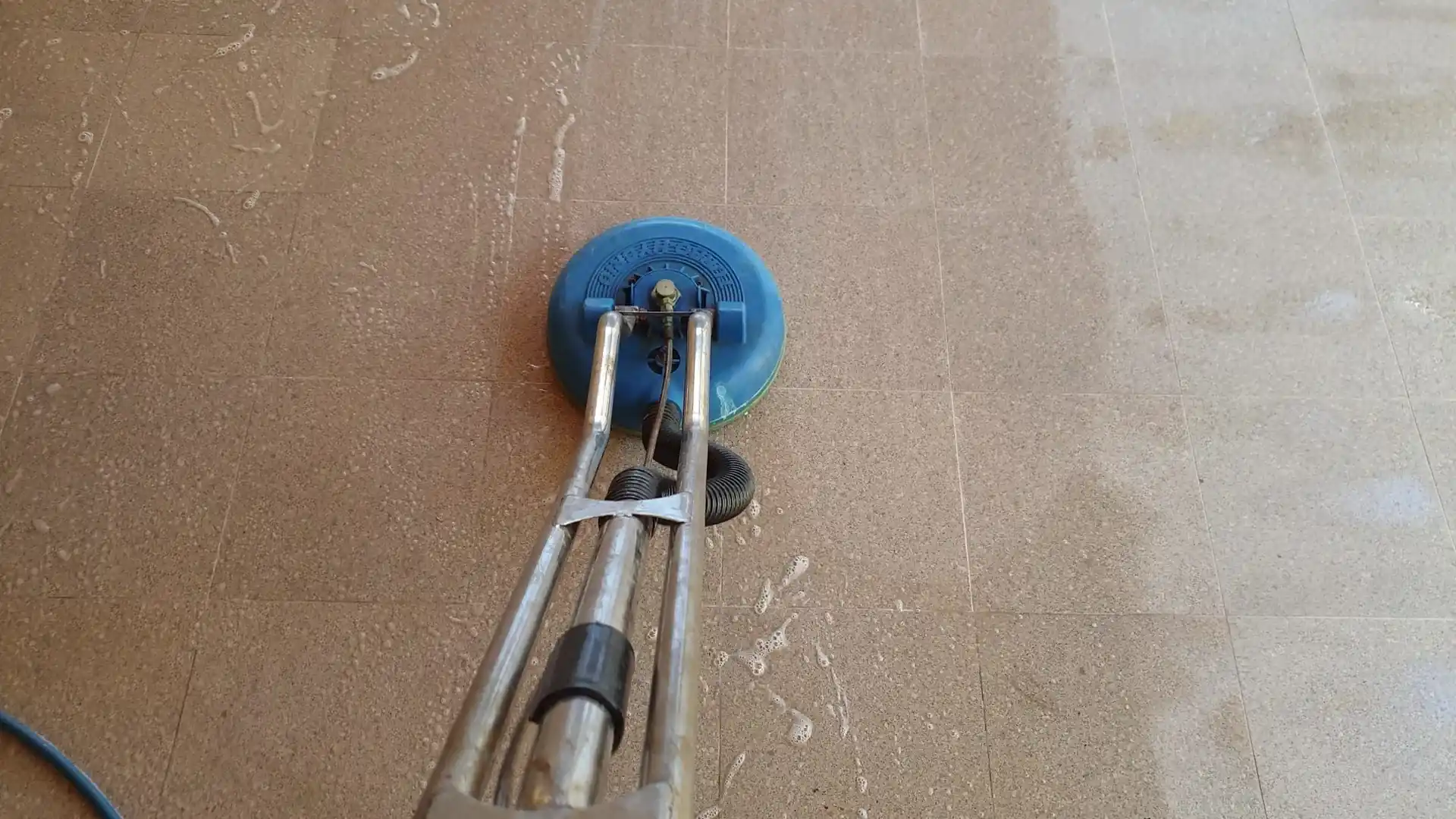
Hot water driven into every grout line under pressure and recovered on the spot, with the packed soil and the grease film that makes tiles slippery. Booked for the time that suits your trade, any day of the week, and the grout comes back close to the colour it had when the floor was laid.
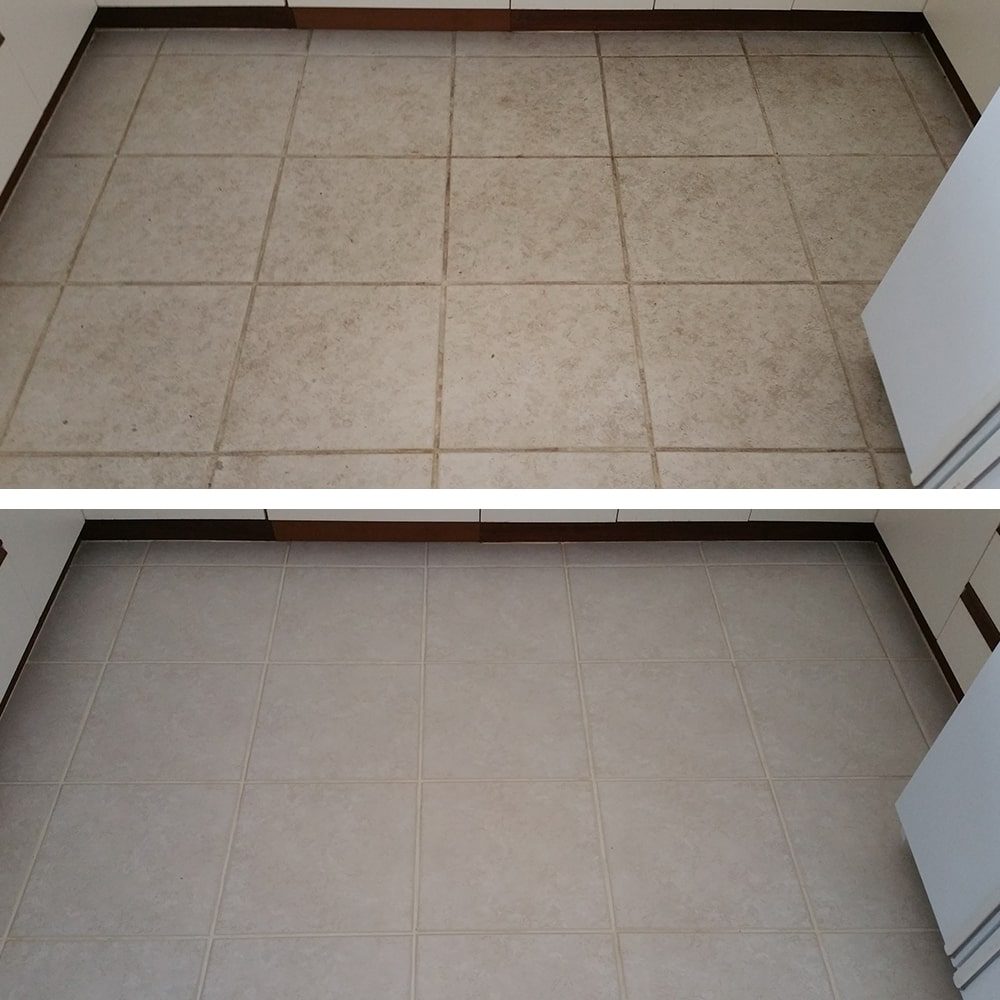
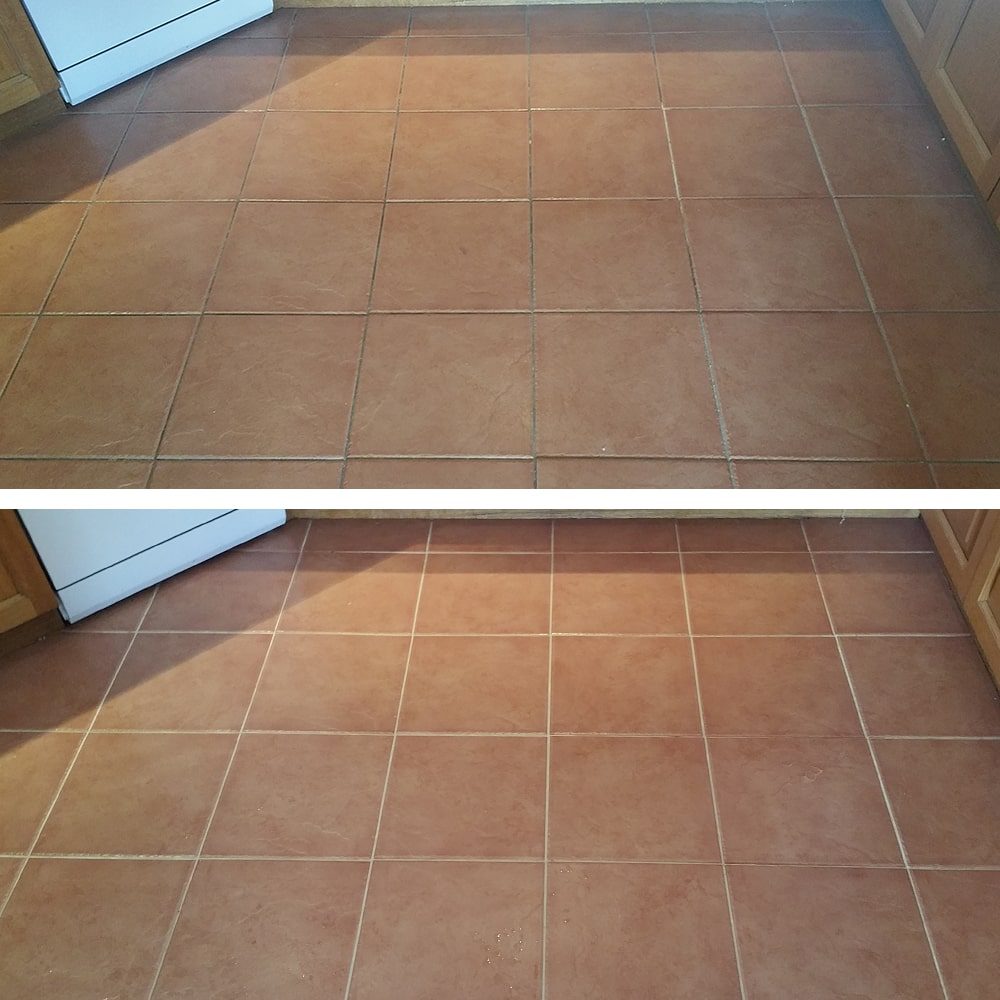
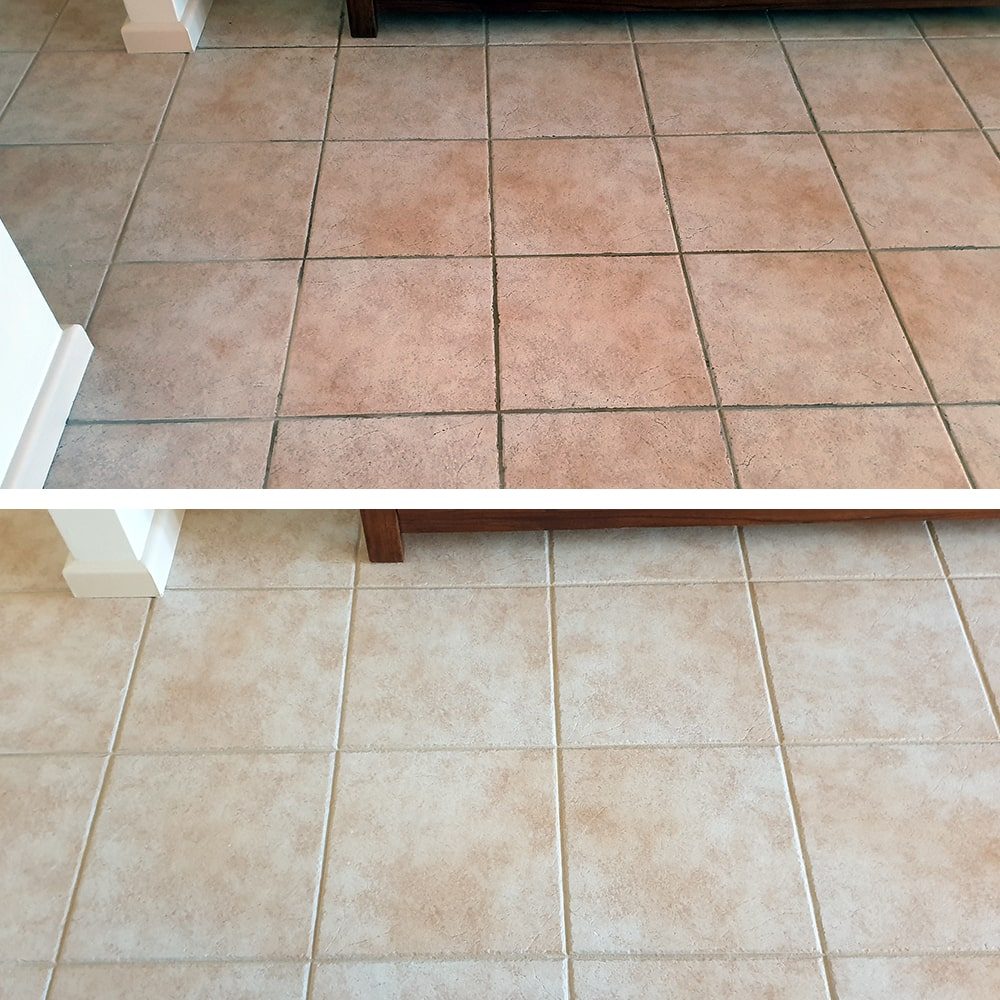
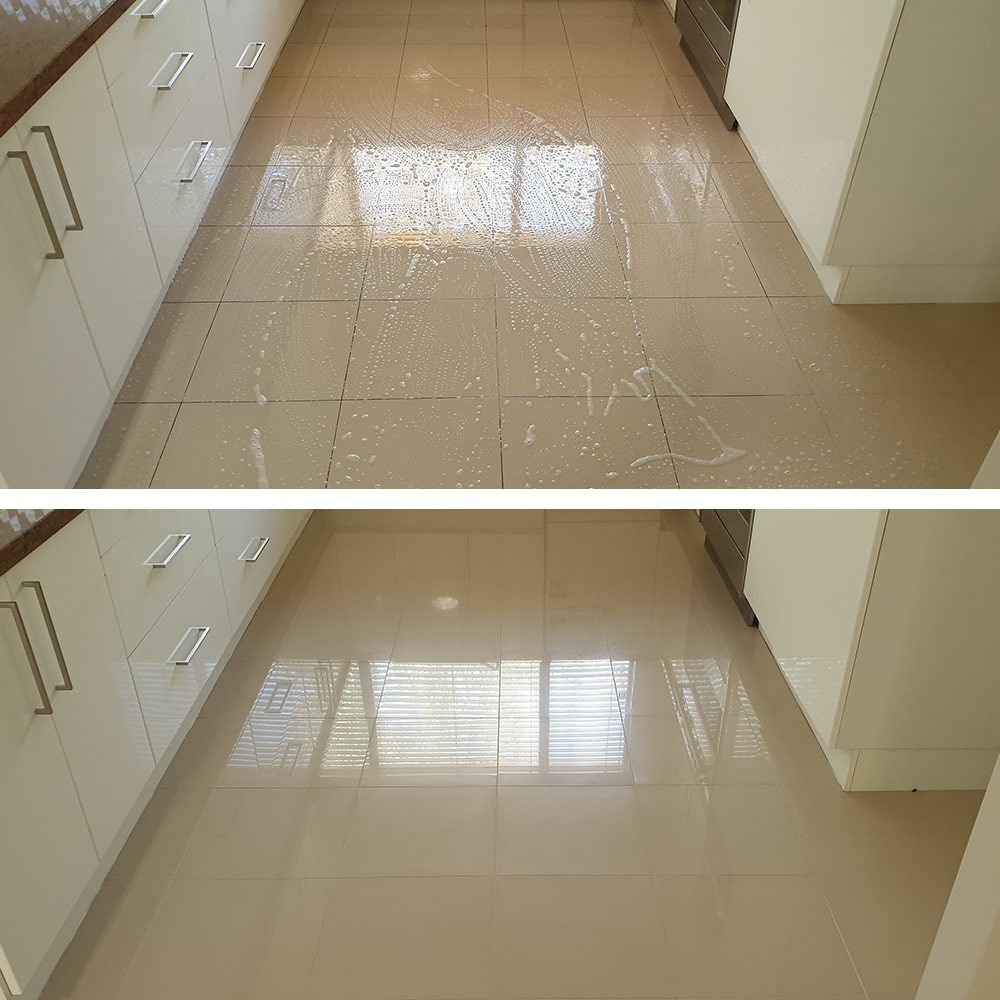
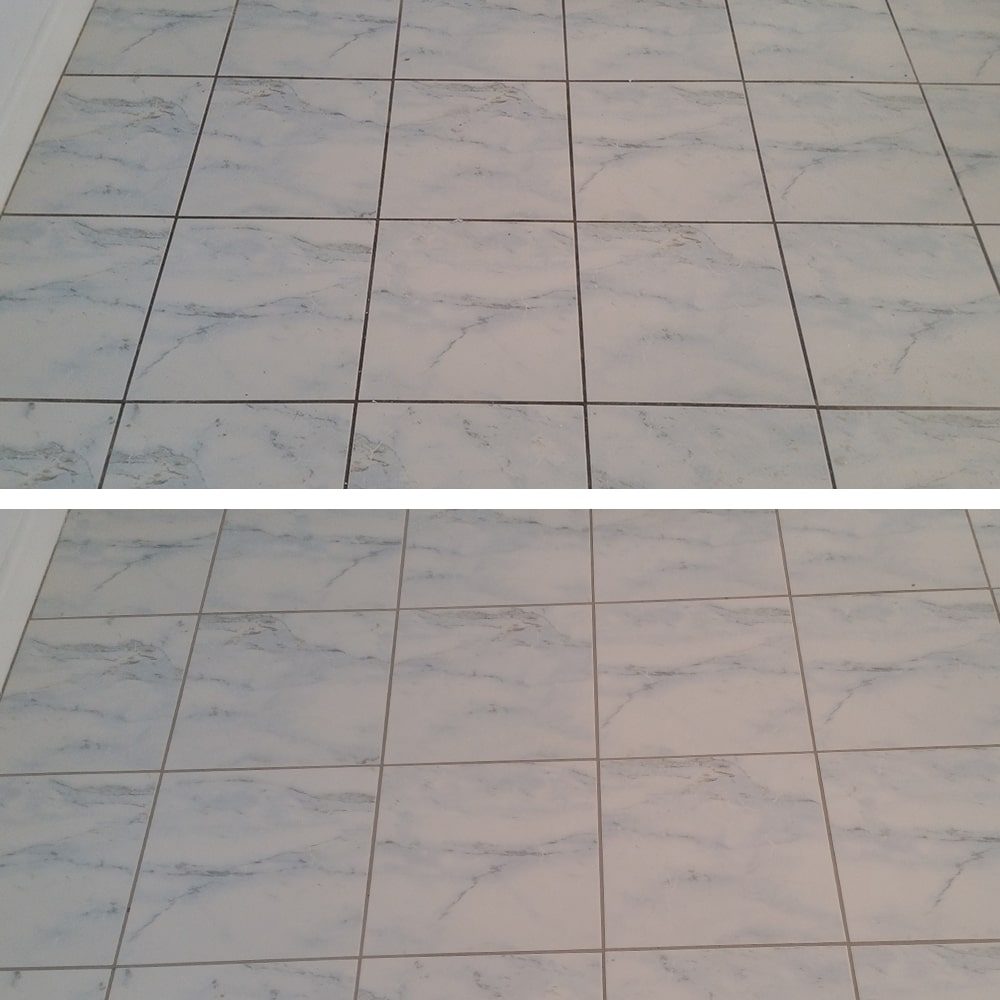
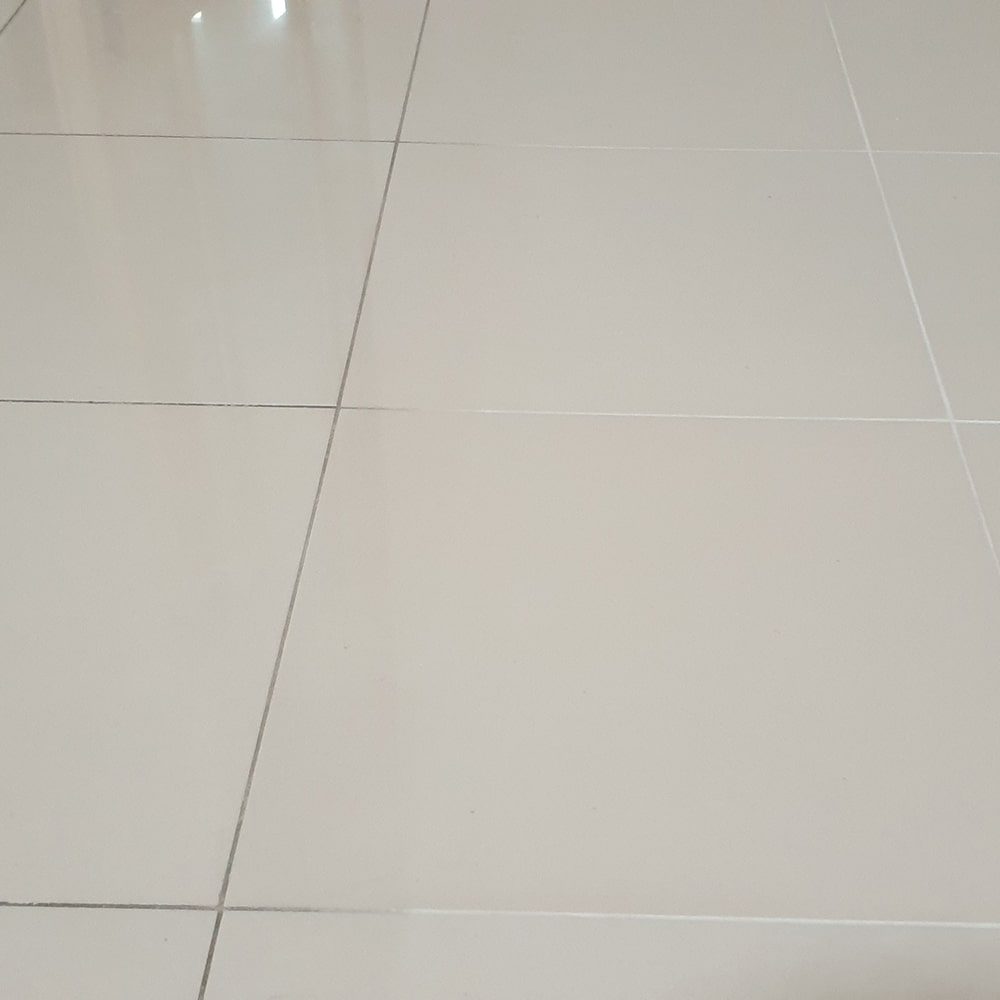
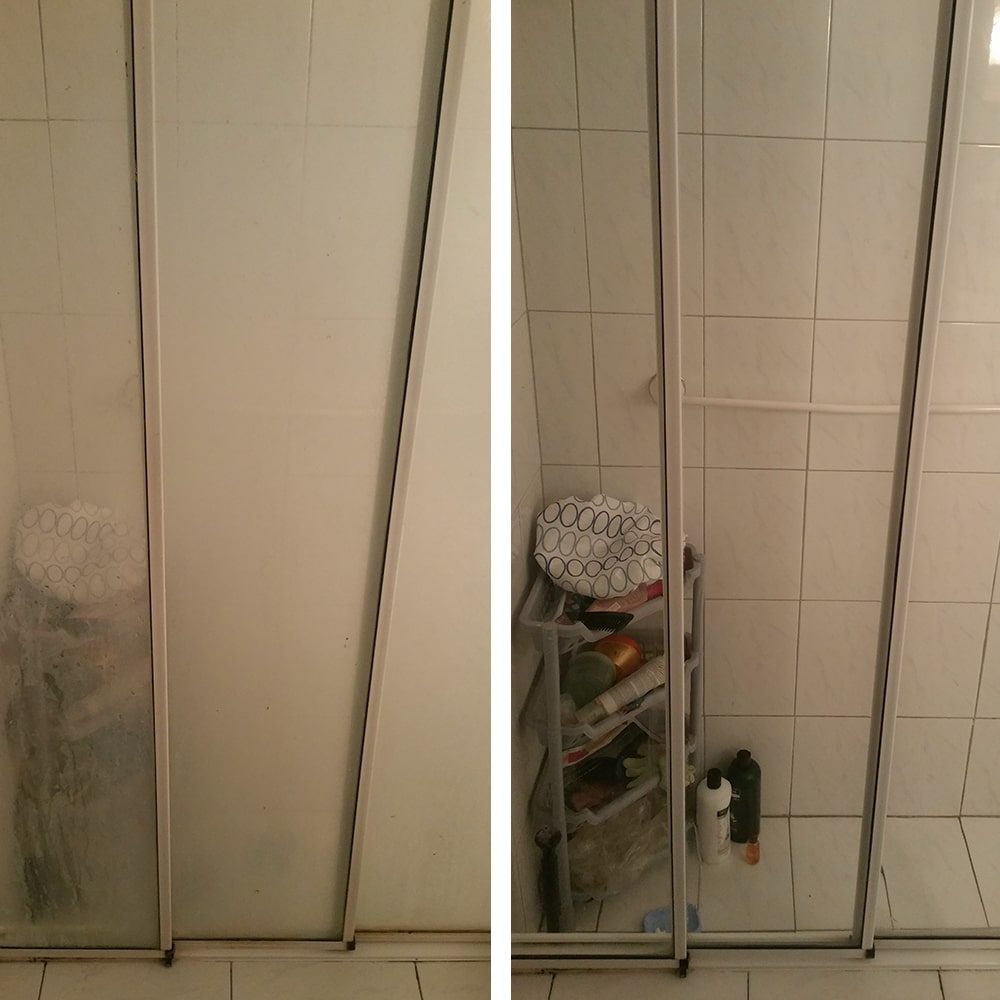
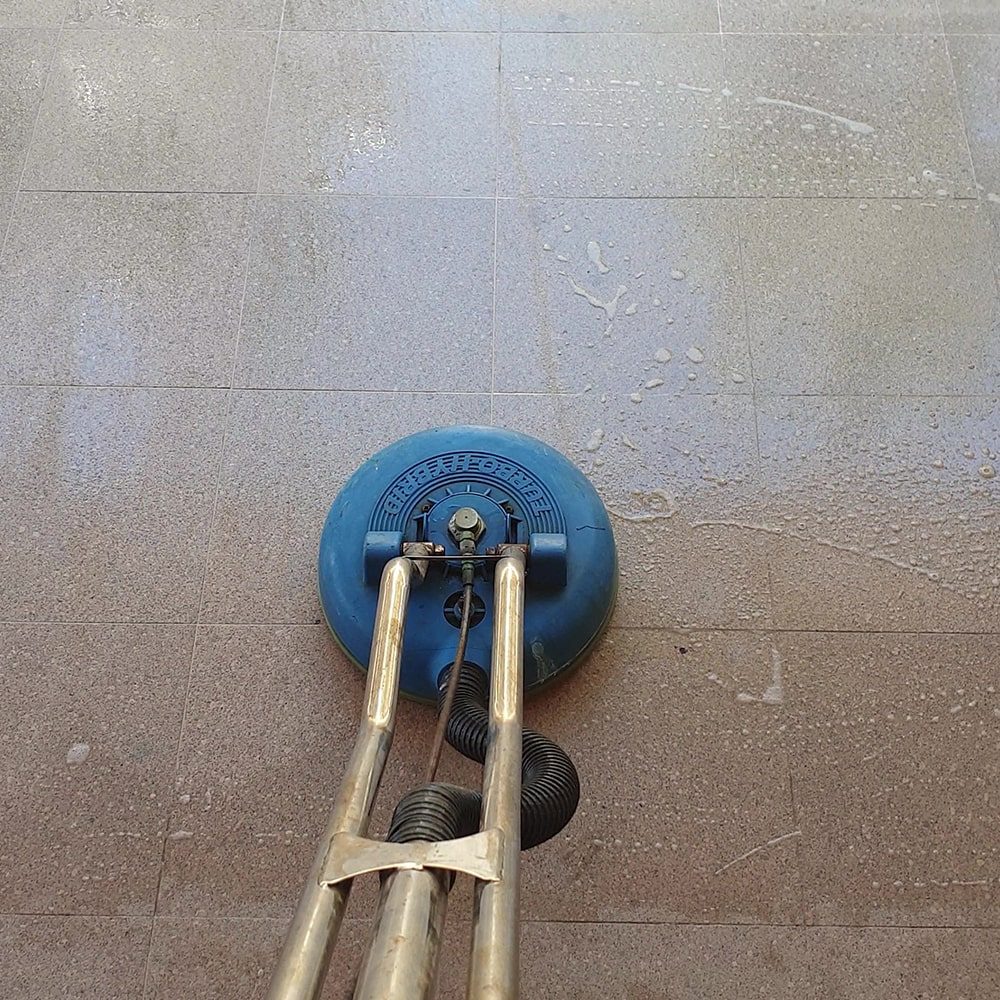
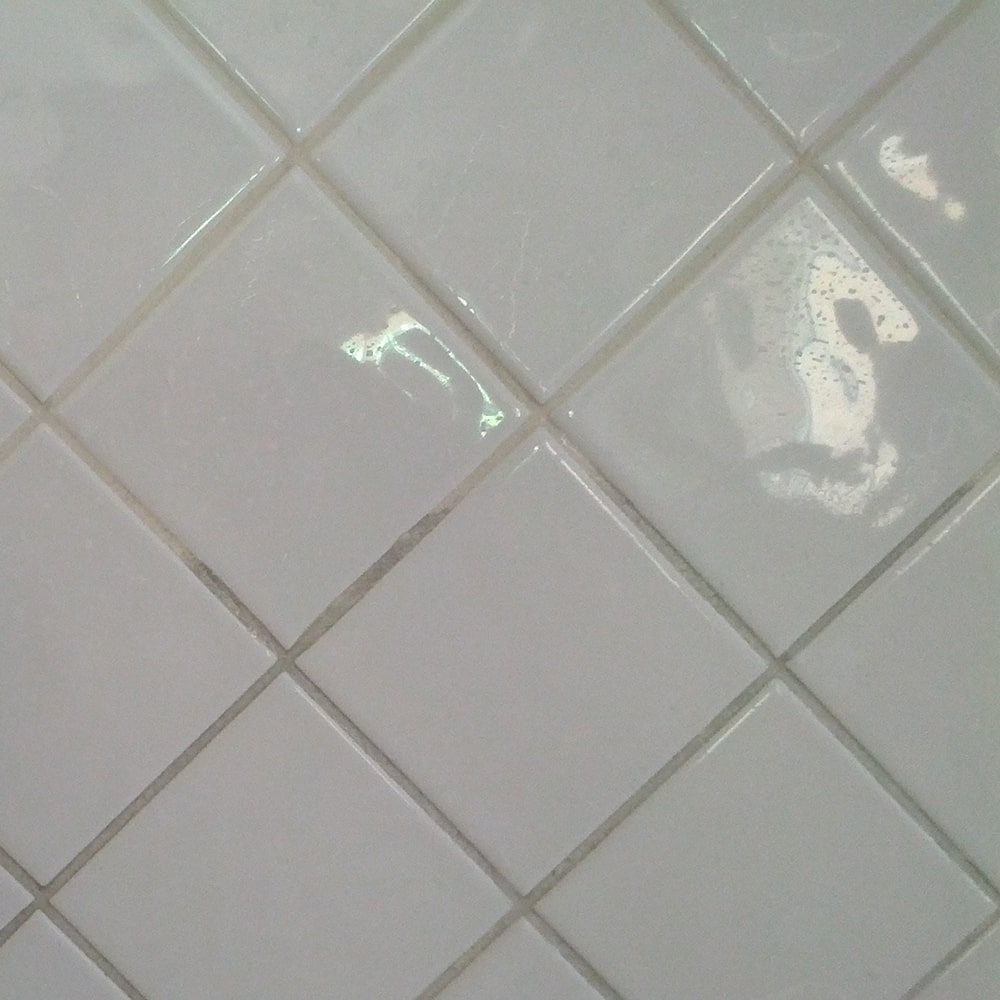
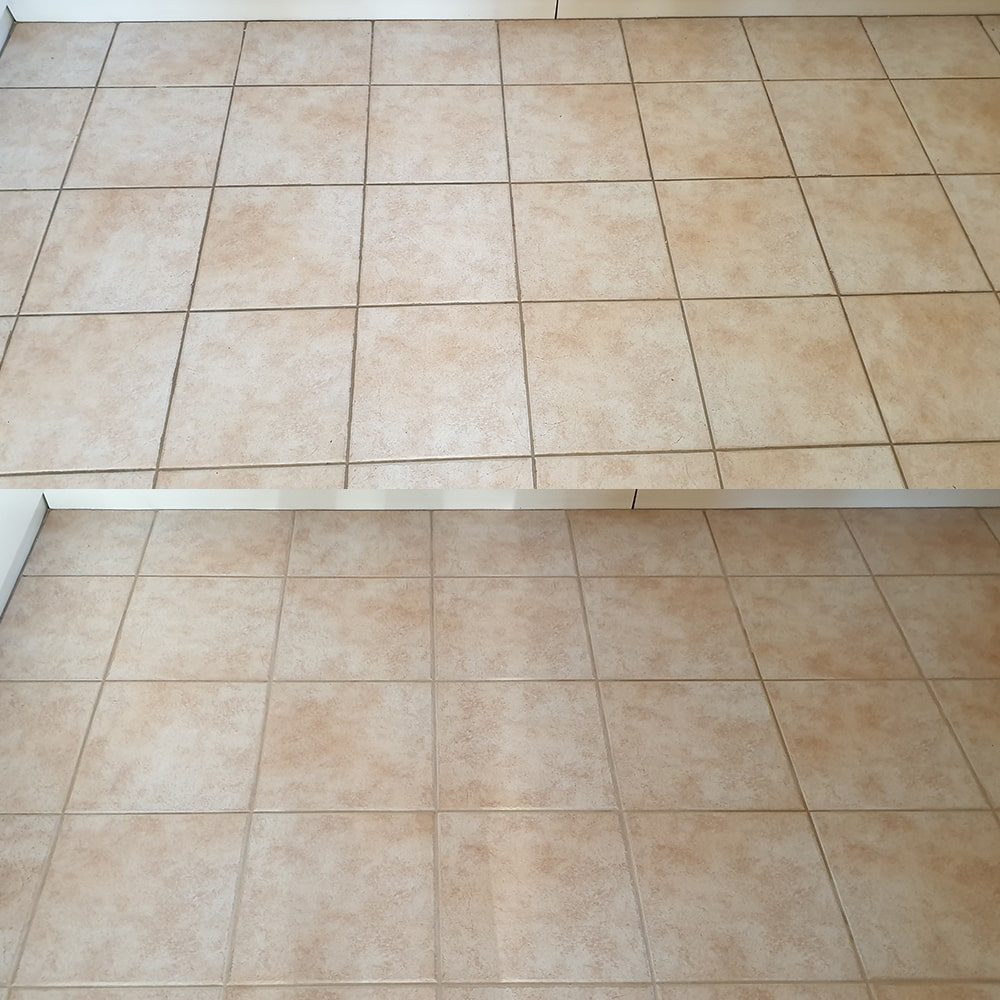
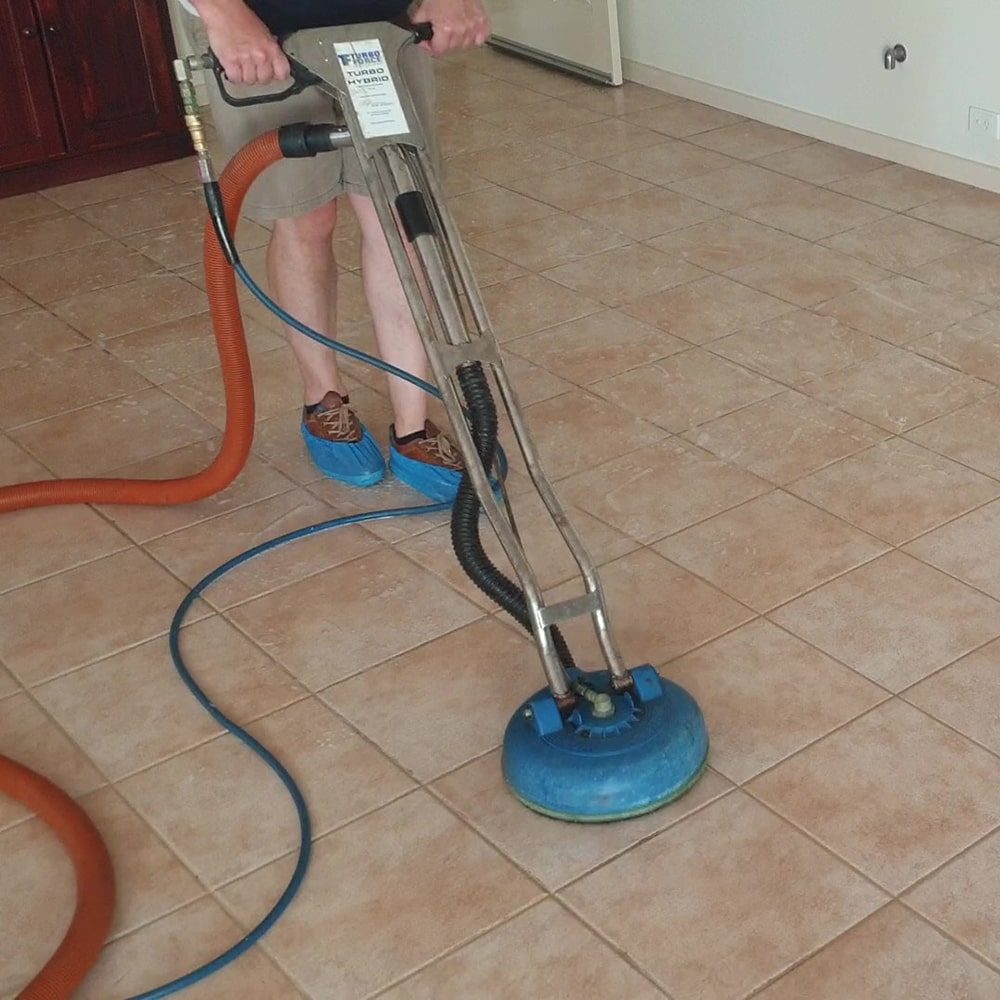
The floor in your kitchen, washroom or foyer is judged by its grout lines: tiles rinse clean under a mop, but the grout beside them darkens with every bucket of dirty water until a floor mopped every night reads as neglected. We bring the grout back to the colour it was laid, give the tiles their grip back and take the odour out at its source. We clean tiled floors in houses as well. Ring for a free cost estimate on a kitchen, a bathroom or the whole house.
Most grey grout is soil, not stain. Cleaning flushes it out, and the lines come back to the colour they were laid.
A film of grease and soap makes tiles slippery. Removing the film gives back the grip the floor was made with, which matters most in kitchens and washrooms.
Glazed ceramic can take full heat and pressure. Marble, limestone and terrazzo get neutral products and a gentler touch, and never acid.
Tile is priced per square metre; we measure up for free and send you the figure in writing. If anything isn't right after your clean, tell us within 14 days and we'll come back and set it right, at no extra charge.
Book the free measure
We identify the tile, the stone and the grout on the visit, set the product and pressure for them, and send the written price. You choose the time your trade allows, seven days a week. Where grout has cracked or washed out, you hear that it's a tiler's job before anything is booked.
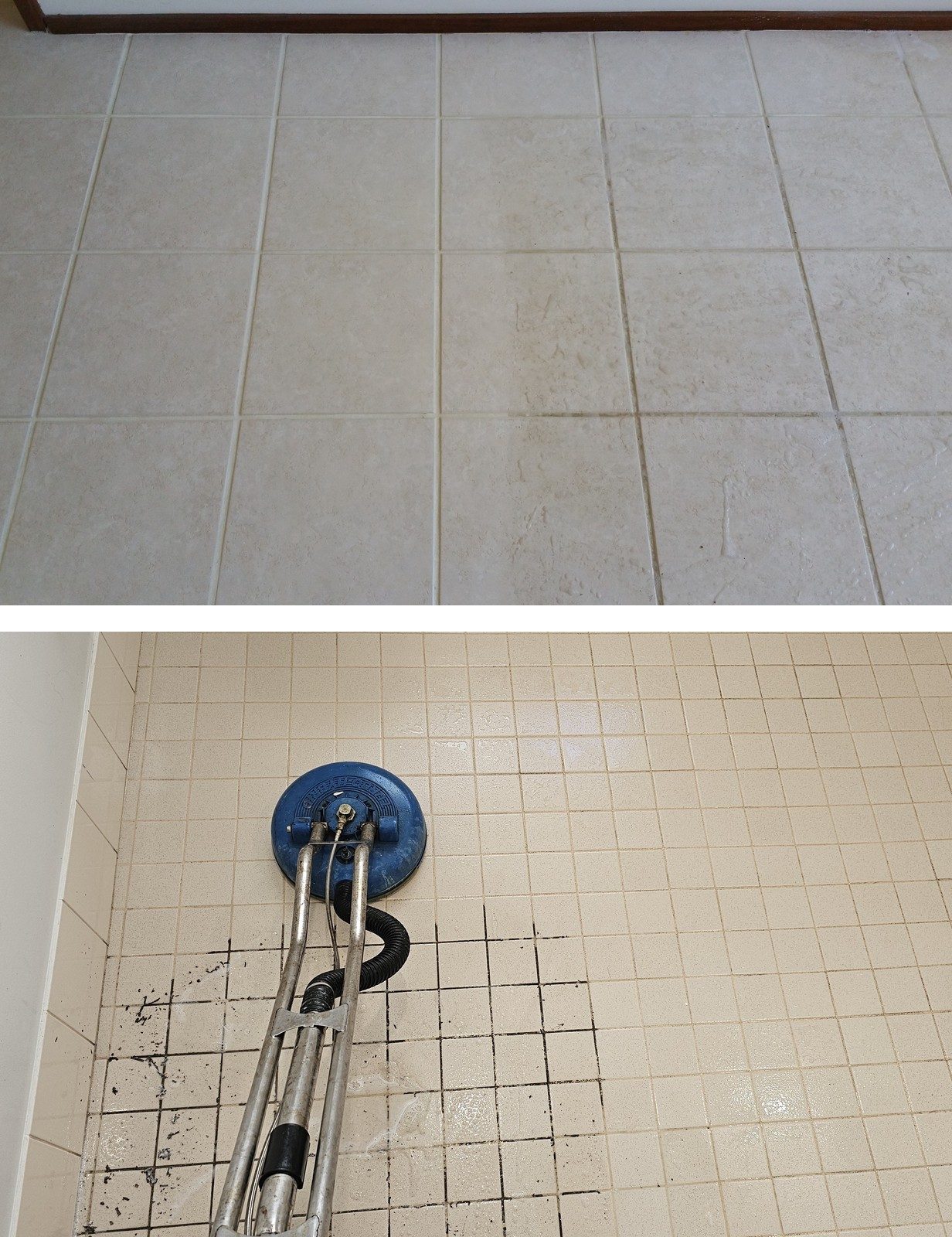
Before you accept a regrouting quote, have the grout cleaned. Dark grout looks like failed grout, but most of it is sound grout holding years of soil, and a clean restores it for a fraction of the cost of raking it out.
Where it's needed, we clean a small test patch during the free site visit. Colour returning in the patch tells you the rest of the floor will clean up the same way, and you've saved the cost of regrouting.
It's dirt, and a clean restores the colour.
The grout has failed, and a tiler has to rake it out and regrout.
The tile bed has come loose, which is a repair job that cleaning won't change.
The grout has worn or washed out and needs topping up by a tiler.
Acid etches calcium-based stone and cement grout, and bleach fades coloured grout. Both changes are permanent, and you'll hear about them from us before we quote.
Let us look at it first
Most grey grout is soil. Book the free visit and we tell you, looking at your own floor, whether the lines will come back with a clean before you pay a tiler.
Your trade sets the time: a kitchen after the last service, a shop before it opens, a washroom block when it can be closed. Tile can be walked on two hours after cleaning, so the clean fits almost any part of the day. The start time, the order of the areas and any walkway you need kept open are all set at the site visit, and the work follows that plan.
Pick the time that suits your trade: during the day, an evening, an early start or a weekend. Once the area is clear, we work through it one section at a time.
Wet tile is slippery, so every wet area is signed and closed off, and a dry walkway stays open where staff or residents still need to get through.
Both our certificates of currency, liability and workers compensation, go to your building manager with the Safe Work Method Statement before the booking, and inductions and swipe passes are sorted early.
Equipment, mats and bins we moved return to their places. Where we're the last ones out, the lights go off, the doors are locked and the alarm is set.
Book the two together
Tiles and carpet are usually done in one visit, each priced on its own on the written quote; our commercial carpet page explains the carpet side.
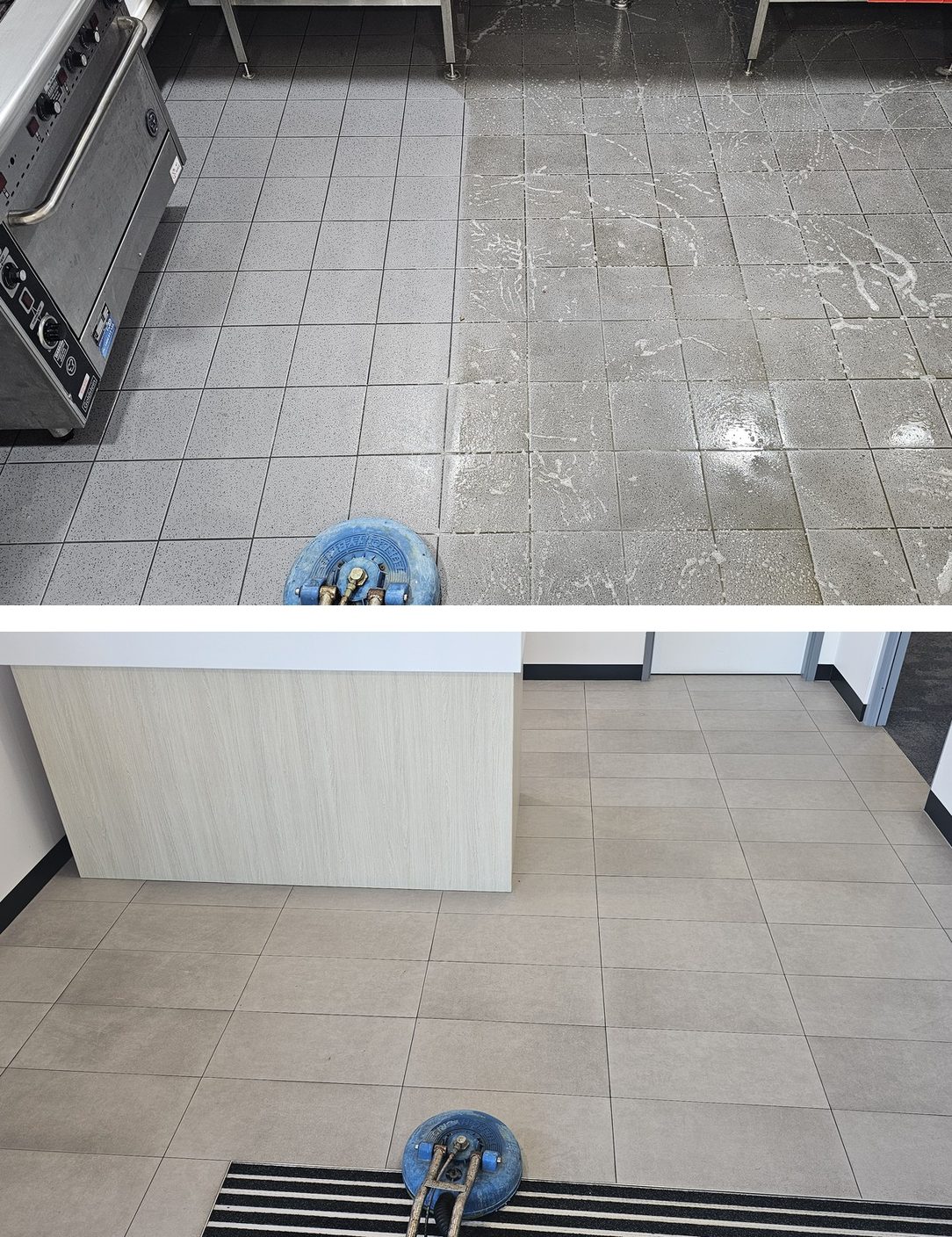
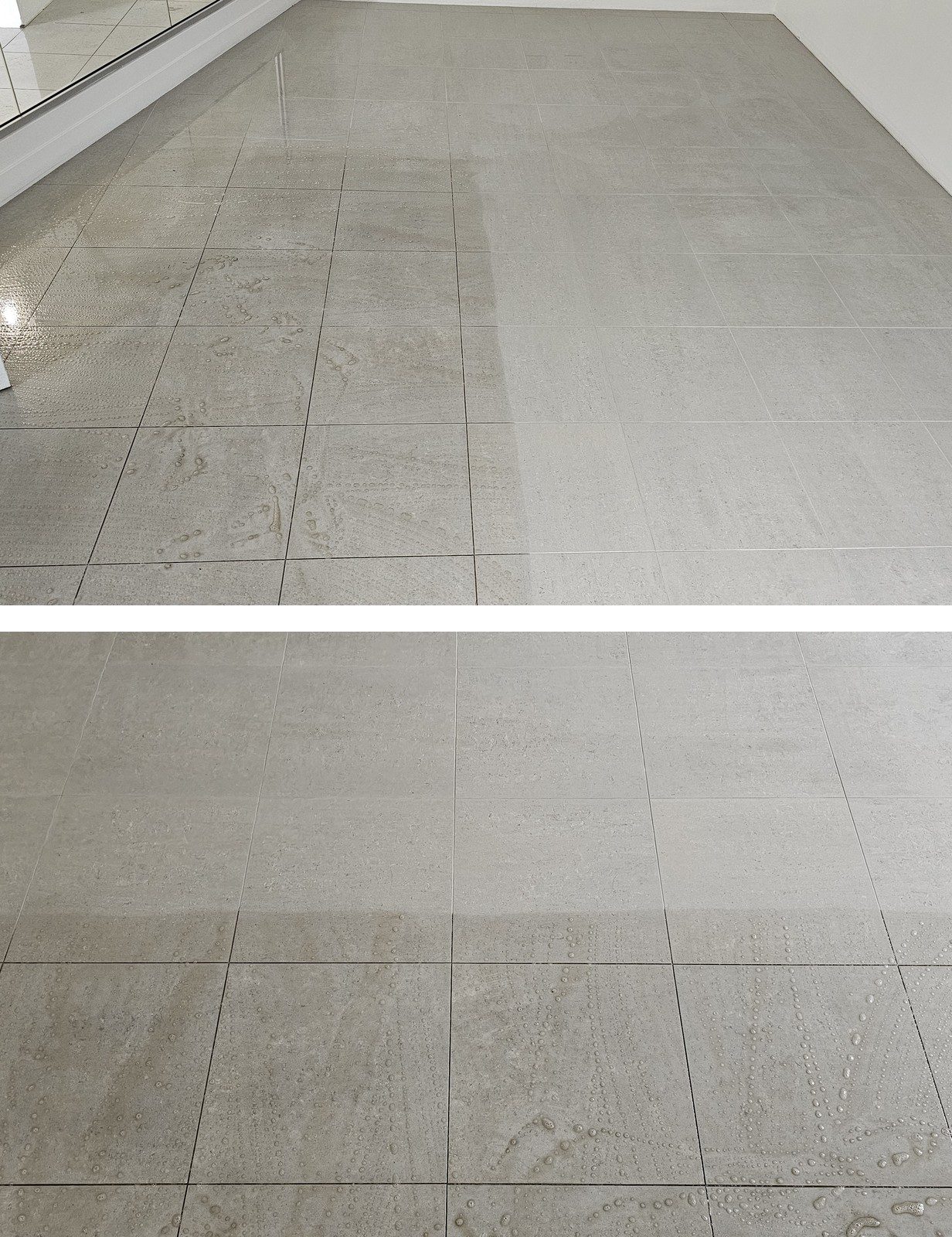
Perth kitchens, washrooms and lobbies are mostly laid in the surfaces below, and each one tells us how hard we can work it.
The glaze is hard and sheds soil easily, so it takes full heat and pressure. The grout is where the work is.
Porcelain is dense and tough. Textured and anti-slip porcelain traps soil in its grain and needs agitation as well as pressure. Polished porcelain gets a clean final rinse so it dries without streaks.
Quarry tile is unglazed, porous and common in commercial kitchens. It soaks up fat, so it needs a degreaser, time to work and often a second pass.
These soft stones etch for good under acid, so they get neutral products only, gentler pressure and a hidden-corner test where the stone needs one.
Terrazzo is stone chips set in cement or resin, so it's treated like stone: no acids, and controlled pressure on older floors.
Granite is hard and takes pressure well. Slate is layered and can flake, so it gets lower pressure and a softer brush.
Cement grout is porous, so it absorbs mop water and soil. It's the grout that goes grey, and cleaning brings its colour back.
Epoxy grout is non-porous, so soil sits on the surface rather than in it. It cleans up fast, and it isn't harmed by the degreasers kitchens need.
We identify it on the visit
Tell us the room and we check the tile, the stone and the grout before the product is chosen, so nothing is etched and nothing is left dull.
The product, the heat and the pressure are what we adjust between a kitchen's ceramic tiles and a foyer's terrazzo, each one set for the surface and its grout. The order of the steps below never changes. Book the free measure and the settings are chosen for your floor before the date is set.
First we confirm the tile and the grout, cement or epoxy, and check the condition: cracked or missing grout, hollow tiles, and etching from past products. Faults that need a tiler, rather than a cleaner, are shown to you at this stage.
The grout's true colour is found somewhere feet never go, under a bench or inside a cupboard, and that becomes the target for the whole floor. A small test patch, done where the floor needs one, shows what the clean will achieve.
Equipment on castors is rolled out, entry mats are lifted, and bins and trolleys are moved. Skirtings, glass, painted edges and any carpet next to the tiles are protected before water goes down.
We sign the wet sections and work the floor in stages, so people still have a dry way through where they need one.
Wet grit gets dragged along the grout lines and scratches polished surfaces, so the sand and grit are vacuumed up before anything else.
Corners, door tracks and the edges along the walls get the most attention, because a mop pushes grit there every day.
Kitchens get a degreaser for cooking fat. Washrooms get a product for soap scum and body soil. Stone and terrazzo get neutral products, because acid etches them.
Each section stays wet until it's cleaned, which gives the product its dwell time and stops anything drying back onto the floor.
A grout brush works along every line, and a scrubbing machine covers the open floor, loosening the soil packed into the grout and into the grain of textured tiles.
Brush stiffness and machine pressure are set for the surface, softer on stone and slate than on glazed ceramic.
The spinner does the main clean of the open floor. Its pressure drives the soil out of each grout line, and the vacuum around its head takes the dirty water away before the soil can settle back into the joints.
Overlapping the passes keeps the colour even as the floor dries, with no clean and dirty stripes.
Edges, corners, door tracks, floor wastes and kick rails are cleaned by hand, where the spinner can't reach.
Under fixed benches and around plumbed equipment, we work with hand tools so the whole floor matches.
A clean rinse carries out any product left in the grout. Residue makes a floor slippery and attracts fresh dirt, so none is left behind.
Any kitchen or corridor that has to open early gets air movers. The floor is safe to walk on two hours after cleaning.
Wet grout looks darker and more even than it will once it dries, so we check the floor after it has dried. Any grout line that needs another pass gets one.
Anything only a tiler can fix is pointed out, and mats and equipment go back once the floor is dry.
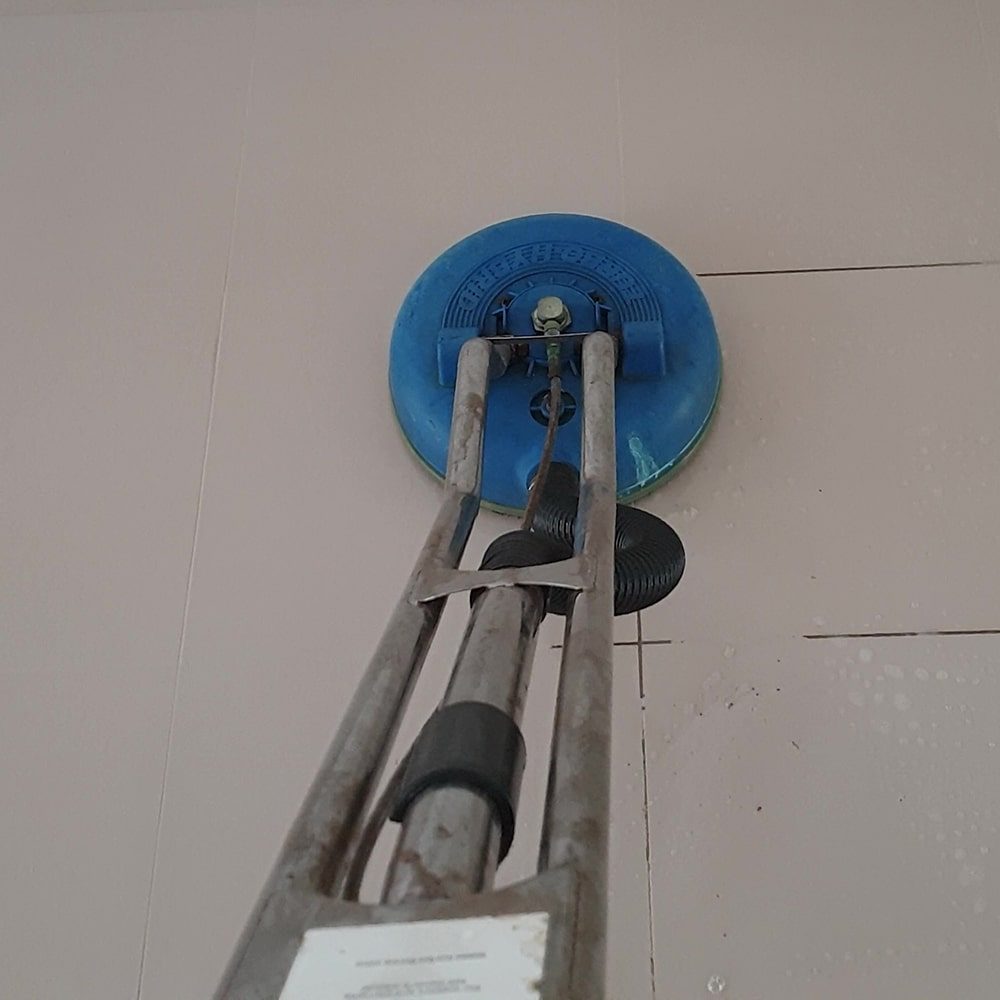
Inside a spinner's round, enclosed head, a spray bar rotates while vacuum recovery runs around its edge. Hot water hits the grout under pressure, and the dirty water is pulled straight back up, so nothing splashes onto walls or soaks into the joints.
That's what a mop can't do. Mopping leaves dirty water sitting in the joints to dry there, which is how grout turns grey in the first place. With the soil lifted out of the grout instead of spread along it, the lines come up clean, and your staff can be back on the floor within two hours.
The cover keeps the spray on the floor, so skirtings, walls and glass stay dry.
Heat loosens grease and soil, and pressure drives the water into each grout line.
The soil leaves with the water, instead of being left in the grout or pushed under the tiles.
Lower pressure on stone, slate and older grout, full pressure on glazed ceramic and porcelain.
The head is enclosed, and we show you
Tell us the room. The spinner recovers its water as it goes, so a kitchen or washroom is back in use two hours later, and you see the machine at work on the day.
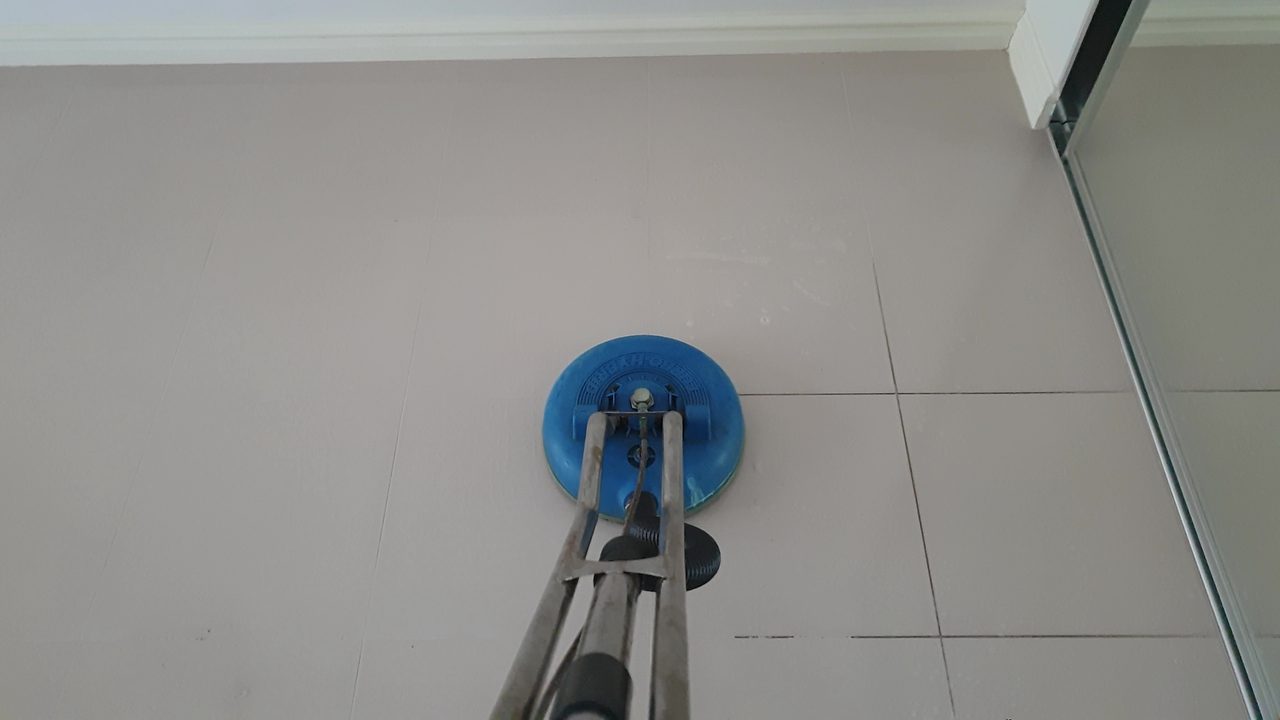
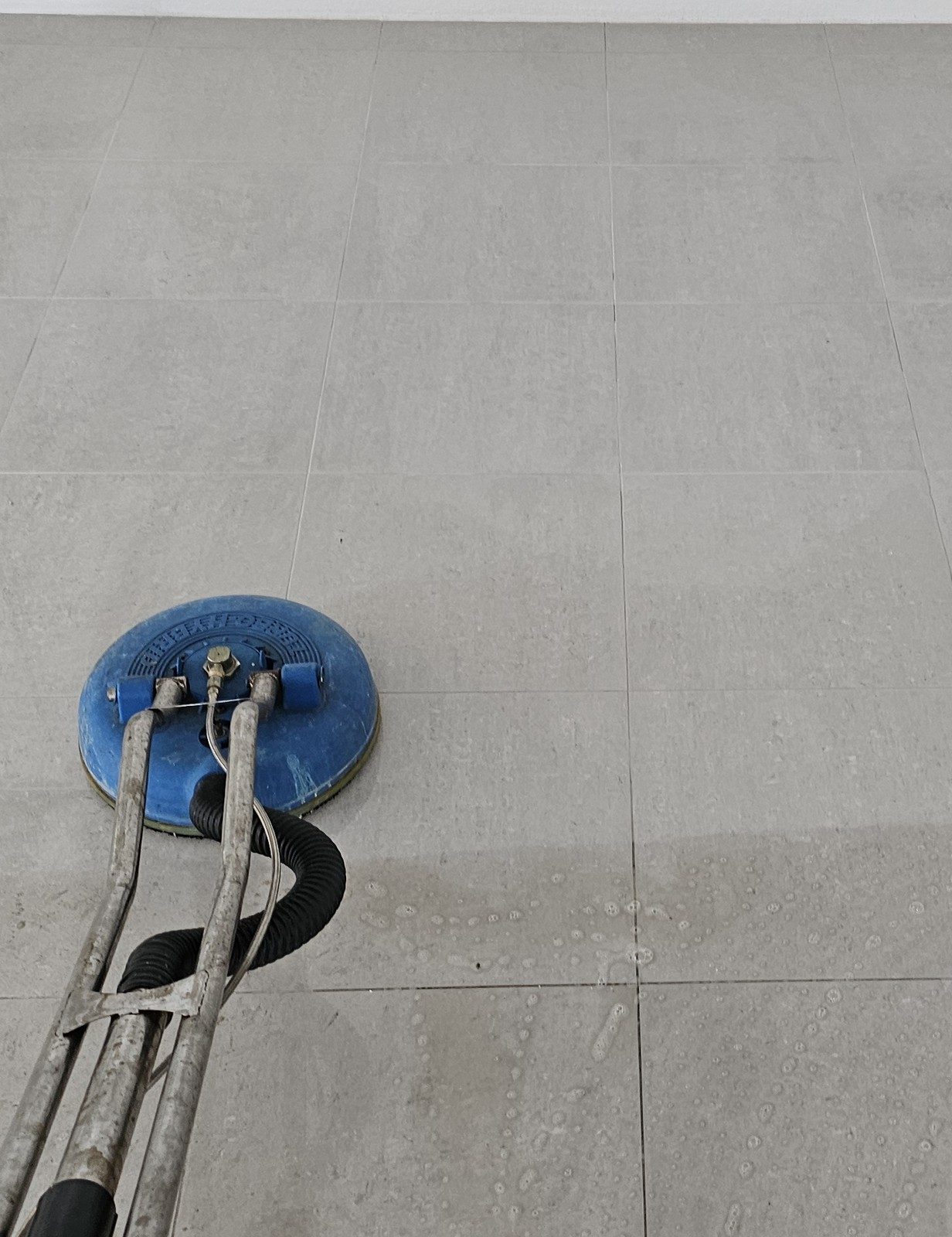
Moving out of commercial premises in Perth, a tenant had to hand the keys back with the carpet and the tiled areas clean. Booking both with us meant the whole tenancy was done in one visit.
The offices were carpeted, and the kitchen, washrooms and entry were tiled. The kitchen floor had its degreaser and dwell time, the washroom grout a product for soap scum and body soil, and every grout line was scrubbed and pressure cleaned with the water recovered on the spot, with the edges and door tracks finished by hand. The carpet was steam cleaned the same day, and the tenancy was ready for the landlord's end-of-lease inspection.
Commercial premises in Perth, with the lease ending
Carpeted offices, plus a tiled kitchen, washrooms and entry
Carpet, tiles and grout together, on a single quote
Every floor clean for the final inspection
Carpet and tiles in one visit
Send us the handover date and the floor areas, and both are cleaned, priced on one quote, and dry before the inspection.
What fills the grout depends on the room: cooking fat in a kitchen, soap scum and scale in a washroom, street grit at the entry. That soil decides the product we use, and the tile decides the settings. Tell us which rooms are tiled and each is measured and priced on one visit.
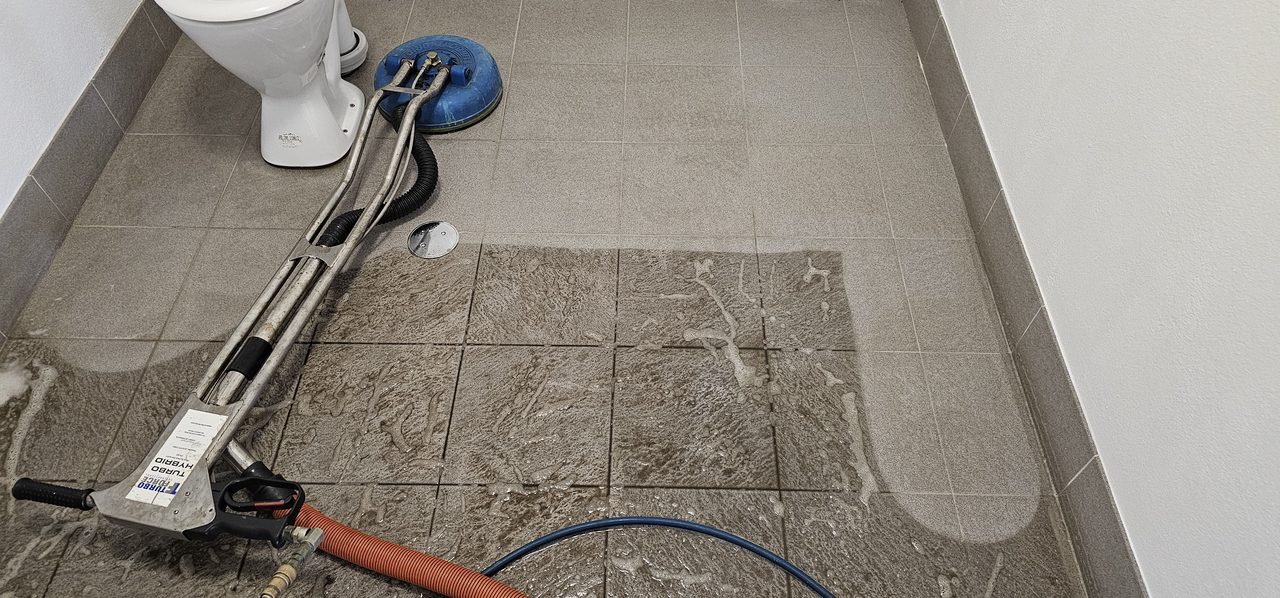
Foot traffic tracks street grit in and grinds it into the first few metres of grout. Mopping also misses the edges, so the band along every wall ends up far darker than the middle of the floor.
Along the walls we work by hand, and we lift the entry mats so the tiles under them are cleaned too. The mats go back once the floor is dry.
Ask for the entry first on the visit; it's the floor that greys fastest, so it sets how often the rest needs us.
Cooking fat settles on the floor and builds a slippery film that mopping only spreads around. The first sign is a floor that feels slippery near the pass.
We lay down a degreaser and give it its full dwell time, then pressure and vacuum recovery remove the film and the slip hazard together. We start after close and finish before prep.
In restaurants, cafes and hotel kitchens, equipment on castors is rolled out and back. Plumbed and gas-fitted equipment isn't moved; we clean around it by hand.
Give us the kitchen's closing hours and the floor is degreased, rinsed and walkable two hours later, before the first shift.
Grout in a washroom stays damp most of the time and holds the soil that causes the smell. A surface spray masks it for a few hours at most.
Cleaning the grout out removes the source of the odour. It is the result staff and visitors notice first.
Washrooms in gyms, schools and offices also collect soap scum and hard-water scale, which need a different product from kitchen grease.
Tell us how many washrooms and the quote covers the scale, the scum and the odour in one figure.
Soft drink, coffee and food spills dry to a sticky film on the tiles, and the grout around the sink and the microwave bench is the most soiled.
Booked ahead of an inspection, the clean leaves the floor ready to show.
Add the staff room to the same visit and it's priced with the kitchen beside it.
Lobbies are often finished in limestone, terrazzo or polished porcelain. Once we've identified the surface, we use neutral products and gentle settings. If a stone or its finish leaves any doubt, we test our products on a hidden corner first.
A strata lobby is cleaned in a single visit from the entry to the lifts, so the whole floor looks even.
Send us a photo of the stone and we bring the neutral products it needs; a test patch, where one is needed, happens on the visit.
Want your floors to read like these? The free quote is below, or see the gallery first.
★★★★★
We haven’t had our carpets cleaned for more than a 10 yrs and Zoran did amazing job 🌟🌟🌟🌟🌟 Carpets looks as new and perfect. Highly recommend his services. Many thanks
★★★★★
Hi everyone I would like to thank Zoran for a wonderful job you did cleaning the carpets. Very meticulous, efficient, nice natured person. Would use you again in the future and recommend you to anyone looking for a very very good carpet cleaner.
★★★★★
Just had my carpets cleaned by Zoran who has done an amazing job. He is so professional and polite I would highly recommend Zoran
★★★★★
The whole experience was great, from the initial communication, the planning and the carrying out of the job. There were no issues at all. It was well priced and Zoran did a really good job. I will definitely call him again next time :)
The rate per square metre for your floor is set at a free visit, after a measure-up and a close look at the tile or stone and at how much soil and grease the grout lines hold.
Small tiles pack far more grout into a room than large tiles, and the grout is where the time goes. A room of mosaic can hold many times the grout length of the same room laid in large-format porcelain.
Grey grout in an office corridor comes clean quickly. A quarry-tile kitchen with years of cooking fat needs degreaser, time to work and often a second pass.
Glazed ceramic takes all the heat and pressure the spinner can give. Stone needs gentler settings at every step, so it takes longer.
The hours your floor is free shape the plan, whether that's a kitchen after close, a lobby before opening or a washroom block midweek.
Benches, plumbed equipment and fixed seating are cleaned around by hand, which is slower going than the spinner on open floor.
A job split over three visits carries three set-ups and three pack-downs, against one for a single visit. Many kitchens and shops choose the split anyway, so they never stop trading.
Tile work has its own minimum charge: $440, GST inclusive, which covers a small floor in full. For a larger floor, the written quote sets the square-metre rate; the minimum is part of that total, and the figure is fixed for the area and work it covers. Ask for yours below and the floor is measured on a free visit. For a home there is no visit to book first. Call us and we put a free cost estimate together over the phone, then take it from there.
Grout is porous and sits below the tile surface, so it collects whatever the mop leaves behind, and the habits below stop that happening.
Grout that turns grey again soon after a clean is nearly always being mopped with dirty water: the soil in the bucket settles into the grout lines as the floor dries. Change the water often and your nightly mopping is enough to keep it light.
Sand tracked in from the street scratches glazes, dulls stone and packs into the grout lines. Entry matting long enough to take several steps on catches it before it reaches the tiles.
Marble, limestone and terrazzo need a pH-neutral floor cleaner. Acid dissolves the surface of calcium-based stone and leaves dull etch marks, which are damage to the stone itself, not soil. Bleach is alkaline and won't etch, but it fades coloured grout, so keep it off these floors too.
A kitchen walkway usually needs a clean well before a lobby does, and the grout shows you when: once the path is darker than the grout beside it, that area is due.
Water spreads fast across tile
A burst pipe or an overflowing washroom sends water under skirtings, into the base of walls and across to nearby carpet within hours. Wet tile is slippery, so close the area off before anything else. With the water off at the valve, ring us for extraction and drying.
Carpet, upholstery, rugs and water-damaged floors: the rest of the building can be booked with your tiles. List what else needs doing when you ask and it's priced on the same visit.
Hot water extraction, encapsulation or agitation before the rinse, matched to each carpeted floor in your offices.
Commercial carpet cleaning in Perth →We steam clean the carpet tiles and broadloom next to your tiled areas, lifting the grey out of the traffic lanes.
Carpet steam cleaning in Perth →A general clean leaves some spots behind; we work out what caused each one and choose the spotter by its stain family.
Carpet stain removal in Perth →Wool carpet beside your tiled foyers and washrooms, cleaned with WoolSafe-approved products while we are on site.
Wool carpet cleaning in Perth →Each chair and lounge gets the method its fabric calls for, water-based or solvent.
Upholstery cleaning in Perth →A dye test on hand-made rugs, and products set for wool, silk or synthetic fibre.
Rug cleaning in Perth →Leaks and burst pipes: we extract the water and keep drying until the moisture meters confirm it's done.
Water damage restoration in Perth →Ask us directly
If your question isn't answered here, call us. You'll get a straight answer about your carpet and your premises, with no obligation.
By the square metre, from our tile and grout minimum of $440, GST inclusive. A small floor costs that minimum, which pays for the trip, the set-up and the first area of tile we clean; on a larger floor it is folded into the square-metre price. The rate depends on how much grout there is, what it's holding, the type of surface and when we can do the work. Small tiles mean far more joints to clean, and greasy kitchen grout takes longer than a lightly soiled corridor.
We measure up on a free site visit, confirm the price in writing and stick to it unless the work itself changes. Read our pricing guide for how the minimum charge and square-metre pricing work together.
Because a mop cleans the tile face, and the grout sits just below it. Cement grout is porous, so every pass of the mop leaves a little dirty water in the joints. The water dries, the soil stays behind, and the joints slowly darken over months and years.
That isn't a failing of your cleaning team. Soil that has soaked into grout has to be scrubbed loose and flushed out under pressure, and that's the work we do. Our guide explains why mopping isn't enough in more detail.
Once the grout is clean, fresh mop water, changed often, keeps it lighter for longer.
On most floors, grout that is only dirty comes back to its original shade, or very close to it. The grey is usually soil packed into the grout rather than a change in the grout itself, so once the soil is flushed out, the original shade shows again. Before we start, we find that shade in a spot feet never reach, such as under a fixed bench, and that's the colour we work towards across the floor.
Grout that has been dyed or colour-coated, etched by acid, faded by bleach or worn down below the tile face stays that way after a clean. Each of these shows up when we inspect the joints on the site visit, so the quote tells you what result to expect.
If the grout is solid and only dark, it's a cleaning job, and that's our work. If the grout or the tiles have failed, it's a repair job for a tiler. A tiler is needed where you find:
It's common to find both on one floor, such as sound grout across the room and a few failed joints at a doorway or around a floor waste. Before any cleaning, we mark out which joints need a tiler and which only need cleaning, so you can have the repairs done first. When it's hard to tell, a small test patch on the site visit shows what cleaning will achieve.
pH-neutral products. We clean marble, limestone, travertine and terrazzo, and we set up every step of the clean for stone. Acid, not the machine, is what damages these floors. Marble, limestone and travertine are calcium-based, and so are the marble chips and cement in most terrazzo, so an acidic cleaner etches them, and the dull marks it leaves are permanent.
On stone we pair those pH-neutral products with lower pressure and softer brushes than on ceramic. Where we need to confirm how a particular stone will respond, we clean a small hidden area before the open floor.
Your daily cleaning matters too. Ask your cleaners to use a neutral floor cleaner on stone and to keep bleach and acidic products off it.
Sound cement and epoxy grout takes the spray without harm, and the spinner's enclosed head recovers the water straight away, so none of it sits in the joints or gets forced under the tiles. The cover also keeps the spray off walls, glass and skirtings.
The pressure is set for each surface. Glazed ceramic and porcelain take full pressure; stone, slate and older grout get less.
Grout that is already cracked or crumbling is different, because pressure would wash more of it out. For that reason, every floor gets a grout check before the spinner goes down.
Only the part we're working on. Work moves through one section at a time, with wet-floor signs around each one, and a dry route stays open for anyone who still needs to get through. Each area is booked for when it is free, any day of the week, so the busiest ones are cleaned when nobody needs them, and every area can be walked on two hours later.
Three things on your side make the clean go faster:
The smell is usually coming from the grout, and a deep clean of the joints removes it. Body soil, urine and soap residue soak into cement grout that rarely dries out, especially around urinals, toilets and floor wastes. A spray or a wipe only treats the surface, so the smell returns.
Our clean goes into the joints. The grout gets a product made for soap scum, body soil and scale, every line is scrubbed, and the pressure spinner flushes the residue out. That takes the source of the odour out of the floor.
If a smell remains once the grout is clean, the cause lies elsewhere, most often a dried-out floor waste trap or a leak at the base of a toilet pan. That's a job for a plumber, and we'll let you know if we see signs of it.
Yes, if by steam cleaning you mean hot water extraction, which is how we clean tile and grout. After a pre-spray and a scrub of the grout lines, an enclosed spinner sprays hot water into the floor under pressure while its vacuum recovers the water, and the soil in it, at once. Heat softens grease, pressure reaches into the grout, and recovery means nothing is left behind to dry back in.
A steam mop or vapour machine works differently. It softens grime on the tile face, but it has no vacuum to recover it, so the loosened dirt settles back into the joints.
It's the same principle as carpet steam cleaning: the water goes in hot and comes back out with the dirt.
For quiet areas such as corridors and store rooms, yes: every tiled area needs a deep clean at least once a year, and that covers them. The hardest-working areas need more, and these decide which ones, and how much more:
Since the quiet areas can stay on the yearly clean, the busy ones can be booked on dates of their own. To check an area, compare the grout in a walking lane with the grout just off the path: once the lane is clearly darker, that area is due. On the quote visit, we'll mark which areas are due now and which can wait.
Kitchens full of equipment are routine work for us, and the floor under most of it gets cleaned. Anything on castors, such as benches, fridges and racks, is rolled out so we can clean the floor beneath it, then rolled back. Equipment that is plumbed in, gas-fitted or bolted down stays where it is, and we clean around and under it by hand as far as we can reach.
We start after the last service and let a degreaser break down the cooking fat, then scrub and pressure clean the floor, and the night is set out so the floor can be walked on again before prep starts. It helps if food and stock are off the floor, and if you tell us about any equipment that shouldn't be moved or unplugged.
If your dining room is carpeted, we can add restaurant carpet cleaning to the same visit.
Two hours after cleaning, on any tile we clean. The spinner recovers the water as it cleans, so the tiles are only slightly damp when a section is finished. Wet-floor signs stay in place until the two hours are up, and we put mats and equipment back when the floor has dried.
We measure each tiled area and confirm the tile and the grout, cement or epoxy. Then we look for the faults that need a tiler rather than a cleaner:
We also find the grout's true colour in a spot feet never reach, and where the floor needs one, we clean a small test patch to show what the clean will achieve. The price follows in writing. When you call, the rough size of each area and the tile type, if you know it, are all we need to book the visit.
Easier, and quicker. Epoxy grout is common in the commercial kitchens and washrooms we clean, and it doesn't absorb liquid the way cement grout does, so soil stays on its surface. The degreasers a kitchen floor needs don't harm it either.
Epoxy dulls under a surface film of grease or old cleaning product, and our clean removes that film along with the soil.
If you're not sure which grout you have, put a few drops of water on a joint: cement grout usually darkens as it soaks the water up, while epoxy stays the same colour. We confirm it on site either way, because the grout decides the products we use and the time the job takes.
It will in most kitchens, because the slipperiness comes from a film on the tiles rather than the tiles themselves. Cooking fat, and detergent left behind by mopping, build up as a thin layer over the tile's textured surface, which is the part that gives shoes their grip. The floor can look dry and clean while it's still slippery underfoot.
We break that film down with a degreaser, scrub it out of the tile grain and the grout, and rinse it away under pressure with the water recovered, so no residue stays behind to coat the floor again. Safe Work Australia's guidance makes the same point: the right cleaning method keeps a floor slip resistant.
If a floor is still slippery once it's clean, the tile surface itself may be worn smooth, and cleaning can't add back grip that has gone. Where we see that wear, you'll hear it from us before the clean, not after.
Our tile work runs from restaurant kitchens and school washrooms to marble strata lobbies. The same standard of clean serves all of them: the products are picked for the soil and the surface, and each industry page below covers its own buildings.
Can't find your industry? Tell us the building and we quote the tiles after a free measure.
The rough size of each tiled area and the tile type, if you know it, are enough to start. We measure up and check the grout on a free site visit, then send a written price. If you're in a hurry, Zoran answers on 0460 815 038.
Book your kitchen, washroom or lobby floor with one call. We clean it at the time that suits your trade, at the price agreed in writing on the free site visit.