
10 Questions to Ask Before Hiring a Commercial Carpet Cleaner in Perth
The questions Perth facility managers can put to any commercial carpet cleaner about certification, insurance, quotes, site walks and method.
Read ArticleVague carpet clauses buy nothing. The six contract clauses that make carpet care deliverable and checkable, plus KPIs, rates structures and handover.
Somewhere in your cleaning contract there is a sentence about carpet. It usually reads "carpets to be maintained in good condition" or "carpets cleaned as required", and it usually cost the drafter about four seconds. That sentence buys you nothing. It sets no frequency, names no method, defines no standard and requires no evidence, which means it can be neither complied with nor breached in any way anyone can demonstrate.
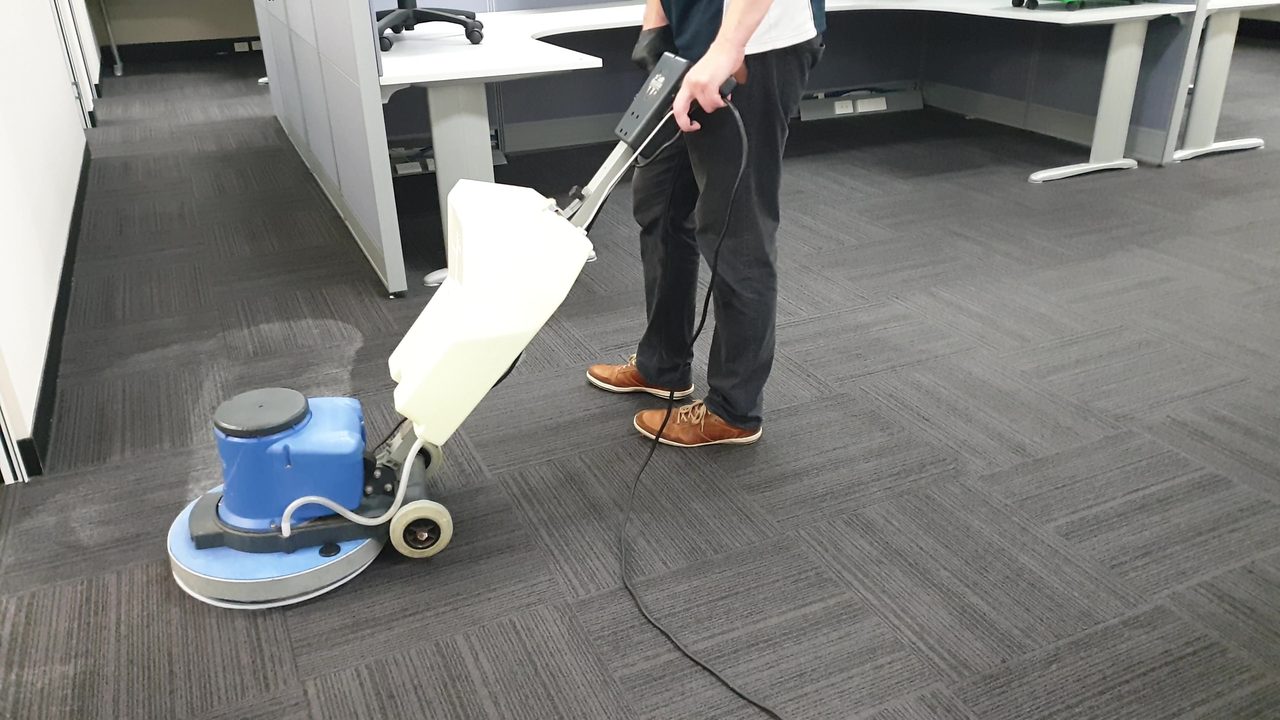
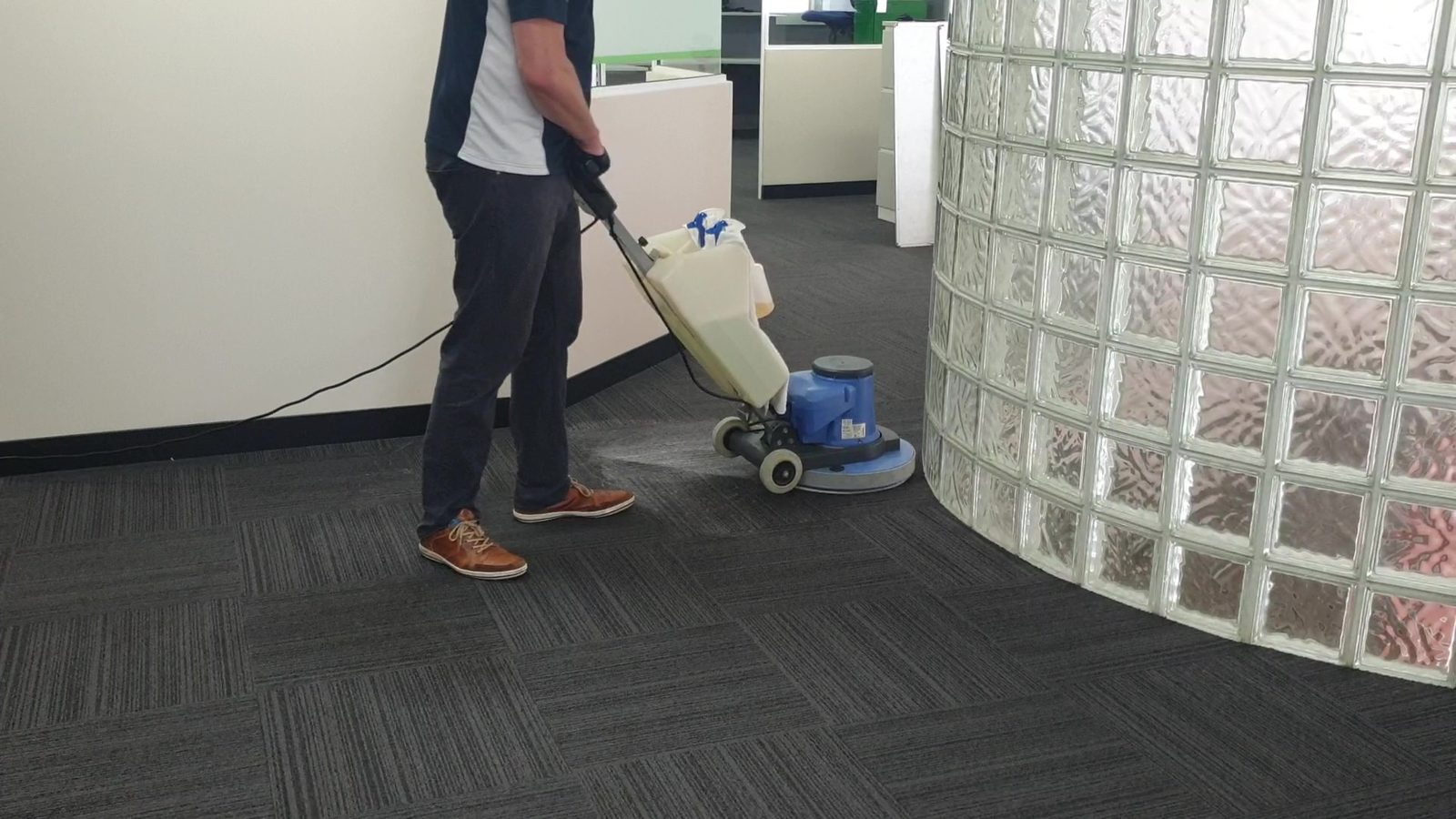
The predictable result plays out in buildings all over Perth. The contractor, having priced to win a competitive tender, allows for the cheapest thing that could arguably be called carpet maintenance: a bonnet pass twice a year, meaning a rotary machine buffing a damp pad over the tips of the pile. The surface brightens for a fortnight. The soil underneath stays exactly where it was while the traffic areas darken as compacted soil builds up in the base of the pile. When the client complains, the contractor points to the clause and observes, correctly, that the carpets are being maintained.
Nobody in that story behaved badly. The contractor delivered what the document asked for, and the client received precisely what the client specified. The failure happened at drafting, which is the one stage where fixing it costs nothing but attention. This article is about writing the carpet schedule of a cleaning contract or tender so that both parties know exactly what has been bought, and so that anyone can check whether it arrived.
A specification differs from a wish in two ways: it can be delivered, and it can be checked. "Good condition" fails both tests, because no contractor can price it and no client can audit it. "Encapsulation clean of the level three corridors each quarter, photographed at the nominated reference points" passes both, and it takes barely one more line on the page.
The working test is simple. Could a stranger, holding only the contract and a floor plan, walk your building and say whether the carpet obligations were met last month? If the answer is no, the clause is decoration. Six clauses, taken together, get the answer to yes, and the rest of this article walks through them one at a time.
Carpet does not soil evenly, so a single frequency for the whole building is wrong everywhere at once. The ground floor entry takes coastal sand in a sea breeze and red dust when the easterly blows, and it sees more feet before morning tea than a quiet upper level sees in a week. Lift lobbies concentrate every journey through the building onto a few square metres. Meeting rooms host coffee and biscuits but little grit. One frequency cannot serve all of them; it will be wasteful in the quiet zones and negligent in the busy ones.
So the first clause names the zones, ideally on a marked-up floor plan attached as a schedule: entries and ground lobby, lift lobbies and lift cars, primary corridors, open plan areas, meeting rooms, stairs, back of house. Each zone then gets its own frequency for each task, vacuuming through to restorative cleaning. The table below is a typical starting point for a mid-rise Perth office building, offered as a shape rather than a rule, because your soil load sets the real numbers.
| Zone | Vacuuming | Professional clean |
|---|---|---|
| Entries and ground lobby | Daily | More than once a year, as walked-in soil builds up |
| Lift lobbies and primary corridors | Daily | More than once a year where traffic shows |
| Open plan areas | Two to three times weekly | At least once a year |
| Meeting rooms | Twice weekly | At least once a year |
| Back of house and stairs | Weekly | At least once a year |
A starting point, not a rule. The frequencies are yours to set. Our advice is a professional clean of every zone no less than yearly, plus extra visits wherever the soil load calls for them. We recommend each zone's frequency at the inspection.
The point is not these particular frequencies. The point is that a zoned schedule can be priced accurately at tender, delivered deliberately through the year and audited in a single afternoon, and none of those three things is true of "as required".
Cleaning methods are not interchangeable, and a contract that does not name them invites the cheapest one. Encapsulation, a low-moisture method for carpet with light soil, brushes a polymer detergent through the pile, where it dries to a crisp film around the soil. Vacuuming then removes that film with the soil inside it, leaving nothing in the fibre. Hot water extraction goes deeper and suits heavier soil and many different stains, with heated solution flushed through the full depth of the pile and drawn straight back out, usually by a truck-mounted machine. Which one a zone needs is recommended at the inspection.
A contract that says "carpets cleaned quarterly" is technically satisfied by four bonnet passes a year, which will keep the surface passable while the base of the pile quietly fills with grit. Naming the method for each zone closes that gap, with the method recommended at the inspection and written into the schedule. This is the same structure a specialist would propose for regular commercial carpet cleaning, written into a document that a contract manager can actually enforce.
Method naming also protects the carpet itself. Wool and wool blends tolerate a narrower range of chemistry and moisture than nylon, and the method clause is the natural place to require Woolsafe-approved products on wool fibre. If your building carries both fibres, say so in the schedule, because the contractor's products and pricing should differ by floor.
Most of the soil entering a commercial building is dry particulate: sand, grit, dust, paper fibre, skin. As a rule of thumb, industry testing has long shown that the large majority of it can be removed by nothing more sophisticated than regular vacuuming with a brush-action machine, provided it happens before the particles work down into the base of the pile and start abrading the fibre. Vacuuming is therefore where most carpet care actually happens, and it is the task most contracts specify least.
"Vacuum regularly" is unverifiable, and a contractor under time pressure will meet it with a flat-head suction wand pushed quickly along the middle of each corridor. A working clause names the machine class, an upright or twin-motor machine with a rotating brush rather than suction alone, sets the frequency per zone from the schedule above, and states how compliance is verified.
Verification does not need a laboratory. Dated task logs signed by the operator, periodic supervisor checks along the carpet edges where a rushed vacuum shows first, and an occasional glance at the machine itself all work, because a permanently full bag and a glazed, bald brush strip tell their own story. We have written separately about a verifiable vacuuming standard in full detail; the contract only needs to reference one and hold the contractor to it.
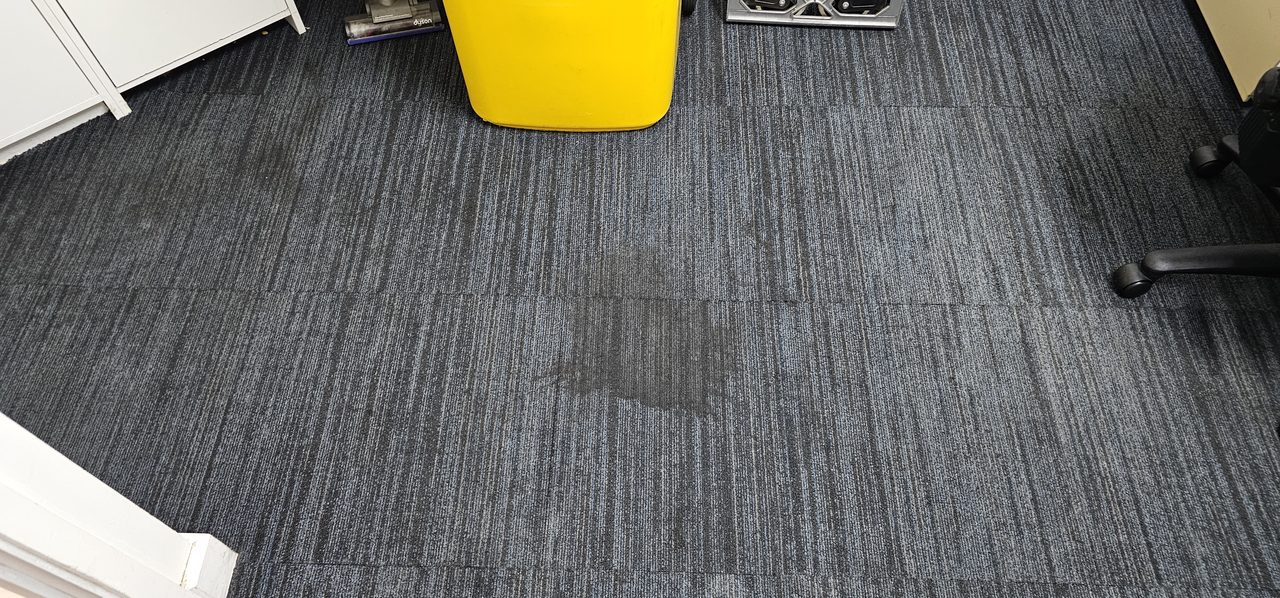
Time is the active ingredient in stain chemistry. Coffee blotted within the hour is a spot; coffee discovered at month end is a dye stain that has bonded with the fibre and wicked into the backing. The difference between the two is not the product or the technician, it is the clock, which makes response time one of the few things a contract can genuinely control.
A working spotting clause has four elements. A reporting channel that anyone in the building can use without ceremony, because a spill nobody can report is a spill nobody treats. A response window: same business day for front-of-house zones and twenty-four to forty-eight hours elsewhere is a typical commercial standard. A spotting kit held on site, stocked with products matched to the building's fibres. And a log recording what was treated, when, and with what.
The clause also needs an escalation line. Day cleaners should attempt what a spotting kit can safely do and nothing more, and anything that does not respond should be escalated to the carpet specialist within a stated number of days, logged rather than scrubbed at. A good share of the permanent marks we are asked to assess began as removable spills and were made permanent by enthusiastic scrubbing with the wrong product, which is a poor way to spend a stain that would have surrendered to the right one.
Carpet declines too slowly for anyone to notice. The corridor you walk every day looks the same as yesterday on every single day while it quietly loses ground, which is why appearance disputes between client and contractor are always a contest between two unreliable memories. Dated photographs of fixed reference points end the contest before it starts.
Nominate the points in the contract itself: the main entry, one lift lobby, a corridor junction, a stretch of open plan. The contractor photographs each one from the same position in similar lighting, monthly or quarterly depending on the building, and lodges the dated images with the report. Any drift in appearance now shows up as a side-by-side comparison rather than an argument, and whether the cleaning is holding the standard becomes a matter of looking.
Keep the report short enough that it is actually read. A property manager should get through it in five minutes without follow-up questions. Its value is cumulative rather than immediate: after a year you hold a dated visual history of the largest surface in the building, which is worth real money at lease end, at insurance time, and in every renewal conversation with the contractor.
The sixth clause asks a question few clients think to ask: what exactly is going into the carpet, and at what strength? It is partly a safety matter, since product names and their safety documentation should be on file for the building in any case, and most commercial sites already require that of every contractor on site. It is equally an asset matter, because the wrong chemistry does slow damage that everyone mistakes for age.
Detergent that is over-applied or poorly rinsed leaves a soft, sticky residue in the pile that grabs every particle of passing soil, so the carpet resoils faster after each clean and the decline gets blamed on the carpet. High-alkalinity products on wool cause alkali damage over repeated cycles, so the fibre turns harsh and dull and the dyes can bleed. On wool with a jute backing they can also cause cellulosic browning, a permanent brown discolouration. The disclosure clause closes both doors: products named, dilution rates stated, suitability for the building's fibres confirmed in writing, and any substitution notified before it is used rather than discovered afterwards.
The strongest recommendation in this article is structural rather than verbal: keep the periodic carpet work out of the daily cleaning contract. A general cleaning company is organised around daily tasks, bins, bathrooms, kitchens, vacuuming, and it prices carpet extraction as a rare extra performed with hired or entry-level equipment by whoever happens to be rostered on. Bundled carpet work is priced to be won, not priced to be done.
The result is familiar to anyone who has audited one of these agreements. The specified cleans quietly become bonnet passes, the annual extraction becomes a rented machine and a long Friday night, and the carpet ages at exactly the rate it would have with no clause at all. Nobody is cheating. The work is simply outside what the contractor is built and equipped to deliver, in the same way a fine restaurant is a poor place to get your car serviced.
Bundled carpet work is priced to be won, not priced to be done.
The clean split gives each party the work it is built for. The daily contract owns vacuuming and spot response; the specialist contract owns the professional cleaning; and both documents reference the same zone schedule so nothing falls into the gap between them. Vetting the contractor for the specialist side is its own exercise, and one we have covered separately. The contract's job is to make sure there is a specialist side to vet.
Every tender response arrives with a KPI section, and most of it is decoration. "Carpets maintained to a high standard" is not a key performance indicator; it is the vague clause wearing a lanyard. An indicator earns the name only if two people can measure it independently and arrive at the same answer, and that single test disqualifies most of what appears in tender documents.
The measurable set is short and it leans on the clauses already written. Appearance, scored against the commencement photographs at the nominated reference points on a simple numeric scale, by walking the building with the folder open. Schedule adherence, counted as tasks completed against tasks planned, straight from the logs. Spot response, read from the spotting log against the clause window. Complaint counts, provided complaints have a defined place to be lodged and are actually counted.
| KPI as written | Measured how | Verdict |
|---|---|---|
| Appearance at or above the agreed score at each reference point | Side-by-side photo comparison at the nominated points, quarterly | Measures |
| Carpets maintained to a high standard | Nobody can say | Decorates |
| 95 per cent schedule adherence | Completed tasks against the published schedule, from the logs | Measures, if the logs exist |
| Customer satisfaction | Undefined survey, unstated sample | Decorates until defined |
| Spots responded to within the clause window | Spotting log times against report times | Measures |
The test is always the same: could two people measure it independently and get the same answer?
Resist the urge to have many. Three or four indicators that are genuinely checked at each review will outperform a dashboard of twelve that nobody audits, because every unmeasured KPI on the list quietly teaches the contractor that none of them matter.
Two pricing structures cover nearly every carpet schedule. A lump sum buys certainty: one figure covering all listed tasks, easy to budget and easy to approve. A schedule of rates prices each task per zone, so much for an encapsulation clean of the level two corridors, so much for hot water extraction on the ground floor, and the invoice reflects the work actually performed in the period.
Which one suits you depends on how variable the soiling is. A stable office tower with predictable traffic can sensibly take a lump sum. A building whose load moves through the year, retail, hospitality, anywhere with event seasons or a wet-shoe problem when the June rain sets in, is usually better on a schedule of rates, because a lump sum priced for the average year quietly under-delivers in the bad one. Lump sums also carry a known failure mode: when the contractor's margins tighten, scope shrinks first in the places the client checks least.
Then match the contract term to the yearly cycle of carpet care rather than to habit. Carpet care runs on an annual cycle, and the maintenance calendar sets out what a Perth year does to a commercial floor, so a twelve-month contract covers exactly one cycle with no room to correct course. A two- or three-year term with annual review points lets the frequencies be tuned against the photographic record, which is the entire reason you collected it.
Contractors change. Companies are bought, tenders are lost, relationships run their course, and the standard handover between an outgoing and an incoming cleaner is a set of keys and a site induction. Everything this article has told you to accumulate, the reference photographs, the spotting log, the product list, the schedule history, walks out the door with the old contractor unless the contract says otherwise.
The handover clause is two sentences long. The records belong to the client and are lodged with the client or the managing agent as they are produced, not reconstructed at exit; and on termination or expiry, the outgoing contractor delivers the complete record set within a stated period. Written that way, the incoming contractor starts with the building's history instead of a blank floor plan, the appearance baseline survives the change, and the specification carries on as if nothing happened, which is exactly the point of having one.
If you are drafting a tender or repairing a contract that has gone quiet, the carpet schedule is a page of work, not a project. An hour walking the building with the draft in your hand is usually enough to name the zones, set the starting frequencies and find which of the six clauses your current document is missing. Ask for a walk-through if the draft is open in front of you now.
The questions Perth facility managers can put to any commercial carpet cleaner about certification, insurance, quotes, site walks and method.
Read ArticleProfessional cleaning gets the attention, but the nightly vacuum decides how fast a floor ages. How to specify, check and keep up the vacuuming your carpet needs.
Read ArticleHow Perth's dry summers and wet winters set the timing of vacuuming, encapsulation and deep cleaning, plus budgeting, records and working around tenants.
Read Article