
The True Cost of Neglecting Commercial Carpet Maintenance
Deferring carpet maintenance does not save money, it moves it. Here is the real cost stack, the arithmetic, and how to build the business case.
Read ArticleWhat make good really means for carpet: cleaned, repaired or replaced, fair wear and tear, condition reports, and the timeline that keeps costs down.
Make good is the clause that decides what condition you hand the premises back in, and floor coverings are almost always named in it. It usually sits in a schedule near the end of the lease, in a dense paragraph nobody reads closely until the last quarter of the term. That paragraph can be the difference between a modest cleaning invoice and a substantial claim against your bank guarantee.
Carpet features heavily because it is the largest continuous surface in the tenancy and it shows use more visibly than any wall or ceiling. A landlord about to re-let has a direct commercial interest in how your floor presents on handover day.
This article is general commercial guidance for Perth tenants and their managers. It is not legal advice, and your lease governs. Read the actual document, and if the wording is ambiguous or the sums are significant, get advice on your specific obligations.
Leases use a small set of recurring phrases about floor coverings, and the money sitting between them is enormous. They look interchangeable when you skim. They are not.
"Professionally cleaned" is the cheapest obligation in the set and the easiest to satisfy. It generally means engaging a commercial contractor to clean the carpet to a professional standard and being able to show that you did. "In good repair" is a step up, because repair contemplates physical condition rather than appearance: seams, joins, delamination, torn or lifted sections. "Fair wear and tear excepted" is the tenant's friend, because it carves out deterioration that comes from ordinary, reasonable use over the term. "Replaced", or "new floor coverings of equivalent quality", is the most expensive wording in the lease, and it is the one you want to identify eighteen months out rather than eighteen days out.
Work out which of these you are actually signed up to, and to what standard. Then read the clause again with a pen, because these phrases are often stacked into one sentence and the qualifiers matter as much as the verbs.
A dated condition report, photographed on the day you took the premises, is the most useful piece of paper a commercial tenant ever produces, because it fixes the starting point. Without it, every argument at the end of the term becomes a contest between memory and assertion, and the party holding the bank guarantee is in the stronger position by default.
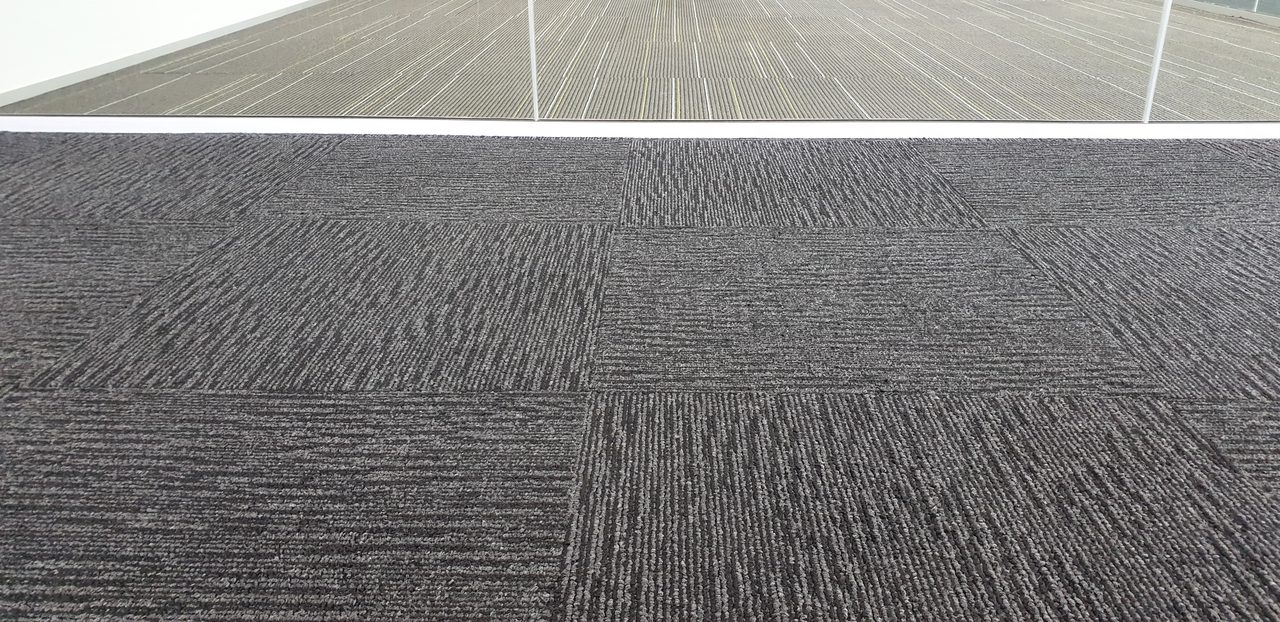
A good report is boring and thorough. Photograph every room, not just the ones that look bad. Shoot traffic areas along their length so the soiling pattern is visible, get close-ups of existing stains, burns, joins or repairs, and include a wide shot of each space so a reader can place the close-ups. Note the carpet type and colour, and whether it is broadloom or tile, because that determines whether patch replacement is possible later.
Then store it somewhere that survives staff turnover. Keep the report and images with the executed lease, back them up, and email a copy to the agent at the start of the term so a dated record exists on both sides.
Plenty of tenancies start without one, particularly short renewals, assignments and spaces taken over from a related business. The position is weaker but not hopeless, and the worst response is to do nothing until the exit inspection.
Reconstruct what you can from ordinary business records: fitout photographs taken for insurance, a builder's progress shots, staff photos from the launch, and the listing images used to market the space before you took it. Any dated image showing the floor before your occupancy has value.
Then create a record from today forward. Photograph the carpet now and again after each professional clean. A documented history showing that the carpet was cleaned on a regular cycle, and that a particular mark has been present and unchanged for years, is far more persuasive than a bare denial at handover. It also demonstrates that you maintained the asset, which is a separate obligation in many leases.
Fair wear and tear is a genuinely contested concept, and most make-good disputes about carpet turn on where the line falls. The general principle is that deterioration arising from ordinary, reasonable use of the premises for their permitted purpose sits inside the exception. Damage, meaning something done to the carpet rather than something that happened through using it, usually does not.
In practice, abraded traffic areas are the classic wear case. So is pile crush in the walkway between the lift lobby and reception, or the shading that appears in high-use corridors. These are the predictable result of people walking where people walk. A permanent stain is a different animal, and so is a burn, a torn seam, a bleached patch from a spilled chemical, or a section cut out for cabling.
The complication is that wear and damage often overlap in the same square metre, and appearance alone does not settle it. A traffic lane that looks dark may be soiling that cleans out completely, or it may be fibre abrasion from years of tracked-in grit that no cleaning will reverse. Knowing which one you have, before the inspection, lets you argue the point calmly instead of guessing.
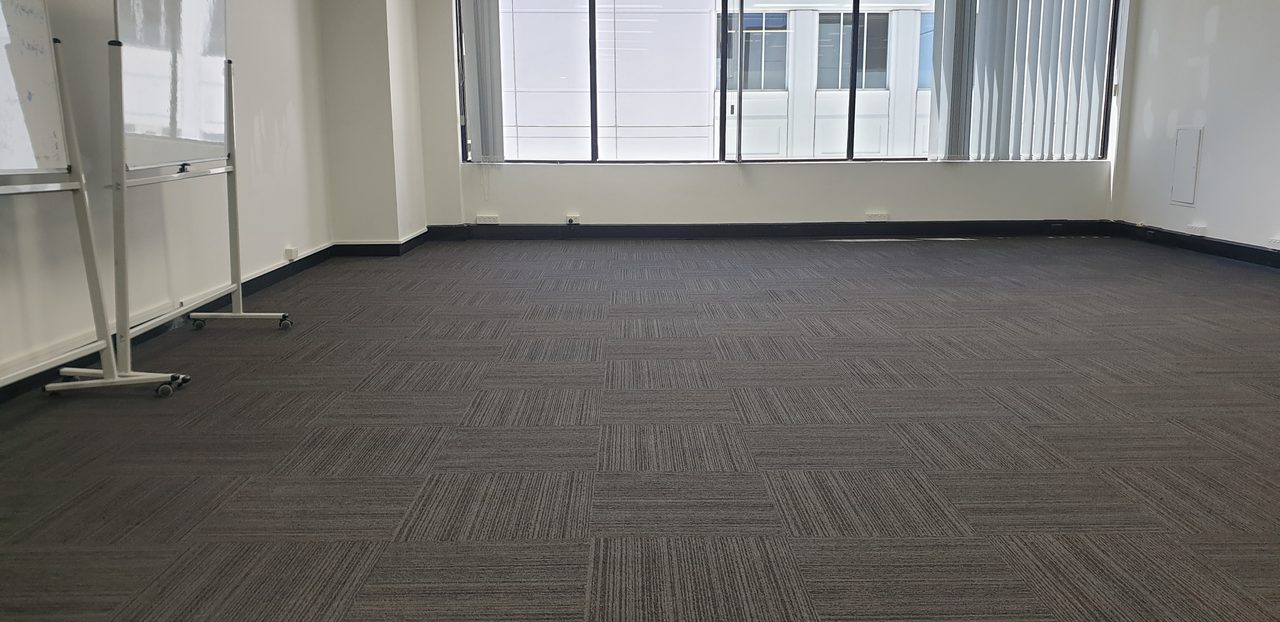
The most common source of unexpected make-good cost is not spills. It is the fitout, and specifically what happens when you take it out. Partitions leave a hard line where the carpet beneath was never walked on and never faded, so the protected strip looks brand new against carpet that has aged for a decade. That contrast reads as damage to an agent even though nothing was harmed.
The same applies under filing cabinets, safes, server racks and compactus units. Heavy static loads crush the pile permanently, and deeper indentations may only partly recover after hot water extraction. Workstation legs and castor cups leave dot patterns across an open-plan floor, and cabling fixed down with strong adhesive tape leaves a residue strip that collects soil and refuses to release it.
Deal with the fitout and the floor as one project rather than two. If partitions are coming down, clean the carpet after the strip-out rather than before, so the newly exposed strips can be blended in and the whole floor presents consistently. If cabling adhesive is coming up, get an honest opinion on residue removal early, because it does not always fully resolve.
The cheapest thing a tenant can do about make good is start early. Eighteen months before expiry is not too soon to read the clause and form a view, because that is still inside the window where you can influence the outcome. By the final fortnight your only remaining option is to pay whatever it costs.
Early inspection buys you the thing that matters most: the chance to try again. Heavily soiled or oxidised areas frequently improve on a second treatment, once a first pass has lifted the bulk of the soil and a targeted follow-up can work on what remains. If your first attempt is three days before handover, there is no second attempt.
Early assessment also changes your negotiating position. A tenant who arrives at the exit discussion holding a contractor's written assessment, before-and-after photographs and evidence of a regular cleaning history is negotiating from documented facts. A tenant who arrives with nothing is negotiating against the landlord's quote.
The economics here are lopsided. A commercial clean across a tenancy is a maintenance-scale expense. A replacement claim covers new carpet, underlay, uplift and disposal of the old floor, adhesive, installation labour, and often an allowance for the landlord's downtime. The gap between the two comes out of your bank guarantee.
Acting early buys something else as well. If the landlord organises the work after you have gone, you control neither the scope, the contractor nor the price, and you are arguing after the fact about an invoice for work you never saw.
The gap between a professional clean and a replacement claim comes out of your bank guarantee.
Cleaning also removes the easiest argument against you. Where a lease requires professional cleaning and the tenant plainly has not done it, the conversation starts from a breach. Where the tenant has cleaned properly and the residual issue is genuinely wear, a landlord asking for a new floor has to explain why cleaning to a professional standard was not enough.
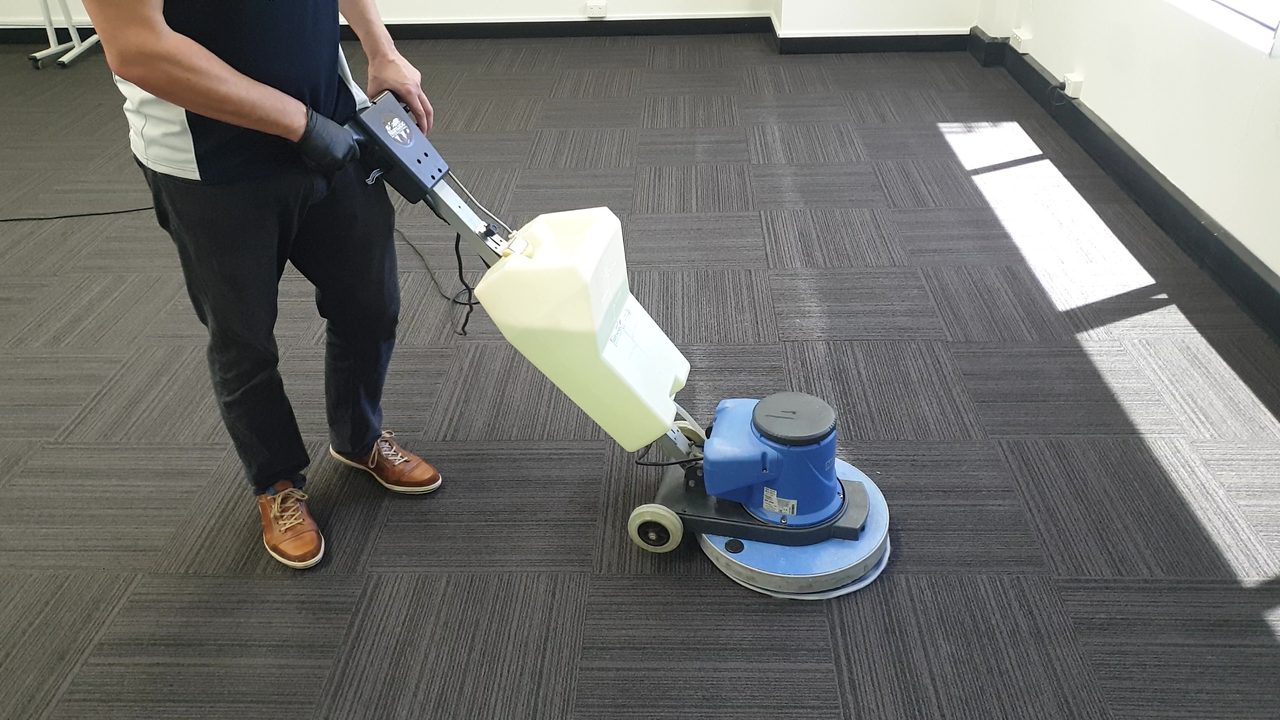
A clean you cannot prove is worth less than a clean you can. Treat the final cleaning as a compliance task and build a small pack a property manager can read in five minutes without asking follow-up questions.
Photographs are the core of it. Take before-and-after shots from the same positions, in the same lighting, with something in frame that fixes the location: a doorway, a column, a window line. A pair of images from identical angles is immediately credible. Close-ups with no context are not.
Add the contractor's invoice, naming the areas cleaned, and keep what you were told at the site walk about the marks likely to stay. Knowing those before the exit inspection keeps a disagreement with the landlord from turning into a claim against your bond or bank guarantee.
Exit inspections are quicker and blunter than tenants expect. The person walking through is forming a view about whether the space can be shown to a prospective tenant next week, and they look at a handful of high-signal things.
The entry registers first, because that is where a viewing starts. Then the main walkways and reception, then the meeting rooms that will be shown, then the pattern of marks across the open-plan floor. They look for contrast: the bright strip under a removed partition, a patch of a different shade, a dark ring near the kitchenette. They check corners and edges, because that is where a rushed clean shows, and they notice whether the floor smells.
It registers first, because that is where a viewing starts.
The main routes through the space, then the front of house.
The rooms that will actually be shown to a prospective tenant.
The pattern of marks across it, and any contrast in shade.
Where a rushed clean shows, and whether the floor smells.
They are rarely assessing fibre condition in any technical sense. That is why a floor properly extracted and dried, with edges done and traffic lanes evened out, so often satisfies the obligation even when the carpet is genuinely old. Consistency reads as a well-maintained tenancy. Patchiness reads as a problem.
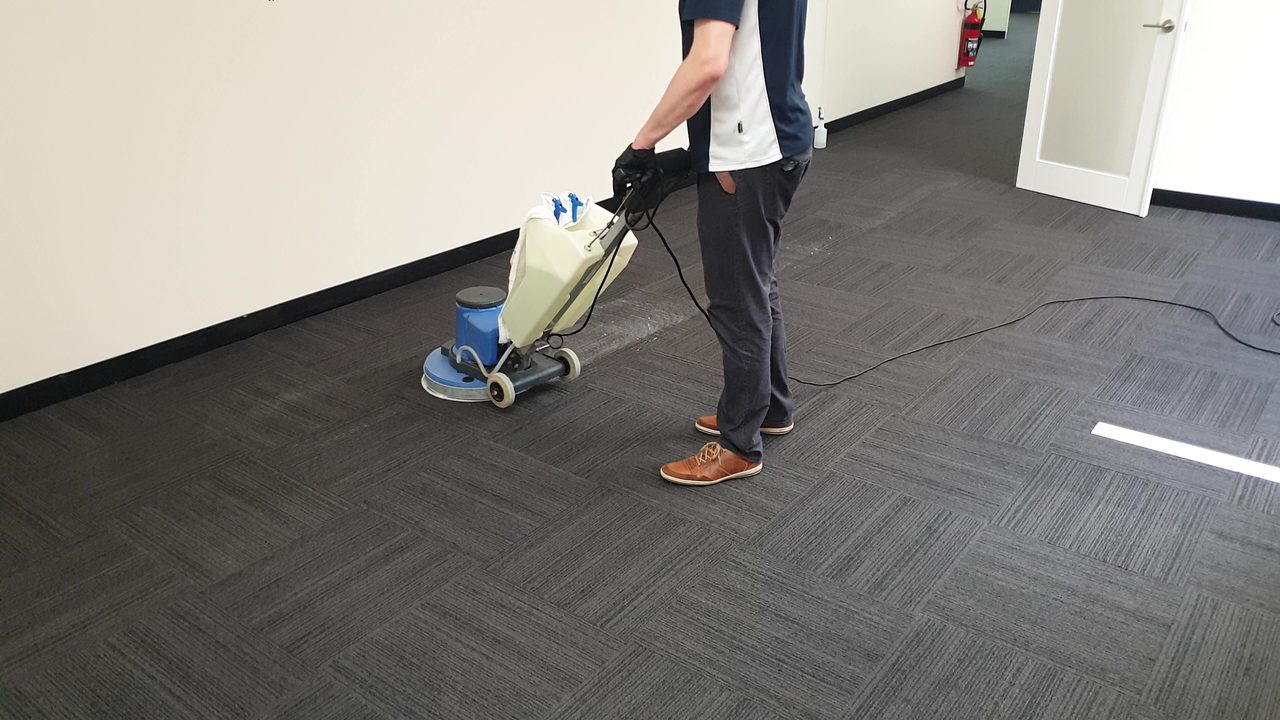
The clause wording is broadly similar across commercial leases, but what actually fails at handover varies by sector, and the plan should follow the use. An open-plan office fails at the entry, the walkways and under the fitout. A retail tenancy fails differently: short terms, frequent refits, and a strip-out that leaves adhesive residue, fixture footprints and a heavily soiled band running a few metres inside the shopfront.
Hospitality and event venues carry the heaviest soil load of any tenancy. Food and drink marks, patterned carpet in function rooms and auditoriums, and years of high-volume foot traffic mean the make-good question is usually whether an accumulated soil load can still be lifted, rather than whether a fitout has left contrast. Venue floors of that kind do far better with a professional clean every year of the lease than with one big effort in the final month. A tenancy that has kept up that cleaning arrives at handover with a great deal less to argue about.
Childcare, education and healthcare tenancies are judged on more than appearance, because the incoming operator usually wants evidence of a hygienic clean rather than a tidy-looking one, and wool or wool-blend carpet in those spaces needs a method chosen for the fibre. At the other end of the scale, serviced suites and small strata tenancies often have no condition report at all, short terms and rapid turnover, which makes your own dated photographs the one record either side holds.
| Tenancy type | Where it usually fails | What to plan for |
|---|---|---|
| Open-plan office | The entry, the walkways and under the fitout | Bare floor first, then one clean across the whole tenancy |
| Retail | Adhesive residue, fixture footprints, a soiled band inside the shopfront | Short terms and frequent refits |
| Hospitality and venues | Accumulated soil load in function rooms and auditoriums | Regular cleaning through the lease, not one effort at the end |
| Childcare, education, healthcare | Judged on evidence of a hygienic clean, not a tidy floor | A method chosen for wool or wool-blend fibre |
| Serviced suites and small strata | No condition report, short terms, rapid turnover | Your own dated photographs are the one record |
Five tenancy types, five different failure points, and the same paragraph of the lease sitting behind all of them.
Sometimes the honest answer is that cleaning will not get there, and knowing that early is worth money too. Carpet worn flat by years of tracked-in grit has lost fibre, and lost fibre does not come back. Where the pile has been abraded down in the traffic lanes, the floor will look better after cleaning but still read as worn, because the wear is structural rather than soiling.
The other clear cases are physical. Delamination, where the backing has separated and the carpet ripples underfoot, is a repair or replacement question. So are torn seams, cut sections from cabling work, and areas water damaged and dried without proper extraction, where the odour sits in the underlay.
The practical test is a test clean on a representative area, and any competent technician will do it for you. Treat a section of the worst traffic lane properly and look at the result in the same light as the rest of the floor. If it comes back, the floor is a cleaning job. If the soil comes out and the area still looks dull, you are looking at fibre wear, and the conversation should shift to whether that wear falls inside the exception in your lease.
Make-good cleaning in Perth has practical constraints worth planning around. Handovers cluster at quarter end and around the June and December breaks, and contractors book out accordingly. If your expiry falls in one of those windows, book earlier than feels necessary.
Access is the other constraint. CBD and West Perth towers generally need a loading dock booking, after-hours access and sometimes an induction, none of which happens at short notice on a Friday afternoon. A tenancy already stripped out may also have had the power isolated, which matters for equipment and for lighting when you photograph the result.
Drying deserves specific thought in winter. An empty, closed-up tenancy with no air conditioning running behaves quite differently from an occupied office, and a floor handed back damp can develop an odour before anyone next opens the door. Leave days rather than hours between the final clean and the handover. We run both truck-mounted hot water extraction and low-moisture encapsulation. Which one we recommend depends on how soiled your carpet is when we inspect it.
Make good is a document problem before it is a cleaning problem. The tenants who come through it well read the clause early, know their starting condition, understand which marks are wear and which are damage, and can produce evidence for all of it. The tenants who pay the most discover the obligation in the final fortnight.
Work through it in order. Find the clause and identify the standard it sets. Locate your condition report, or rebuild the best record you can. Separate wear from damage honestly. Get a professional assessment while there is still time to act on it, clean early enough for a second attempt, and hand the agent a documented pack rather than a promise.
If you have a lease expiry coming and want a straight answer on what your floor will and will not do, we are happy to walk it with you. Commercial Carpet Cleaning Perth is owner-operated by Zoran, services the Perth metro area, and is open 7 days with after-hours and weekend work available. Pricing starts from $385 (GST inclusive). Call 0460 815 038 or email commercialcarpetcleaningperth@gmail.com. And read your lease: the wording in your document, not this article, governs your obligation.
Deferring carpet maintenance does not save money, it moves it. Here is the real cost stack, the arithmetic, and how to build the business case.
Read ArticleThe questions Perth facility managers can put to any commercial carpet cleaner about certification, insurance, quotes, site walks and method.
Read ArticleHow to set commercial carpet cleaning frequency by zone, traffic and sector, and build a Perth maintenance schedule that protects the carpet.
Read Article