
A Twelve-Month Carpet Maintenance Calendar for Perth Buildings
How Perth's dry summers and wet winters set the timing of vacuuming, encapsulation and deep cleaning, plus budgeting, records and working around tenants.
Read ArticleHow to set commercial carpet cleaning frequency by zone, traffic and sector, and build a Perth maintenance schedule that protects the carpet.
Commercial carpet is one of the largest surfaces in most workplaces, and it quietly absorbs everything that walks through the door. Grit, dust and foot-borne soil work deep into the pile long before the carpet looks dirty, and by then the damage to the fibres is underway.
The mechanism is unforgiving. Dry soil in a commercial carpet is mostly mineral: sand, silt and fine grit carried in on shoes. Those particles have sharp edges, and every footfall grinds them against the fibre. The fibre does not so much get dirty as get scratched, and a scratched filament bounces light in every direction rather than back at you. Hence a traffic area that looks dull and flat even after cleaning.
So the right frequency does two jobs. It keeps the premises presentable, and it protects the carpet as an asset by removing abrasive soil before it does permanent damage. That is far cheaper than reacting once the carpet is beyond recovery.
Almost every frequency mistake starts with a guess. Someone decides the office is moderately busy, books a clean every six months, and never revisits it. A twenty-minute exercise gives a far better answer, repeated once a year.
Pick a normal week, not a quiet one and not a peak one, and count the people who cross each area in a working day. Head count plus a sensible multiplier gets you close: staff cross the main walkway several times a day, the kitchen more, the boardroom only when it is booked, and reception takes staff plus visitors plus deliveries. Then rate each zone against a scale of daily traffic events, where one event is one person crossing once.
Not a quiet one and not a peak one.
Count the people who cross each area in a working day, where one event is one person crossing once.
Staff cross the main walkway several times a day, and reception takes staff plus visitors plus deliveries.
Light, moderate, heavy or severe, adding a grade wherever the traffic is public rather than staff.
Intervals hold until something about the building changes.
For every commercial carpet we advise a professional clean at least once a year, sooner wherever the carpet calls for it. Heavy foot traffic, food and drink, soil walked in from outside, a lease or warranty clause and your own organisation's rules all bring a zone's next clean forward. The traffic rating you have just worked out shows which zones those are. You decide when and how often to book. When we walk the site with you, free of charge, we recommend a frequency for each zone from the traffic and the soil we find in the pile. A quiet back office and a busy front reception rarely need the same timetable.
The guide below assumes your own daily care is in place between visits: decent matting, daily vacuuming of the lanes, spills dealt with promptly. If those are missing, every zone needs us sooner and the carpet will still look tired.
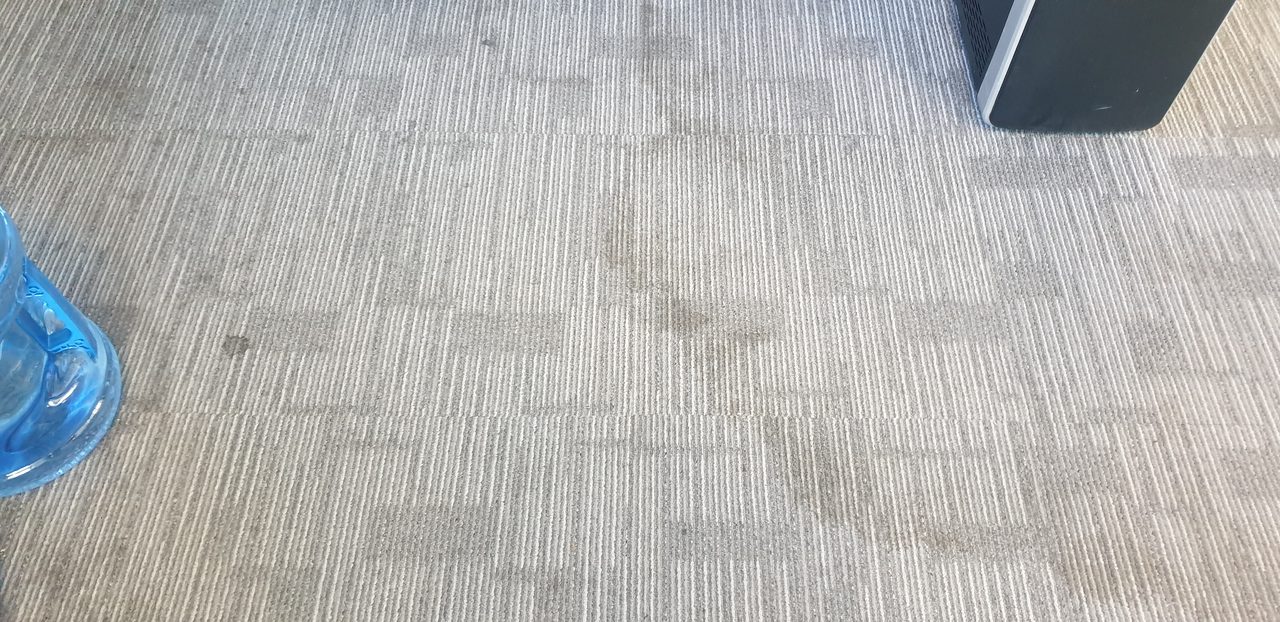
The single most common error in commercial carpet care is applying one frequency to a whole tenancy. Soil arrives at the door, gets walked inwards, and drops off sharply as it goes. The first few metres inside an entrance take a punishing share of a building's total soil load, while a boardroom at the far end may see almost none.
Cleaning the whole floor on the entrance's schedule wastes money; cleaning it on the boardroom's schedule destroys the entrance.
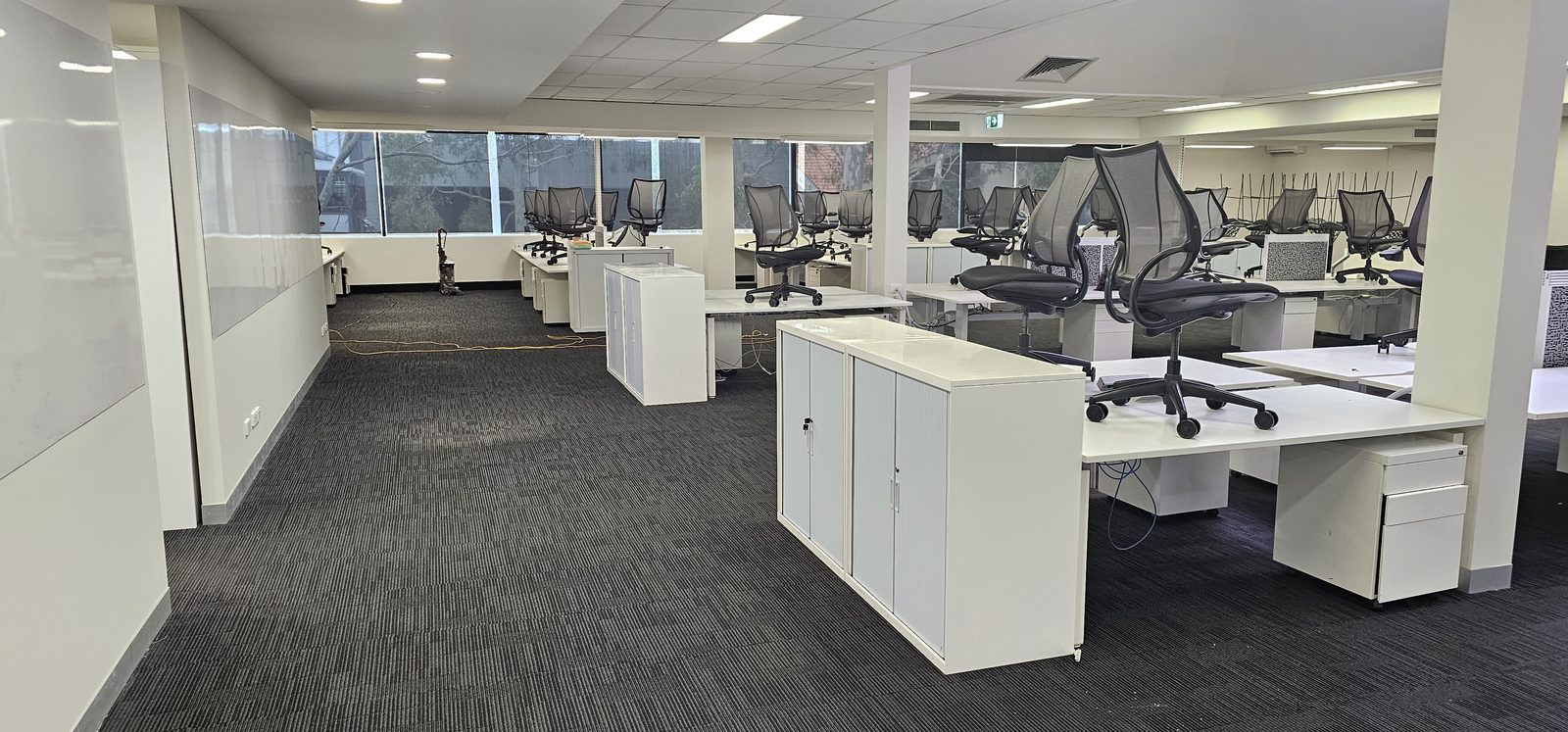
Cleaning the whole floor on the entrance's schedule wastes money. Cleaning it on the boardroom's schedule destroys the entrance. Split the tenancy into zones and book each one as often as it needs, grouping them so one visit covers several. A typical Perth office splits roughly like this, and the same logic maps onto a school, a clinic or a venue.
Much of the confusion about frequency comes from treating all cleaning as one thing. Encapsulation and hot water extraction do different work. The soil in your carpet decides which one it needs. We recommend the method when we inspect it.
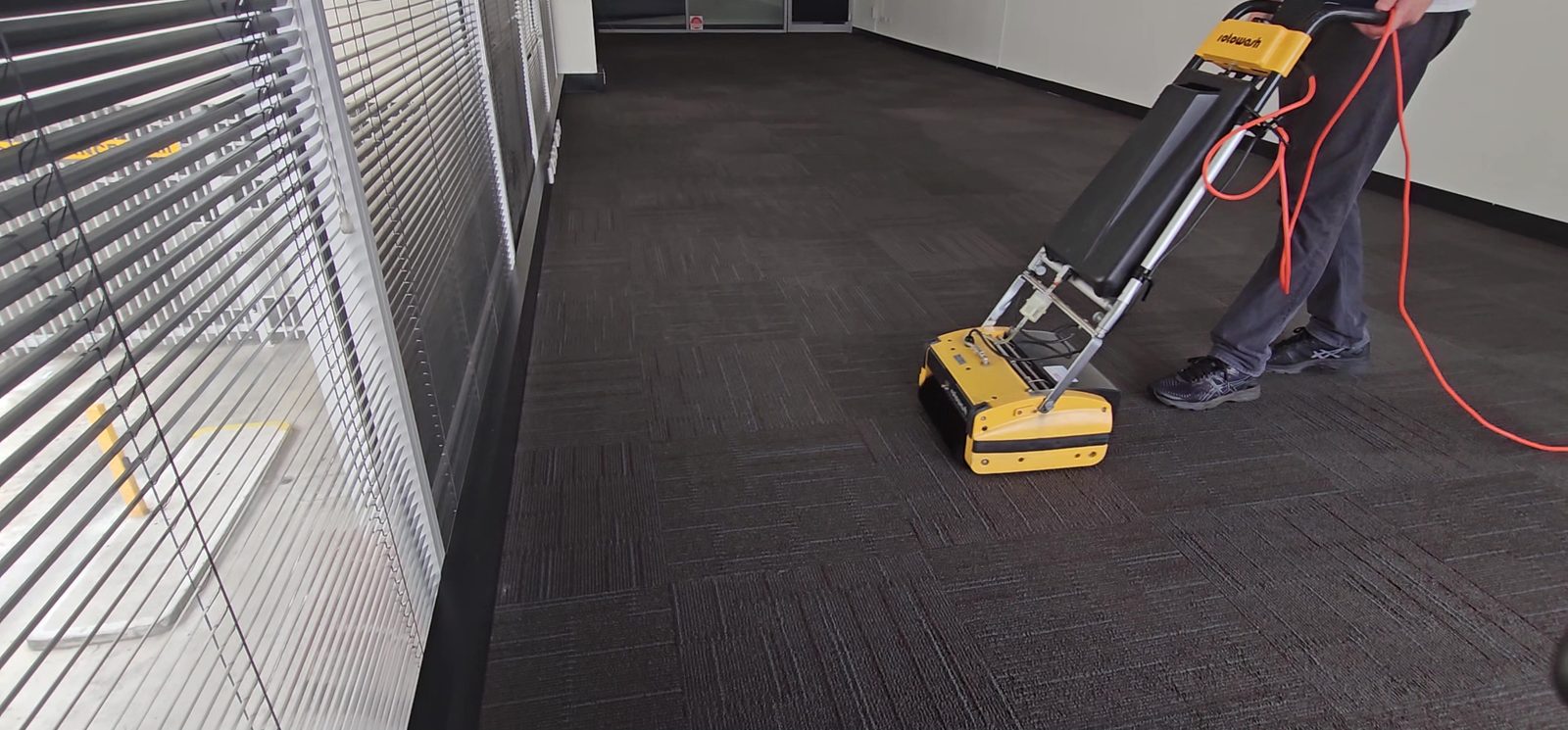
Encapsulation uses very little water and suits carpet that is only lightly soiled. A brush machine works the detergent through the pile, where it surrounds the soil in the upper fibres and dries to brittle crystals. The vacuum then lifts them out and leaves nothing in the fibre. Foot traffic can resume soon after, usually inside two hours. Heavy soil packed at the base of the pile needs the deeper clean.
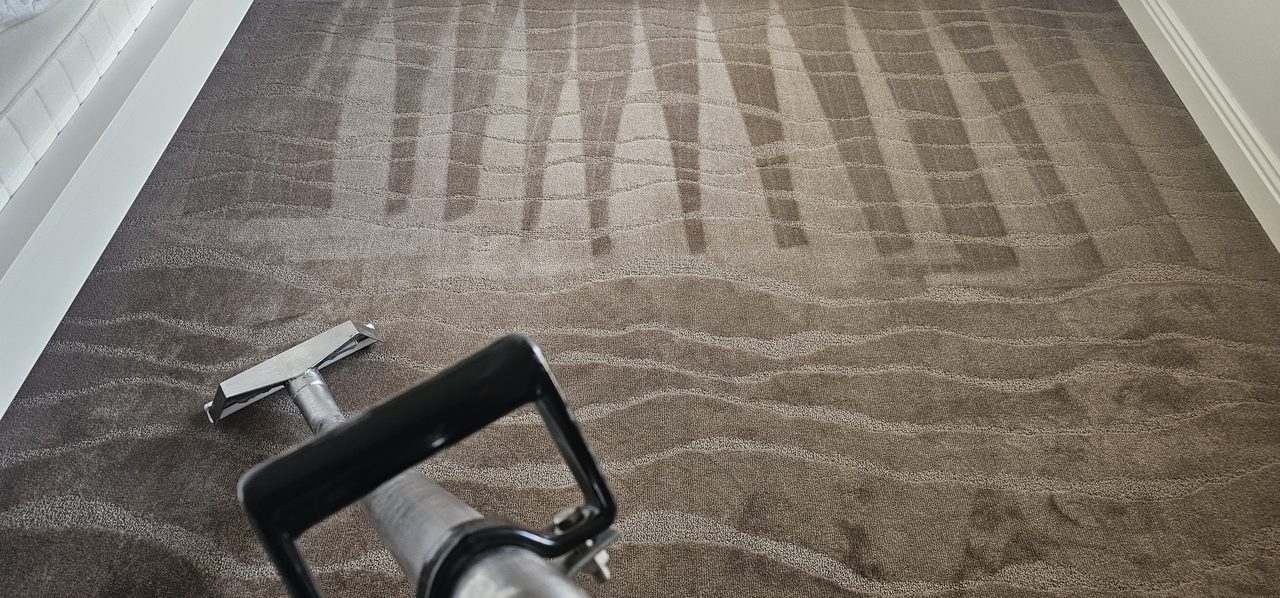
Hot water extraction, which we call steam cleaning, is the thorough clean for heavier soil and carpet with many different stains. We pre-treat each stain, then rinse hot solution through every layer of the pile, recovering it with strong truck-mounted vacuum. That takes out embedded grit and the oily residues that bind soil to fibre. Drying usually takes 4 to 8 hours after a steam clean.
| The difference | Encapsulation | Hot water extraction |
|---|---|---|
| Which carpet it suits | Lightly soiled carpet | Heavier soil and many different stains |
| Method | Encapsulation detergent worked in by a brush machine | Truck-mounted hot water extraction |
| What it reaches | Soil in the upper pile, lifted out by the vacuum | Embedded grit and the oily residues that bind it |
| What has to move | Little; chairs and bins, with the machine run around the desk legs | Chairs and light furniture lifted, so the pile underneath is reached |
| Drying | Walkable in an hour or two | Usually dry in 4 to 8 hours |
The soil decides the method. We recommend it when we inspect your carpet.
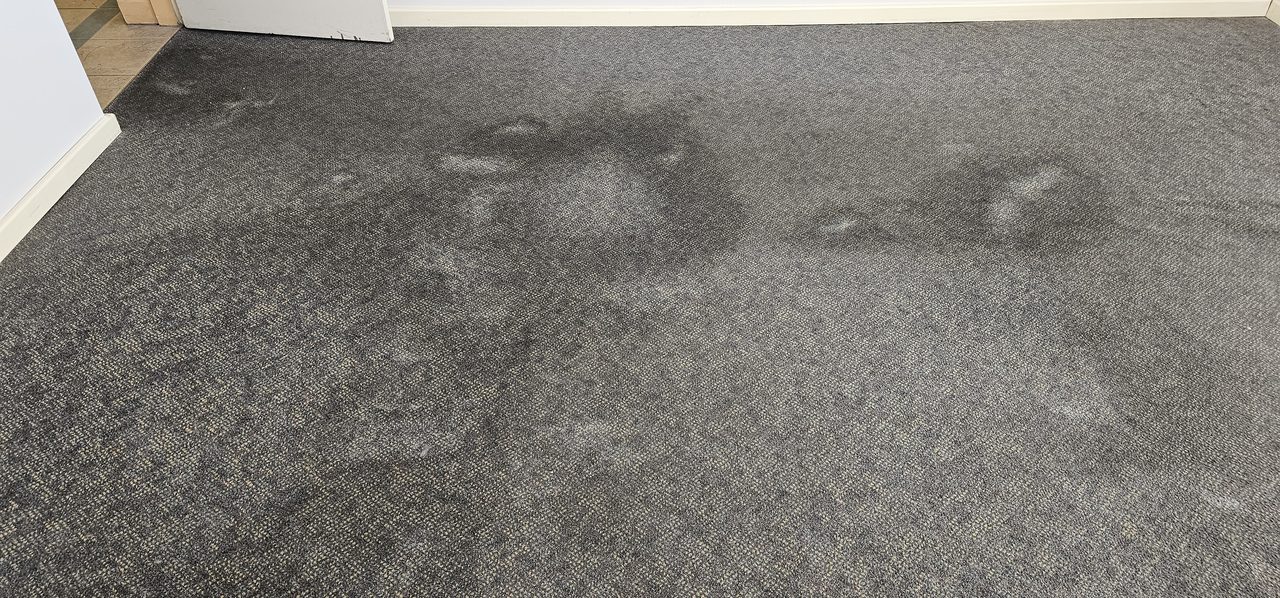
You decide when and how often your carpet is cleaned. Our part is to recommend. Our advice starts from a professional clean at least once a year for every area, with more visits where the carpet needs them. We give that advice at the free on-site visit, after walking each zone with you and looking at the soil in the pile.
For a moderately busy Perth office that often means one clean of the whole floor a year, with the entry and main walkways booked more often if they show soil first. A venue or a school corridor usually needs us more often again. Some government sites must have certain carpet cleaned every quarter, which is a requirement the site has to meet. Each visit gets the method its soil needs on the day, encapsulation where the carpet is lightly soiled and hot water extraction where the soil is heavier or the stains are many.
A useful sign to watch is how quickly the walkways show soil again after a clean. If they look tired well before the next visit, the zone needs us more often, or its soil has become heavy enough to need a steam clean.
Two identical offices with identical traffic can need different schedules purely because of what is on the floor. Construction is the bigger factor. Loop pile, which covers most commercial installations and nearly all carpet tiles, holds its structure well and hides soil reasonably, but the loops trap grit at the backing where it is hardest to reach. Cut pile shows footprints, shading and lanes far sooner because the exposed fibre tips splay and lose reflectivity, so a cut pile boardroom can look worn while a loop pile corridor still looks fine.
Colour and pattern change what you see rather than what is there. Light plains and mid-greys show everything, so their schedule is set by appearance long before soil load requires it. Dark plains hide dry soil but show lint and coffee splash. Patterned carpet is the most forgiving, which is exactly the trap: it can carry a heavy soil load and still look acceptable, so its schedule must follow the traffic count, not the view from the doorway.
Some sites carry obligations that outrank any traffic count. In healthcare, medical and aged care settings, hygiene and presentation standards justify more frequent cleaning and proper record keeping for audits, and waiting areas count as public traffic. Childcare centres deal with constant spills and close floor contact, so hygiene sets the frequency. Schools give you natural windows: term breaks suit the main clean. Busy corridors may need us again mid-term.
Hospitality, retail and function venues are judged by every customer who walks in, and they run in peaks. We have cleaned the theatre carpets at a Fremantle cinema, and a venue like that sets its rhythm around its screening schedule rather than the calendar. Sites running 24 hours have no quiet window, so the work is built around the lightest shift and cleaned in sections, each one closed only for as long as its method needs to dry.
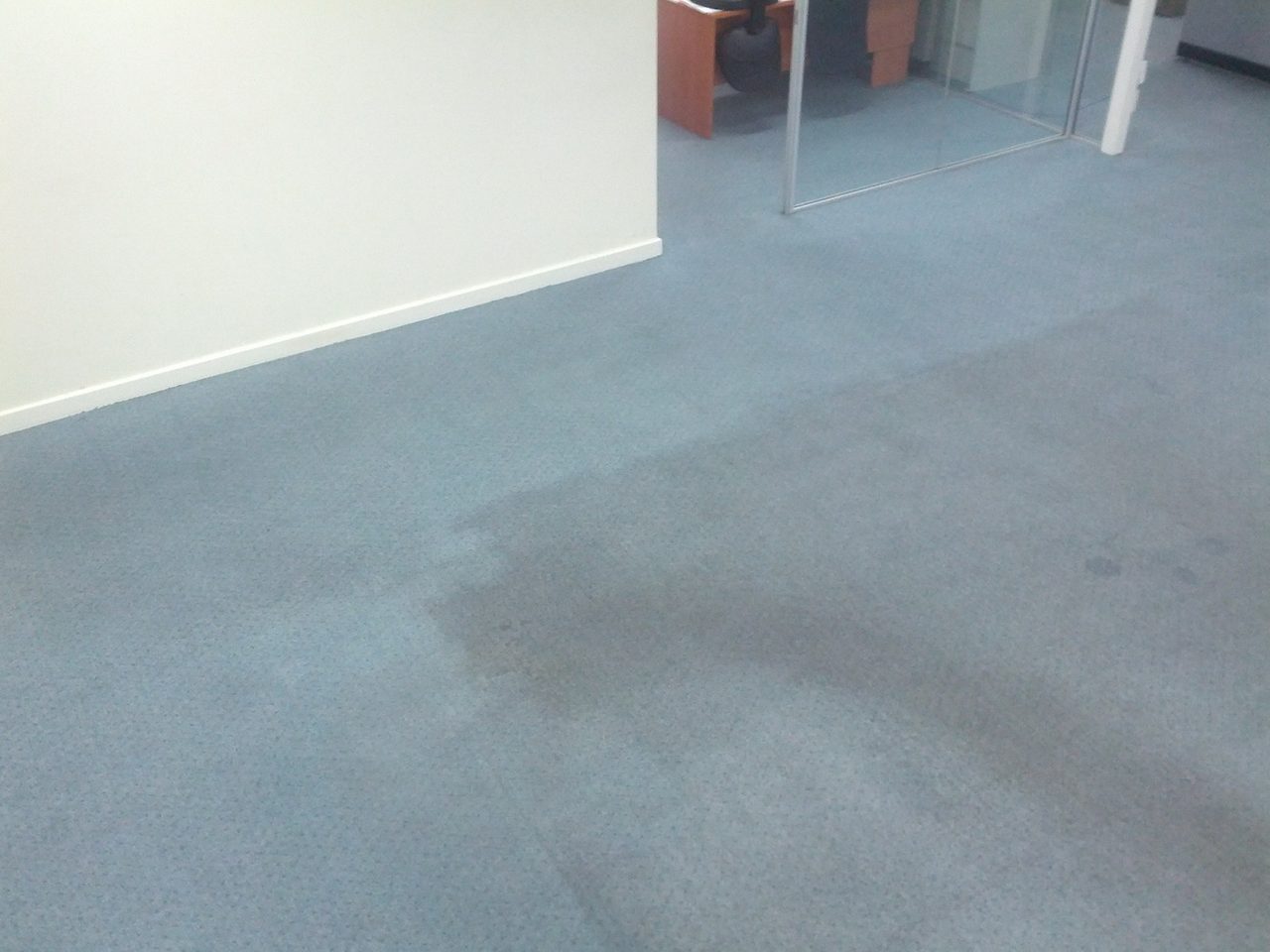
Frequency is not fixed. Everything you do between visits lengthens or shortens the interval, and the three levers that matter most cost very little to pull.
Matting is the first and best. Soil that never gets past the door never has to be extracted. Short mats do almost nothing; a person needs several footfalls on matting for it to work, which means a run of a few metres, not a tile at the threshold. Matting also has to be cleaned, because a saturated mat stops absorbing and starts redistributing.
Vacuuming discipline is the second. Dry soil is easy to remove while it is dry and near the surface, and near impossible once walked in and bound with oils. Daily vacuuming of the lanes does more for carpet life than any single professional visit. Prompt spot response is the third: a fresh spill is a cleaning job, a set stain a restoration one.
The opposite list is worth knowing because most of it is predictable. Perth conditions are a real factor. Hot dry summers push fine grit and red dust from the east into buildings on every gust, and coastal sites carry sand in continuously. Wet winters bring damp shoes and wet grit that grind into the pile and hold soil in place. Any site near active construction is dealing with limestone dust, which is fine, pale and abrasive, and will cut your interval sharply for as long as the work continues.
Building factors matter too. Ground-floor tenancies and street-level entries take far more soil than a tenancy twelve floors up a CBD tower, where everyone has already crossed a lobby and a lift. A car park opening directly onto carpet is one of the worst arrangements there is, and food at desks or an industrial process next door raise the load again.
Then there are temporary spikes. A fit-out, an office move, a busy event season or a spell of wet weather can put months of wear into a fortnight. Plan for them: a clean booked straight after stops that soil being ground in permanently.
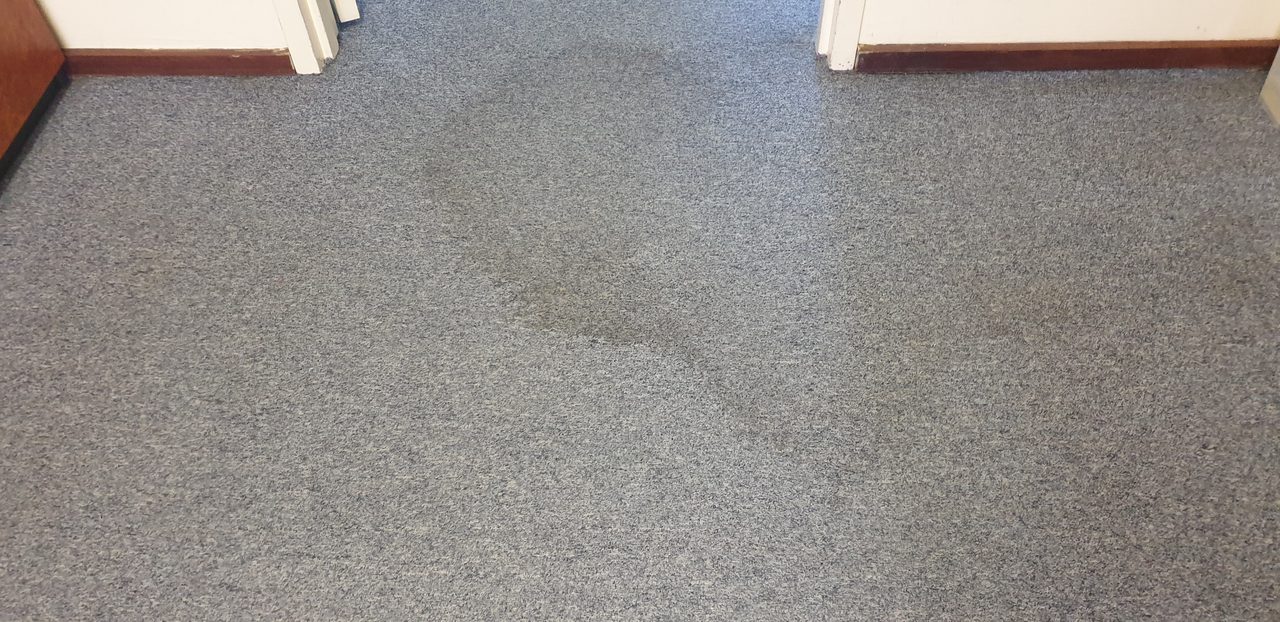
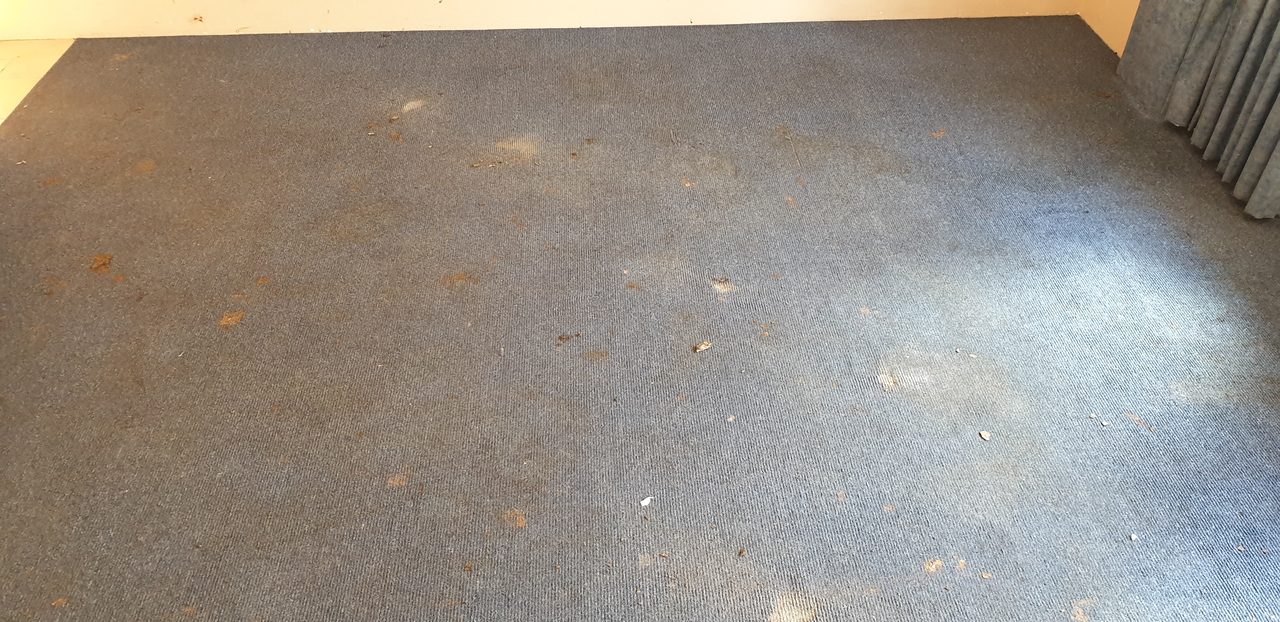
There is a point where carpet stops responding to cleaning, and it helps to recognise the warning signs while they still mean something. The first is lanes that stay visible after a clean: if the traffic area stays dull and flat while the carpet either side comes up clean, that is abrasion, not soil, and no further cleaning fixes it. The second is re-soiling within days, which usually means detergent residue from a poor previous clean, or soil left so long one pass could not flush out the oils binding it.
The cost of pushing past those points is straightforward. The deep clean then becomes a two-visit job. Sections may need replacing, and matching a discontinued carpet is rarely possible, so patches show. Eventually the whole floor is replaced years early, at a cost that dwarfs a decade of scheduled cleaning. Most carpet we see replaced early was not worn out by traffic but by grit that stayed in it too long.
Drying is the constraint Perth imposes. Summer is the easiest season for restorative extraction: warm, dry air pulls moisture out of the pile quickly, and a floor cleaned on a Friday evening is comfortably dry by Monday. Winter is the opposite. Cooler air holds less moisture, buildings are shut up, and carpet that dries in a few hours in February takes considerably longer in July without help.
That does not mean avoiding winter cleaning. It means planning for it: air movers, the building's air conditioning running during and after, and enough hours booked before the space is needed. On lightly soiled carpet that suits encapsulation, people can use the floor again an hour or two after the clean, summer or winter. The method is still set by the soil we find at the inspection.
| When | Why | What to book |
|---|---|---|
| Summer | Warm dry air, fastest drying | Any clean, with the fastest drying of the year |
| Winter | Cool air and closed buildings slow drying | More drying hours booked, with air movers and the air conditioning running |
| Early autumn | Summer has finished pushing dust and sand through the doors | The yearly clean |
| Spring | The wet has passed | A second clean, where you choose one |
| Before a summer peak | Venues and hospitality run the pattern in reverse | Clean ahead of the season |
Winter cleaning is perfectly workable, it just needs more hours allowed and help drying.
For a Perth office cleaned once a year, early autumn suits the clean, once summer has finished pushing dust and sand through the doors. Where you book a second clean, spring suits it, after the wet has passed. Venues and hospitality with a summer peak often clean ahead of the season instead.
A schedule that lives in someone's head disappears when that person changes jobs. Once you have settled on intervals, write them down where they will survive.
For budgeting, work out the annual figure rather than the visit figure. Count the visits each zone needs across twelve months, price them together and put that number in the maintenance line. It then reads as a predictable operating cost, easier to defend than an unplanned request every few months, and it sits against the replacement cost of the carpet. Our commercial cleaning starts from $385 (GST inclusive) depending on the job, and an annual schedule is usually quoted as a whole so you know the yearly figure up front.
For contracts, be specific about what is being bought. A contract that says carpets cleaned regularly will be honoured with whatever is cheapest. Name the zones, the method, the frequency and the standard. That matters particularly for strata common areas and for leases with make-good clauses.
The one fixed figure is the minimum: a professional clean at least once a year. Past that, any interval given without seeing the site is a guess. The method is what holds up: count the traffic, split the building into zones, ask for our advice on how often each zone needs us and adjust after a year of watching.
The important part is planning rather than reacting. By the time soil is visible from the doorway the fibres have already taken a beating, and it costs more to recover the appearance than to maintain it.
Most sites settle into their real schedule within a year. You will find one zone you were cleaning too often and another you were quietly starving, and once those are corrected the intervals tend to hold until something about the building changes.
If you would rather walk the floor with someone who cleans it for a living, that conversation takes half an hour standing on the floor. Call Zoran on 0460 815 038 or email commercialcarpetcleaningperth@gmail.com.
How Perth's dry summers and wet winters set the timing of vacuuming, encapsulation and deep cleaning, plus budgeting, records and working around tenants.
Read ArticleHow encapsulation polymers trap soil, why the vacuum finishes the job, what each machine does, and where low-moisture cleaning fits a Perth office.
Read ArticleSeven signs Perth facility managers can diagnose themselves, the tests that confirm each one, and how to tell cleanable soil from permanent wear.
Read Article