
How Often Should Commercial Carpets Be Professionally Cleaned?
How to set commercial carpet cleaning frequency by zone, traffic and sector, and build a Perth maintenance schedule that protects the carpet.
Read ArticleHow Perth's dry summers and wet winters set the timing of vacuuming, encapsulation and deep cleaning, plus budgeting, records and working around tenants.
Most buildings we walk into have a cleaning specification but not a cleaning calendar. The specification says what happens; it rarely says when in the year it happens, and that gap is where carpet quietly falls apart. A floor cleaned in the same month every year regardless of what the weather and the building are doing is being cleaned at the wrong time for part of its life.
Perth makes the case better than most cities: a genuinely dry, gritty summer and a genuinely wet winter, with a short shoulder either side. The soil arriving on shoes in January is fine, abrasive and dry; the soil arriving in July is wet, clay-heavy and comes with water attached. Those are different problems wanting different responses at different times of the year.
Carpet does not usually fail because it wears through; it fails because it stops looking acceptable.
Layer the Australian business year over the top and the picture sharpens. The Christmas shutdown, the February return-to-work surge, the June financial year end, the audit season and the school terms all create windows where work is easy and windows where it is close to impossible. A maintenance calendar is simply the act of matching the cleaning to those windows before someone else books them.
Durable carpet care rests on three layers, each doing a job the others cannot. That division of labour is what lets you build a calendar rather than a wish list.
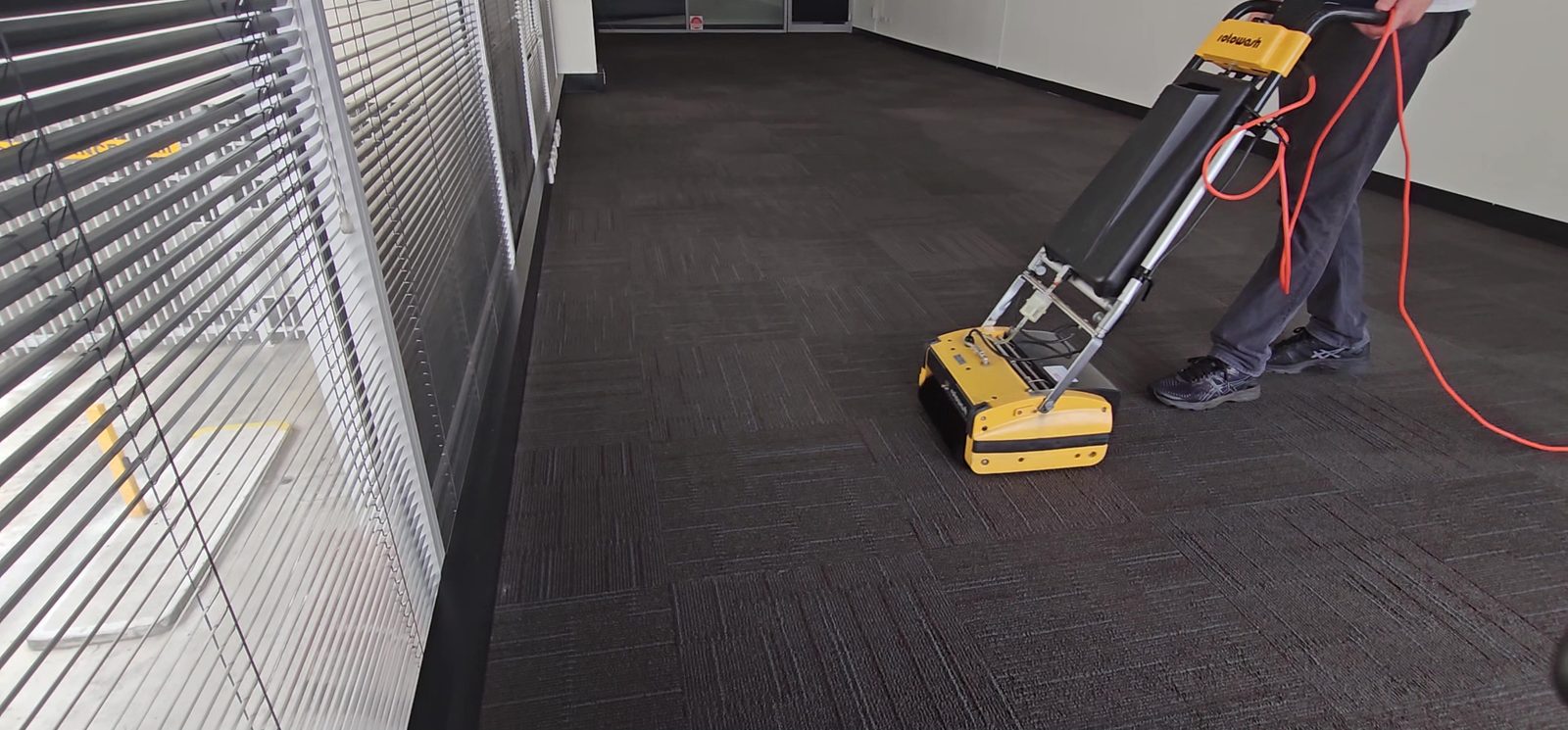
The first layer is daily vacuuming, which removes dry soil before it does damage. Most of what lands on a commercial carpet is dry particulate, and while it is still loose a good vacuum takes it away. The second is weekly detail work: edges, under desks, mats lifted and cleaned underneath, spots treated while fresh. The third is professional cleaning, which we advise yearly at the least, with extra visits for any area that needs them. We recommend the method at the inspection. Lightly soiled carpet suits encapsulation, a low-moisture clean whose polymer surrounds the soil in the upper pile so the vacuum lifts it out. Heavier soil and mixed stains need hot water extraction, which pre-treats each stain and rinses the full depth of the pile.
The layers are cumulative, not alternative. A professional clean cannot compensate for missed vacuuming, because by then the grit has already been ground against the fibre countless times. Vacuuming cannot replace a professional clean, because it does not touch oily residue bonded to the yarn.
When budgets tighten, the work that gets cut is the work in the middle. Daily vacuuming survives because it sits inside the cleaning contract and nobody sees it as a separate cost. The yearly professional clean survives because it is visible and on a purchase order. Weekly detail work and the extra cleans of the busiest areas disappear. They are the ones holding the structure up.
The mechanism is worth understanding. Carpet does not usually fail because it wears through; it fails because it stops looking acceptable. Traffic areas turn dull and flat while the rest of the floor is fine, and once that contrast is established a single annual clean cannot remove it. Fine soil packs down among the tufts and scours the fibre surface, so the lane throws light back unevenly rather than cleanly. That change is mechanical, not chemical, and cleaning does not reverse it.
Extra cleans of the busiest areas stop them reaching that point. A clean in the middle of the year lifts the soil while it is still in the part of the pile you can reach. It keeps those walkways level with the floor around them. How many extra cleans an area needs depends on its traffic. We recommend a number at the free on-site visit and you decide.
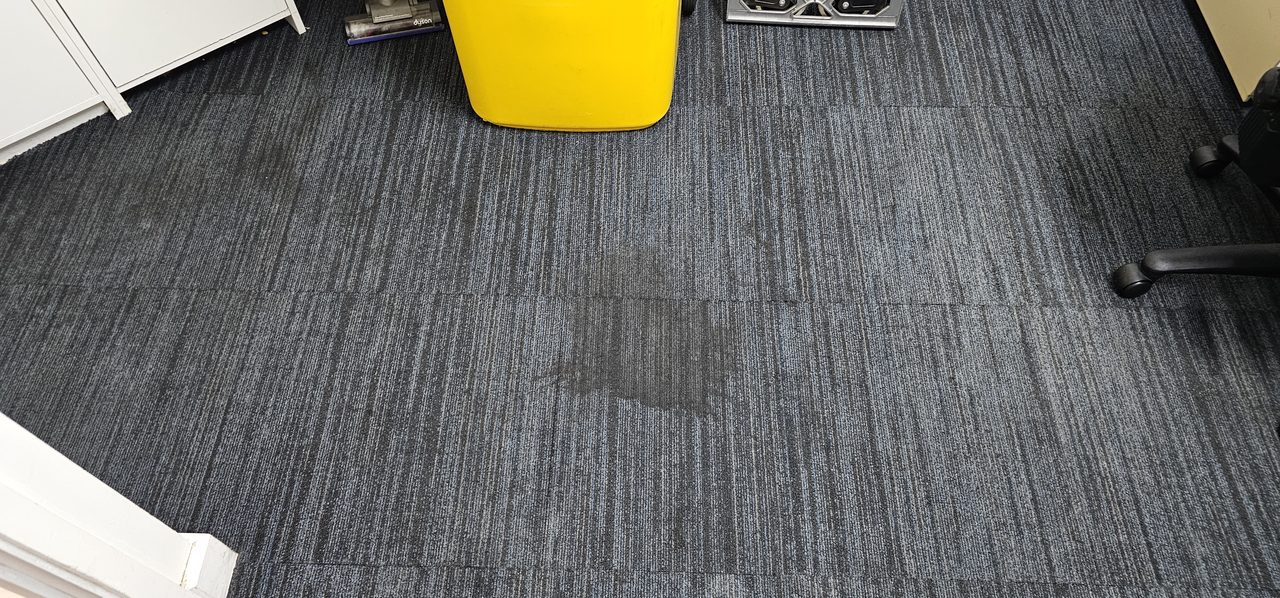
Perth summers deliver a particular kind of soil. It is dry, fine and hard-edged: coastal sand from the west, red dust carried in on easterlies, limestone dust from whichever site is under construction next door. It walks in on shoes, blows in through propped doors, and does not stain in any obvious way; it simply accumulates and grinds.
So summer is a vacuuming season more than a wet-cleaning season. Lift vacuum frequency in lanes and entries rather than adding extraction, and keep external mats and door tracks swept. If your building has a loading dock or a car park with an unsealed edge, that path is the largest single source of soil you have.
Summer also gives you the best window in the calendar. The Christmas and New Year shutdown, when most offices run on skeleton staff and many close outright, is when a building can absorb a full wall-to-wall clean with almost no disruption. Furniture can be moved, rooms taken out of service, and drying is fast in hot dry air. The catch is that everyone wants that window.
By early March the building is fully occupied again. School has gone back, leave is over, meeting rooms are in use and visitor numbers climb. In most offices we look after, autumn is the busiest stretch of the year, landing on carpet that has just been through a summer of grit.
That combination makes March or early April a good time to clean the busiest areas, if their traffic calls for more than one clean a year. A clean then lifts the summer load out of the walkways before the traffic spike works it deeper. Where that soil is still light, the inspection usually points to encapsulation. The floor is then walkable the same night.
| Encapsulation | Hot water extraction | |
|---|---|---|
| Suits | Lightly soiled carpet | Heavier soil and many different stains |
| Where it goes | Any area where the soil is light | Any area where the soil is heavier |
| Water applied | A small volume of polymer solution | Truck-mounted hot water flush |
| Who finishes the job | Your own vacuuming, which lifts the crystallised soil over the days after | Nothing: the soil leaves with the water on the day |
| Best window | After close on a weeknight | Christmas shutdown, late autumn or spring |
The inspection decides the method, by how heavily the carpet is soiled.
Late April into May is a good time for the yearly clean if you cannot use the Christmas window. The weather is still warm and dry enough for sensible drying times, but the building is not yet dealing with wet-weather soil. Clean then and the carpet enters winter with a clean base, which changes how it copes with the months of tracked-in water that follow. Cleaning in June instead means extracting a carpet that is about to get dirty immediately.
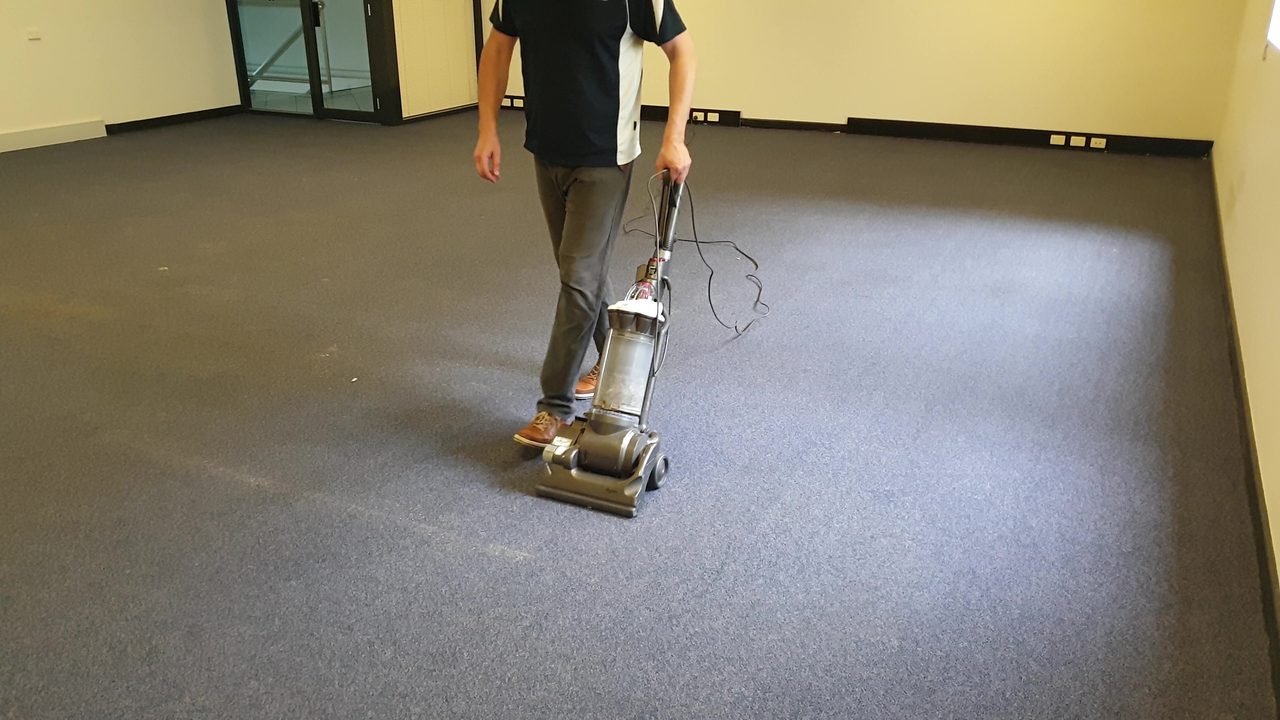
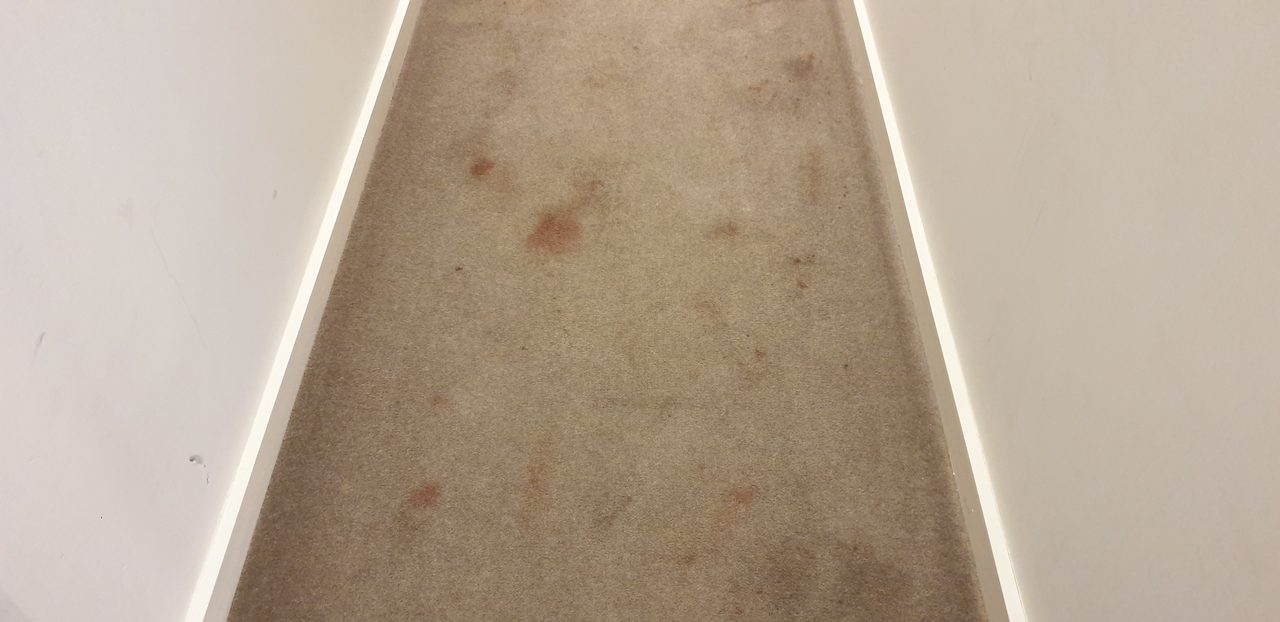
Winter is the hard part of the Perth calendar and the part most maintenance plans handle badly. The problem is not that it rains; it is that the water arrives carrying everything the car park and the footpath had on them. Wet soil migrates further into the building than dry soil, spreads outward from the entry as it is walked on, and dries into a grey film across the first several metres of floor.
A second problem stacks on top: winter cleaning has less going for it. Cooler air holds less moisture, humidity is higher after rain, and most buildings ventilate for comfort rather than evaporation. An extraction that copes easily in February asks much more of the building in July, and carpet left damp too long risks odour and wick-back of soil from the backing.
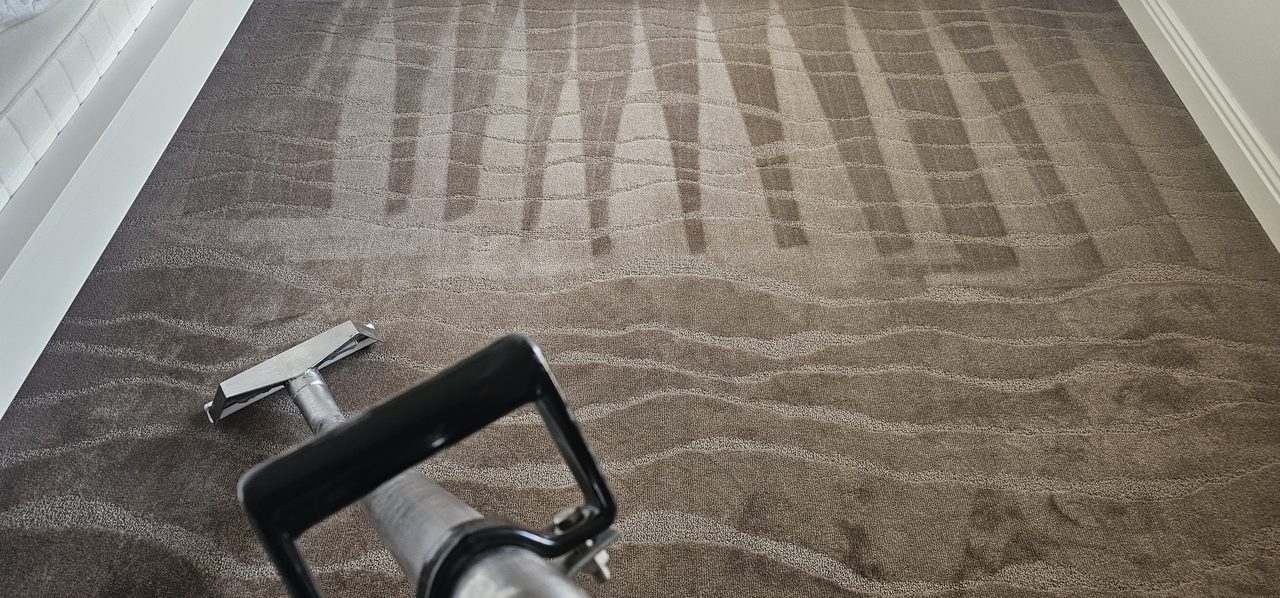
Winter does not change which method your carpet needs. Lightly soiled carpet suits encapsulation, which applies a small volume of polymer solution, agitates it in and dries to a brittle crystal that the vacuum lifts away with the soil inside. Heavier soil needs hot water extraction in July as much as in February, with the drying managed as set out below.
If you do extract during winter, plan the drying rather than hoping for it. Book the work early in the week and early in the evening so there are more hours before occupancy returns. Run the building's air handling overnight if you can, because moving air is worth more than heat for evaporation. Air movers along the lanes and a dehumidifier in an enclosed area make a real difference, and we carry drying equipment as standard from water damage work.
Matting is the other half of the winter strategy and it is chronically under-specified. A single small mat inside a door is close to useless in July. What works is a run of matting long enough that a person takes several steps before reaching carpet, in a scraper-then-absorber sequence: a coarse outdoor mat to knock off water and grit, then an absorbent internal mat to take the remaining moisture off the sole.
Matting only works while it has capacity: a saturated mat is a sponge that re-wets every shoe crossing it, so wet-weather mats need changing or cleaning far more often than at other times of year. Lifting them to clean the floor underneath matters too, because trapped grit otherwise sits there all winter.
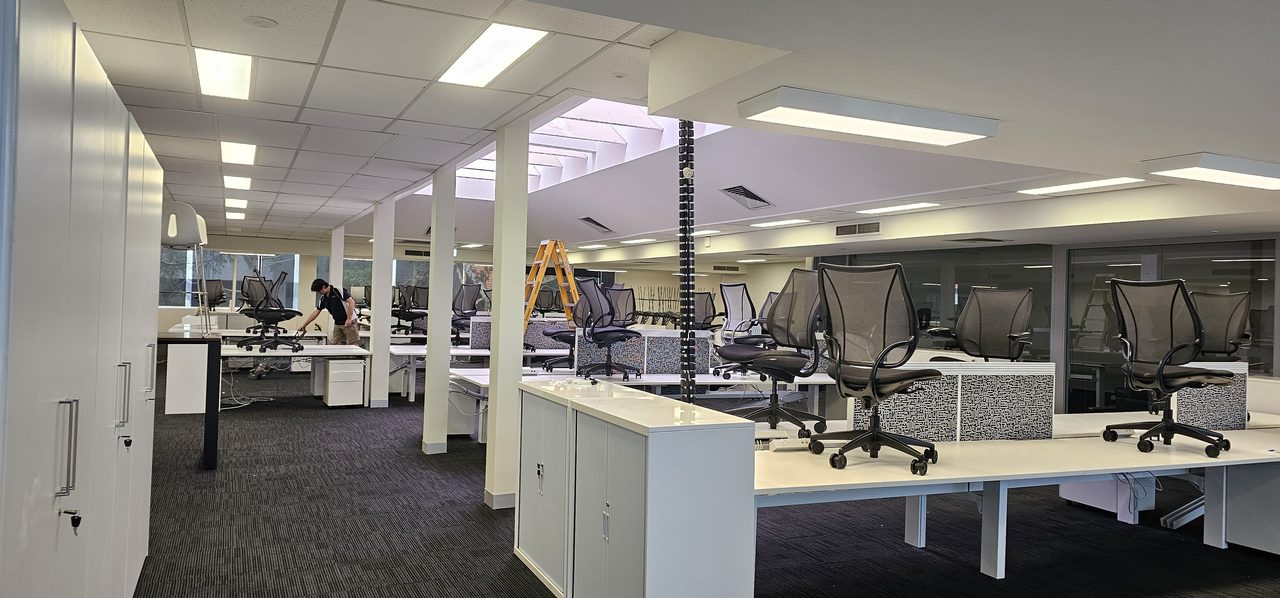
Spring brings a different load again. Pollen rises, the ground dries out, the easterlies carry dust back into the metro area, and the building shifts from wet soil to dry soil almost overnight. Carpet that spent three months absorbing tracked-in water needs the residue of that period lifted before summer bakes it in.
Spring is a natural point for a second clean in buildings that need more than one a year. Drying conditions are good, occupancy is steady but not peak, and you are resetting the floor before the dusty months rather than after them.
Two business realities also cluster in spring. The financial year turned over on 30 June, so by September you are in the first quarter of a fresh budget with the allocation still intact, which is the easiest time to get discretionary maintenance approved. Spring is also a common season for audits, insurance inspections, lease reviews and open days. Placing a clean a week or two before a known inspection date is one of the more useful things a calendar lets you do.
Carpet maintenance is easier to approve as one planned annual line than as a series of surprise requests. Build the line the same way each year. Include the yearly clean, any extra cleans you choose for the busiest areas, an allowance for reactive spot work and matting replacement. Quote it as a full-year figure with the dates already attached, because a decision maker approving a year of cleaning asks different questions than one approving an invoice.
The argument that lands with finance is asset life, not appearance. Carpet is a depreciating capital item, and regular maintenance that defers replacement even by a couple of years returns far more than it costs. Framing the annual maintenance spend against a replacement quote for the same floor area is usually a short conversation.
Timing matters too. Get the number in front of whoever builds the budget before the financial year closes on 30 June, so the allocation exists from 1 July rather than being scraped together mid-year. If you have unspent maintenance budget in May or June, a restorative clean is a legitimate and visible use of it. We can quote a full twelve months of cleaning in one document, so the figure that goes into the budget is the figure that gets invoiced.
A calendar is worth more if it leaves a paper trail, and that trail gets used more often than people expect. Make-good clauses at the end of a lease frequently turn on whether the tenant can demonstrate the flooring was maintained. Carpet warranties commonly require evidence of periodic professional cleaning at a stated interval, and insurers, auditors and incoming owners ask the same question in different words. What is actually required varies from one document to the next, so check the wording of your own lease and carpet warranty with your property manager or adviser rather than assuming a common standard applies.
The record need not be elaborate: one spreadsheet or folder per site, updated as work is done, satisfies almost every request you will receive. What matters is that it is contemporaneous and specific: the date, the areas, the method, who did the work and their credentials.
For regulated environments the bar is higher. Healthcare, aged care, childcare and school sites are inspected against documented cleaning schedules, and producing the schedule alongside evidence it was followed is part of passing. We provide job records for every visit, and we are IICRC certified and Woolsafe accredited, which is the detail warranty and compliance paperwork usually asks for.
In multi-tenanted buildings the calendar has to survive contact with other people's diaries. Common areas are the easy part: lobbies, lift lobbies and corridors sit under building management control and schedule cleanly. Tenancy floors need notice, and the earlier the notice the better the outcome, because a tenant can move a Friday deadline if they know in March that the carpet is booked for a Thursday night in April.
CBD towers add their own logistics. Loading dock bookings, after-hours lift access, security passes and induction requirements all need arranging before the night of the work, not on it. Truck-mounted extraction needs the van standing within hose reach of the entry, and in the city that must be confirmed in advance. In suburban business parks from Joondalup to Fremantle this is rarely an issue; in a tower it decides whether the job happens.
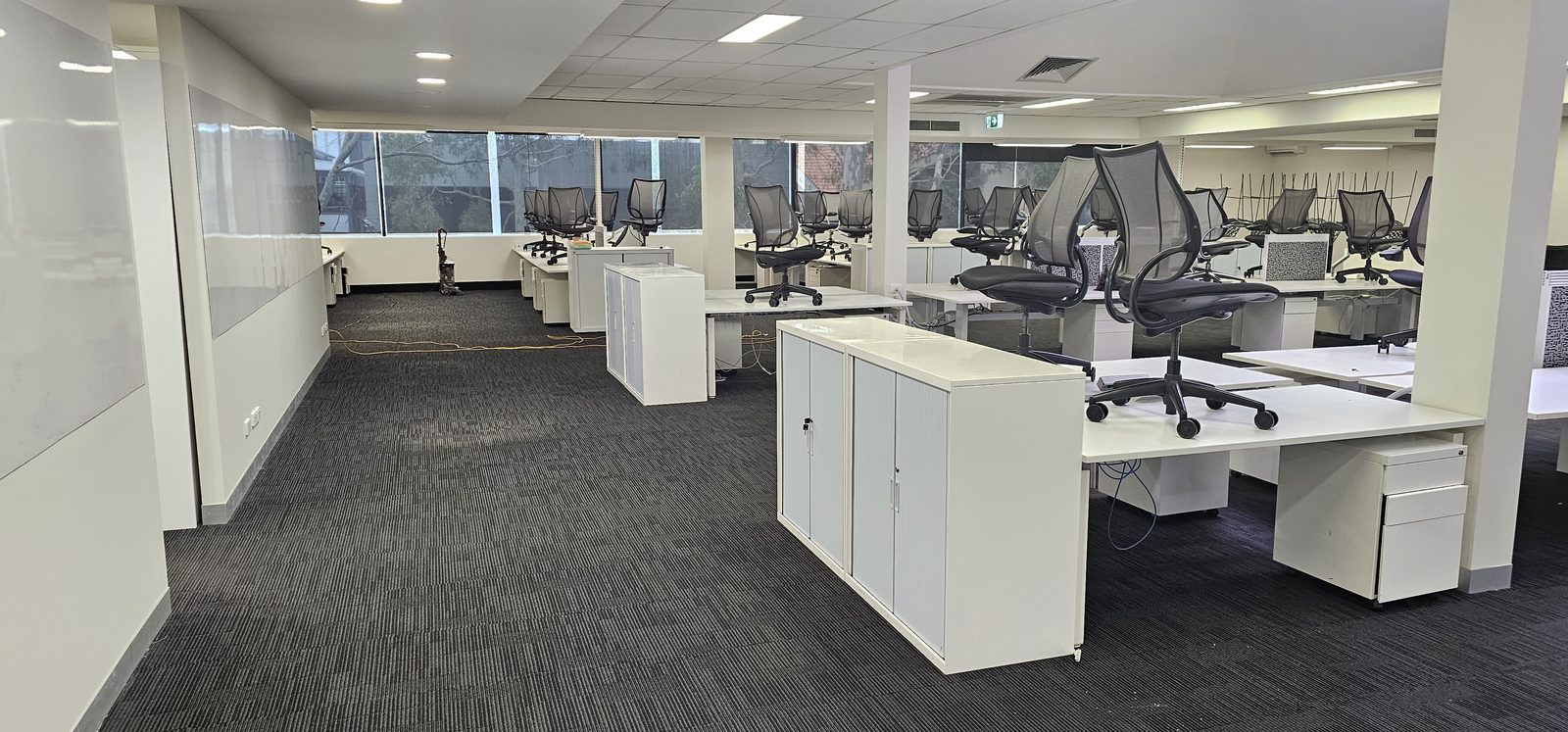
Because we work seven days a week and take after-hours and weekend bookings, most commercial cleaning can happen entirely outside occupied hours, with staff arriving to a finished floor. The limiting factor is usually the building rather than the cleaning: how late security will hold the doors, whether a lift can be put on service for equipment, and how many hours the floor has before the first person walks on it. Settle those three questions at the time of booking and the night itself is straightforward.
One more scheduling habit is worth adopting in shared buildings. Put the year's carpet dates into whatever notice you already send tenants about other planned works, rather than issuing them separately. Dates that arrive alongside lift servicing and window cleaning read as routine building maintenance and are far less likely to be pushed back than a standalone request for access.
The four-season structure holds everywhere, but the windows shift with how a building is occupied. The adaptation is usually a matter of moving the professional clean to whenever the site empties.
For a school the calendar is set by terms, not seasons. Professional cleaning belongs in the term breaks. The summer holidays are the obvious slot for the yearly clean of classrooms, libraries and administration areas, with shorter breaks used for corridors and hall floors where they need more. Book early, because every school in the state is chasing the same fortnight.
For a hotel, occupancy drives everything. Public areas are cleaned in low-occupancy periods, often mid-week and away from school holidays and event peaks, while guest rooms are done in rotation so a block is out of service rather than a floor. Function spaces follow the booking diary instead of a fixed date.
A 24/7 site never empties, so the answer is zoning. Divide the floor into sections and rotate through them across several nights during the quietest hours, with clear signage and a maintained walkway. Each section gets the method its soil needs. The drying is timed to the quietest hours.
Pull it together into something you can look at. Take a blank year, mark the fixed obstacles first — shutdowns, term dates, audits, event peaks, the June year end — then place the yearly clean in the largest available gap, which for most Perth offices is either the Christmas closure or late autumn. If an area needs more than one clean a year, space the extra cleans across the rest of the year. Write the daily and weekly layers into the cleaning contract so they are a defined responsibility rather than an assumption.
Review the plan once a year rather than rebuilding it. If the traffic areas still looked soiled by September, they need cleaning more often. If a clean landed the week after an inspection instead of the week before, move it. A calendar that gets one honest adjustment a year converges on the right answer quickly.
If you would like help setting one up, we can walk the floor with you and look at the entries, the traffic pattern and access. We then put our recommended twelve months of cleaning in writing for your budget holder to approve. Commercial Carpet Cleaning Perth works right across the metro area, is fully insured, and cleaning starts from $385, GST inclusive, after a free look at the floor. Call Zoran on 0460 815 038 or email commercialcarpetcleaningperth@gmail.com.
How to set commercial carpet cleaning frequency by zone, traffic and sector, and build a Perth maintenance schedule that protects the carpet.
Read ArticleHow encapsulation polymers trap soil, why the vacuum finishes the job, what each machine does, and where low-moisture cleaning fits a Perth office.
Read ArticleDeferring carpet maintenance does not save money, it moves it. Here is the real cost stack, the arithmetic, and how to build the business case.
Read Article