
How Often Should Commercial Carpets Be Professionally Cleaned?
How to set commercial carpet cleaning frequency by zone, traffic and sector, and build a Perth maintenance schedule that protects the carpet.
Read ArticleSeven signs Perth facility managers can diagnose themselves, the tests that confirm each one, and how to tell cleanable soil from permanent wear.
Office carpet is one of the hardest-working surfaces in any building, yet it is the one nobody looks at until it has already gone. By the time a floor reads as visibly tired, soil has worked below the tips of the pile into the part of the yarn a vacuum was never designed to reach. Down there, fine grit behaves like sandpaper, and every footstep grinds it against the fibre.
That is why timing is not a cosmetic question. Cleaning at the right interval removes the abrasive before it does structural work, which is the difference between carpet that looks dull and carpet that has been permanently scratched. Once the fibre is abraded, no amount of cleaning brings the light back.
The seven signs below are the ones we look for when we walk a commercial site in the Perth metro area. None need equipment or training to spot. What they need is somebody willing to walk the floor deliberately and look at it the way a visitor would, rather than the way somebody who passes it daily has learned to.
Before working through the signs, hold one distinction in your head, because it governs every decision that follows. Some of what you see on a tired floor is soil, and soil comes out. Some of it is wear, and wear does not. Telling them apart saves both wasted cleaning money and premature replacement money.
Soil problems are additive. Something has been deposited on or in the fibre: grit, oil from shoes and skin, spilled liquids, food, residue from a previous spot clean. The fibre underneath is intact, so removing the deposit returns the carpet to something close to how it looked before.
Wear problems are subtractive. The fibre has been abraded, crushed flat under a chair castor, cut, burned, bleached, or worn to the backing by years of concentrated traffic. Nothing was added, so there is nothing to take away. Cleaning a worn area gives you a clean worn area, which is worth doing but should not be sold to you as a fix.
| Soil | Wear | |
|---|---|---|
| What happened | Something was added to the fibre | Fibre was taken away or flattened |
| Typical causes | Grit, shoe and skin oil, spills, food, old spot residue | Abrasion, chair castors, cuts, burns, bleach, worn to the backing |
| The fibre itself | Intact underneath | Abraded, crushed or gone |
| What a clean does | Returns it close to how it looked | Gives you a clean worn area |
Work out which one you have before you spend money on either.
Most real floors are a mixture, and usually a more favourable one than they look. A corridor that reads as ruined is frequently mostly soil.
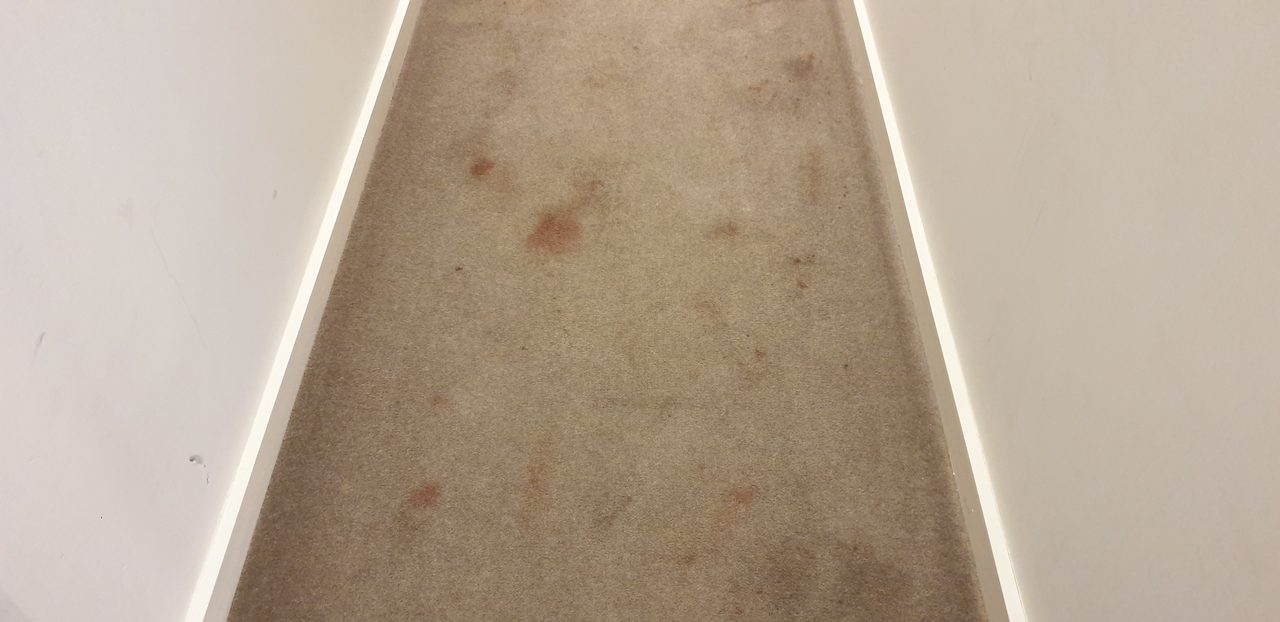
The clearest early sign is the darkening path along main walkways: from the entry doors to the lifts, around desk clusters, in front of the kitchenette, and through the doorways everyone funnels through. This darkening is fine grit and oily soil bound into the pile, and it spreads outward from the centre of the lane before anyone consciously registers it.
The darkening also outruns the actual soiling, because traffic changes how the pile sits. Yarn that has been walked on lies over and presents its side to the light rather than its tip, and flattened yarn reads darker even at a similar soil load.
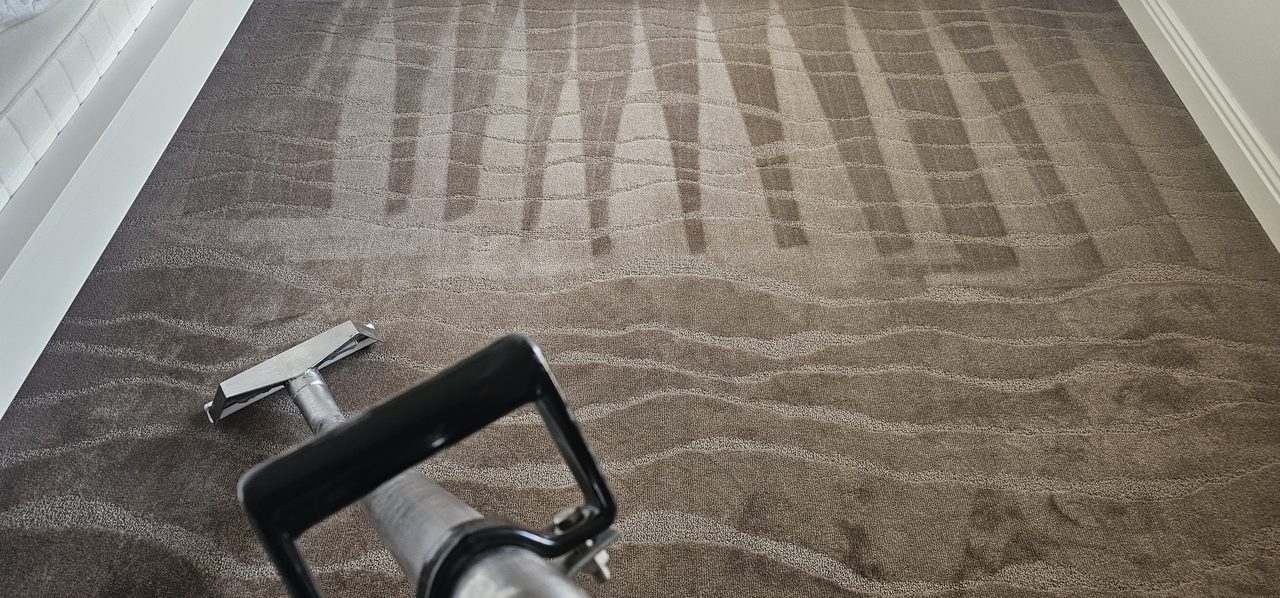
Confirm it by comparing the lane with carpet that has been protected: under a desk, behind a filing cabinet, along the skirting. That protected carpet is your original colour. If the lane is noticeably darker, you have soil, and lanes respond very well to truck-mounted hot water extraction because it reaches the depth the soil has reached.
The caveat is that a darkened lane which also feels thin, rough or fuzzy under your palm has moved past soiling into abrasion. Cleaning lifts the colour but the texture change stays.
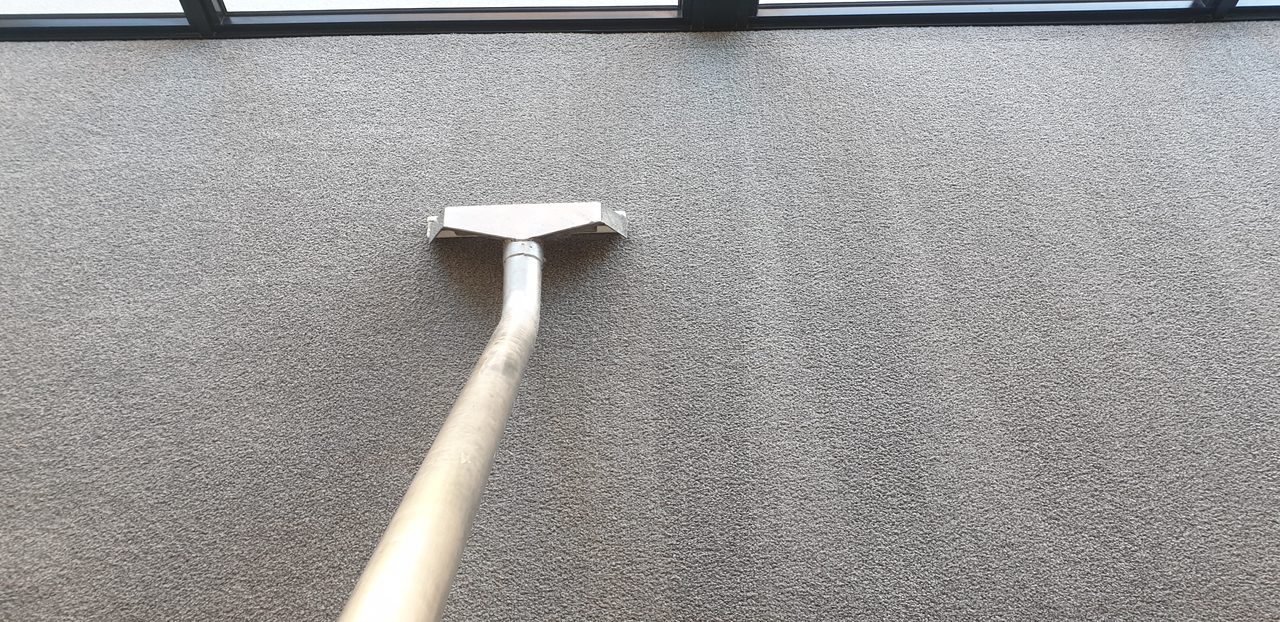
A thorough vacuum should do two things: pull out dry particulate, and lift the pile so it stands upright and looks even. When a proper vacuum, done slowly with a working brush and a clean filter, leaves the carpet exactly as flat and dull as before, the soil has bonded to the fibres and daily maintenance can no longer shift it.
This is a useful diagnostic because it separates a maintenance problem from a cleaning problem. If the vacuum is not run often enough, is run too fast, or has a filter nobody has changed since the fit-out, the floor looks tired for reasons unrelated to professional cleaning. Rule that out by having one section vacuumed carefully and looking at it in good light.
If that makes no difference, a deeper method earns its keep. Truck-mounted steam extraction flushes and removes the bonded soil outright, which is what a heavily loaded lane needs. For lightly soiled carpet, encapsulation is the low-moisture option. The detergent dries into crystals around the soil. A vacuum pass then lifts them out, leaving nothing in the fibre. We recommend one method or the other when we inspect the floor.
Slowly, with a working brush and a clean filter, over one representative area.
Stand back and see whether the pile has lifted and the colour has come up.
The floor is tired because of how it is vacuumed, not because it needs a deep clean.
Daily maintenance can no longer shift it, so a deeper method earns its keep.
Extraction for heavy soil and many stains, encapsulation for light soil, recommended at the inspection.
Worth noting too that vacuuming which has stopped working is often vacuuming that has been quietly downgraded. Cleaning contracts get renegotiated, a brush bar seizes, a bag runs at half capacity for months. Before assuming the carpet is the problem, find out what the vacuum is actually doing and how often, because a deep clean laid over a broken maintenance routine will look tired again within weeks.
Coffee rings, kitchenette splashes and the halo around the bins are part of office life. The warning sign is not the individual stain but the pattern: spots that keep coming back days after somebody cleaned them. That behaviour is wicking.
When a spill soaks in, it goes further down than the visible mark suggests, often to the backing. Surface cleaning removes the top and the carpet looks fixed. Then, as the remaining moisture travels back up the fibre and evaporates, it carries the dissolved soil with it and redeposits it at the tips, sometimes larger than it started.
Leftover cleaning product does the same job in reverse. Detergent that is not rinsed out stays sticky, and sticky carpet grabs every particle that lands on it. That is why a spot treated with a supermarket spray often ends up darker than its surroundings within a month.
Professional spotting treats the mark and then extracts the residue so nothing is left to wick or attract. Set-in marks and the wool and wool-blend carpets common in corporate fit-outs need the care of a WoolSafe Approved Fibre Care Specialist, which Zoran is. Wool is protein, so the wrong chemistry strips its colour or handle permanently.
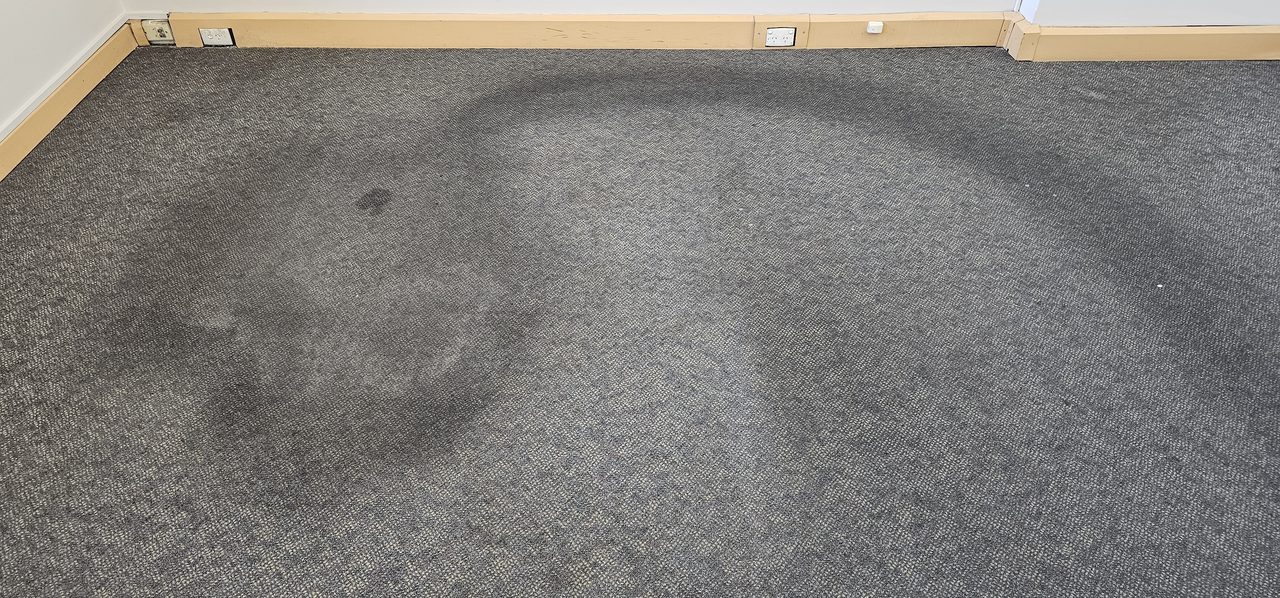
Carpet holds odour from spills, food, damp shoes and the ordinary life of a busy office. If a musty smell greets people as they come through the doors, or gets stronger in wet weather, the source is almost always trapped in the pile and backing rather than floating in the air.
Perth makes this seasonal in a way that is genuinely diagnostic. Through the hot dry summer, moisture evaporates fast and odour compounds stay quiet. Come the wet winter, humidity rises, tracked-in water sits in the entry carpet, and the same compounds turn volatile again. An office that smells fine in February and sour in July is telling you something in the floor never left.
Confirm it by getting close. Kneel in the suspect area and smell the carpet itself rather than the room, and press a palm firmly into the pile to check whether it feels cool or damp. If the smell is stronger at floor level than at standing height, it is in the carpet.
Masking sprays only postpone all of this. Extraction removes the soil and moisture feeding the smell, and where there has been a leak or a roof failure, water damage extraction and structural drying is what resolves the cause rather than the symptom.
Carpet works as a filter, holding dust, pollen and fine particles out of the breathing zone until foot traffic disturbs them. Like any filter it has a capacity, and a full one stops holding and starts releasing. A rise in dust settling on desks within a day of being wiped is worth reading as a floor signal rather than an air conditioning one.
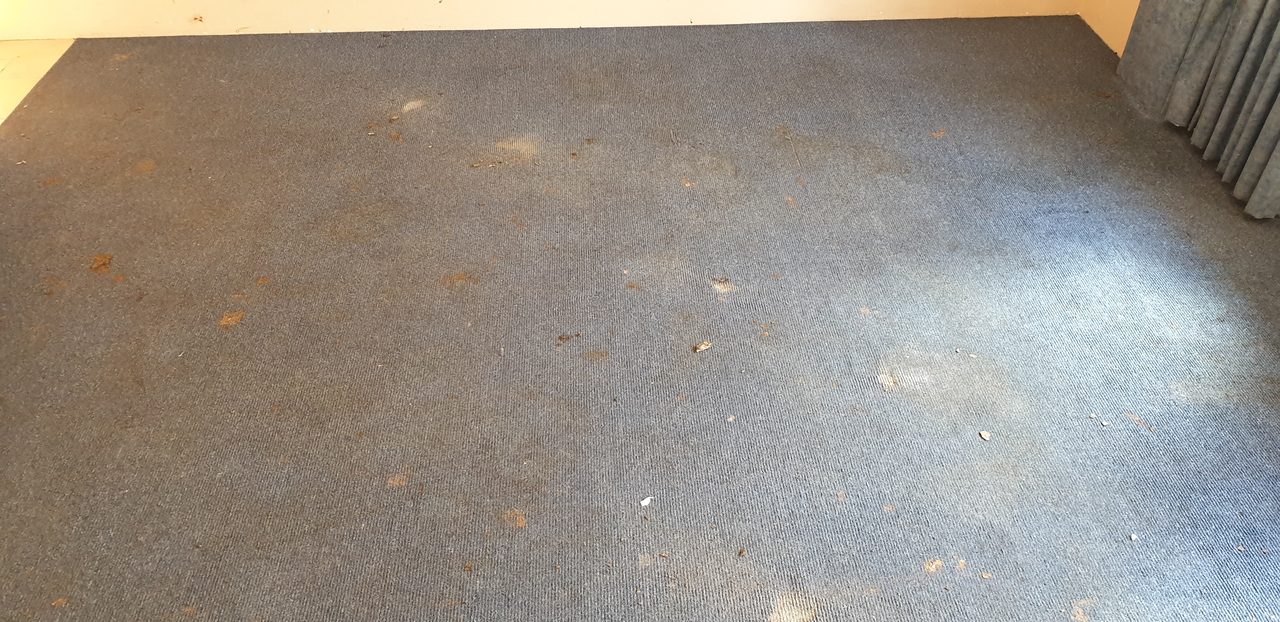
In Perth the filter fills from directions worth naming. Coastal sand arrives on shoes as fine, sharp, pale grit. The easterlies carry red dust that shows on light carpet and stains once wet. Construction nearby puts limestone dust into the air, and it is alkaline, fine and clinging.
An uptick in comments about stuffiness or sneezing, particularly among staff sitting near the entrance or a main walkway, is the human version of the same reading. A deep clean effectively empties the filter. For sites with medical, childcare or aged care functions, our advice is to book regular cleans rather than wait for a complaint.
We advise having commercial carpet professionally cleaned at least once a year, and sooner in high-traffic and food-adjacent areas. If nobody in the building can say when the carpet was last cleaned, that uncertainty is itself the finding. It usually means the interval has been however long it took for somebody to complain.
Records are not bureaucracy for its own sake. They convert an argument about opinion into an argument about dates, which is a much easier argument to win with a landlord, a head office or an owners' committee. If you are starting from nothing, start now: one clean, dated and photographed, gives the next inspection something to measure against.
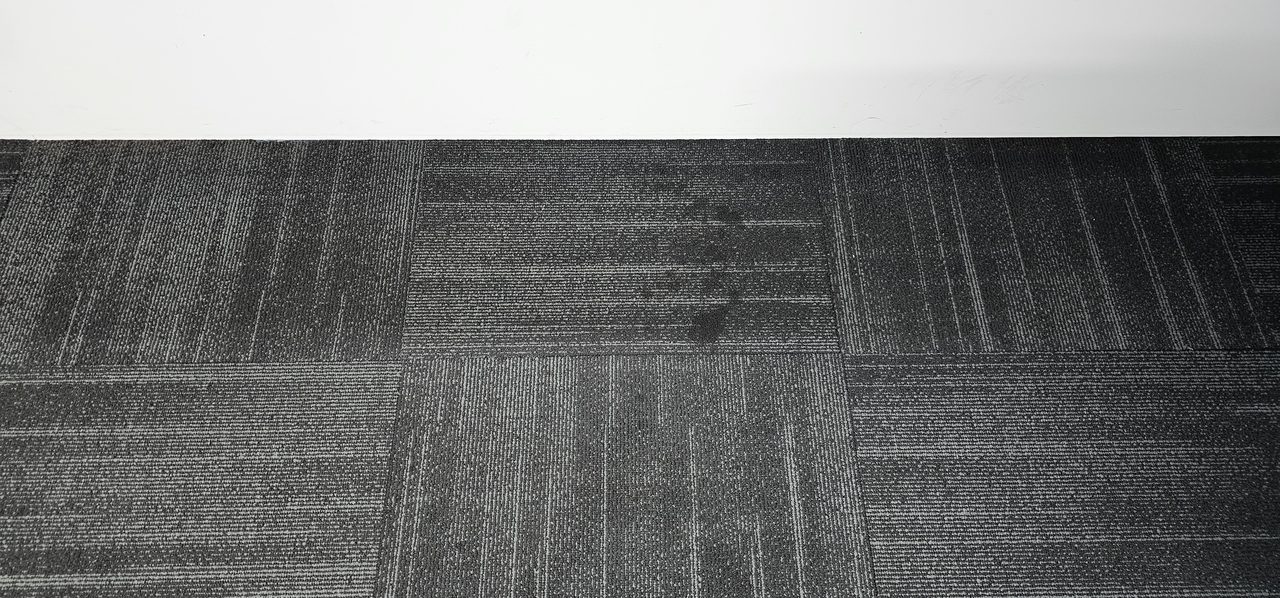
Sometimes the sign is not on your floor at all. A client visit, board meeting, open day, audit or end-of-lease inspection sets a presentation standard that everyday carpet may not meet, and first impressions in a foyer or boardroom count for far more than those few square metres suggest.
The practical constraint is that most offices cannot pause to be cleaned, and the practical mistake is leaving the booking until the week before. Carpet needs drying time, and a rushed job on a Friday before a Monday inspection is how a floor ends up damp, marked by furniture put back too early, or smelling worse than it did.
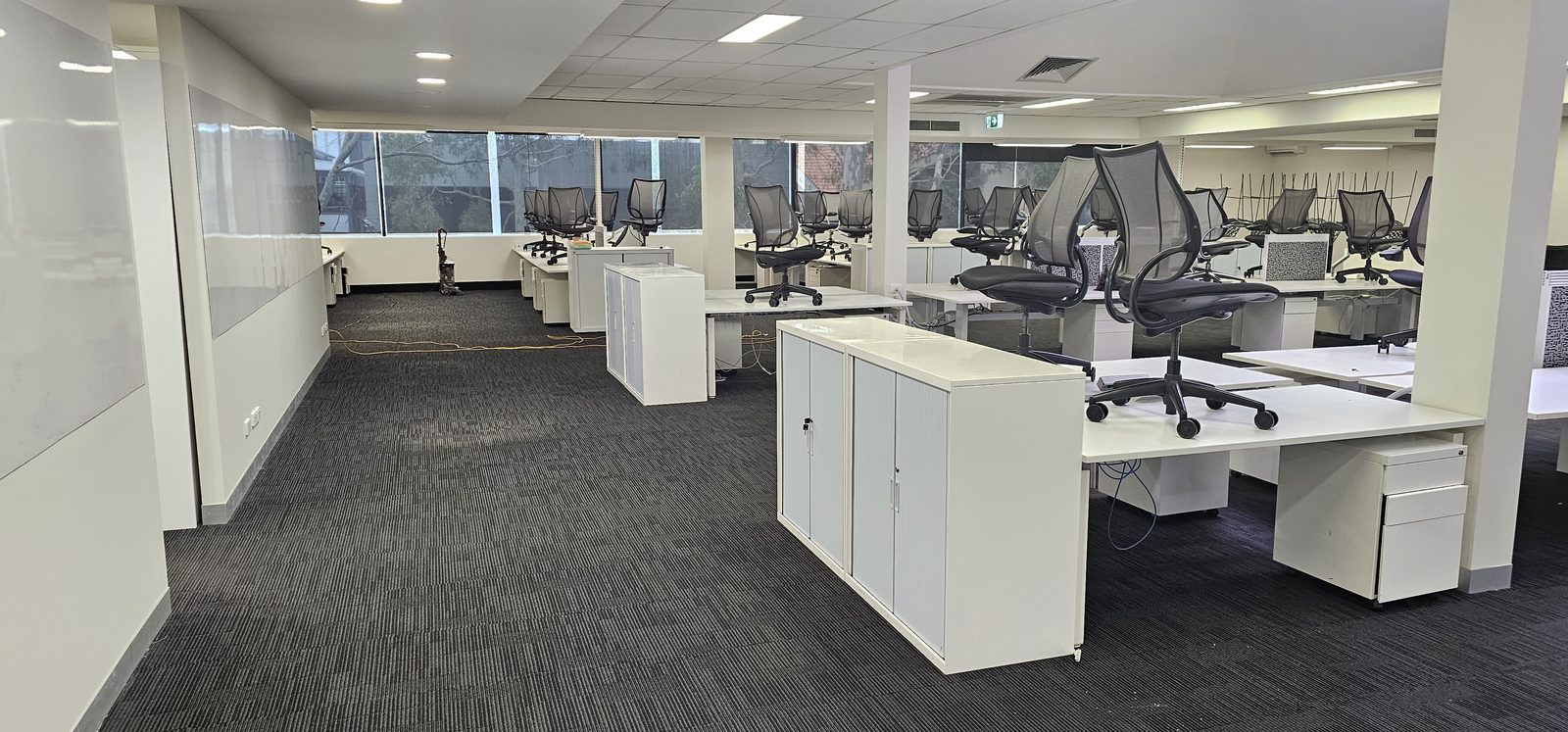
Because we are open seven days and offer after-hours and weekend commercial cleaning, the work can happen overnight or across a weekend, which suits CBD towers where lift and dock access is booked ahead anyway. Allow a fortnight of clearance so there is room for a second visit on anything stubborn.
These are the checks we run on a first walk-through, and nothing stops a facility manager running them before picking up the phone. Doing so means the conversation starts from evidence rather than impression, and it often shows the floor is in better shape than feared.
The white cloth test is the most direct. Dampen a clean white cloth with warm water, press it into a traffic lane and twist under your body weight for a few seconds. Heavy grey or brown transfer means suspended soil that extraction will remove. Almost no transfer on carpet that still looks grey means you are seeing worn or flattened fibre, not dirt.
The protected-area comparison settles arguments. Every floor has carpet nobody walks on, and it is your control sample. Compare it against the lane in daylight and photograph both in one frame, so the difference is undeniable to someone who was not there. The remaining checks take a minute each.
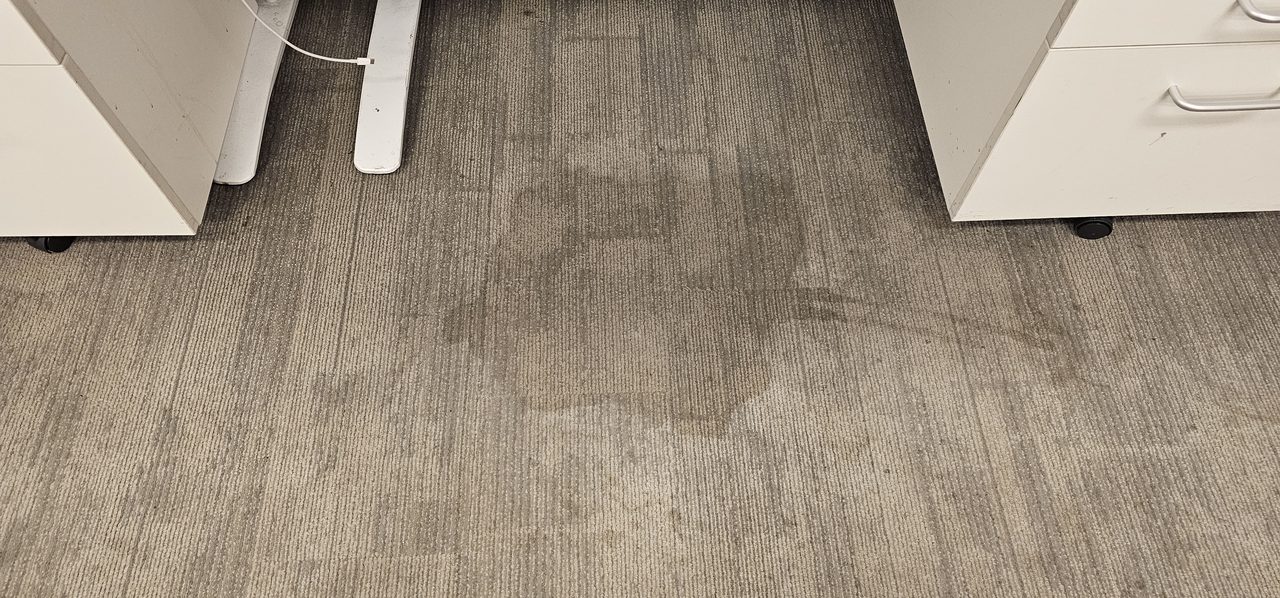
There is a point where cleaning stops being the right recommendation, and you deserve to hear that plainly rather than after paying for a clean that could not have worked. The signs below are the ones that settle it, and each can be checked on your own walk before anyone quotes you.
The clearest indicator is fibre loss. Where backing shows through the pile in a lane or a doorway, the yarn is gone rather than dirty. Delamination, where the secondary backing separates and the carpet ripples underfoot, is the same story: a structural failure and a trip hazard that no cleaning method addresses.
Cleaning a worn area gives you a clean worn area, which is worth doing but should not be sold to you as a fix.
Permanent colour change is next. Bleach marks, harsh chemical spills, sun fading along a west-facing glass line and old rust or dye transfer have altered the fibre rather than coated it. Some can be repaired by patching from an offcut, which is worth asking about before condemning a whole floor.
Crushing sits in between and deserves an honest test. Pile flattened under desks or heavy furniture sometimes recovers substantially with hot water extraction, because heat and moisture let the yarn relax and stand. Sometimes it has been crushed too long. The reasonable approach is a small test area first, and a decision based on what it actually did.
Whatever you find on the walk is worth capturing properly, because the version that lives only in your memory will not survive a budget meeting. It takes a few minutes and repays that time at quoting, at reinspection and at end of lease.
Shoot in the same light each time, from roughly the same height and angle. Carpet photographs badly and inconsistently, and a floor can be made to look fine or terrible depending on where the photographer stands, which is why consistency is what makes the pictures persuasive. Keep the log short enough that you will maintain it: a row per area is plenty, and it becomes the document you hand a contractor so the quote covers what you want done.
In most organisations the person who notices the carpet is not the person who approves the spend, and a request that reads as a preference will lose to one that reads as a risk. The reframing that works is simple: this is asset protection, and deferring it costs more than doing it.
Lead with the money already committed. Carpet is a capital item paid for once and expected to last a defined number of years, so abrasive soil left in the pile shortens that life. Where the warranty requires documented cleaning, say so plainly, because an unfunded lapse can quietly void it. Then attach the request to something with a date, since budgets move for deadlines far more readily than for conditions.
Put it together as a single walk and it takes about fifteen minutes for a typical floor. Start outside the entrance and look at what is arriving: the state of the footpath, the car park surface, any construction nearby, and whether the entry matting runs far enough that several footfalls land on it before anyone reaches carpet.
Move to the entry carpet, which is always the worst area and the earliest warning for everything else, and run the white cloth test there. Then follow the main lane through to the lifts, stopping at each doorway and pinch point, because that is where traffic concentrates and wear shows first.
Work through the open-plan floor next. Look under the desks for your original colour, look at the chair zones for crushing and castor marks, and stand at the far end looking back with the light coming towards you, which is the angle that makes lanes obvious. Finish at the kitchenette, the bin areas and the meeting rooms, where spills and odour concentrate.
You do not need all seven signs before acting. Darkened traffic areas, an odour that returns each winter, or a stain that keeps coming back are each enough on their own. The most useful outcome of the walk is not a booking but a rhythm: a scheduled interval per zone, records kept, and the entry matting sorted so the next interval is easier than the last.
Set that rhythm and the signs stop being surprises. You will still get the coffee spill and the wet winter, but you will meet them on a floor that is already close to its baseline, which is a much shorter job than recovering one that has been left. If you want a second opinion on what is soil and what is wear before you commit a budget, Commercial Carpet Cleaning Perth is owner-operated by Zoran and works across the Perth metro area on 0460 815 038.
How to set commercial carpet cleaning frequency by zone, traffic and sector, and build a Perth maintenance schedule that protects the carpet.
Read ArticleDeferring carpet maintenance does not save money, it moves it. Here is the real cost stack, the arithmetic, and how to build the business case.
Read ArticleHow Perth's dry summers and wet winters set the timing of vacuuming, encapsulation and deep cleaning, plus budgeting, records and working around tenants.
Read Article