
Removing Common Office Carpet Stains: A Practical Guide
A practical guide to office carpet stains for Perth facility managers, with first aid for every spill, the right fix for each stain and when to call us.
Read ArticleWhy a stain you removed reappears: how wicking and detergent residue bring marks back, how a white towel tells them apart, and the fix for each cause.
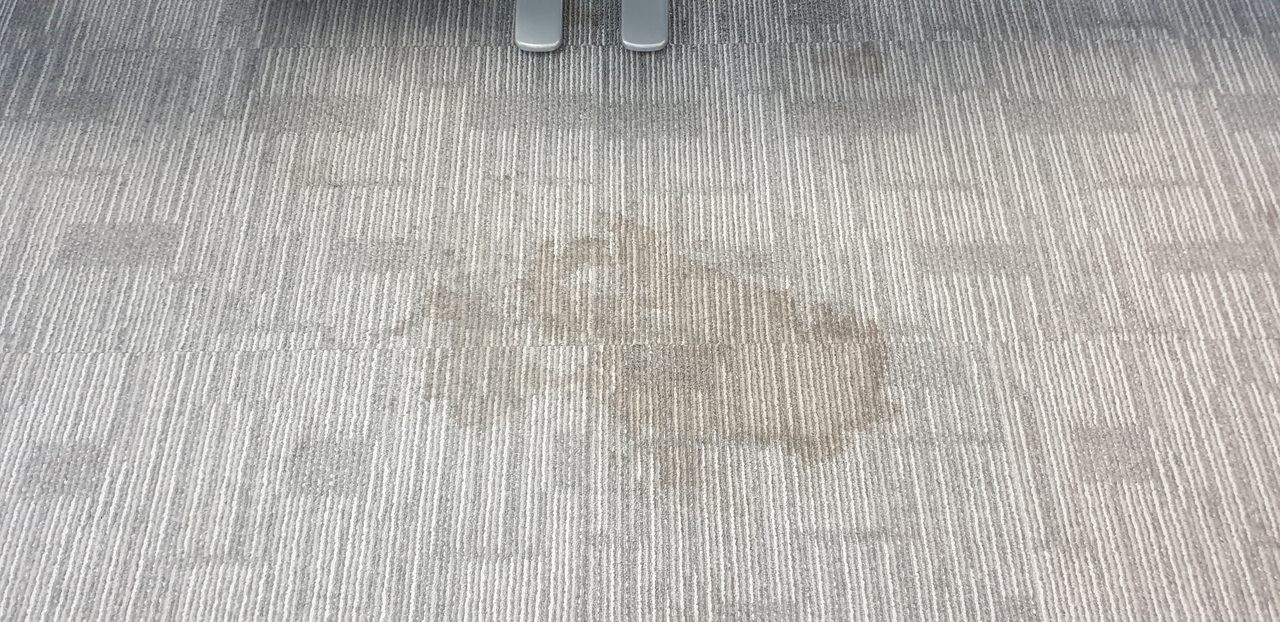
Of all the calls a carpet cleaner takes, one comes more often than any other. The spill was dealt with promptly, the mark lifted, the patch looked perfect while it was damp, and by the next morning the stain was back: same place, same shape, as though nothing had been done. It feels like a failed clean. Nine times out of ten it is nothing of the sort.
What has happened is one of two well-understood mechanisms, and neither means the cleaning removed nothing. Either soil that was sitting below the surface has travelled back up the fibre as the carpet dried, which is called wicking, or something sticky was left behind in the pile and has spent a few days quietly collecting fresh dirt, which is residue attraction. The two look similar from a standing height, and they are fixed in almost opposite ways, which is why guessing wrong wastes both product and patience.
This article is the diagnostic companion to our practical guide to removing common office stains. That post covers what to do for each type of spill while it is fresh. This one covers the harder question: why a mark you already removed keeps reappearing, how to work out which mechanism is doing it, and what actually stops it.
Commercial carpet is deeper than it looks. Above the floor there is the visible pile, then a primary backing the tufts are stitched through, a layer of adhesive, a secondary backing, and often an underlay or a bed of glue below that. A cup of coffee is around 250 millilitres, and pile a few millimetres deep can hold only a fraction of it. The rest goes down. Most of a decent spill ends up in layers you cannot see and cannot reach with a cloth.
The stain you removed was only the lid of the stain.
When you clean the surface, you remove what is in the pile, and the patch genuinely is clean, briefly. But drying happens from the top. Air moves across the tips of the fibre, water evaporates there first, and the moisture below rises through the yarn by capillary action to replace it, exactly as lamp oil climbs a wick. That rising water is not clean water. It carries dissolved coffee, sugar, soil and anything else waiting in the backing, and when it reaches the tips and evaporates, it leaves its cargo behind, in plain view.
This is why the returned mark holds the original footprint so faithfully, and why it often shows a darker ring at its edge, where the last of the moisture concentrated as the patch dried inward. The mechanism is the same one described in our guide to how carpet dries: evaporation at the surface pulls moisture up from below, and whatever is dissolved in that moisture comes along for the ride.
The second culprit works on a completely different timetable. Most household carpet sprays, and a fair amount of professional product used carelessly, contain detergents that do their job and then stay in the pile. Detergent is designed to grab soil; that is its entire purpose, and it does not stop being good at it just because nobody rinsed it out. Left behind, it dries into a soft, faintly tacky film on the fibre.
From that point every shoe that crosses the patch presses a little fresh soil onto the film, and the film holds it. In a Perth office the arriving soil is limestone dust, beach sand and red silt off an easterly, so the mark that builds is grey-brown rather than the colour of whatever was originally spilled. It grows slowly, over days or weeks, and it will keep growing for as long as the residue stays in the pile.
The two mechanisms give themselves away in three places: the clock, the edges and a white towel. Wicking is fast and faithful. The mark returns within hours or a day, precisely where the original stain sat, in something close to the original colour, and it arrives as the carpet finishes drying. Residue attraction is slow and vague. The mark takes days or weeks to build, spreads a little beyond the original footprint, follows the direction of foot traffic, and turns up grey regardless of what went down.
The towel test settles most arguments. Dampen a clean white towel with plain water, press it firmly onto the mark for thirty seconds, and look at it. A wicking spot transfers colour readily, because the mark is soluble soil sitting at the fibre tips. A residue mark transfers a grey smudge or very little at all, and the patch itself often feels slightly stiff or tacky when you draw dry fingertips across the pile.
| Wicking | Residue attraction | |
|---|---|---|
| When it appears | Within hours to a day of the clean | Gradually, over days to weeks |
| Shape and edges | The original footprint, often with a darker outer ring | Slightly spread and blurred, following foot traffic |
| Colour | Close to the original spill | Grey-brown, whatever was spilled |
| Damp white towel test | Transfers colour readily | Little transfer; the pile may feel tacky or stiff |
| The fix | Starve the reservoir: absorbent drying, low-moisture re-clean | Rinse extraction to strip the film |
Thirty seconds with a damp white towel answers what months of respraying never will.
The history of the patch helps too. If the mark reappeared the morning after a large spill was cleaned, wicking is the near-certain answer. If nothing has been spilled recently but a shadow has been slowly developing where somebody once emptied half a can of supermarket spotter, residue is the answer. Where a floor has had both, an over-wet clean with detergent left in, you will see both behaviours at once, and the fix has to deal with both.
There is a third pattern worth knowing, because it looks like a stain and is actually the carpet itself. Older broadloom is often backed with jute, a natural plant fibre, and some carpets carry other cellulosic material in the backing or underlay. When those layers are soaked and then dry slowly, water dissolves tannins and lignin, the same browning compounds found in tea and in cut timber, and carries them up the yarn as it wicks. The result is a weak, tea-coloured discolouration at the tips, usually in patches or rings.
Cleaners call this cellulosic browning, and it follows over-wetting as reliably as a headache follows the office Christmas party. It shows up after flooding, after a carpet has been cleaned with far too much water, and after slow drying in a closed winter building. Wool carpet needs the same restraint with moisture, because over-wetting a wool floor risks dye bleed, alkali damage to the fibre and browning from its jute backing.
Browning is correctable in most cases, but not with detergent, which is alkaline and tends to make it worse. The standard treatment is a mildly acidic rinse that neutralises the alkalinity and re-dissolves the browning compounds, followed by fast, forced drying so they cannot make the journey up the yarn a second time. It is a job for someone who can identify the backing fibre first, because here the diagnosis is the treatment.
Size changes everything, and it is worth being blunt about why. When a full cup of coffee, a jug of milk or a knocked-over vase goes down, the surface can only hold a small share, and the remainder becomes a reservoir in the backing. Blotting recovers what the cloth can reach; the reservoir sits below, untouched, and re-supplies the surface every time the carpet dries. This is why a splash rarely wicks and a soaking almost always does.
The reservoir is patient. A large milk spill can keep feeding the surface across several drying cycles, and because milk carries protein and fat, the returning mark brings company. This is the same journey behind an odour that survives a clean, which is why a returning smell so often shares an address with a returning stain.
Perth's seasons take a side here. In February, a spill treated in an air-conditioned office dries fast, the capillary journey is short, and wicking is modest. In June and July, with buildings closed against the rain and humidity sitting high, the same spill dries over days, and every one of those days is another chance for the reservoir to send soil to the surface. Winter is returning-stain season, and slow drying is the whole reason.
Because the problem is a reservoir, the fix is to empty it, or at least to bring its contents up into something other than your carpet pile. The cheapest tool is absorption plus time. A thick pad of clean white towelling laid over the damp mark and weighted down with something flat and heavy turns the wicking process against the stain: as moisture rises, it wicks past the fibre tips into the towel, and the towel takes the soil with it.
Leave the weighted pad overnight and change the towelling when it loads up. It is slow and completely unglamorous, and it recovers a remarkable amount of material that no amount of surface scrubbing would ever touch. On a fresh large spill, a weighted pad overnight is worth more than any product in the cleaning cupboard.
Press dry towelling firmly into the mark until nothing more transfers. Do not add liquid yet.
A thick stack of clean white towels under a flat weight, changed as it loads, draws the reservoir up into the towel instead of the pile.
An encapsulating spotter cleans the surface without sending fresh water down to the backing.
A fan across the patch shortens the wicking window; slow drying is the stain's best ally.
A mark that beats the pad routine needs professional extraction that flushes the backing, with drying managed on the same visit.
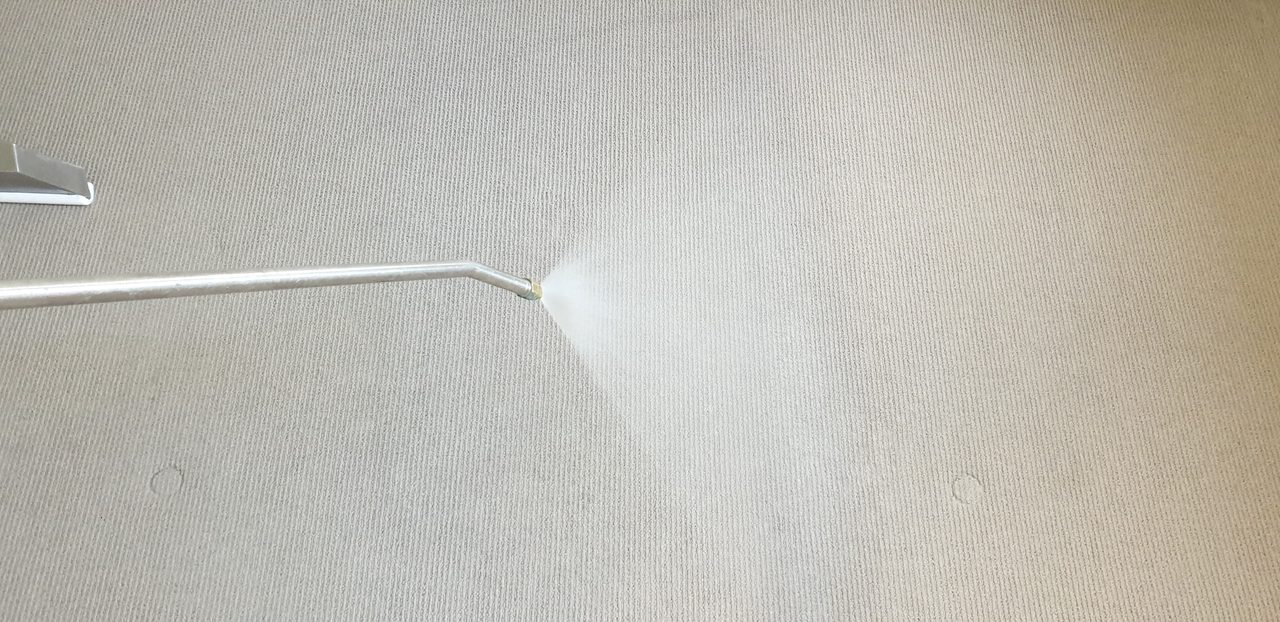
For the re-clean itself, use as little new moisture as possible. An encapsulating spotter, a low-moisture product that dries hard instead of tacky, cleans what is at the surface without recharging the reservoir below, and the crystals lift out with the next vacuum pass, soil locked inside. What the mark should not get is another bucket of water: with wicking, the enthusiasm of the second clean is usually the cause of the third appearance.
Residue asks for the opposite instinct. The mark is not being fed from below; it is being fed from above, by foot traffic, and it will continue until the sticky film is out of the fibre. More spray makes it worse, because you are adding residue to residue, and dry vacuuming barely dents it, because the soil is effectively glued on. What the patch needs is a rinse.
At a hand scale, that means repeated blotting with clean warm water and dry towelling: dampen the patch lightly, blot hard, and repeat until the towel comes away clean, then dry the area with airflow. It is tedious, and on a patch bigger than a dinner plate it becomes impractical, which is roughly the point where professional equipment earns its keep.
The professional version is rinse extraction: hot water, usually with a mildly acidic rinse agent rather than more detergent, driven through the pile and recovered in the same movement by a truck-mounted machine. It strips the film and the soil bonded to it in one pass and carries the water away with it. Encapsulation has a role here as well, because encapsulating chemistry is designed to crystallise sticky residues so they vacuum out. Which of the two suits your floor is something we judge when we inspect it.
Sometimes the returning mark is not returning at all; it never left, because it is not soil. Cleaning removes material from the fibre. It cannot restore colour that has been destroyed, and it cannot repair fibre that has been melted or abraded. Recognising damage early saves a great deal of pointless scrubbing, and it stops well-meant treatment from making the eventual repair harder.
The commonest example is the pale spot rather than the dark one. Bleach, benzoyl peroxide from acne creams, some hand sanitisers, and a range of bathroom and fertiliser products strip dye from carpet, and the pale mark only becomes obvious once the surrounding pile picks up a little soil and the contrast grows. It is routinely mistaken for a stubborn stain and scrubbed at for months. There is nothing there to remove.
Heat damage reads the same way. A dropped iron, ember burns near a function-room fireplace and friction burns from furniture dragged across synthetic pile all melt or scorch the fibre, and melted tips reflect light differently forever, however clean they are. The honest options for genuine damage are re-dyeing, patching from an off-cut, or living with it, not another round of chemistry.
Nearly every returning stain is preventable at the moment of the original spill, and the levers are exactly the ones the mechanisms point to. Wicking is beaten by getting liquid out before it becomes a reservoir and by keeping any added moisture modest. Residue is beaten by rinsing out everything you put in, and by owning fewer spray bottles than the cleaning cupboard would like to hold.
The single highest-value habit is the weighted absorbent pad on any spill larger than a coffee cup. It costs a stack of towels and something heavy to sit on them, it works while everyone is at home asleep, and it removes the reservoir that every later problem would have drawn on. The second habit is the rinse-blot: after any detergent touches carpet, clean water goes on and comes back out until the towelling shows nothing.
The third is drying, which deserves far more respect than it gets. A pedestal fan across a treated patch for two hours shortens the wicking window from a day to an afternoon, and in a closed winter office it is the difference between one appearance of the mark and four. If a floor is repeatedly over-wet on schedule, every clean followed by a day of dampness, the returning marks are telling you about the cleaning method, not the spills.
A mark that has beaten you twice will usually beat you a third time, because the household toolkit works at the surface and the problem is not at the surface. Professional equipment approaches it from the other side: extraction that flushes the backing rather than washing the tips, spotters matched to the mechanism rather than one bottle for everything, an acid rinse for browning and residue, and forced airflow so drying finishes in hours rather than days. That is professional stain removal properly defined: not stronger chemicals, but access to the part of the carpet the mark actually lives in.
It is also cheaper than it sounds, because the alternative is what usually happens instead: months of respraying, a patch of pile stiff with residue, and eventually a quote to replace a floor whose only real fault was one unresolved reservoir. If you are weighing it up, the answers to the common questions we hear, about drying times, access and after-hours work, are all short ones.
And keep the failed attempts in mind when you do hand it over. Tell whoever attends what has already gone onto the mark, because the products sitting in the pile change what can safely follow them, and a spot that has had four different bottles on it is a chemistry problem before it is a cleaning one. Get in touch with that list, and bring the white towel test results if you have run them; they save everyone ten minutes.
A practical guide to office carpet stains for Perth facility managers, with first aid for every spill, the right fix for each stain and when to call us.
Read ArticleWhy carpet drying takes as long as it does, the four levers that shorten it, where to stand air movers, and what changes between a Perth summer and winter.
Read ArticleA smell in your carpet is a source problem. Here is how to find what is causing it, treat it below the surface, and know when the underlay has to go.
Read Article