
Removing Common Office Carpet Stains: A Practical Guide
A practical guide to office carpet stains for Perth facility managers, with first aid for every spill, the right fix for each stain and when to call us.
Read ArticleSeven cheap items in one drawer, a blot technique staff will follow, and the products never to stock: the office spill kit that decides most stains.
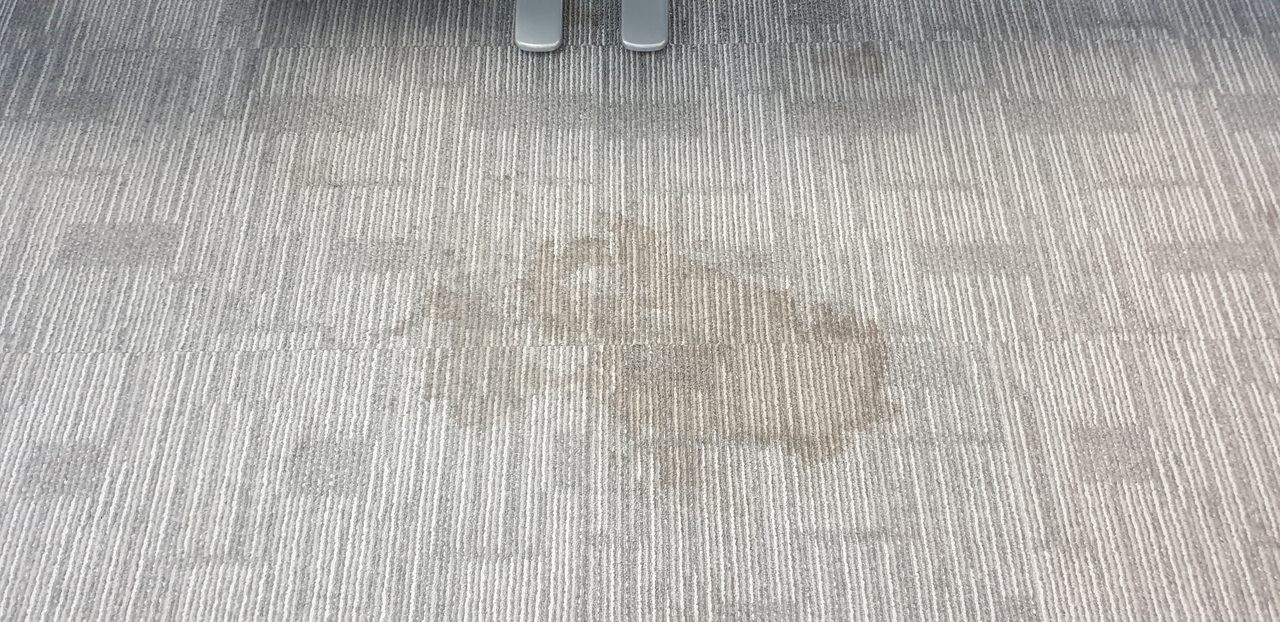
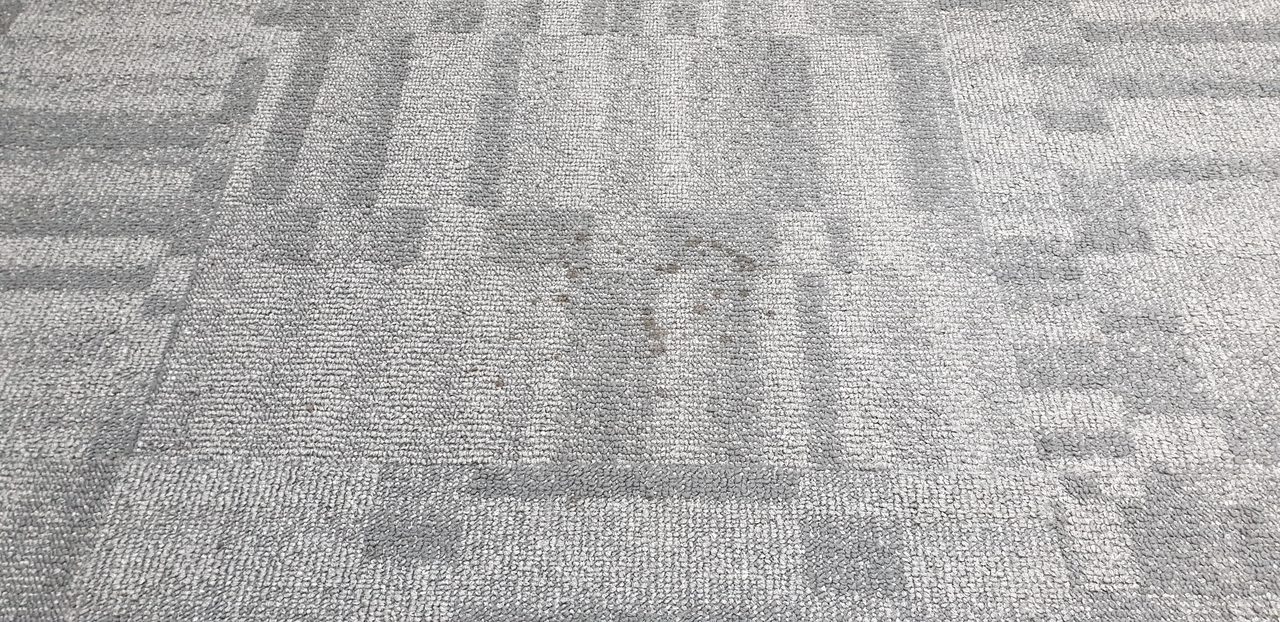
Most of the permanent marks on an office floor were not caused by anything exotic. They were caused by coffee, tea, soft drink and lunch — ordinary spills that sat too long or were treated badly in the first three minutes. While a spill is still liquid it sits on top of the fibre and lifts out with nothing more than pressure and a clean cloth. Once it soaks in and begins to dry, it bonds, and everything afterwards is harder, slower and less certain. In a Perth February, with dry air moving through the building all day, that window is shorter than most people think.
The person standing nearest when it happens is never a cleaner. It is someone from accounts, a receptionist halfway through a phone call, or a visitor who would rather nobody noticed. Without a plan, that person improvises: a printed serviette rubbed in hard, hot water fetched from the kitchen tap, or whatever spray lives under the sink. Each of those makes its own contribution — frayed fibre tips, set protein, stripped colour — and by the time anyone senior hears about the spill, the important decisions have already been made, badly.
A spill is a poor moment for decision-making. The spiller is embarrassed and wants the evidence gone, the carpet is absorbing steadily, and the nearest product wins by default. A spot-cleaning kit exists to remove the decisions from that moment. When the box is in the drawer and the card is on the wall, the flustered person follows instructions instead of instincts, and the instructions were written by someone calm.
Think of it the way you think of the first aid kit or the fire blanket: cheap, boring, and the entire point is that nobody has to be clever under pressure. This article is the practical companion to our stain guide, which covers which method suits which stain — coffee against ink, protein against grease. This one covers the physical box, the habits around it, and the short list of things staff should never attempt.
A spill kit is not cleaning equipment. It is a set of decisions made in advance, kept in a drawer.
The whole kit assembles from a supermarket and a hardware store in under an hour, and everything in it costs less than the morning coffee run that causes most of the spills it will treat. The real investment is not money. It is the small amount of organising required to put the kit where spills actually happen, write the card, and give one person the job of keeping it stocked.
The list is short on purpose. A kit with fifteen products is a chemistry set, and chemistry sets invite experiments. Seven items cover practically every spill an office produces, they all fit in a lidded plastic tub that slides into a kitchen drawer, and none of them can make a stain permanent — which is the design principle behind the whole list.
That principle is worth stating plainly, because it explains why the list looks underpowered. Every item is white, blunt, cold or neutral. Nothing bleaches, nothing bakes, nothing leaves a residue that cannot be rinsed back out. The kit's job is to remove as much of a spill as possible while keeping every option open for whoever treats whatever remains, and a kit that can do no harm can be handed to any member of staff without a training course.
Here is the list, with the reason each item earns its drawer space.
"Neutral" is doing real work in that list. Cleaning products sit on a pH scale from acid to alkaline, and most of the aggressive ones — oven cleaners, laundry boosters, mould sprays — sit far from the middle. Carpet dyes and wool fibre both object to the extremes. A pH-neutral carpet detergent cleans by lifting soil into suspension rather than by chemical force, which makes it safe on nearly every commercial carpet, including the wool blends where a strongly alkaline product can cost you the colour. Buy it from a carpet supplier rather than the supermarket aisle, and check that the label says neutral, not merely "gentle".
The vinegar solution earns its place more modestly than the internet suggests. White vinegar is a weak acid, so it neutralises alkaline residue — the sticky film left behind by a previous product or an over-enthusiastic attempt with something soapy — and it takes the edge off some odours while a spill is still fresh. What it is not is a stain remover. It will not shift tannin from dried coffee, and on wool it should be used sparingly and rinsed. Treat it as a rinse aid with a sideline in odour, nothing grander.
Cold water deserves a sentence of its own, because temperature is the instruction people ignore. Milk, blood, egg and most food proteins set hard when they are warmed, the same way they set in a frying pan, and hot water drives tannin drinks like coffee deeper into the dye sites of the fibre. The hot tap feels like the serious option, and it is the wrong one every time. Cold, sprayed rather than poured, and blotted straight back out — that is the entire liquid strategy of the kit.
The harder discipline is what stays out of the drawer. The supermarket cleaning aisle is full of products that promise exactly what a panicked spiller wants to hear, and most of them are engineered for a situation an office carpet is never in. Four categories account for most of the damage that lands on our list when we arrive.
| Product | The promise | What actually happens |
|---|---|---|
| Supermarket foam carpet sprays | Spray on, vacuum off, stain gone | A soft detergent residue stays in the pile, collects soil, and the patch turns grey within weeks |
| Bleach-based products of any kind | Kills the stain outright | Strips the carpet's own dye along with the mark, and a bleached patch cannot be cleaned back |
| Laundry stain removers | Works on shirts, so it should work on pile | Formulated to be machine-rinsed out; carpet cannot be rinsed like a shirt, so enzymes and brighteners stay behind |
| Eucalyptus oil and home remedies | The natural fix that always works | Oily residue holds soil, and some solvents soften the latex that holds the backing together |
The common failure is residue. A shirt gets a full machine rinse; carpet gets whatever you can blot out, and everything else stays in the pile.
The mechanism behind almost every failure in that table is the same: residue. Laundry chemistry is designed around a rinse cycle that flushes everything back out of the fabric, and a carpet never gets one. Whatever a product leaves in the pile stays in the pile, and soft, sticky residues collect soil with every footstep, which is why the treated patch is so often the first part of the floor to turn grey. Optical brighteners are worse again, because they stay invisible until the afternoon sun or a bright fit-out light hits the patch at an angle and it glows faintly blue.
Bleach damage belongs in its own category because it is not soil at all. An oxidising product does not remove the stain from the colour; it removes the colour from the carpet, and no cleaning process puts dye back. A pale ring from a bleach wipe left face-down on the floor is a permanent feature or a patching job. If a label mentions bleach, oxy, peroxide or "colour-safe" — a phrase written for clothing, not carpet — it does not go in the kit.
Technique fails in offices when it is complicated. Nobody flustered will follow a seven-branch flowchart, so the kit teaches one physical action: press, lift, repeat. Fold a towel into a pad, press it onto the spill firmly, hold it there for a few seconds while the liquid moves into the cotton, lift it straight up, and go again with a dry section. That is the entire skill, and it is close to impossible to do damage with it.
The one prohibition matters more than any positive instruction: never rub. Rubbing feels productive because the surface mark fades, but it roughens the cut ends of the yarn so the patch scatters light differently forever, unwinds the twist that gives the pile its resilience, and pushes the spill outward and downward at the same time. The liquid it drives into the backing is also why rubbed spills come back a day after they seemed to be gone — surface treatment cannot follow a spill that has been pressed below the pile.
Scoop with the blunt scraper, working inwards from the edge so nothing spreads into clean pile.
Fold a white towel into a pad, press it firmly onto the spill and hold for a few seconds. Weight does the work, not motion.
The colour on the towel tells you it is still working. Move to a dry section and go again.
Start at the rim of the mark and finish at the centre, so the spill shrinks instead of spreading.
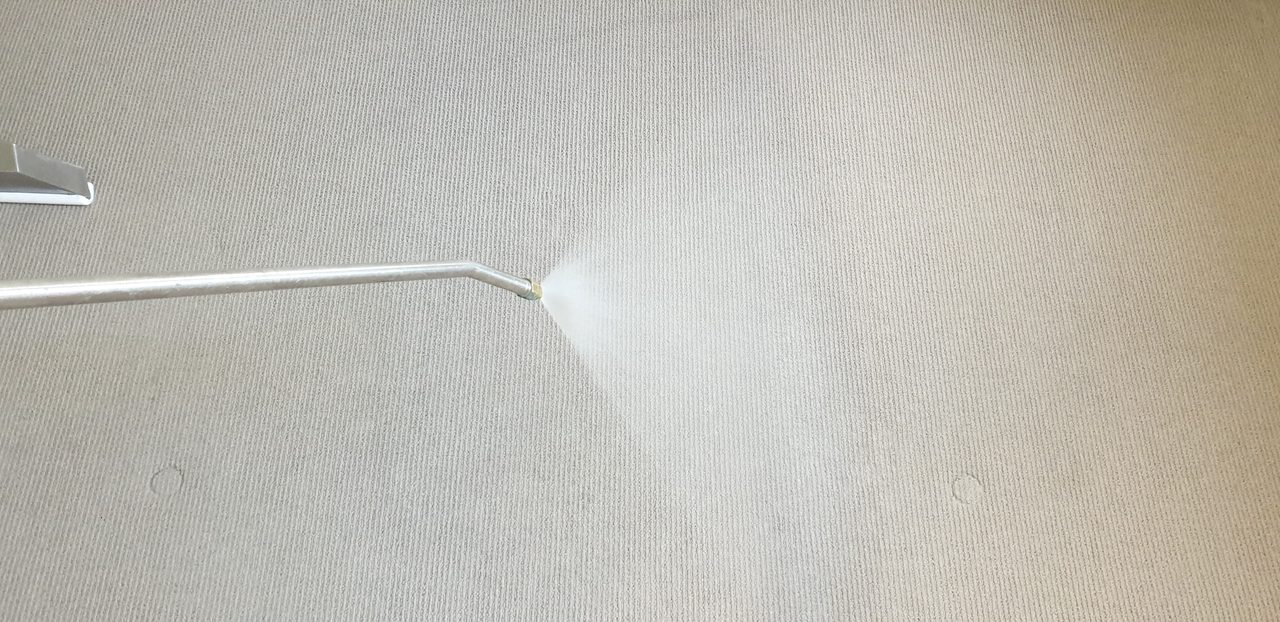
A light mist of cold water dilutes what remains; pouring drives it into the backing. Blot after every spray.
Then stand a dry stack of towel on the damp patch under something flat and heavy, and leave it for an hour.
The weighted towel at the end is the step everyone skips and the one that quietly finishes the job. A stack of dry white towelling under a box of copy paper keeps drawing moisture upward for an hour after everyone has gone back to their desks, which is exactly the direction you want the last of the spill to travel — up into the cotton, not up into the tips of the pile overnight.
Instructions kept in the drawer die in the drawer. The card goes on the wall at eye level next to the kettle, laminated so it survives splashes and wipes clean, printed large enough to read from a metre away by someone who is not calm. One page. If it needs a second page it is not a card, it is a document, and documents do not get read during a spill.
Write it for the worst reader at the worst moment: a new starter, twenty seconds after tipping a full plunger of coffee onto pale grey carpet tiles. Short words, big type, no branching. A good test is to hand it to someone in their first week and ask them to talk you through what they would do. Wherever they hesitate, rewrite that line.
The detailed knowledge for each stain — what shifts coffee, why toner must stay dry, which marks are dye and beyond first aid — deliberately stays off the card. That detail lives in the stain guide for whoever wants it later. The card's job is to make sure nobody needs it in the first three minutes: first aid first, diagnosis afterwards, and never the reverse.
Some spills are a phone call, and the card should say so bluntly. The first category is anything unidentified. If nobody can say what the liquid is — a solvent from the plant room, something leaking from a delivered package, an unlabelled bottle knocked from the cleaner's trolley — then nobody adds water to it, because water spreads it, may react with it, and turns one problem into a larger one. Contain the area, keep people off it, and make the call with the container or its safety data sheet in hand if one exists.
The second category is biological. A plaster-sized spot of blood from a paper cut is within the kit's scope: cold water, press and lift, done. Anything beyond that — vomit, a larger blood spill, a sewage backflow — is a hygiene job with its own protective equipment, its own chemistry and its own disposal rules, and our guide to biohazard spills covers it. Staff blotting a biological spill with kitchen towel are taking a risk no carpet is worth.
The third category is size. A full jug of anything — water included — has gone through the pile and into the backing before the towels come out, and surface blotting cannot follow it down. What a big spill needs is extraction, which pulls liquid back out of the backing rather than chasing it from above, and the sooner that happens the smaller the outcome. Ring it in within the hour, keep chairs and feet off the area, and resist the urge to demonstrate diligence with a mop.
A kit works in proportion to how close it is to the spill. The kitchen or kitchenette is the obvious first home, because most office spills are drinks made there and dropped within ten metres of it. Reception is the second, covering the visitor coffee lane and the most-photographed carpet in the building. If the premises run events — a boardroom that hosts client evenings, a training room, a function space — that room gets a kit stocked before the event rather than fetched during it.
What does not work is the well-stocked kit in a locked storeroom two floors down. It will still be immaculate in five years, which is the wrong kind of success. The measure of a good kit is that it needs restocking, because restocking means towels went onto spills while the spills were still wet.
Ownership is the difference between a kit and a former kit. Unowned kits evaporate: the towels get borrowed for a window leak, the scraper wanders off to the storeroom, the spray bottle ends up watering the reception plants. Give the job to a named person, tie a monthly check to something that already happens on a schedule, and make filling in the restock line on the card part of the ritual.
First response does not replace professional work; it changes what the professional work is. A coffee spill blotted inside three minutes is usually a nil event, or a thirty-second spot treatment folded into the next scheduled clean. The same spill rubbed with a serviette and left over a weekend becomes a separate call-out for professional stain removal, possibly involving dye-site chemistry, heat and dwell time — and a share of those late arrivals are not recoverable at any price.
The larger saving is the one nobody itemises. Commercial carpet is rarely replaced because it has worn out; as a rule it is replaced because it looks finished, and what makes a floor look finished is a scatter of permanent marks in the sight lines — the lift lobby, the reception lane, outside the boardroom door. Every spill that gets blotted instead of rubbed is one fewer permanent mark voting for early replacement, which makes the plastic tub in the kitchen drawer one of the cheapest pieces of floor-care equipment a building can own.
We see the difference across Perth offices every week. The floors that still present well at year seven are not the ones with the biggest cleaning budget; they are the ones where somebody blotted, somebody rang early, and the professional visits dealt with traffic-lane soil instead of archaeology. When we arrive at a building with a stocked kit and a marked-up card, the stain list is short and the conversation is about maintenance rather than triage.
Setting up the kit takes about an hour: assemble the seven items, print and laminate the card, name the owner, and tell staff the one rule. And when a spill beats the kit — too big, too old, too biological or too mysterious — call us rather than reaching for the next bottle. The worst that can come of an early phone call is reassurance; the worst that comes of a late one is a permanent mark.
A practical guide to office carpet stains for Perth facility managers, with first aid for every spill, the right fix for each stain and when to call us.
Read ArticleWhy a stain you removed reappears: how wicking and detergent residue bring marks back, how a white towel tells them apart, and the fix for each cause.
Read ArticleBlood and bodily fluids are not ordinary spills. A calm workplace protocol: contain first, what staff can safely do, and where the professional line sits.
Read Article