
10 Questions to Ask Before Hiring a Commercial Carpet Cleaner in Perth
The questions Perth facility managers can put to any commercial carpet cleaner about certification, insurance, quotes, site walks and method.
Read ArticleWhat a supermarket hire machine can honestly do on commercial carpet, where the gaps with professional work open, and the labour maths on a real floor.
Every Perth supermarket with a hardware aisle has the trailer near the door: a carpet extractor, a rack of detergent bottles, and a day rate that looks very reasonable next to a contractor's invoice. The instinct that stops you there deserves respect. You have a stained meeting room, or a small office that has gone flat and grey, and here is a machine you can drive home tonight. Wanting to solve the problem yourself, for less money, on your own timetable, is not naivety. It is how most facility budgets are supposed to think.
This article is the fair version of the comparison. We clean commercial carpet for a living, so you know which side of the counter we stand on, but the honest answer is not that hire machines are useless. They are not. They are small extractors with a genuine job to do, and in a handful of situations they are exactly the right call. The interesting question is where the gap between them and professional work opens, and why.
The gap turns out to be four specific things: heat, vacuum lift, chemistry, and agitation. None of them is a secret and none of them is marketing. They are plumbing and physics, and once you can see them you can predict, before you swipe your card at the hire counter, whether the machine will do what you need or quietly cost you a weekend and a redo.
Lift the lid on a hire unit and the layout is familiar to any technician: a solution tank, a pump, spray jets, a vacuum motor and a recovery tank. It is the same principle as professional extraction, which is exactly why the comparison is worth taking seriously. This is not a toy or a gimmick. It is a scaled-down version of a real method, built to a price, to a weight a customer can lift into a hatchback, and to a duty cycle measured in lounge rooms.
The hire machine is not a small professional machine; it is a large domestic one.
The scale is the point. The pump delivers modest pressure, a single vacuum motor provides all the lift, and the solution tank holds somewhere around ten litres, which sounds like plenty until you learn what a commercial floor drinks. There is no water heating on board; the tank holds whatever temperature you pour into it, and that temperature falls from the moment you leave the tap. Every one of those choices is sensible for the machine's real design brief, which is a domestic carpet cleaned occasionally and forgivingly.
Trouble does not start with the machine. It starts when the machine is pointed at a job from a different category: three hundred square metres of dense commercial loop pile, soiled by two hundred pairs of shoes a day, that must be dry before trading resumes. Nothing about the hire unit was designed with that sentence in mind, and the four gaps that follow are simply the places where the design brief runs out.
Start with where the hire unit genuinely works, because pretending it never does would make the rest of this article sales copy. The clearest case is the single fresh spill over a small area. A knocked-over coffee plunger across two square metres of synthetic carpet, blotted promptly and then flushed with a hire extractor the same day, will usually come out well. Timeliness is doing most of the work there, and timeliness is the one advantage a machine you can fetch tonight will always hold over a contractor you book for Thursday.
The second honest case is the very small tenancy between professional visits. A two-room suite of twenty or thirty square metres, synthetic carpet, light soil, cleaned on a Friday evening at the start of a warm dry Perth weekend, will be dry by Monday and visibly brighter. That is interim care, not restoration, and at that modest scale the machine's limits stay comfortably inside the job.
The first gap is temperature, and it is bigger than it sounds. Cleaning chemistry runs on heat, and the relationship is not gentle: warm water does slowly what hot water does at once, and cold water largely does not do it at all. A hire unit heats nothing. It takes whatever comes out of the tap and loses some of that on the way down the hose, so the chemistry arrives at the fibre already working at a disadvantage. The greasy films that bind soil to fibre soften and release under heat; under a lukewarm rinse they mostly stay where they are.
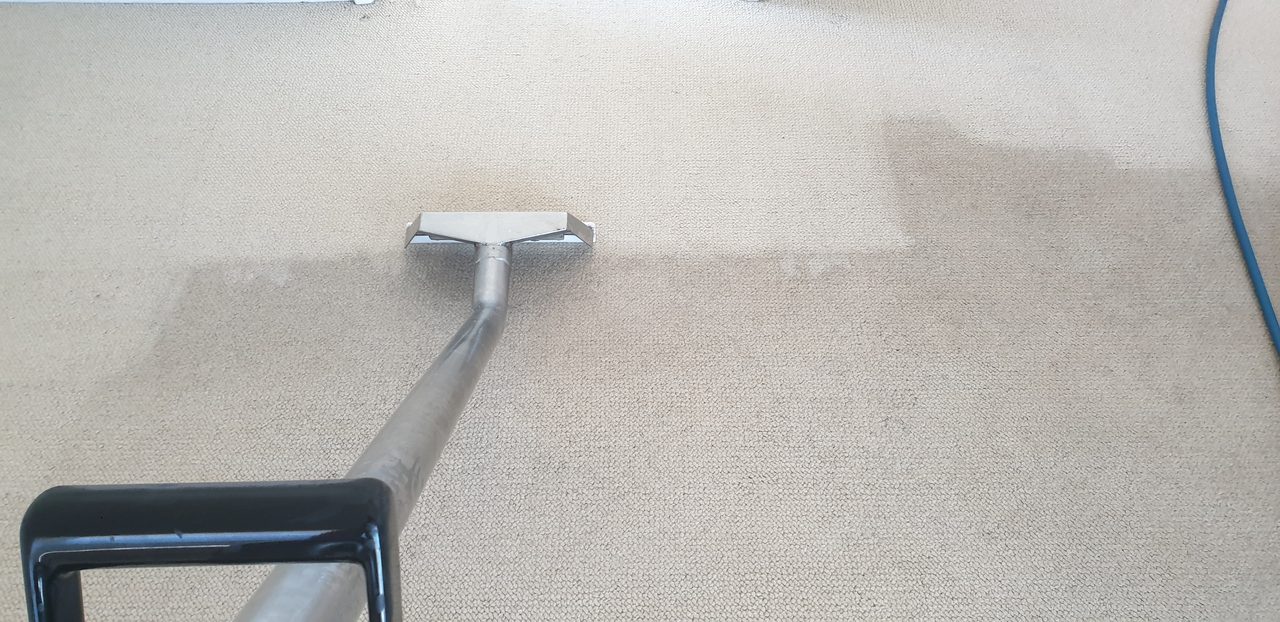
A hire unit brings no heat of its own. You fill the tank from the laundry tap, the water cools in the tank, cools again in the hose, and arrives at the carpet somewhere on the cooler side of warm. A truck-mounted machine runs its water through a heat exchanger driven by the engine and holds delivery temperature at the wand for hours at a stretch. That difference in plumbing is most of the difference in result; the rest of what professional extraction involves builds on top of it.
The consequence of missing heat is not just slower cleaning; it is a change of method. Cold water has to lean harder on detergent to do the same work, so the temptation is a stronger mix and a heavier hand, and detergent left in the pile becomes a soil magnet of its own. The heat gap quietly becomes a residue gap, which is the beginning of the carpet that looks dirty again three weeks after its clean.
The second gap decides more outcomes than any other. Extraction cleaning is judged not by what a machine puts into the carpet but by what it pulls back out, and vacuum lift is where the hire unit gives away the most. One small vacuum motor cannot recover water from the base of a dense commercial pile the way a truck-mounted blower can, so a share of every litre you spray stays behind, held in the pile and the backing where no towel will ever reach it.
That retained water is why hire-cleaned carpet stays wet for a day and sometimes two, especially in a closed building through a humid June week with the air conditioning off overnight. A wet floor in a workplace is a slip hazard at every hard-floor transition, an odour risk as the damp pile sours, and a re-soiling magnet, because moist fibre grips every particle that walks across it.
The mechanics of over-wetting and returning stains have an article of their own, but the short version belongs here: slow drying is not a cosmetic inconvenience, it is the engine that drives old marks back to the surface. Professional extraction leaves so much less water behind that the whole failure mode largely disappears; a properly extracted commercial floor is typically walkable in hours, not days.
The third gap is chemistry, in two layers. The first layer is stock. The hire counter sells one general-purpose detergent, formulated to be safe on every carpet it might meet, which necessarily means it is decisive on none of them. A professional van carries a shelf of specific answers: alkaline pre-sprays graded by soil load, acid-side rinses to neutralise them afterwards, and dedicated spotters that treat protein, tannin, oil and ink as the different problems they are.
The second layer is knowing which answer fits, and that begins with fibre identification. Wool, nylon and polypropylene tolerate completely different chemistry and temperature, and they do not announce themselves; a technician burn-tests a tuft when the label is long gone. Wool in particular is unforgiving, which is why Woolsafe accreditation exists as a separate credential. A high-pH general detergent worked warm into a wool boardroom carpet risks dye bleed and felting, and nothing on the hire machine or the bottle will warn you before it happens.
Residue closes the loop. Domestic formulations foam generously, over-application is the default with an unfamiliar machine, and a lukewarm rinse cannot carry the surplus away, so it dries in the pile soft and faintly sticky. Professional practice runs in the opposite direction: a measured pre-spray, then a rinse that neutralises and removes it, leaving the fibre close to neutral with nothing behind for passing soil to grab.
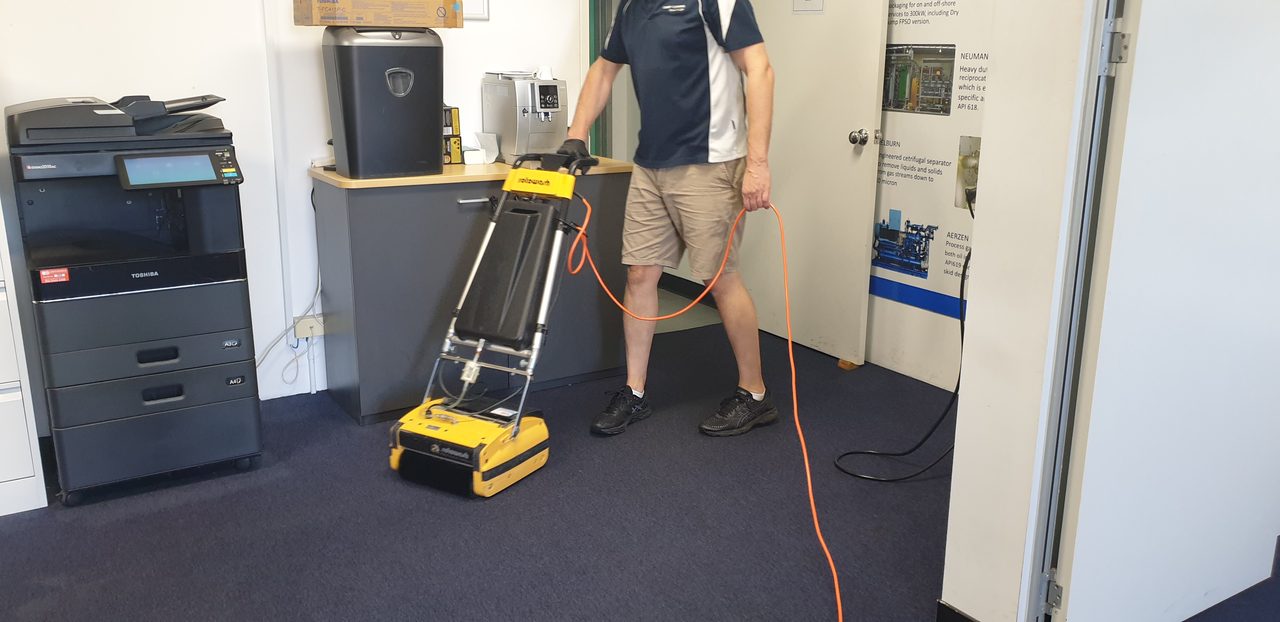
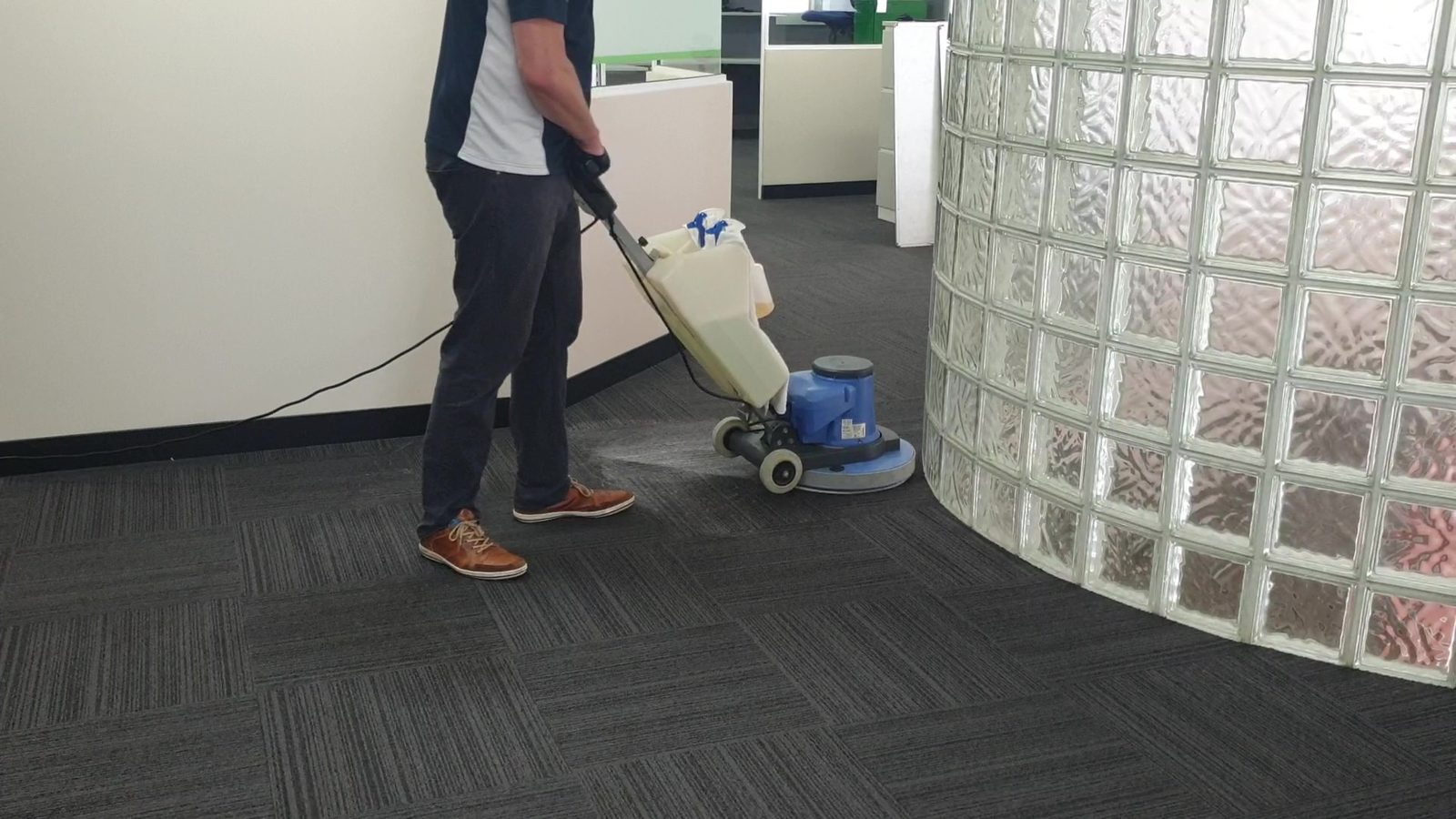
The fourth gap is mechanical. Between the spray and the vacuum, professional cleaning inserts agitation: a counter-rotating cylindrical brush machine, such as the Rotowash units we run, that drives the chemistry down to the base of the tuft and works it against every side of every fibre. The typical hire unit offers a light stirring at best; it relies mostly on spray pressure going in and a straight pull-back stroke coming out.
Agitation matters because soil does not sit on top of carpet; it migrates downward and lodges at the base of the pile, exactly where commercial loop constructions are densest and hardest to reach. Without mechanical action, the top third of the pile gets cleaned and the bottom two-thirds keep their load, so the floor looks better for a fortnight before the traffic areas darken again as the remaining soil works its way back up.
The four gaps also compound rather than add. Heat covers for weaker chemistry, agitation covers for shorter dwell, vacuum lift recovers the water the others need; a professional clean is four levers balanced against one another, and the hire unit arrives with all four short at once. You can see the equipment gap itemised for yourself: the truck mount, the cylindrical brushes, the air movers. None of it fits on a supermarket shelf, and none of it is there for show.
Now put numbers of a different kind on it: hours. Picture three hundred square metres of open-plan office in an ordinary suburban business park, ordinary soil, cleaned by two staff members with a hire unit over a weekend. Furniture must move, the floor must be vacuumed properly first, and then the real arithmetic starts. A ten-litre tank at domestic flow rates means a refill-and-dump cycle every few minutes of actual cleaning, a walk to the cleaner's sink each time, and a pass rate that is a fraction of a professional wand's.
| Hire machine over a weekend | Professional visit | |
|---|---|---|
| Water and heat | Warm tap water, cooling as it goes | Heated continuously at the truck |
| Vacuum lift | One small motor, and it stops pulling hard once the tank fills | Vacuum lift from the truck, at full pull the whole time the wand moves |
| Chemistry | One general detergent | Pre-spray, rinse and spotters matched to fibre and soil |
| Agitation | A light stir at best | Counter-rotating brushes to the base of the pile |
| The people | Two staff, most of a weekend | Trained technicians, about three hours |
| Monday morning | Wick-back risk, and a second visit to pay for | Dry, clean and checked before we lock up |
The right column is not magic; it is the same method with all four levers actually available.
Then cost the weekend honestly. The hire fee and the detergent are the visible lines, but the real line is labour: two people's Saturday, possibly at overtime rates, certainly at goodwill rates, spent on slow, wet, repetitive work they have never done before. Against that stands one after-hours visit of professional steam cleaning, booked for Friday close, finished the same evening, with the floor dry and presentable before anyone badges in on Monday.
The number most spreadsheets forget is redo risk. If the floor wicks, browns or re-soils inside a month, the professional visit you deferred still has to happen, now on carpet loaded with detergent residue that makes the job slower, and the weekend's spend bought nothing but a delay. A false economy is not an economy that fails every time; it is one that fails often enough to erase what it saves.
Commercial settings add obligations that a lounge room never has. The first is the warranty. Many commercial carpet warranties specify periodic professional cleaning, often naming hot water extraction and sometimes an interval, and a claim for premature wear can turn on whether the maintenance records show it happened. A weekend hire receipt does not satisfy a clause written around professional method; read your warranty before deciding this does not apply to you, because the cost of guessing wrong arrives years later.
The second is the floor itself. Carpet tiles are the default commercial surface, and most are bitumen-backed; soak them and the water can work at edges and adhesive, and a curled tile is a trip hazard as well as a replacement cost. The third is liability. A floor still damp at Monday opening is a workplace safety matter, not a comfort issue, and if a staff member's well-meant weekend clean damages the carpet, there is no contractor and no contractor's insurance to claim against. The cost simply lands on the business.
None of this makes the hire machine forbidden fruit. It means the commercial setting stacks quiet obligations around a decision that feels casual. In a house, the worst case of an over-ambitious weekend is a damp lounge and a lesson. In a workplace it can be a voided warranty discovered at make-good, a curled tile field, or an incident report, none of which appear on the hire counter's price board.
A well-run building still does most of its own carpet care, and should. Daily vacuuming and the response to fresh spills decide more of a carpet's appearance over five years than any single deep clean, and both belong to you, not to a contractor. What to keep on the shelf is covered by the office spot kit; the principle behind it is that a fresh spill treated within minutes beats any machine applied months later.
The hire unit keeps its narrow slot inside that picture. Used on a small synthetic tenancy, mid-cycle, with a dry weekend ahead of it and modest expectations behind it, it is legitimate interim care. Used in place of professional cleaning on a whole floor, it leaves water and soil in the pile and the carpet looks tired again within weeks.
So the scorecard, without romance in either direction. The hire machine is a real tool with a real niche: fresh spills, tiny synthetic tenancies, interim brightening when the calendar is kind. The gap that opens beyond that niche is not branding; it is heat, lift, chemistry and agitation, four physical shortfalls that compound on exactly the floors commercial buildings have. The saving is genuine in a lounge room and evaporates somewhere around the tenth refill of a ten-litre tank.
Our own advice runs milder than you might expect. Keep your money for good matting, a good vacuum and a stocked spot kit, because those decide the years. Book a professional clean for the whole floor once a year at the least, more often where the carpet needs it. Carpet cleaned regularly never reaches the heavy soil load that costs the most to remove. Between visits, spot promptly and vacuum well, and the schedule itself can stretch further.
If you are not sure which side of the line your floor falls on, the deciding facts take five minutes to gather: the measured area, the fibre, the backing, and what Monday morning looks like. Ask through the contact page and the answer will be a straight one, which occasionally is that the hire machine will do fine for the job you have.
The questions Perth facility managers can put to any commercial carpet cleaner about certification, insurance, quotes, site walks and method.
Read ArticleWhat happens during hot water extraction: the four levers, pre-spray and dwell, wand technique, truck mount or portable, and what only a flush lifts.
Read ArticleDeferring carpet maintenance does not save money, it moves it. Here is the real cost stack, the arithmetic, and how to build the business case.
Read Article