
Hotels and Venues: Cleaning Carpet Around a Booking Calendar
How Perth hotels, function centres, clubs and churches schedule carpet cleaning around a full events diary, in the gap between one event and the next.
Read ArticleFood fats, sugary drinks and kitchen grease age a dining-room carpet one service at a time. How Perth cafes, restaurants and venues keep it clean.
An office carpet soils on a schedule. The same people walk the same lanes five days a week, and the floor drifts towards grey at a rate you can predict a year out. A dining-room carpet does nothing so polite. It ages in bursts, one service at a time, and a single busy Friday night can put more into the pile than an office corridor collects in a month.
The difference is not only volume. Food-service soil is a different substance: cooking fats that settle as an invisible film, sugary drinks that dry clear and sticky, wine, coffee, dressings and sauces, all arriving during trade while the room is full and nobody can stop to deal with them properly. The soil goes down hot and fresh, service continues over the top, and by the time the last table leaves it has been trodden into the base of the pile.
This guide is written for anyone running carpet in front of house: cafes, restaurants, licensed venues, clubs and function bars. It covers what a service actually leaves behind, why a dining-room floor fails in the particular ways it does, and how to build cleaning around a trading week that never pauses for long enough. If you would rather see how the work gets scoped and quoted for a venue than read the reasoning behind it, that lives on our restaurant and cafe carpet cleaning page.
Stand in the dining room after the last table leaves and the carpet looks much as it did at opening. That is the deceptive part. Almost everything a service deposits is invisible at eye level, and the pile underfoot is holding a remarkably complete record of the day's menu.
The sugary fraction is the quiet saboteur. Soft drink, juice, dessert wine and sweetened coffee dry to a clear, tacky residue that cannot be seen at all, and that residue works like flypaper: every shoe that crosses it afterwards leaves a little grit behind. A floor carrying dried sugar does not look dirty on the night. It looks dirty three weeks later, when the cause is long gone.
Everything a food venue puts into carpet belongs to one of two families. Greasy soils are the fats and oils: kitchen film, butter, fried food, salad dressing, meat juices. They are hydrophobic, meaning they repel water, so a plain rinse slides straight past them. They bond to the fibre, darken as they collect grit, and oxidise over the following weeks into the stale, faintly rancid note that old restaurant carpet carries.
Sugary soils are everything sweet and water-borne: soft drink, syrup, juice, dessert wine, sweetened coffee. They dissolve easily, which sounds like good news, but a light mop or a dab with a wet cloth simply spreads them thinner and wider, and what remains dries tacky again by morning. They are also food, in the literal sense, for the bacteria and yeasts that turn a spill into a smell.
| Greasy soils | Sugary soils | |
|---|---|---|
| Where they come from | Kitchen film, fried food, butter, dressings, meat juices | Soft drink, juice, syrups, dessert wine, sweetened coffee |
| What they do in the pile | Bond to the fibre, collect grit, oxidise and darken | Dry clear and tacky, gluing passing soil in place |
| What removes them | Alkaline pre-spray, heat and agitation, then extraction | Thorough hot rinsing under vacuum, not surface wiping |
| What fails against them | Plain water and light low-moisture passes | Dabbing and mopping, which spread them wider |
A dining room holds both families at once, which is why the method has to handle both.
The trap is that each family defeats the wrong method quietly. A low-moisture pass over greasy soil brightens the surface for a fortnight, then the floor darkens faster than before, because the polymer cannot crystallise properly around an oil film and the grease left in the pile keeps grabbing soil. Water-only spotting on sugar looks perfect on the night and rebuilds the sticky patch by the weekend. A floor that is cleaned regularly and still looks tired is usually a floor being cleaned against the wrong family.
Commercial kitchen floors carry a film of fat no matter how well they are degreased, and the non-slip soles that kitchen and floor staff wear are very good at picking it up. Every trip from the pass to a table deposits a little of it onto the carpet, and every trip follows the same narrow route, because the room's layout allows no other. The result is the waiter line: a dark ribbon in the pile that traces the service path as faithfully as a map.
The line is grease and abrasion working together. The fat film holds grit; the grit scratches the fibre under every footstep; the scratched fibre scatters light dully and reads as grey even when it is clean. It shows first in low-angle light, such as the afternoon sun through a west window, and it is nearly always the first place a dining-room carpet looks tired. Guests read it as dirt, whatever the rest of the room looks like.
You cannot roster the line away, because the path is fixed by where the kitchen door and the tables sit. What you can do is intercept the grease before it reaches carpet, and clean the line itself on a shorter cycle than the rest of the room. The interception points are worth naming, because they are the same in almost every venue:
Somebody will knock over a glass this week. What the floor staff do in the next two minutes matters more than anything a technician does later, because most spills are removable while they sit on the surface of the fibre and become progressively harder once they are walked in, dried or heated. The first rule is the one everyone half-knows and forgets under pressure: blot, never rub. Rubbing spreads the mark and distorts the pile; blotting lifts liquid out.
The second rule is to keep retail spot sprays out of the dining room. Most of them leave something sticky behind that pulls in soil and can set a shadow worse than the spill it was meant to fix, and some react badly with wine and food dyes. What staff need instead is a small, boring routine they can run mid-service without breaking stride; the chemistry for each kind of mark is a separate subject, covered in our guide to removing common carpet stains.
Use a spoon edge or the back of a knife to lift food before any liquid touches the fibre.
A clean white cloth or napkin, pressed down firmly, working towards the centre so the mark does not spread.
Never poured onto the carpet, and never hot, which can set some pigments.
Put a chair over it. At close, with the lights different and the floor empty, a small mark is remarkably hard to find again.
A one-line note of what and where turns tomorrow's mystery mark into a two-minute treatment.
Train the routine the way allergen handling is trained: short, specific and rehearsed, with clean cloths and a bottle of plain water stocked at the service station rather than in a storeroom two flights away. A venue that runs this routine consistently hands its carpet cleaner easy work, and its carpet stays presentable between professional visits for far longer.
Odour is the cruellest way for a dining-room carpet to fail, because a guest smells the room in the first three seconds and silently attributes whatever they notice to the kitchen. It is not fair, and it does not need to be. The carpet is usually the largest soft surface in the room, and it holds the raw material: sugars fermenting, fats oxidising towards rancid, a milk-based spill souring somewhere under table twelve. Overnight, with the doors shut and the air conditioning off, the room concentrates whatever the floor is producing, which is why the smell is always strongest at opening.
Fragrance is not a fix. Perfume over rancid fat produces a third smell worse than either, and diners notice it the way they notice any cover-up. The lasting answer is removing the source material from the pile, which for food-service soil means extraction rather than surface work. We have written separately about tracing odour in commercial carpet to its source; the food-service point is simpler. In a room where people are eating, the floor has to smell of nothing at all, and reviews are written by noses as much as by palates.
A food venue never has downtime in the office sense, but it has windows, and the window decides when each kind of work can happen. A cafe that closes at 3pm has a civilised afternoon. A restaurant serving lunch and dinner has the gap between roughly 2.30 and 5.30. A licensed venue that pours until midnight has the small hours and the whole of the next morning.
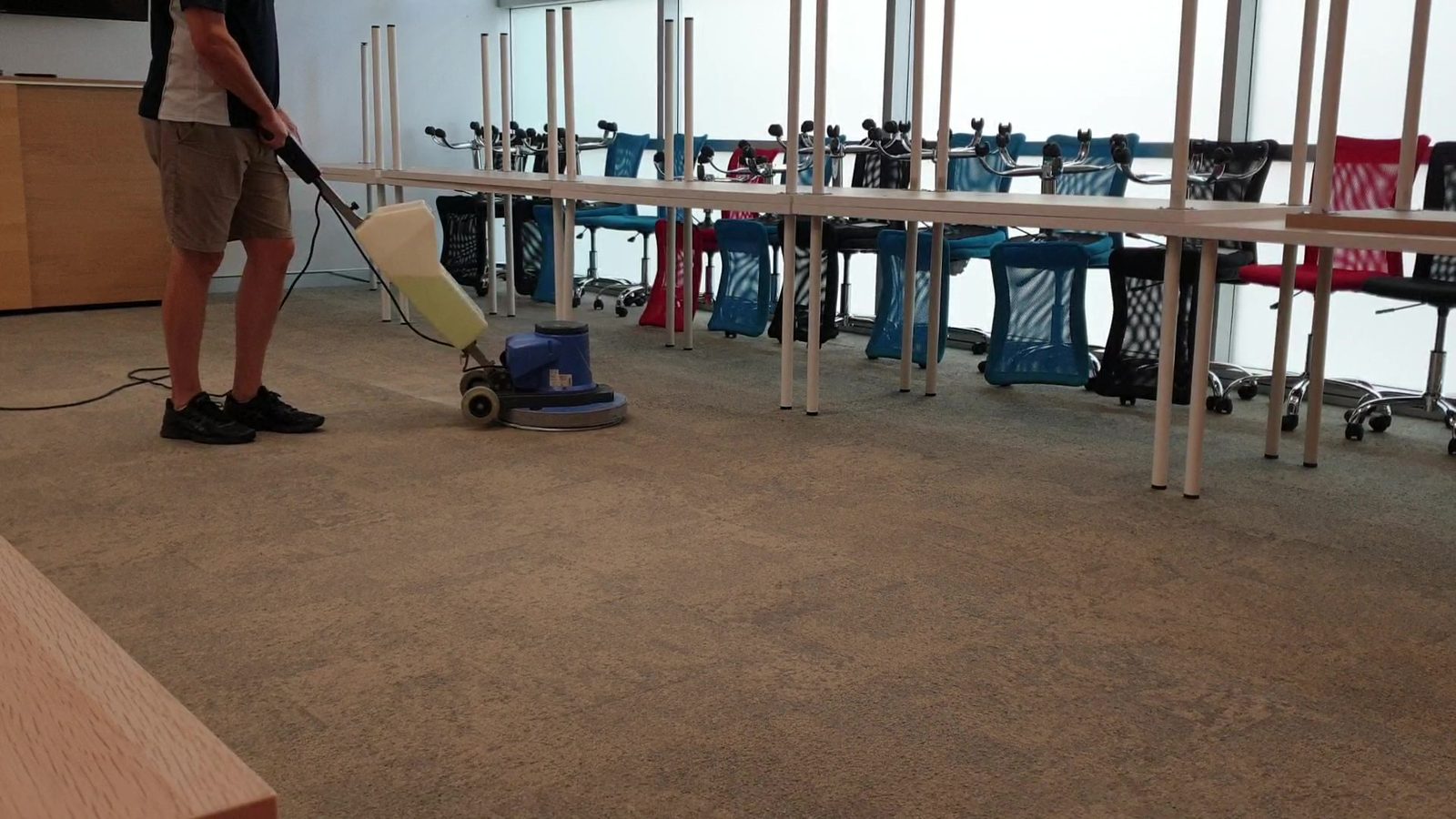
Where the soil in the entry or the bar approach is light and still sits in the upper pile, low-moisture encapsulation fits the between-services window. Very little water goes down and no hoses run through a dining room the staff are trying to reset for the evening. Where grease has built up, as it usually has on the waiter line, encapsulation is the wrong method. The inspection tells you which applies.
What the short window cannot do is remove what a food room actually accumulates. A polymer only ever gets at the soil it can wrap, and greasy build-up defeats it, as does anything that has already migrated down the pile. A venue that books all its cleaning into between-service windows ends up with a passable surface over a loading base. Grease and deeper soil need hot water extraction, which needs the long window after close.
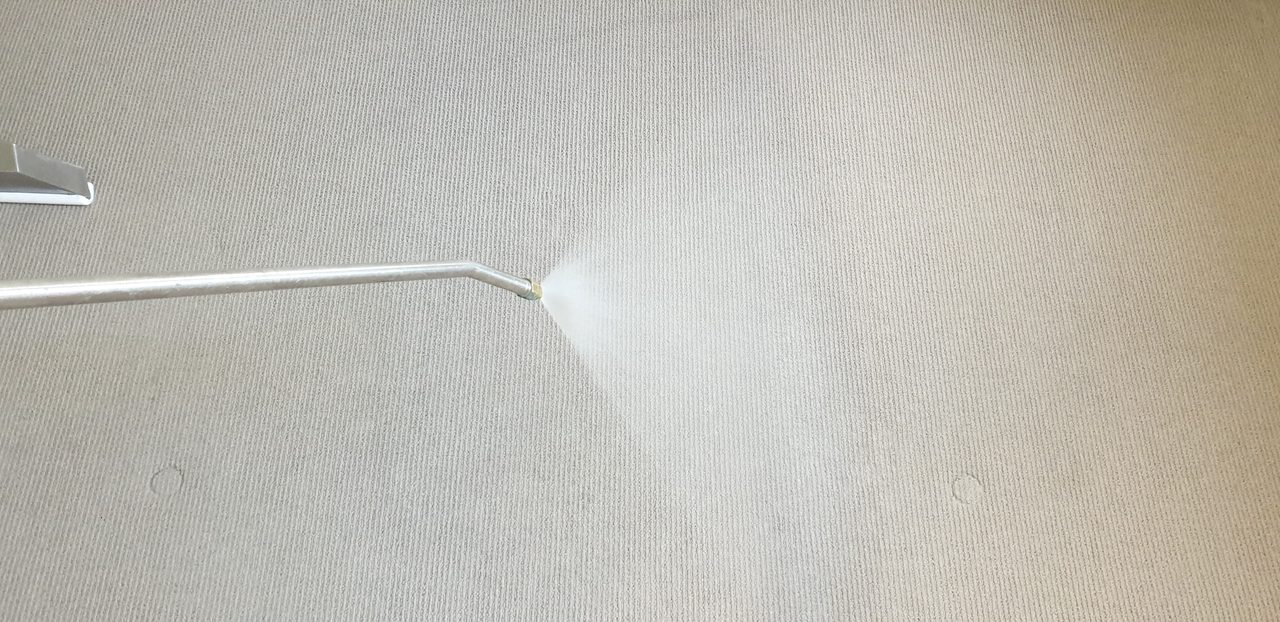
The reset is truck-mounted hot water extraction: an alkaline pre-spray to break the grease bond, time for it to dwell and work, mechanical agitation, then a hot rinse under strong vacuum that pulls the emulsified fats and dissolved sugars out of the pile together. It deals with both soil families in a single pass, which is why the inspection of a food venue's floor usually points to it.
After close is also when the set marks get individual attention, the wine shadows and curry splashes that survived the mid-service routine, which is professional stain removal work rather than general cleaning. Drying is the planning question: a February night in Perth dries carpet in a few hours with the doors cracked open, while a humid June night wants air movers and the air conditioning left running. Either way the floor is dry before the first barista arrives, provided a few things are arranged in advance:
Food business inspections in WA run under the Food Act and the national Food Standards Code, and the Code's test for floors is that they can be effectively cleaned. In practice that is why food-preparation areas have hard, sealed flooring, and why nobody carpets a kitchen. Front of house is assessed more leniently: carpet in a dining area is common and accepted, provided it is genuinely maintained rather than merely vacuumed. As with anything regulatory, your local council's environmental health officer is the authority worth asking, not a carpet cleaner and not a blog.
What an inspection tends to notice is condition rather than material. A greasy sheen at the kitchen threshold, food debris accumulated under fixed banquettes where a vacuum head does not reach, and above all odour, because an inspector's nose works exactly like a guest's. None of this typically fails a venue on its own, but a plainly neglected floor sets a tone for the rest of the visit that no manager wants set.
The same records earn their keep beyond inspection day. Slip claims, lease make-good negotiations and insurance conversations all go better for a venue that can show when the floor was cleaned, by what method and by whom. Your specific obligations depend on your lease and your policies, and it is worth checking both, but a dated record has never hurt anybody's case.
The cheapest cleaning a food venue will ever buy is a mat. A rubber-backed washable runner at the kitchen threshold intercepts grease at the source, on the first two or three strides where the deposit is heaviest, and goes through a commercial laundry instead of needing a technician. Square metre for square metre, that strip of textile does more for the dining-room carpet than anything else in this article.
The discipline is in the laundering. A saturated mat stops intercepting and starts redistributing, handing grease back to every sole that crosses it, so mats belong on a laundry rotation with spares, not on a wash-when-remembered basis. And the aim is interception, not carpeting the carpet: a runner the full length of the waiter line looks like a bandage and trips waiters. Cover the transfer points and let the carpet do the rest:
Perth adds its own ingredients. Coastal venues take beach sand all year, and sand walked onto a carpet holding a tacky sugar film becomes an abrasive paste that dulls fibre remarkably quickly. The cafe strips are the concentrated case: on the cappuccino strip and around the fishing boat harbour, carpeted Fremantle dining rooms deal with sand, sea air and seven-day trade at once, and the floor shows it within a season if regular cleaning slips.
The CBD and Northbridge small bars are the opposite problem: tiny floors taking enormous per-metre traffic, with a cleaning window that starts after midnight and a fit-out where the carpet is part of the look. February works against them, because the doors stand open to the evening heat and the easterly carries fine dust straight in off the street. Leederville, Mount Lawley and Victoria Park run the same pattern at cafe scale.
This is why food-service work is odd-hours work, and it is worth saying plainly what that means when you are choosing who does it. The window a dining room can offer is short, it moves, and it is often not confirmed until the same afternoon. We are open 7 days and work at the hour you choose, including after midnight, so the method can suit the floor rather than the clock. Judge a proposal on whether it names your window and matches the method to it, well before you look at the number on the bottom of it.
The venues whose carpet lasts treat it like the coffee machine or the fryer: a piece of equipment on a maintenance roster, serviced on a schedule rather than when it visibly complains. We advise having the whole floor professionally cleaned once a year at the very least, with the waiter line and entry cleaned more often because grease and grit reach them every service. Covers, trading days and carpet colour decide how much more often. You choose the frequency. We recommend one after seeing the room.
The commercial argument is blunt. Replacing a dining-room carpet is not a carpet bill, it is a closure: furniture out, trade stopped, a fit-out contractor in, and a week of takings gone before the first metre is laid. Regular cleaning costing a small fraction of that each year defers the closure by years, and keeps the room looking like somewhere worth lingering in the meantime, which is the part the till notices.
If you would like cleaning that fits your actual trading week, the useful first step is a walk-through during a quiet service, where the waiter line, the windows and the problem corners can all be seen doing their jobs. Quotes are free and on site, and evenings are no obstacle, for the obvious reason. You can arrange a free quote and we will fit the visit around your bookings rather than the other way about.
How Perth hotels, function centres, clubs and churches schedule carpet cleaning around a full events diary, in the gap between one event and the next.
Read ArticleA smell in your carpet is a source problem. Here is how to find what is causing it, treat it below the surface, and know when the underlay has to go.
Read ArticleA practical guide to office carpet stains for Perth facility managers, with first aid for every spill, the right fix for each stain and when to call us.
Read Article