
How Clean Carpets Improve Workplace Health and Air Quality
Carpet works as a filter for dust, allergens and fine soil. Here is how regular vacuuming and deep cleaning keep that filter working in Perth workplaces.
Read ArticleHow Perth schools and early learning centres keep carpet clean, safe and compliant: low-residue methods, holiday bookings and drying that fits the day.
In a school or early learning centre, carpet is not just a floor covering. It is furniture. Children sit on it, crawl across it, eat over it and lie down on it, which puts their faces within a few centimetres of whatever the fibres are holding. That single fact should change the standard you hold your cleaning to, because in an office the carpet is something people walk over and in a childcare room it is something people live on.
These floors absorb playground sand, spilled milk and juice, paint and glue, biscuit crumbs, and the grinding wear of hundreds of small feet each week. Left alone, that build-up feeds odours, dust and allergens, and it wears the pile out from the inside as grit cuts the fibre with every step. Regular professional cleaning protects the health of the room and the value of a floor covering that is expensive to replace and disruptive to install.
It also protects your reputation. Parents form an impression within moments of walking through the door, and much of it comes from how the floor looks and how the room smells.
It is tempting to treat every education site as one category, but a primary school and a long day care centre soil their carpet in genuinely different ways. A school is a high-traffic building with a light spill load. Hundreds of children move through corridors and classrooms in short bursts, dragging in sand, grit and dust, so most of the damage is abrasive rather than organic and compacted soil darkens the main walkways.
An early learning centre is the reverse. Fewer children occupy the building for far longer, they stay largely within their own room, and the soiling is organic and concentrated. The traffic lanes matter less; the mat area, the nappy change approach and the eating zone matter far more. Odour is a much bigger issue in a centre than in a school, because the sources are biological rather than mineral.
| School | Early learning centre | |
|---|---|---|
| Traffic | Hundreds of children in short bursts | Fewer children, all day, mostly one room |
| Soil type | Abrasive — sand, grit and dust | Organic and concentrated |
| Where it shows | Soiled walkways and entries | Mat area, eating zone, nappy change approach |
| Odour risk | Lower | Much higher |
| Closed | Weeks at a time | A short break over Christmas |
Scheduling differs too. A school closes for weeks at a time, while a centre may open early, close late and shut only for a short break over the Christmas period. Whichever you manage, these are the zones to rank first in a walkthrough:
The biggest concern in these environments is not what comes out of the carpet, it is what stays behind. Children have developing lungs, spend long periods on the floor, and put their hands in their mouths constantly. The goal is carpet that is genuinely clean, not carpet that smells strongly of a product. A room that reeks of fragrance after cleaning has not been cleaned well, it has been perfumed.
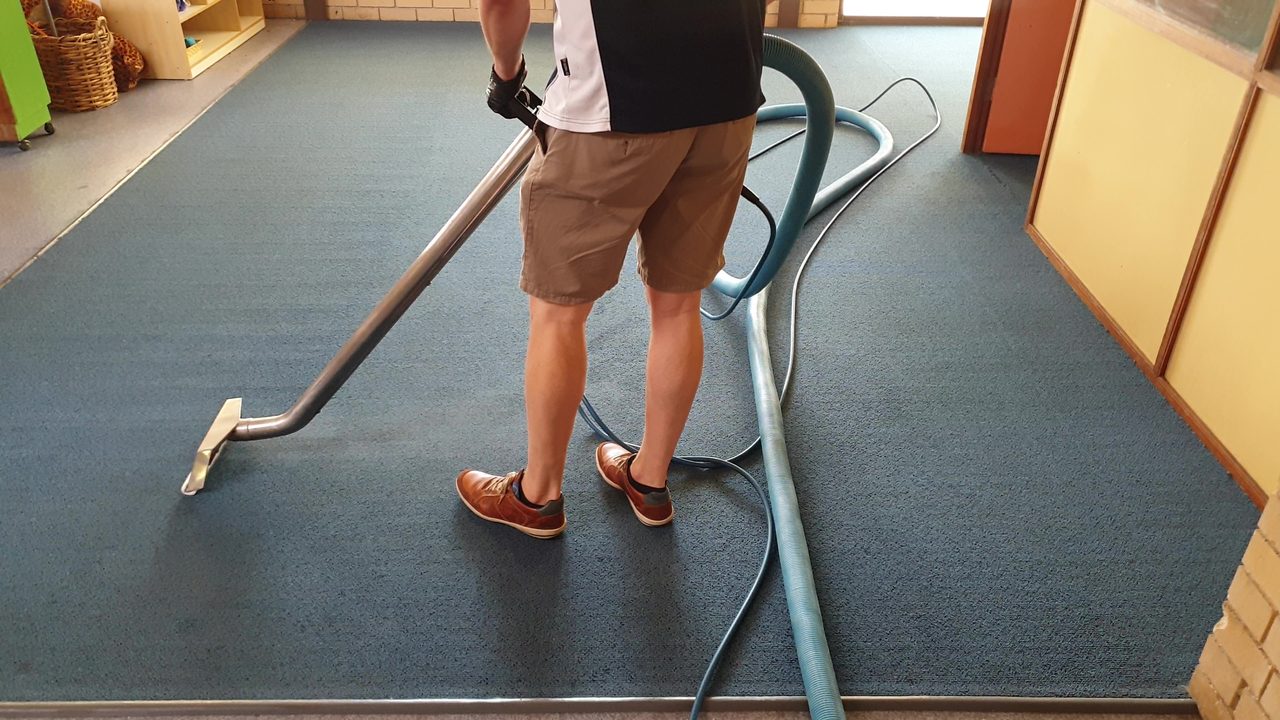
Residue is also a self-defeating problem. Anything left behind in the pile is tacky, and tacky fibre picks up soil faster than clean fibre does, so an over-shampooed room dulls again within weeks. That is why the rinse decides more than the chemistry does. A truck-mounted machine recovers its solution on the same pass with far more vacuum than any portable unit, which is the most reliable way to leave a floor rinsed rather than loaded.
A room that reeks of fragrance after cleaning has not been cleaned well, it has been perfumed.
Product choice follows the fibre rather than the strength of the bottle, and thorough rinsing is what decides whether any of it leaves. Where the carpet is only lightly soiled, we recommend encapsulation instead. Its low-moisture polymer crystallises around the soil in the upper pile. Your own cleaners vacuum the crystals away over the following days, leaving nothing in the fibre.
Educators use these two words as though they mean the same thing, and they do not. Cleaning takes the soil, the spills and the organic matter off and out of the carpet. Sanitising reduces the number of micro-organisms left on a surface. The first is what makes the second possible, and the second can never stand in for the first.
Order decides whether either of them works. A sanitiser sprayed onto a dirty carpet spends itself on the soil, so the room ends up still dirty and now carrying an extra chemical load on top. Extraction does the heavy work by taking away the material micro-organisms live on. Anything targeted goes on afterwards, over the square metre that needs it, never as a mist across a whole room.
For most classrooms and playrooms, thorough professional cleaning at least once a year is what actually improves the room, with more visits where the room needs them. If a contractor's answer to a hygiene concern is an extra sanitising pass rather than a better clean, ask what the sanitiser is being applied to. A floor that is properly extracted needs far less of it than a floor that has been surface-cleaned for years.
Different rooms in the same building want different treatment, and a plan that recognises that is how you get value out of a budget. A classroom is a mixed problem: traffic at the door, a mat area that takes the most direct contact, and a general field that soils slowly. A classroom needs a professional clean every year as a minimum. The mat area often needs more because it takes the heaviest use. It also benefits enormously from someone moving the low furniture rather than cleaning around it.
A library is the easiest floor in the building, so the risk there is neglect rather than wear: dust settles, the pile flattens under shelving, and a yearly clean lifts the settled dust out of the pile. Corridors are the opposite extreme. Everything that enters the building travels along them, they wear as a dark spine down the centre, and they usually need cleaning more often than the rooms they connect. Halls are the wildcard, hosting assemblies and sometimes weekend hire, so plan those around the event calendar rather than the term calendar.
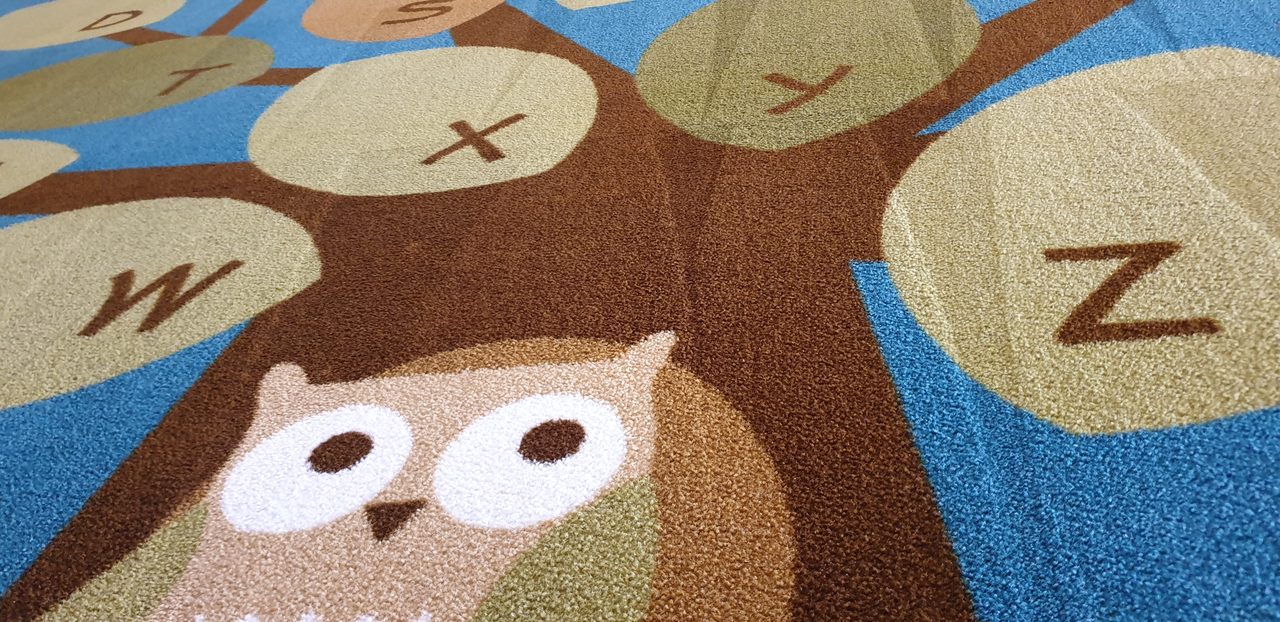
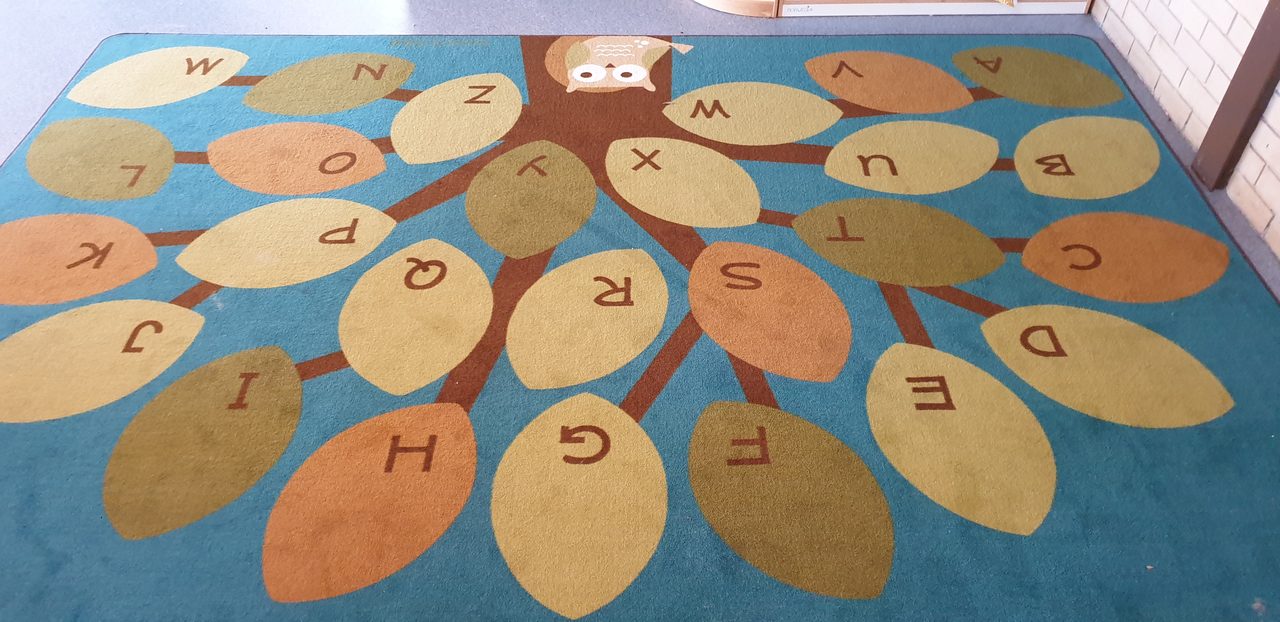
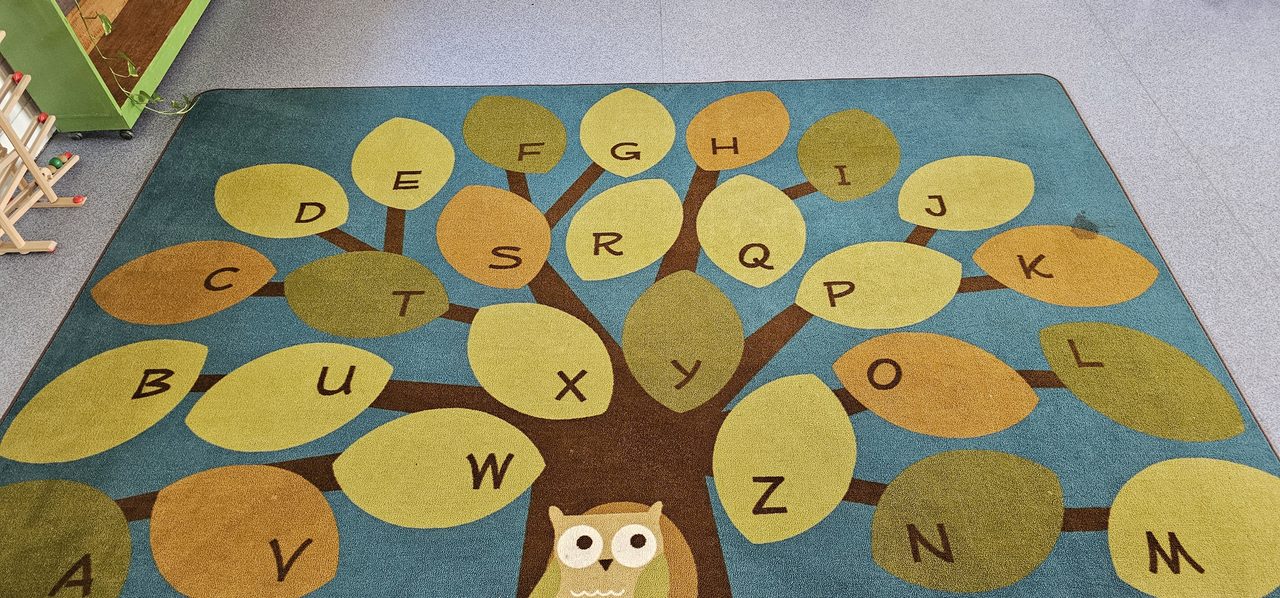
Carpet is one of several soft surfaces in an early learning room. Foam soft-fall mats, rubber-backed play mats, alphabet rugs and cushions all collect the same soil as the floor while getting far less attention. A room can have immaculate carpet and still smell, because the mat on top of it has never been lifted.
Loose rugs and mats should come up whenever the floor beneath them is cleaned. Two things happen under a mat that never moves: soil migrates through and settles at the interface, and any moisture that gets in has nowhere to go.
Indoor soft-fall and rubber-backed matting is not carpet and should not be treated as though it is. Hot extraction can trap water between the backing and the floor, which is how a mould problem starts. Machine scrubbing with controlled moisture suits these surfaces better, and badly degraded foam is consumable: replace it rather than clean it.
Classroom and playroom carpets see a catalogue of spills you do not get in an office, and each behaves differently. Handled quickly and correctly, most lift cleanly. Handled with the wrong product, or scrubbed hard by a well-meaning staff member, they set, spread or bleach the fibre permanently. Give your team a simple rule for each of the common ones, plus a standing instruction to blot rather than rub and to work from the outside of a spill inwards.
The most common complaint we hear from centre managers is a smell that returns a few days after cleaning. That is almost always a depth problem rather than a surface one. Urine, vomit and spilled milk pass through the carpet backing into the underlay and sometimes the subfloor, so a surface clean removes the visible mark and leaves the source. Warm weather and humidity then reactivate it.
Treating it properly means finding the full extent of the contamination rather than the shape of the visible stain, then flushing and extracting to the depth it actually reached. Occasionally the correct answer is that a section of underlay is beyond saving and should be replaced, and you are better served by someone who says so than by someone selling repeat cleans.
A smell that returns days after cleaning is almost always below the surface rather than on it.
Map the area the contamination actually reached, not the shape of the visible stain.
Down past the backing, not across the top of the pile.
Occasionally a section is beyond saving and should be replaced rather than cleaned again.
Where a burst pipe, roof leak or overflowing amenity soaks a carpeted room, the job stops being a clean and becomes a drying operation: the water comes out of the carpet and the underlay under monitoring before anything else is decided. Perth's wet winters make this a live risk for older school buildings with tired roofing and blocked downpipes, and reaching a room on day one rather than a week later is often the difference between a clean and a replacement.
Timing is as important as method here, and the good windows are scarce. Every school in the Perth metro area wants the same fortnight, so the summer and mid-year breaks fill early. If you want deep restorative work across a whole school, plan it at least a term ahead and book it in writing before the term begins, not in the last week when everyone else is calling.
The long summer break is the natural slot for the heaviest work: full traffic-lane restoration, moving furniture to reach edges that never get attention, hall floors, and any room needing more than one pass. Hot dry conditions also give the best drying of the year, so a January clean dries far faster than the same job in July.
Long day care centres do not get holidays, so the plan is built from evenings and Sundays instead. A room cleaned once the children have gone home has the whole night to dry and is ready well before the next morning, which is why the centres that plan this way rarely lose a day to it.
Drying is a safety issue in its own right, not an afterthought. Damp carpet is a slip risk, it is uncomfortable to sit on, and over time it is an environment for mould and musty odour. In a room where children lie on the floor, handing back a carpet that is merely dry to the touch on top is not good enough.
Real dry time depends on the method, the airflow and the weather. Hot water extraction recovers most of the moisture on the pass and the balance evaporates over the following hours, faster in a Perth summer with windows open and slower in a closed winter classroom. Low-moisture encapsulation leaves a room ready for children within an hour or two. We recommend it for lightly soiled carpet once we have inspected the floor.
Agree the re-occupancy time before the job starts rather than discovering it afterwards. Tell us when the room must be back in service. We recommend the method at the inspection from how soiled the carpet is, then set the drying to meet your time. Leaving doors open, running fans and keeping air conditioning on overnight all shorten the wait meaningfully.
Education sites have access rules that most commercial buildings do not, and a contractor who does not understand them creates work for you. Gates, alarm codes, sign-in registers, key handovers and after-hours security all need sorting before the van arrives. The half hour spent on that before the first booking is the half hour that stops a holiday job being lost to a locked gate.
Site logistics matter just as much. Truck-mounted work needs a parking position within hose reach and a clear path for the line, which in a multi-building school means planning the sequence rather than improvising it. Someone needs to know which rooms are cleared, who moves the furniture and toy storage, and where children's work should go.
The smoothest jobs are the ones where a single site contact walks the building with us once beforehand. Ten minutes spent pointing out which rooms are locked, which door the hose can run through and which classroom has a teacher setting up over the break removes most of the friction on the day. It also lets us sequence the rooms so nothing is cleaned twice and nothing is missed.
Schools and centres operate under real scrutiny, and the question is rarely whether you cleaned the carpet. It is whether you can show it. A simple record of the date, the rooms covered, the method used and any specific treatment carried out turns a maintained environment into a demonstrable one, and it takes almost no effort to keep if it is built into the schedule from the start.
That paper trail is just as useful for parent enquiries. When a parent asks how often the room their child sits in is cleaned, or what was used on the floor, a specific answer settles the question in a way that a vague reassurance never does. Being able to name the date and the product is worth having on hand, because the question almost always arrives on a day nobody has time to go looking for it.
A documented schedule gives directors that trail without anyone having to chase it. A predictable schedule also spreads the cost evenly across the year and removes the scramble that otherwise arrives before an inspection or an open day.
Everything above resolves into one document: a plan for the year that says what gets cleaned, when, by which method, and who is responsible. It does not need to be complicated. It needs to exist, so carpet care becomes a scheduled item rather than a reaction to a complaint, and the cost is known in advance.
Start with the high-frequency zones and work outwards. Corridors and entries drive the appearance of the whole building and should be the most frequent line on the plan. Classrooms and playrooms sit in the middle, cleaned in the breaks at least once a year. On top of that sits an allowance for the incidents that will happen regardless. Review it once a year with someone who has walked the site, because rooms change use and a new gate changes where sand enters the building.
Carpet care in schools and early learning centres is two jobs at once: keeping the environment safe for children who spend their days at floor level, and protecting a significant asset from wearing out years before it should. The right method, low-residue products, honest drying and scheduling that respects the timetable let you do both without losing a day of learning or care.
The most useful thing you can do with this article is walk your own building holding it. Kneel down in the mat area the way a four-year-old sits there and look at the pile from that height. Compare the carpet inside the playground door with the carpet under a bookcase that has not moved in years, and note where the room smells different on a warm afternoon. That walk will tell you which zones belong at the top of the plan far more reliably than any generic frequency.
Then put dates against it before the next break fills up. Carpet care in these buildings rewards planning and punishes reaction, and the sites that never seem to have a carpet problem are simply the ones where somebody decided in advance what happens and when.
The one thing an article cannot do is see your building. Every centre and every school has a room that behaves differently from the rest of it — the one under the air conditioner, the one that catches the afternoon sun, the one where three children have been sick this year — and that room is where a generic frequency does the most damage. Find it, give it its own line in the plan, and the rest of the floor becomes a much simpler conversation.
Carpet works as a filter for dust, allergens and fine soil. Here is how regular vacuuming and deep cleaning keep that filter working in Perth workplaces.
Read ArticleHow Perth's dry summers and wet winters set the timing of vacuuming, encapsulation and deep cleaning, plus budgeting, records and working around tenants.
Read ArticleA smell in your carpet is a source problem. Here is how to find what is causing it, treat it below the surface, and know when the underlay has to go.
Read Article