
Hotels and Venues: Cleaning Carpet Around a Booking Calendar
How Perth hotels, function centres, clubs and churches schedule carpet cleaning around a full events diary, in the gap between one event and the next.
Read ArticleHot desks, member events and 24/7 access make shared workspaces soil faster than offices; here is how Perth operators keep the floor tour-ready.
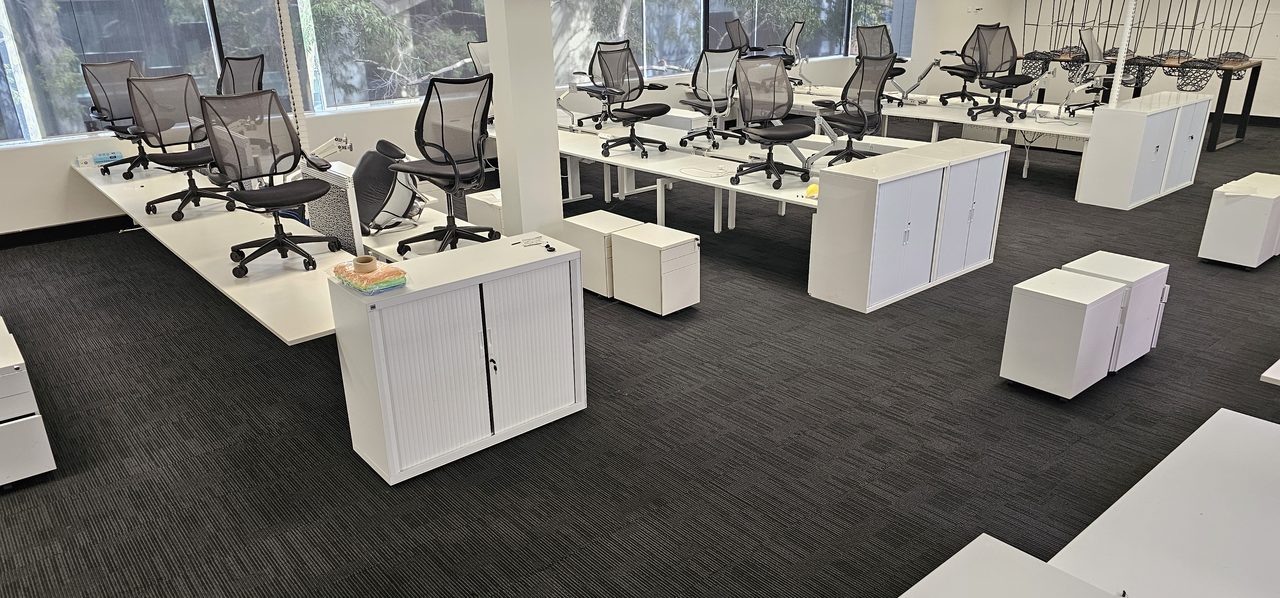
A co-working floor is fitted out like an office and used like a shop. The carpet tile under a hot-desk bank was specified for a conventional tenancy: one company, a stable headcount, predictable hours, a facilities manager who knows every stain by name. What actually crosses it is closer to retail traffic — members, their guests, day-pass visitors, event crowds and a steady procession of tours, most of them strangers to the space and none of them responsible for it.
That mismatch is the whole subject of this article. The fibre and the cleaning chemistry are the same as in any office; what changes is the arithmetic of who walks on the carpet, how often, and whether the person who just made a spill feels it is their problem. Get those three things wrong and a shared floor ages at double speed. Get them right and the carpet becomes what it should be in a membership business: part of the product.
This guide covers the churn arithmetic, the no-owner problem and the house rules that fix it, event nights, the tour path, scheduling around 24/7 member access, and who pays for what between operator, landlord and member. Strata-titled buildings have their own cost rules, and the health case for clean carpet is made elsewhere on this site; both are deliberately out of scope here. If what you actually want is the work scoped and priced for your own plate, our coworking carpet cleaning page handles that end of it.
Consider a single hot desk in a Perth CBD hub. On Monday it holds a consultant between client visits; on Tuesday, a graduate designer; Wednesday brings two half-day bookings; Thursday, somebody's visiting colleague from Melbourne on a day pass. Each of them arrives from the street, walks the same route from the lift to the desk, makes three or four trips to the kitchen, and leaves. By Thursday afternoon that desk has taken a full week of a conventional office's people-movements.
Soil arrives on shoes, and it tracks journeys rather than headcount. As a rule of thumb, a floor's soiling rate follows the number of trips across it, so a hot-desk floor with the same nominal capacity as a conventional office can take double or triple the traffic. The lanes concentrate it further: everyone walks the same few metres from the lift lobby, past reception, down the spine corridor, to the kitchen. Those lanes darken while the carpet under the desks stays new.
The kitchen and breakout area deserve particular respect. Every membership tier uses them: the private-suite tenants, the hot-deskers and the meeting-room hirers all funnel through one kitchenette and carry coffee back to their seats. The carpet within ten metres of a co-working kitchen works harder than any other soft floor in the building, and catches most of the drips on the way through.
In a conventional office, a spill has a witness with a stake in the carpet. It happened in their office, on their employer's floor, in front of their colleagues, and somebody fetches paper towel because the alternative is explaining the stain to the office manager for the next year. Co-working removes every one of those pressures. The member's relationship with the floor is a monthly licence, the desk they spilt at is not the desk they will sit at tomorrow, and the carpet belongs to an operator they may never have met.
The result is a quiet, entirely human failure. The flat white goes over at ten past five, a laptop bag is swung onto a shoulder, and the spill is left for the floor to absorb. A member's guest is even less likely to say anything. Nobody is malicious; everybody is simply somewhere else by half past. The operator's team finds a dried brown bloom on Thursday with no idea whether it is two days old or two weeks.
The most expensive spill in a shared workspace is not the biggest one. It is the one nobody mentioned.
That discovery delay is the real cost of churn. An operator cannot treat what nobody reports, cannot fairly bill damage to a member they cannot identify, and cannot even brief the cleaner accurately about what a mark is. The whole system therefore has to be designed so that reporting is easier than walking away — which is a house-rules problem, and is dealt with a little further down.
Fresh spills are mostly a surface event. Liquid sits in the top of the pile for a while before it wicks downward, and in that window most of it will lift into an absorbent cloth with gentle blotting. Time closes the window. Sugars dry to a tacky film that grips passing soil, milk proteins bond to the fibre and then sour, and the tannins in coffee and red wine oxidise into compounds that behave like dye. Foot traffic accelerates all of it, driving residue off the surface and down to the base of the pile where blotting cannot reach.
In a shared workspace the delay is structural rather than accidental. A spill at 7pm on Tuesday is found on Thursday morning, after two full open days of members walking through it. What would have been a thirty-second blot has become a set stain needing professional spotting, and on light office carpet tile it has usually printed itself along the traffic lane as well.
The co-working spill profile is also its own genre. It is not the plated-dinner damage of a function centre, and it is not the single-tenant coffee ring of a quiet office:
The tour is where a membership is won or lost, and a good part of it is decided at floor level. The prospect has already seen the website; the walk-through exists to confirm it, and the judgement forms inside the first minute. Every tour follows the same route — reception, the hot-desk floor, a meeting room, the kitchen, the office on offer — which means that route takes tour traffic on top of member traffic, every open day, and wears a lane exactly the way a hotel lobby does.
This is where co-working differs from an ordinary tenancy in kind rather than degree. A conventional office cleans carpet to protect an asset and keep staff comfortable. An operator cleans carpet because appearance is the product: the member pays a monthly fee for an environment, and a soiled walkway past reception tells the prospect the environment is tired before a word is said. In the serviced-office belt of West Perth, where a prospect can walk to three competing hubs inside ten minutes, the comparison is immediate and unforgiving.
The practical consequence is that many operators book the tour path more often than its soil alone would call for. You are not cleaning that carpet because it is dirty. You are cleaning it because prospects deciding whether to sign look at it every day. How you check it is the last section of this article.
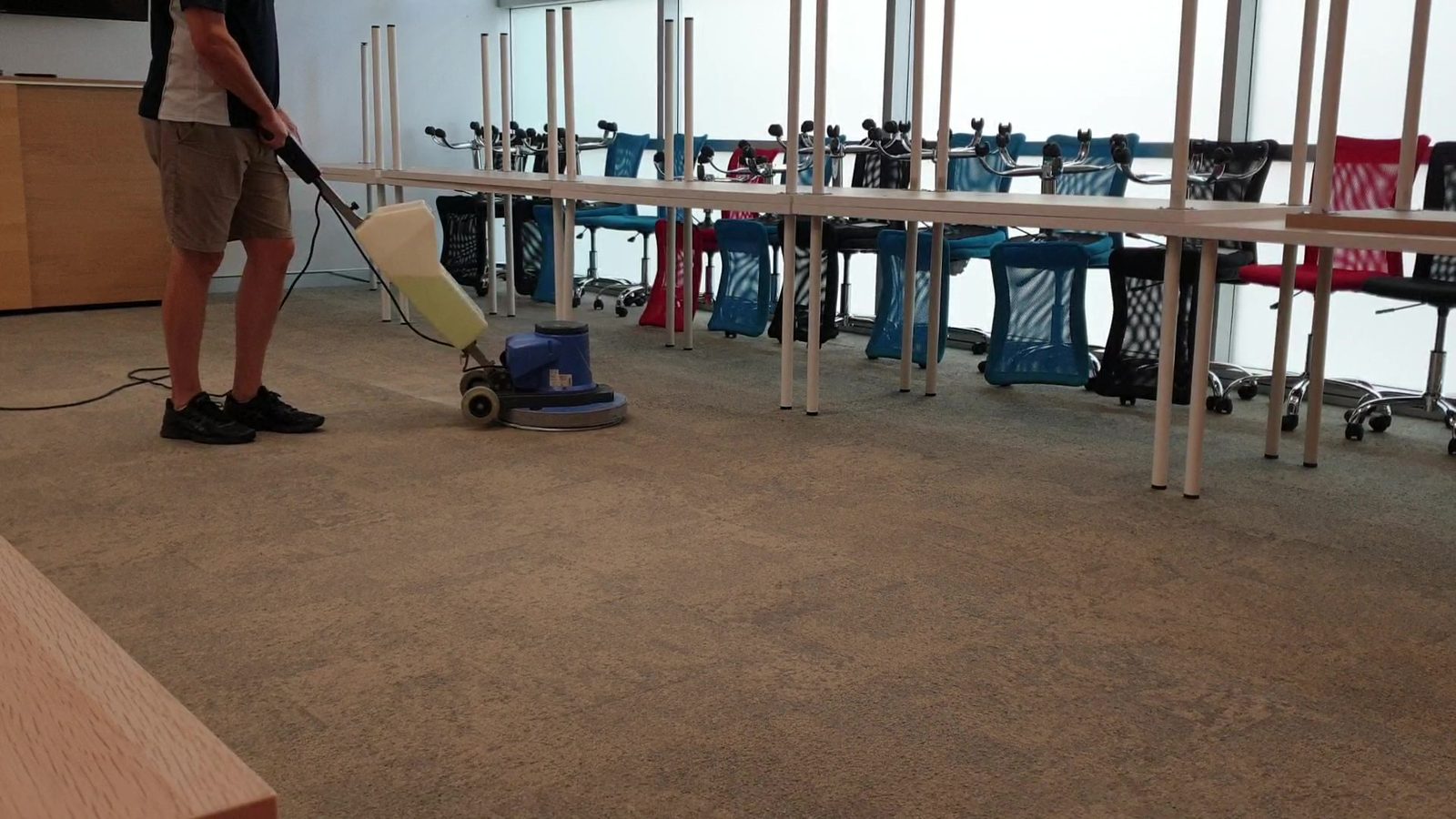
The same room earns its keep twice in one day. At two o'clock it is a boardroom holding a client presentation; by six the tables are folded, a caterer's trestle goes up along the wall, and eighty people stand on the carpet holding drinks. Operators run events because community is the retention tool, and the events are good business — but the floor covering was chosen for the two o'clock use, not the six o'clock one.
Event soil is episodic, the way a hotel ballroom's is: nothing for a fortnight, then one evening of wine, beer, dropped food and trolley wheels. The difference is the recovery window. A ballroom can go dark the next day; a co-working event space hosts a client meeting at eight the next morning, every morning, so there is no such thing as leaving it a few days to deal with properly.
The operators who stay ahead of this treat the bump-out as part of the event. The room is held for half an hour after the last guest leaves for a walk of the floor with the spill log open. Solids are lifted and fresh marks blotted on the spot, and anything beyond first aid is booked for same-night or next-morning attention. That half hour costs nothing. It catches a red wine spill while it is still fresh enough to blot out.
The no-owner problem is not solved by cameras or sternly worded signs. It is solved by making the report cheaper than the walk-away: under a minute to lodge, no bill attached to an honest accident, and a visible response so members learn that reporting works. Blame is the enemy here. A member who fears a damage charge for a dropped coffee simply will not mention it, and the operator inherits a set stain instead of a damp patch.
The mechanics are simple. A QR code at the kitchenette and on the meeting-room tables opens a form that asks three things: where, what, when. The community manager owns the log and watches it for patterns. First response lives on the floor itself: a spot-cleaning kit at each kitchenette means blotting starts within a minute rather than after a hunt through a cleaner's cupboard, and the kit's own rules apply — blot, never rub, and no supermarket spot spray, whose sticky residue shadows back within weeks.
Framed this way, the damage clause in the membership agreement becomes fair and enforceable rather than hostile. Report an accident and it costs you nothing; conceal damage and the clause applies, with the log as the record. Members accept rules that are cheap to follow and only bite on concealment, and the operator gets the one thing money cannot buy afterwards: the spill while it is still new.
The traditional office cleaning window — staff out by six, cleaners done by ten — does not exist here. Members hold 24/7 swipe access, and a founder on a deadline or a team working to a US time zone can be in at any hour. Late evening is quieter, but no hour is guaranteed empty, which changes how the work is staged before it changes the diary question.
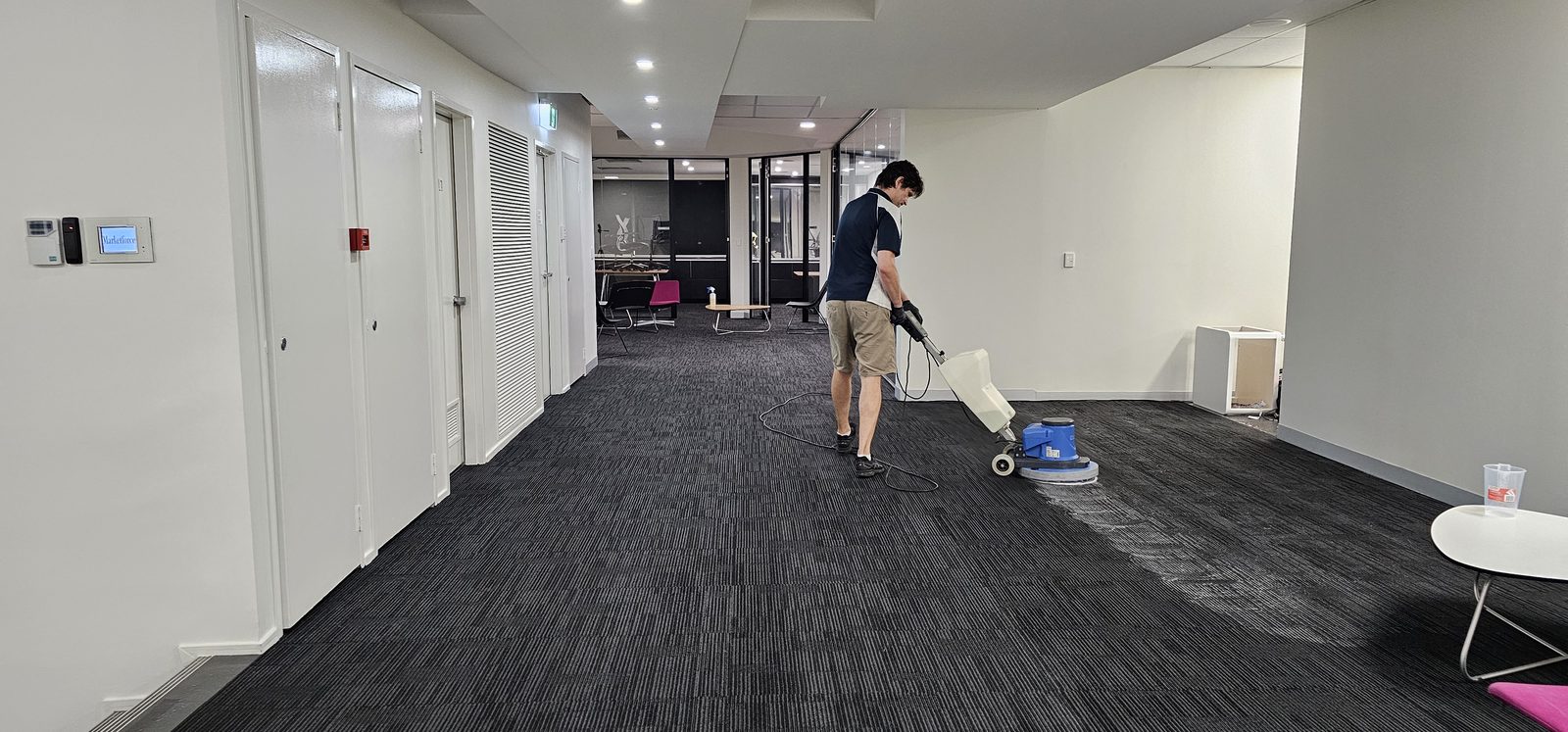
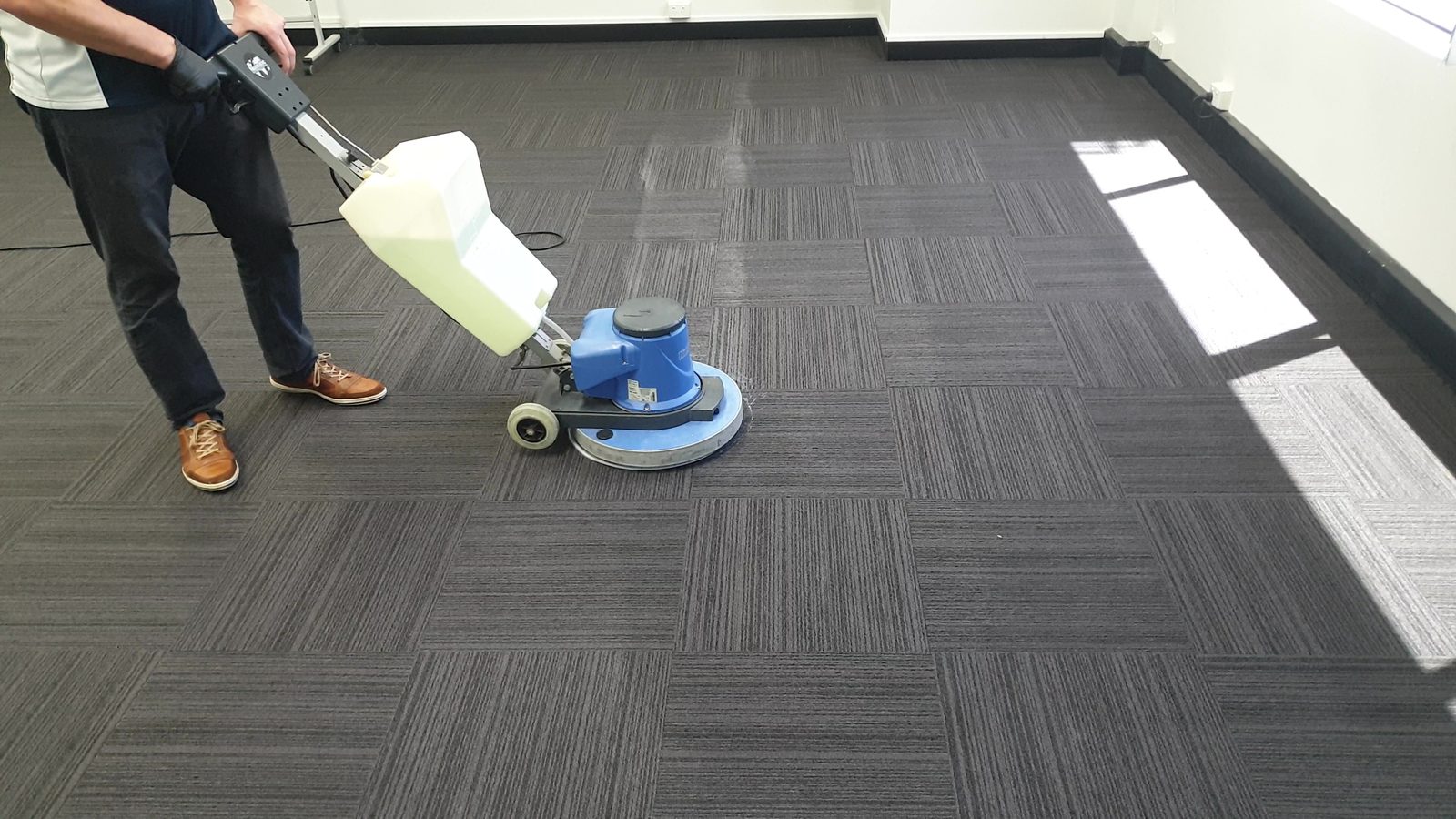
We recommend a method for each hub zone once we have seen its soil. A hot-desk bank with light soil suits encapsulation, a low-moisture clean whose detergent holds the soil in crystals for the vacuum to lift out, leaving nothing in the fibre. It is dry long before the floor fills the next morning. Lanes that are heavily soiled or marked by assorted spills need hot water extraction with every stain pre-treated. That visit is organised like a small event: members notified through the app, the floor closed in stages, signage out, everything dry before the morning rush. If you want to know what that visit involves from start to finish, we have written up what happens on cleaning day separately.
| Situation | Sensible approach | Why |
|---|---|---|
| Lightly soiled carpet | Encapsulation in the quietest hours | Hose-free, one bank at a time, once the bank is clear |
| The morning after an event | Same-night spotting, then the method the soil needs | The room hosts meetings at eight, every day |
| Heavy soil and many stains | Truck-mounted extraction in staged sections | Each stain pre-treated, then rinsed and extracted to the base of the pile |
| Private suites | Arranged with whoever licenses the room | Access is contractual, not assumed |
The soil decides the method at our inspection. The 24/7 access decides how the work is staged.
Tell the members. A cleaning visit in a co-working space happens in front of customers, and silence reads as disruption where a notice reads as standards. The operators who handle this best post the cleaning dates in the member app the way they post events: carpet care on level two on Thursday night, booths out of action until ten. A floor being visibly cared for is, quietly, part of the sales pitch.
Three documents settle nearly every co-working carpet question. The head lease between operator and landlord sets the make-good obligation for when the operator eventually leaves. The membership agreement between operator and member — a licence, not a lease — carries the damage clause. And the event hire form covers external bookings. What follows is the typical shape of each; the wording in your own documents governs, and it is worth reading before the first dispute rather than during it.
The logic of the usual split is straightforward. Routine carpet care sits with the operator, because appearance is the product and its cost is a cost of sale, in the same way that office carpet cleaning is a cost of occupancy for any ordinary tenant. The landlord's interest generally arrives only at make-good, where a documented maintenance history is the difference between fair wear and tear and a replacement bill. Members pay only where the damage clause bites — negligence or concealment — with the spill log as the evidence. And where the hub sits inside a larger strata-titled building with shared lobbies and lifts, who pays in shared buildings has rules of its own, covered separately on this site.
In practice, the divisions that keep disputes rare look like this:
None of this needs much administration once it is set up. The rhythm is a monthly walk of the tour path in morning light, a weekly skim of the spill log by the community manager, and a quarterly review that asks one question: where are the marks recurring? A phone booth that keeps appearing in the log, a darkening arc where the caterer's trestle always stands, a lane deepening past reception — each one tells you a zone needs cleaning more often or a habit needs a house rule.
Perth adds its own seasonal notes. February heat means more cold drinks and condensation rings on the breakout carpet; June rain means umbrellas and wet shoes tracking through the lift lobby, and the entrance matting suddenly earning its keep; coastal hubs collect fine sand all year round. None of this changes the system. It changes when a zone needs us more often, which is exactly what the quarterly review is for.
One closing thought, because it is the thing operators grasp last. In a conventional office the carpet is overhead: a cost of occupancy, budgeted alongside the cleaning and the bins, and nobody has ever signed a lease because of it. In a hub it sits on the other side of the ledger. It is one of the things the monthly fee buys, it is the first surface a prospect stands on, and it is the part of the fit-out that wears every day you are open. Budget it the way you budget the coffee, which is to say as something the product is made of rather than something the building costs.
How Perth hotels, function centres, clubs and churches schedule carpet cleaning around a full events diary, in the gap between one event and the next.
Read ArticleHow WA strata schemes fund common area carpet cleaning, where the lot boundary sits, and how to write a specification that makes three quotes comparable.
Read ArticleAn hour-by-hour walkthrough of a commercial carpet clean in Perth: the site walk, access, the clean in sequence, drying, the final check and lock-up.
Read Article