
Steam Cleaning vs Encapsulation: Which Is Right for Your Business?
Steam cleaning versus encapsulation for Perth commercial carpets: what each one does at fibre level, real dry times, costs over a year, and how to choose.
Read ArticleCarpet works as a filter for dust, allergens and fine soil. Here is how regular vacuuming and deep cleaning keep that filter working in Perth workplaces.
Carpet is usually the single largest surface in an office, and it is the one nobody thinks about until it looks tired. That is a shame, because of all the finishes in a building it has the most direct relationship with what people breathe. Walls stay where they are. Ceilings stay where they are. The floor is walked on, dropped on, rolled over and disturbed several thousand times a day.
Staff in a typical Perth workplace spend the bulk of their waking hours indoors, often in a sealed, air-conditioned tenancy where the same air is recirculated for most of the day. Anything sitting in the carpet is part of that environment whether it is airborne at the moment or not. It is only ever one footstep away from becoming airborne.
None of this makes carpet a health risk. Handled properly it is the opposite. But it does mean the floor's cleaning schedule deserves the same seriousness a facility manager gives to filter changes and airflow, because it is doing a related job.
The most useful way to think about carpet is as a passive filter laid across the floor. Fine particulate that lands on a hard floor stays mobile. Every time someone walks past, a door opens or the air conditioning cycles, that dust lifts again and rejoins the air. On carpet, the same particulate falls between the fibres and is held below the walking surface, out of the breathing zone.
That is a genuine benefit and it is the reason carpet holds up well in offices, hotels and consulting rooms. Reservoir effect is the term the industry uses: the pile takes soil out of circulation and stores it.
The catch is in the word stores. A filter that is never emptied stops being a filter and becomes a source. Once the pile is loaded, new soil has nowhere to go, foot traffic starts pushing the older material back up, and the surface that was protecting the air begins feeding it. Everything else in this article follows from that one idea. Carpet is only a health asset for as long as it is being emptied on a schedule.
A filter that is never emptied stops being a filter and becomes a source.
The soil load in a Perth building has a local character worth understanding, because it changes what your cleaning has to cope with and when. The great majority of what ends up in commercial carpet arrives on the soles of shoes, which is why the first few metres inside any door carry a wildly disproportionate share of it and why entrance matting repays its cost faster than almost anything else you can buy.
The remainder settles out of the air, comes off clothing and bags, or is generated by the people and equipment working in the room. It arrives slowly and evenly, which is exactly why it goes unnoticed until a lifted chair mat or a shifted filing cabinet shows you the original colour of the carpet.
Dust mites are the allergen most often raised in office complaints, and the science on them is more specific than the general worry suggests. Mites do not eat carpet. They eat shed skin, and they need humidity to survive because they absorb moisture from the air rather than drinking it. Dry conditions kill them. That is why they are far more of an issue in bedding and soft furnishings than in a dry, air-conditioned open-plan floor.
What triggers asthma and hay fever is not the mite itself but the proteins in its droppings, which are light enough to stay airborne once disturbed. So the goal is not sterilising the carpet. It is removing the food source and the accumulated waste, and keeping the environment dry enough that populations do not build.
In practice that means three things: consistent vacuuming with proper filtration, periodic hot water extraction to flush out the load that vacuuming leaves behind, and humidity control. Perth's dry summers do a lot of that work for you. Wet winters, poorly ventilated tenancies and any carpet that stays damp swing it the other way.
Mould in a workplace almost never starts with the carpet. It starts with water, and the carpet is simply the first place anyone notices it. Mould spores are present in every building at all times. They are inert until they are given moisture, and then they take hold on whatever organic material is nearby.
The variable that matters most to a facility manager is time, not humidity. Given water and a food source, microbial growth starts quickly, and the window you are working inside is a day or two rather than a fortnight. That is why a leaking chiller, a burst pipe over a long weekend or a slow window leak during a wet Perth winter turns into a health issue so quickly, and why the response has to be measured in hours rather than days.
Mould is a moisture problem, so the source has to be fixed before anything else is done.
Pull the standing moisture out of the carpet rather than letting it sit.
Airflow and dehumidification until the structure is dry, not just the surface.
Cleaning first is wasted money, because the growth comes back while the water is still there.
Cleaning mouldy carpet without fixing the water source is wasted money, because it will return. The order of operations is always: find and stop the moisture, extract the water, dry the structure properly with airflow and dehumidification, then clean. Where carpet has stayed wet long enough for the backing and underlay to be affected, replacement is sometimes the honest answer and we will say so rather than sell you a clean that will not hold.
Indoor air quality is not only about particulate. Volatile organic compounds are the gases released by materials and products in the building, and they are what people are describing when they say a space smells chemical or that a clean gave them a headache. New carpet, adhesives, paint, furniture and cleaning products all contribute.
For carpet specifically there are two moments that matter. The first is installation, when a new floor and its adhesive off-gas most heavily and are best given ventilation and time before the space is reoccupied. The second is cleaning, when the products chosen and how thoroughly they are rinsed determine what is left behind in the fibre.
Our preference is the lightest effective chemistry, applied to what needs it rather than the whole floor, and rinsed out properly. Truck-mounted hot water extraction helps here because the rinse stage carries residue out of the building instead of leaving it in the pile. The discipline that governs wool chemistry — mildest product that will do the job, tested before it is trusted — is worth applying to synthetics too, which tolerate more and are routinely given more than they need. Running the air conditioning through and after a clean is a simple, effective step that most sites skip.
If you want one change that improves the air in your building, improve the vacuuming. A yearly deep clean, with extra visits where the traffic is heavy, removes what has accumulated. Vacuuming determines how much accumulates in the first place, and it is the single most under-invested part of most commercial cleaning contracts.
The machine matters more than the labour hours. A vacuum without sealed HEPA filtration will capture the visible debris and blow the fine particulate straight back into the room through the exhaust, which is the opposite of the intended result. A good upright with a beater bar agitates the pile and lifts embedded grit that suction alone cannot shift, though on wool and loop-pile carpet the agitation needs to be gentle enough not to fuzz the surface.
Even well-run vacuuming has its limits. Vacuuming is a dry process, and it removes dry, loose soil. It does not touch the oily film that builds up from skin, food, cooking vapour, car park residue and the atmosphere itself, and that film is what makes fine grit stick to the fibre instead of releasing.
This is why traffic areas can look steadily duller despite being vacuumed every night. The soil that remains is bonded, not loose. Left alone it does two things: it holds allergens and organic residue in the pile where vacuuming cannot reach them, and it works away at the yarn under every step taken across it, wearing the carpet out years earlier than it should.
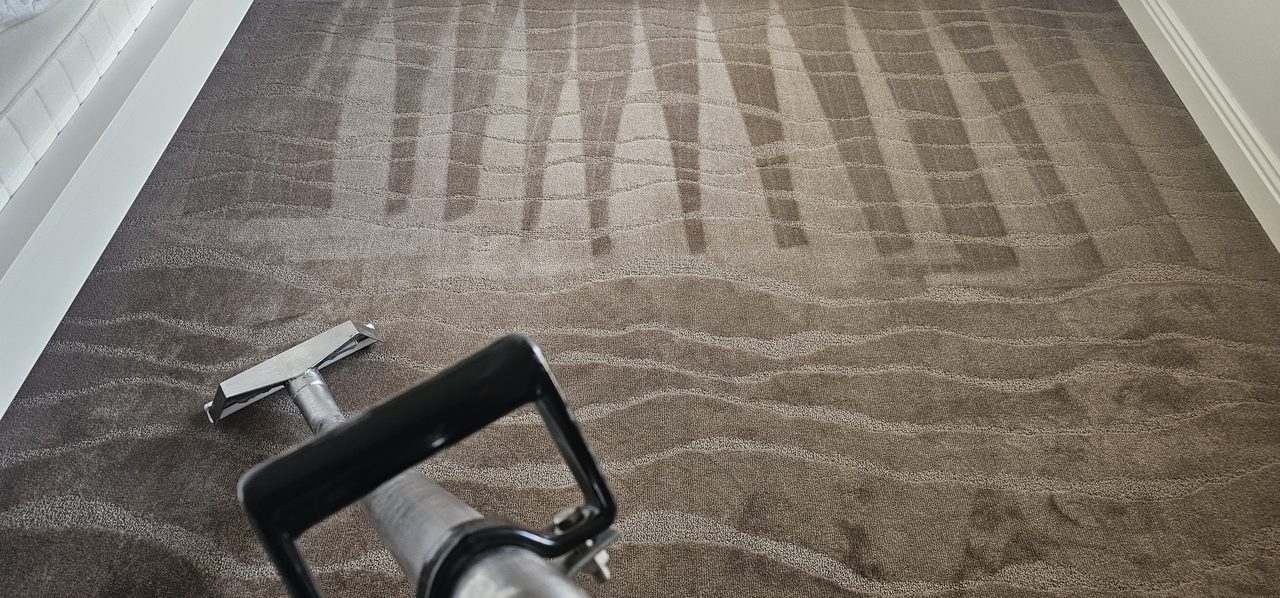
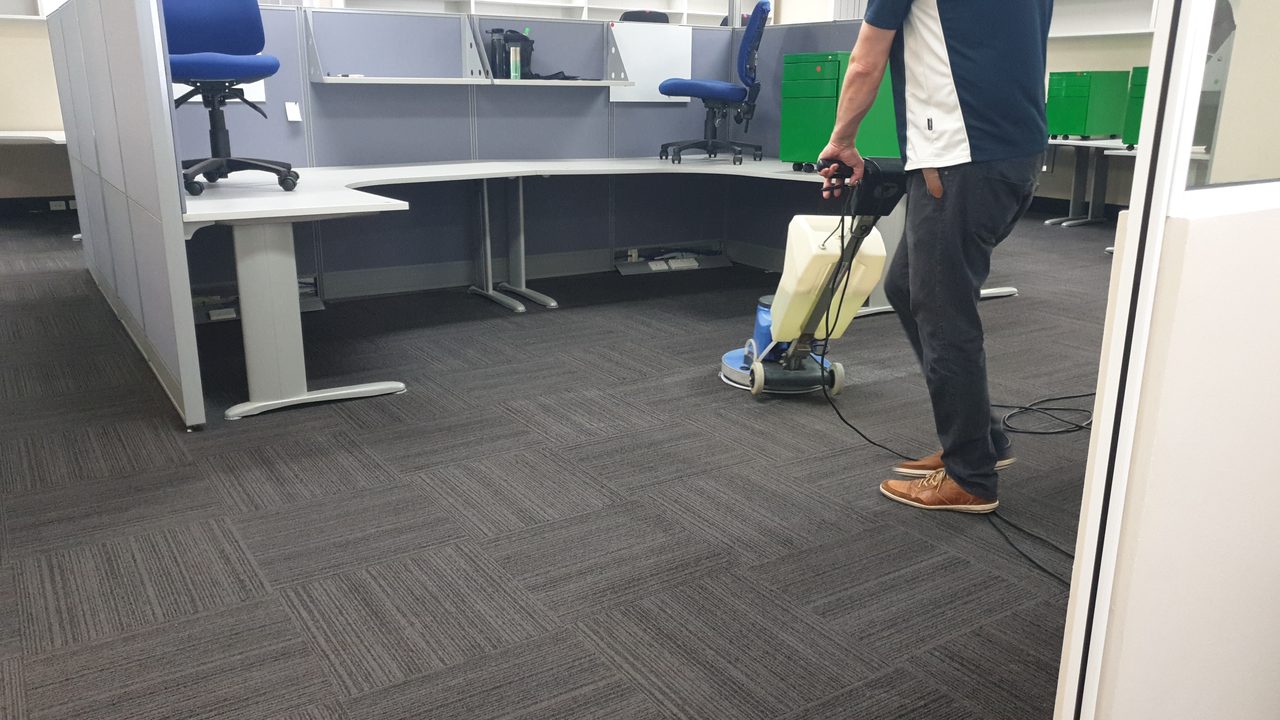
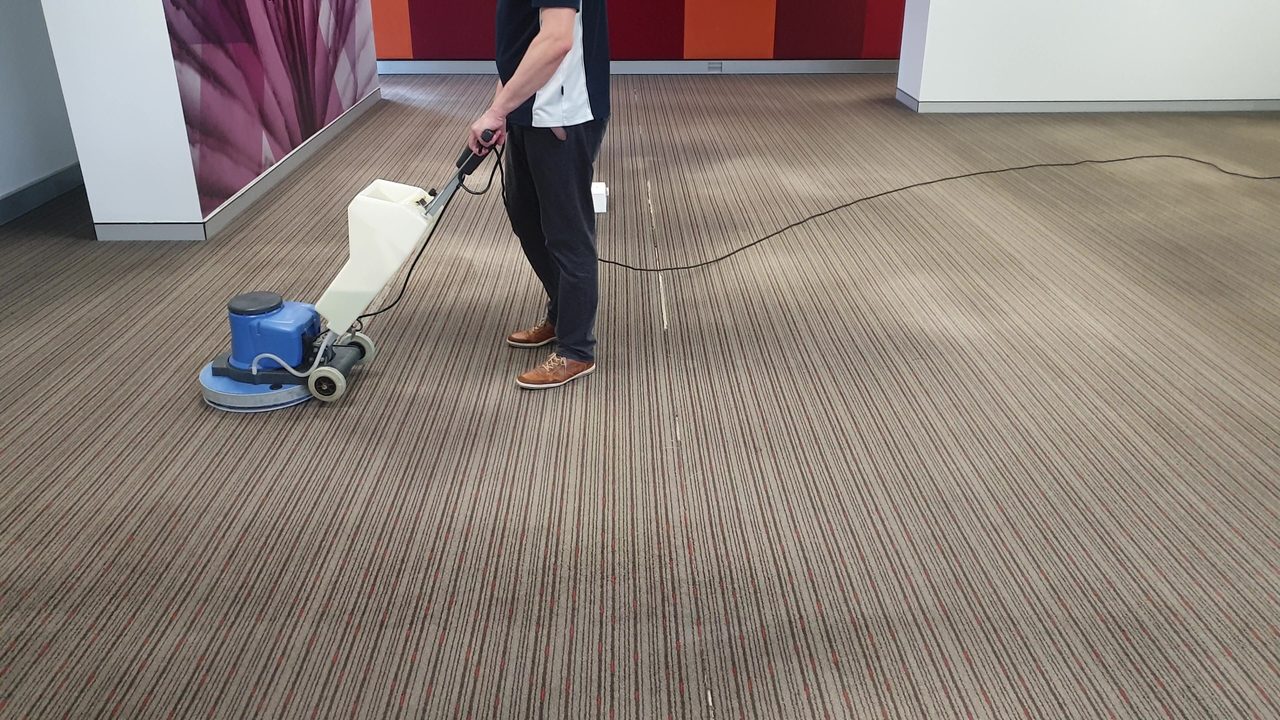
Periodic deep cleaning is what resets that. Hot water extraction uses heat, controlled chemistry, agitation and a powerful rinse to break the bond and physically pull the soil out of the building, rather than moving it around inside. Encapsulation works differently on lightly soiled carpet. Its polymer surrounds the soil particles and crystallises as it dries. The next vacuuming lifts the crystals out with the soil inside. Both remove soil. The soil level decides which one suits your floor.
Method choice is usually discussed in terms of appearance and cost. For a health conversation the more relevant differences are how much soil leaves the building and how long the floor stays damp.
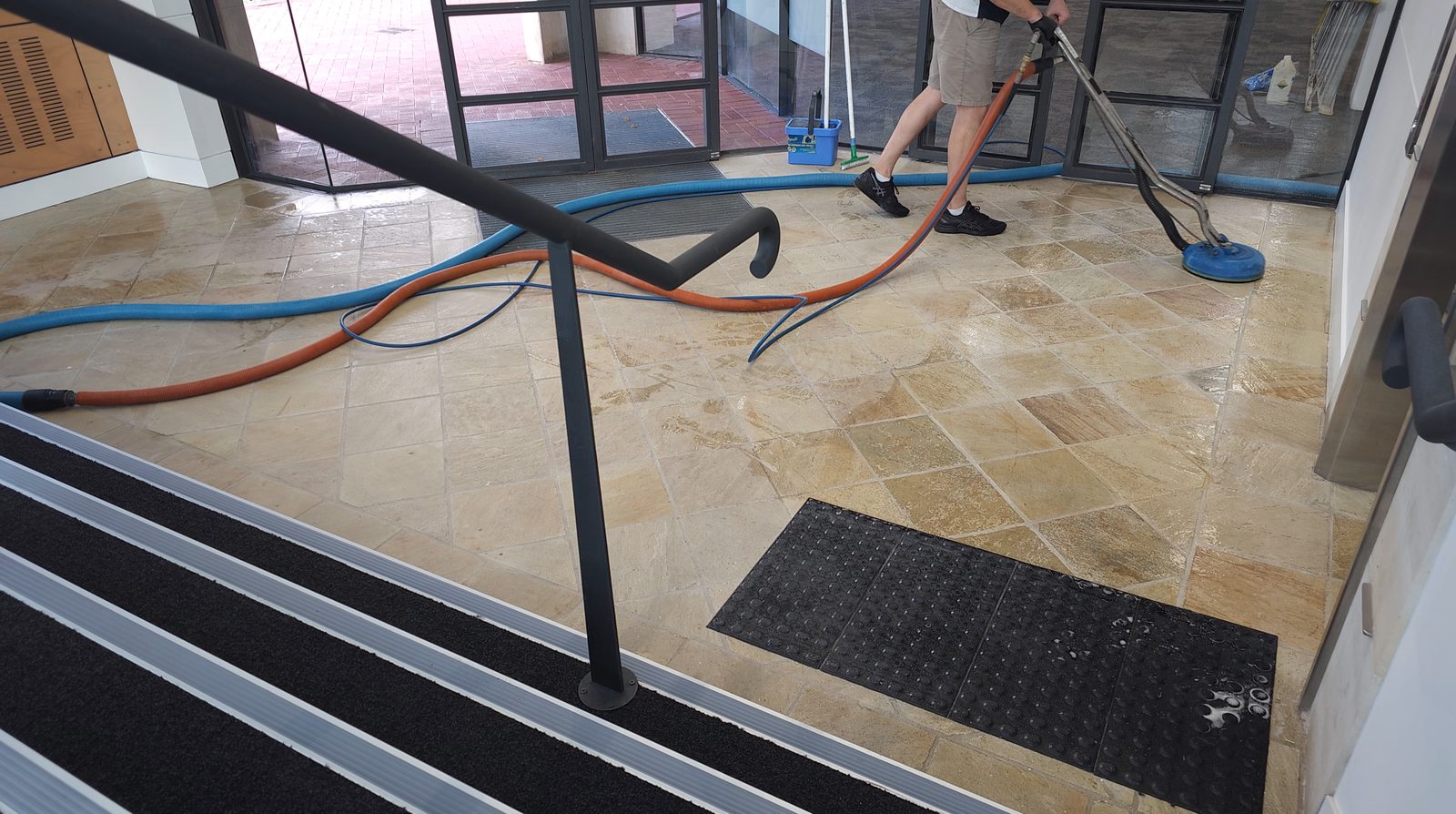
Hot water extraction removes the greatest quantity of soil, allergen and residue in a single visit, and it is the method we recommend where the goal is genuinely reducing what is in the pile. It uses more water, so drying is the trade-off to manage. For lightly soiled carpet there is encapsulation, which uses very little moisture. Its polymer holds the soil in the upper pile until the vacuum lifts it out, leaving nothing in the fibre. Scrubbing machines such as the Rotowash, run ahead of the extraction, suit heavily soiled entrances and hard-wearing traffic lanes.
One floor can need more than one method, because an entrance and a quiet corner rarely carry the same soil. Each area's method is chosen at our inspection. Agitation ahead of extraction goes where the soil is heaviest.
| Method | What it removes | Where it fits |
|---|---|---|
| Hot water extraction | The most soil, allergen and residue in one visit | Heavier soil and many different stains |
| Encapsulation | Soil crystallised, then lifted by later vacuuming | Lightly soiled carpet |
| Agitation, then extraction | Heavy surface soil | Entrances and hard-wearing traffic lanes |
All three remove soil. How heavily each area is soiled decides which one we recommend at the inspection.
A wet carpet is not a clean carpet, and the gap between the two is where most of the problems people blame on cleaning actually occur. Slow drying invites microbial growth, causes wicking as soil from the backing travels back up the fibre, and creates a slip hazard while the floor is still damp.
Perth splits the year neatly on this. Through summer the air is hot and dry, drying is fast and a well-extracted commercial carpet is typically touch dry within a few hours. Through a wet winter, with the building sealed and the outside air already saturated, the same clean can take considerably longer if it is left to dry on its own.
The answer is not to use less water and accept a worse clean. It is to control the environment: thorough extraction passes so less moisture is left behind to begin with, air movers positioned to keep the whole surface in moving air rather than aimed at one patch, and the building's own air conditioning running to exchange the moisture-laden air. In winter a weekend gives a steam-cleaned floor the most drying hours, so it is a good time to book.
When staff start reporting headaches, stuffiness, irritated eyes or a smell nobody can place, the carpet is frequently the first suspect because it is visible and it is easy to have cleaned. Sometimes it is the cause. Often it is not, and cleaning it simply resets the clock on a complaint that returns a fortnight later.
It pays to investigate before you spend. Work through the building systematically and record what you find, because the pattern of the complaints usually points at the source more reliably than any single test.
Health at work is not only respiratory. Carpet is the reason an open-plan office is bearable to work in, because it absorbs footfall and softens the reflected sound that makes hard-floor tenancies exhausting by mid-afternoon. It is warmer underfoot, it is more forgiving to stand on, and it is materially safer when wet than polished hard flooring.
There is a presentation dimension too, and it is not vanity. A grimy entrance and soiled walkways tell every visitor, client and prospective employee something about how the organisation is run, and staff read it as well. People take more care of a space that is visibly cared for.
We see this most clearly in high-visibility work. In an office tower the lift lobby carpet sets the tone before anyone reaches reception. At a tyre business the office carpet has to hold its own against heavy soil walked in from the workshop. In each case the floor is doing a job beyond covering the slab, and the maintenance interval reflects that rather than the square metres involved.
If cleaning is part of how you manage the workplace environment, it needs to be documented like anything else in your safety system. Verbal arrangements with a cleaner are not evidence. For strata managers, tenanted buildings and any regulated setting, a paper trail is also what settles disputes about who was responsible for what.
Keep it short and keep it somewhere that survives a change of facility manager. A date, an area and a method is enough, and two years later it is worth far more than a detailed report nobody can find.
Pulled together, the health case for carpet maintenance is straightforward. The floor is a filter: it protects your indoor air while it has capacity, and it stops protecting it once it is full. Good vacuuming with proper filtration governs how fast it fills, and periodic deep cleaning is what empties it again. Fast drying and sensible product choice make sure the cleaning itself does not create a new problem. Everything else is detail.
The schedule that works is the one set around your building rather than a generic frequency. Traffic areas and entries need cleaning more often than private offices. A ground-floor tenancy near a construction site carries a different load to level twelve of a CBD tower. Work done overnight or across a weekend gives the floor its drying hours while nobody is at a desk, which is usually what separates a schedule that holds from one that keeps getting deferred.
Most of this is a question of direction rather than budget. Sites routinely pay for nightly vacuuming that recirculates as much as it captures, and then pay again for deep cleans timed by the calendar instead of by the state of the floor. Move that same spend towards filtration, the entries and traffic lanes, and proper drying, and the quiet three quarters of the building will look after itself for far longer than the schedule assumes.
The honest test is to read your own floor the way this article reads one. Stand inside the front door and see how far the soil has come. Compare the lane between the lift lobby and the desks with carpet under a cabinet nobody has shifted in years. Ask when the vacuum filters were last changed, and whether anyone knows. Whatever you decide to do next, those few looks will tell you more than any frequency quoted down a phone.
There is one more thing worth knowing before you spend anything. Air quality complaints in offices are rarely traced to a single cause, and carpet is one contributor among several — ventilation rates, printers, cleaning products and the age of the building all sit in the same room. Cleaning the floor will not fix a ventilation problem, and anyone who says otherwise is selling. What a well-maintained floor does is take one large, cheap variable off the list, which makes everything left on it far easier to diagnose.
Steam cleaning versus encapsulation for Perth commercial carpets: what each one does at fibre level, real dry times, costs over a year, and how to choose.
Read ArticleHow to set commercial carpet cleaning frequency by zone, traffic and sector, and build a Perth maintenance schedule that protects the carpet.
Read ArticleMost Perth buildings run their entrance matting too short and pay for it in worn traffic lanes. How the three-zone system works and how to audit yours.
Read Article