

Commercial Carpet Cleaning
Hot water extraction or encapsulation across the whole floor, at the time you choose, before soil and marks build up.
Read about commercial carpet cleaning →
Professional stain removal for commercial carpet across Perth. We identify the fibre and the stain type, treat each mark with the right spotting agent, and tell you before we start how far it will come out.
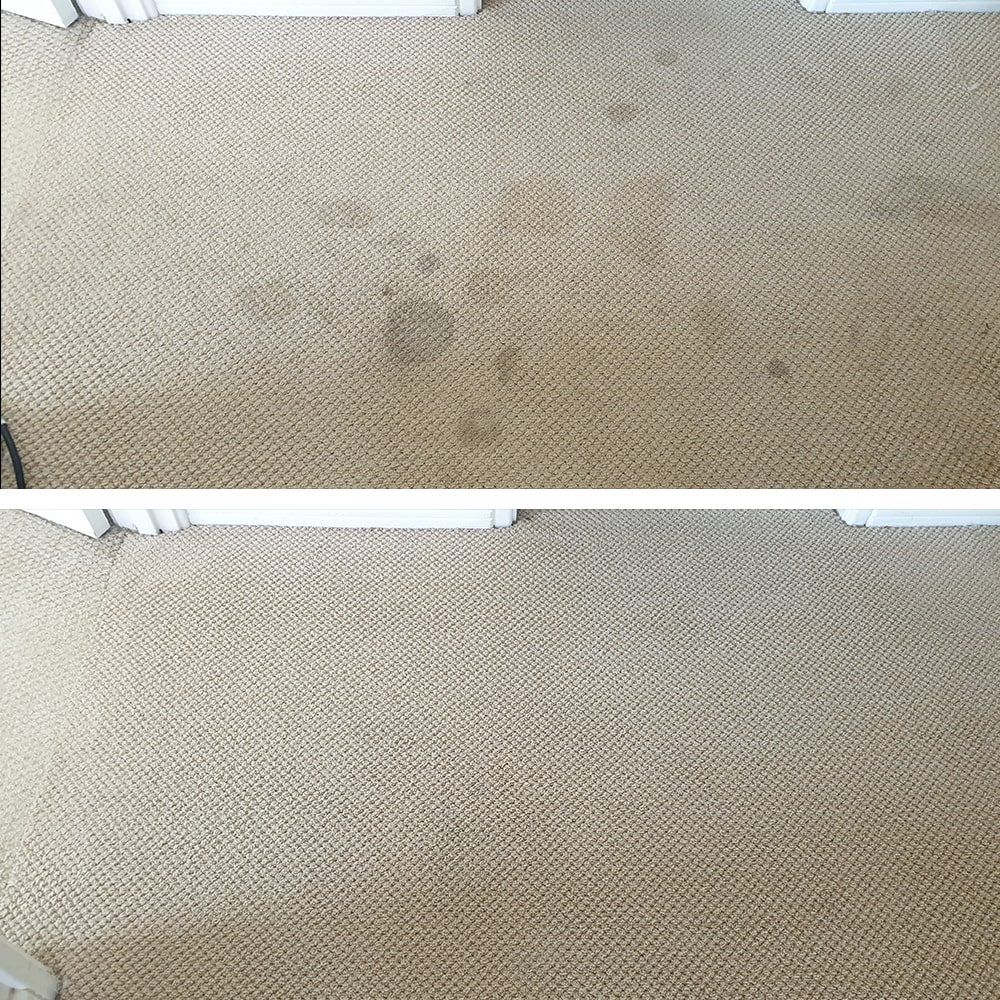
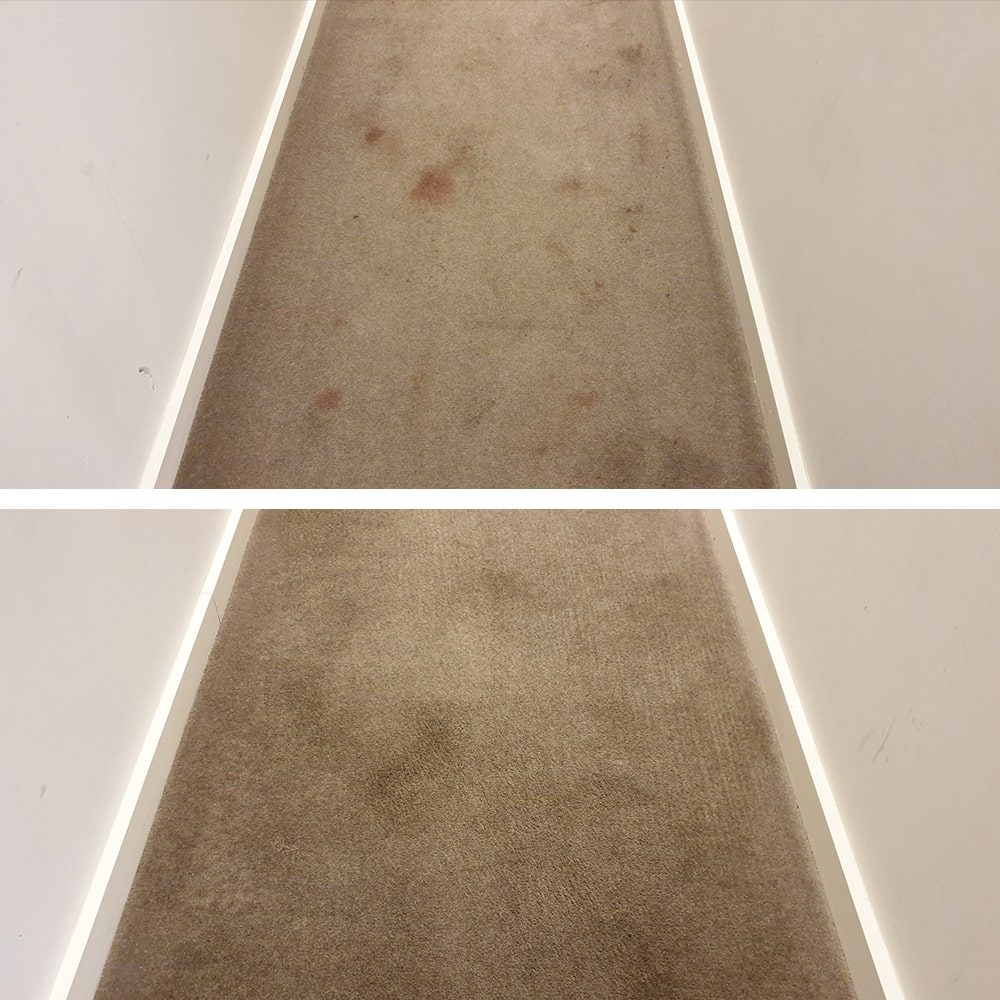
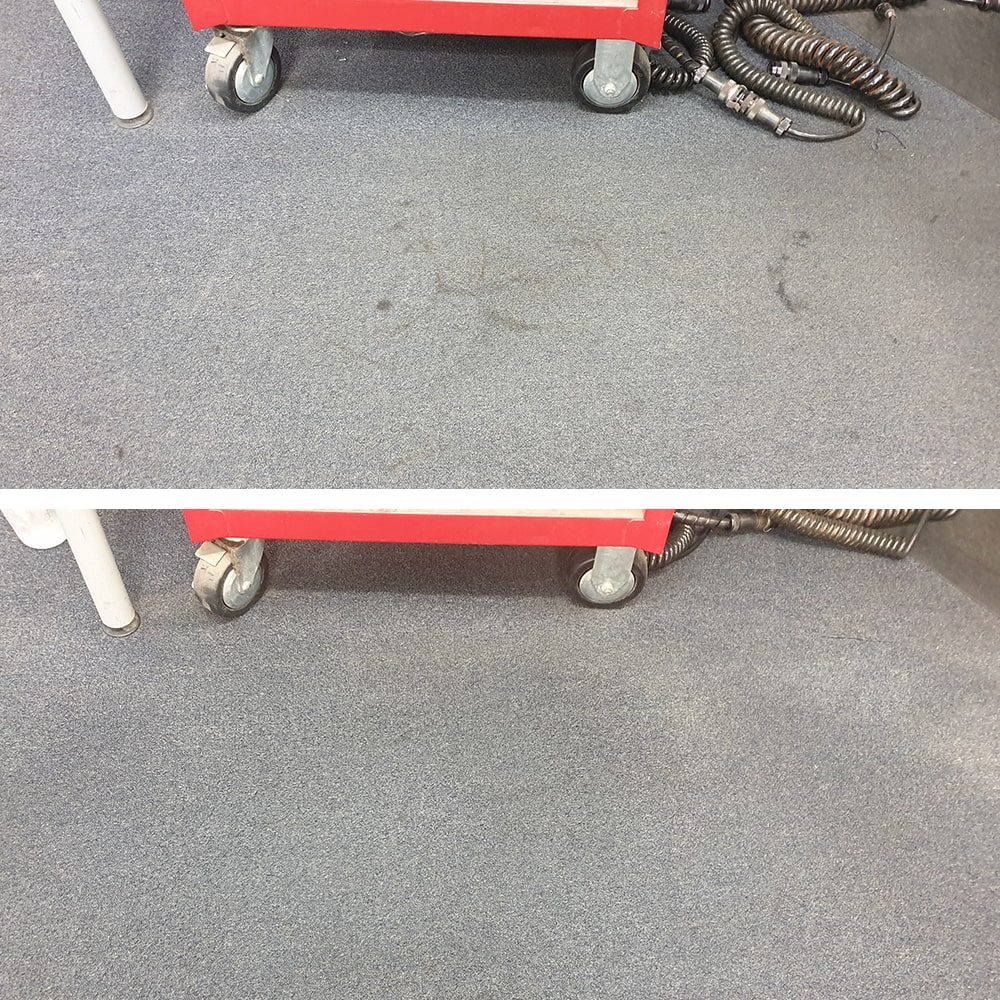
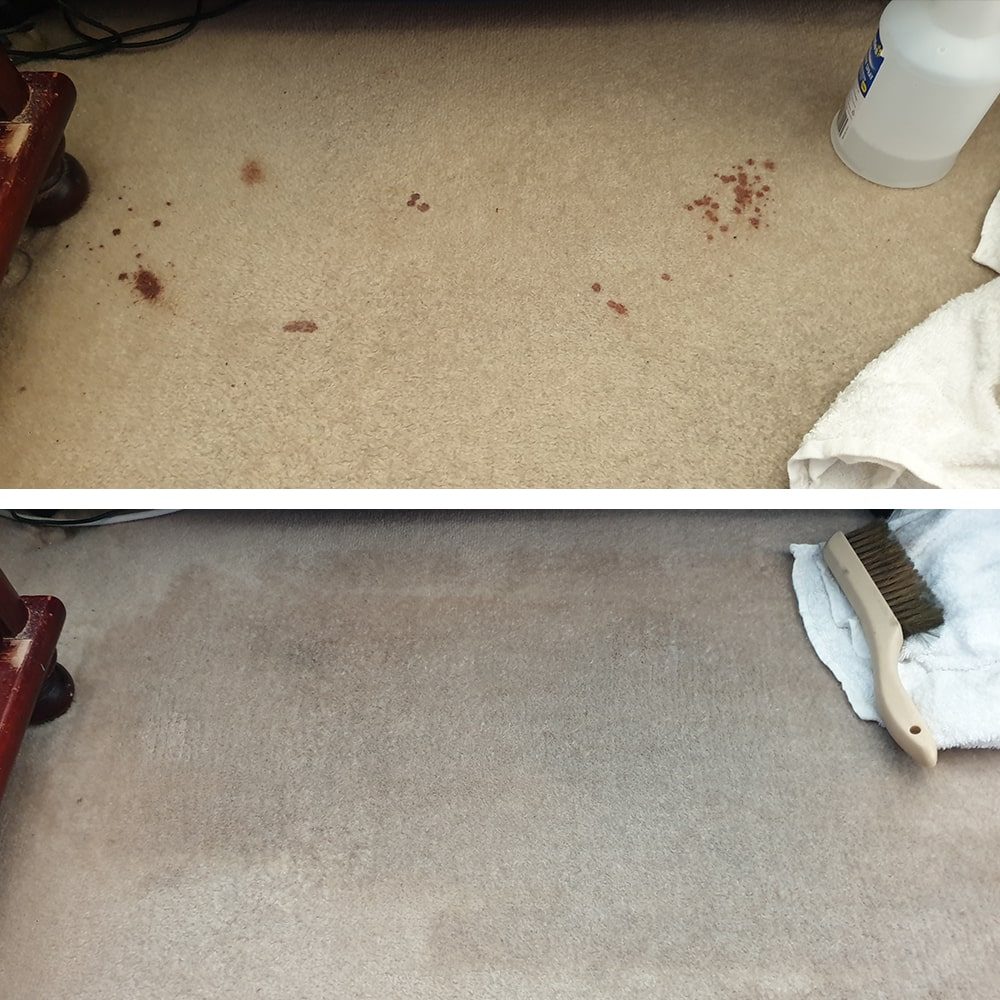
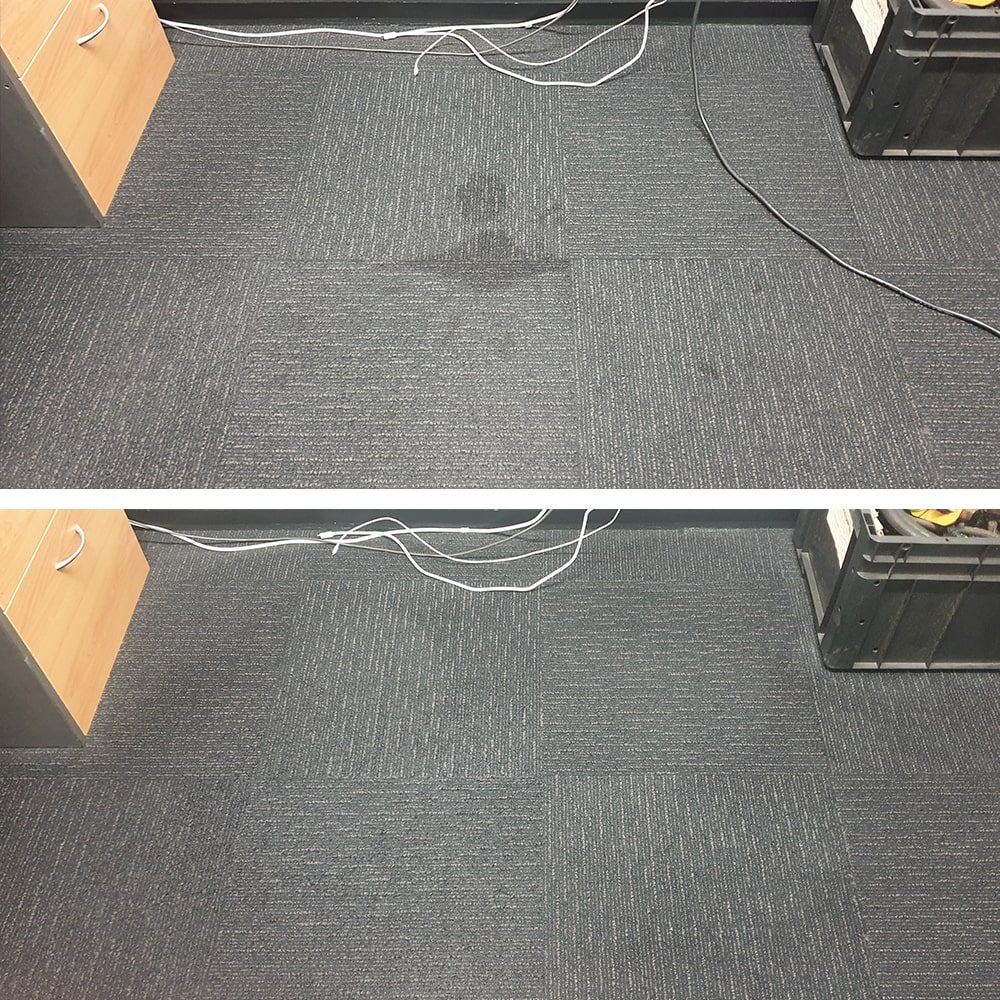
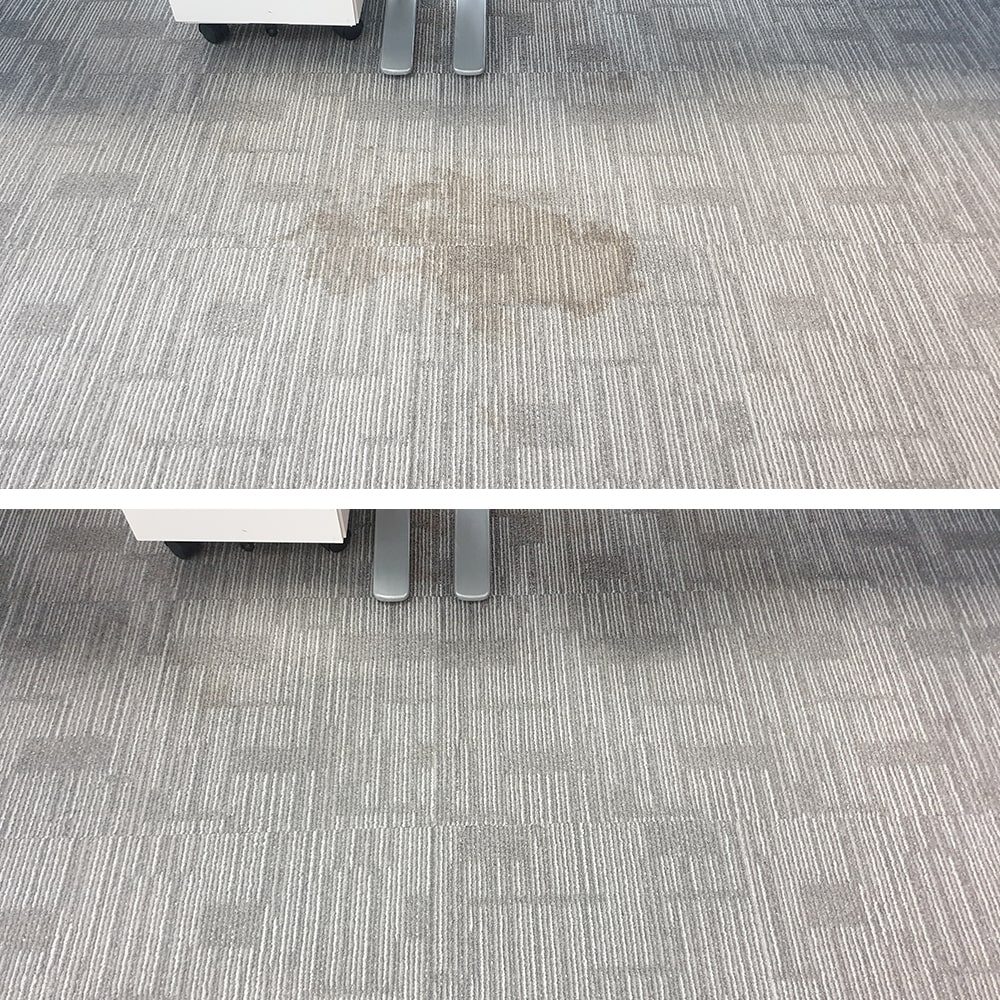
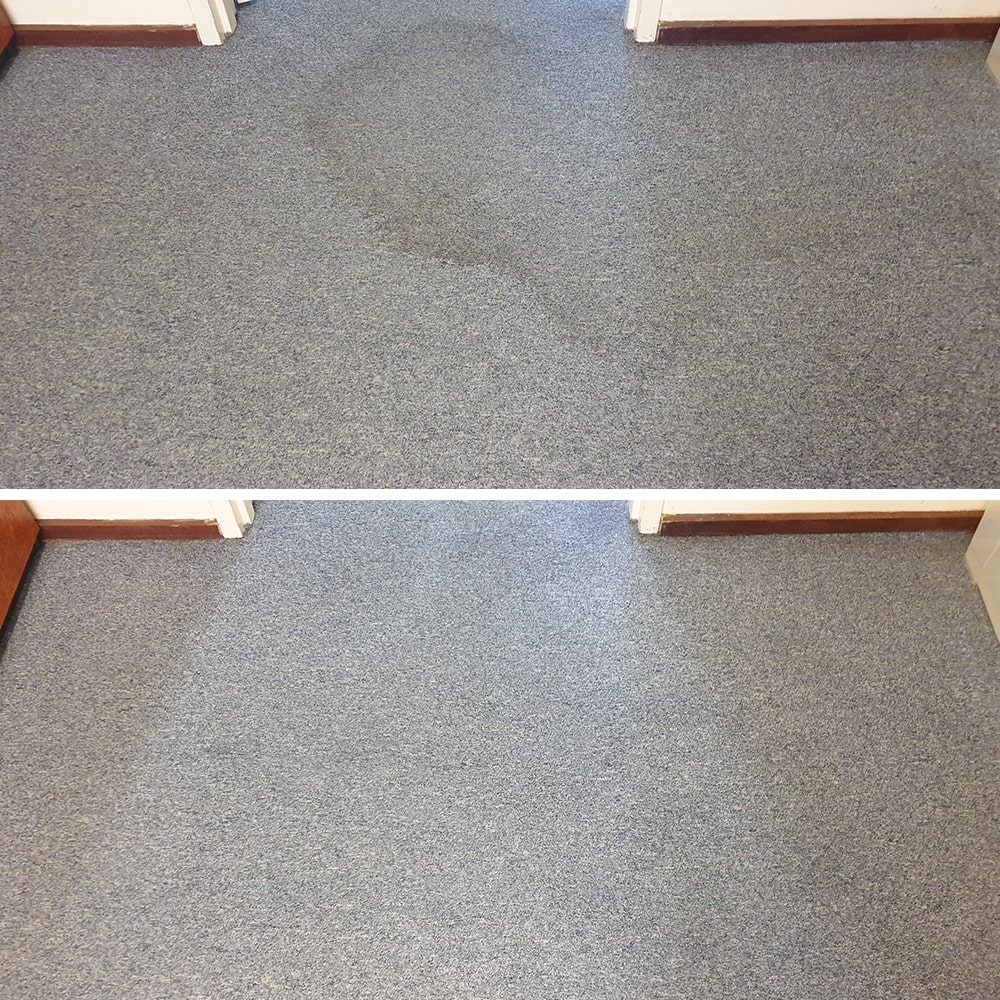
One mark in the wrong place undoes the look of a whole floor. A coffee ring in front of reception, ink under the boardroom table or cordial in the childcare room is what every visitor notices first, and a spill left in the pile oxidises and bonds to the fibre. We take those marks out: most come out completely, the rest lighten until they no longer stand out, and we tell you which before we start. The same care goes into a stain on the carpet at home. Ring us and we will estimate the job for you over the phone, free.
Soft drink, sauces, fruit, chocolate and most lunchroom spills. Water-soluble, released by a water-based spotter and a rinse.
Cooking fat, car park oil, hand cream and salad dressing. Insoluble in water; a solvent or degreaser breaks them down before the rinse.
Blood, vomit, dairy and urine. Treated cold with an enzyme spotter, because heat bonds protein to the fibre and sets it.
Coffee, tea, red wine, cordial and ink. Tannins oxidise to a brown mark if left; dyes take the fibre's own dye sites, so early treatment matters.
Book the free stain inspection
We look at each mark on site, say which will come out and which will only fade, and put the price in writing before anything is treated. You choose the day, any day of the week.
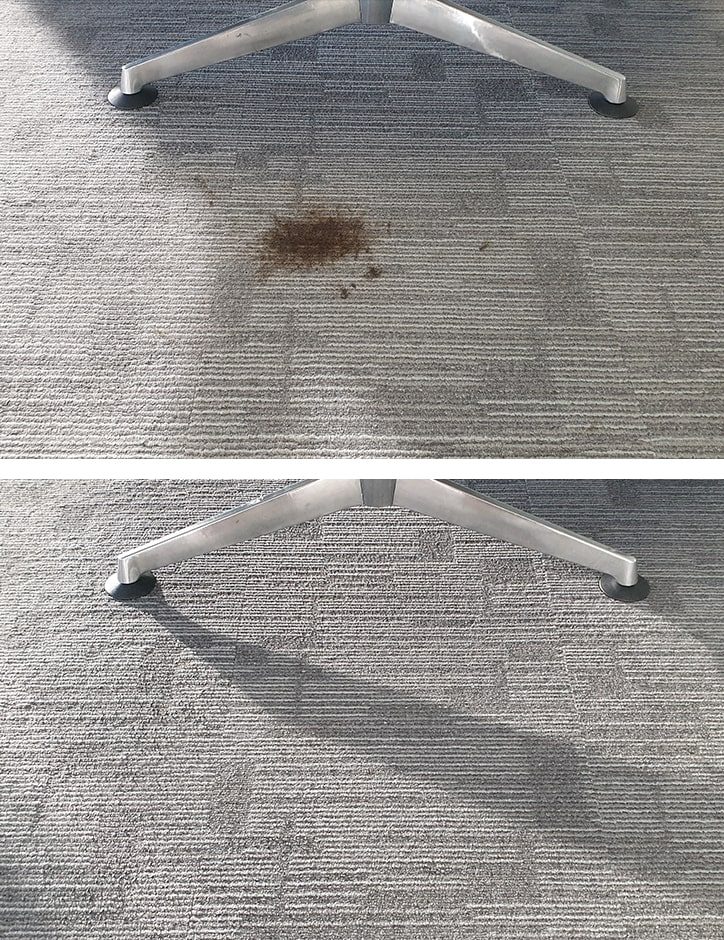
How far a stain comes out depends on how long it's been there, how much was spilt and how deep it went, the carpet's fibre and colour, and what's already been tried on it. A fresh mark is almost always easier. We rate each stain by the range we see on commercial carpet, and the treatment itself shows how far each mark comes out. Ask for the free inspection and you hear which rating each of your marks falls under before you book.
Coffee, tea, soft drink and energy drinks are tannin stains with sugar in them. Fresh, they lift with a tannin spotter and a cool rinse. Left to sit, the tannin oxidises into a brown mark, and hot water sets it sooner, so a spill someone has rinsed from the kettle is harder than one left alone. The sugar in soft drink dries sticky and collects soil, so the spot darkens over the following weeks.
Most of what gets dropped at a desk or in a lunchroom is water-soluble: tomato, soy and barbecue sauce, fruit, chocolate, yoghurt and sandwich fillings. Solids are scooped out first, then a water-based spotter and a rinse take out the sugars and colouring. Dairy and egg, as in milk, yoghurt or mayonnaise, are protein as well and get an enzyme spotter, and the cocoa butter in chocolate needs a solvent first. Food spills get harder once they have been walked in for weeks or their oils have reached the backing.
Cooking fat walked out of a kitchen, oil picked up in a car park, butter, salad dressing, hand cream and lip balm all belong to the oil-based family. Oil won't mix with water, so a water-based spotter only spreads it; a solvent or a degreaser breaks it down, and the rinse carries it out. Polypropylene and polyester are oleophilic, so they hold onto oil, and a lunchroom doorway that has built up for months can take more than one visit.
Fresh gum is frozen brittle and cracked out of the pile. Gum trodden in for years is black and hard, packed with soil and set into the tufts, so freezing does nothing: it is softened with a gel remover and worked out a piece at a time, and some pieces take fibres with them. Blu-Tack and the adhesive left by tape and floor stickers are treated the same way, with a solvent and patience.
Blood and vomit are protein stains. We treat them cold with an enzyme spotter, because heat coagulates protein and bonds it to the fibre, and old blood oxidises to a rusty brown.
Urine is a different job. Bacteria break it down into alkaline urine salts that hold the smell, draw moisture from the air so the odour returns on humid days, and over time shift the carpet's dye. Our urine treatment breaks the salts down and goes as deep as the urine went, the pile, the backing or the floor under a carpet tile, and the area is then rinsed and extracted.
Printer toner is a dry pigment, so it is vacuumed out before anything wet touches it; water turns it into a smear and sets it. Ballpoint, whiteboard marker and stamp-pad ink dissolve with the right solvent, worked from the edges in and blotted so the ink doesn't spread. Gel ink and permanent marker are made not to come off, and on nylon and wool a trace can stay.
Rust is iron oxide and needs an acidic rust remover chosen for the fibre; alkaline products and bleach set it deeper. It comes from metal standing on damp carpet: the feet of chairs, filing cabinets and display stands, a steel planter or the tray under a pot plant, and table legs after a spill or a mop has wet the carpet. Most rust marks come out, and a saucer under the planter stops them returning.
Red wine, red cordial and coloured sports drinks carry dyes that bond to nylon and wool at the same dye sites that hold the carpet's own colour. Fresh, they come out with a dye-removing spotter and a rinse. Solution-dyed nylon and polypropylene release them readily, because their dye sites are already full; left to set on dyed nylon or wool, some leave a shadow.
Curry and yellow mustard owe their colour to curcumin, the strong natural dye in turmeric, and hair dye is made to bond with keratin, the same protein wool is made of. Both are difficult even when fresh; the common cases are curry under a lunchroom table and hair dye in a salon or an aged care room. We lighten them substantially with a dye remover matched to the fibre, and on wool and light colours a shadow can stay.
Wet water-based paint lifts with water. Dried paint and tar have to be softened with a solvent and worked out of each tuft, and sometimes a little pile comes with them. Tar and bitumen are walked in from car parks and fresh road surfaces, more so on hot days, and paint turns up after a fit-out, dripped from a roller or a tin carried across the carpet.
These aren't stains: the colour has been taken out of the fibre. Chlorine bleach from a cleaner's bucket, the benzoyl peroxide in acne creams, which leaves pale spots under desks and around chairs, and sun through a north-facing window all remove the dye, and no cleaning puts it back. On carpet tiles the damaged tile is swapped for a spare; on broadloom the fix is spot dyeing to restore the colour, or a bonded insert, where the damaged section is cut out and a matching piece is bonded in its place.
A dropped cigarette, a hot appliance or furniture dragged across the floor melts nylon and polypropylene, and years of traffic wear the pile down to the backing. The fibre itself is gone, so no product brings it back. We'll say so up front: a burnt or worn carpet tile is swapped for a spare, and on broadloom a bonded insert replaces the damaged section with a matching piece from a spare offcut or a hidden area.
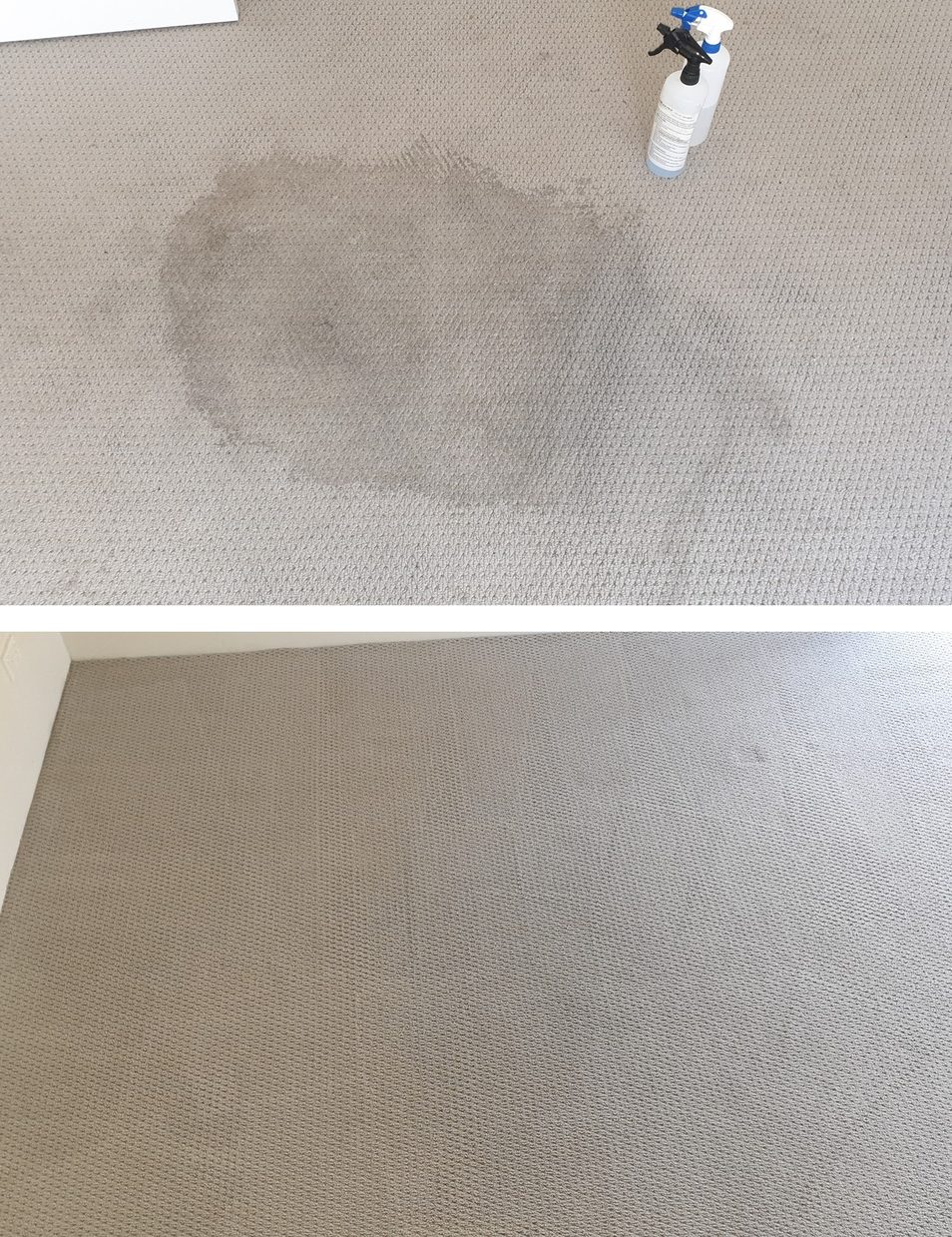
The same spill behaves differently on different carpet. Before we treat anything, we identify the fibre, because it decides which products are safe and how far we can go.
The colour runs right through the fibre. It resists bleach and most dye stains, so it takes stronger treatments safely, and many commercial carpet tiles are made this way.
The dye sits in open dye sites on the surface of the fibre. Red wine, cordial and other coloured spills bond to those same sites, so we treat them quickly with a dye remover, before the dye sets. A stain-resist treatment fills those open sites, which is why treated nylon holds out against coloured spills.
Both repel water-based spills and attract oil, so coffee and wine release well, while grease and oily soil need a degreaser. Polypropylene is solution-dyed, so it also resists bleach.
A protein fibre coloured with acid dyes. High-pH products cause alkali damage that leaves it weak and harsh and can make those dyes bleed, and chlorine bleach dissolves it. So we use WoolSafe-approved products and careful moisture control, and most stains release without harm to the fibre.
We check the fibre before anything goes down
Tell us the building and we identify the fibre on the free visit, so the spotter and the heat are right for your carpet from the first mark.
At the quote you get our professional assessment of each mark, from what was spilt, how long ago and what the carpet is made of. Most marks come out. The treatment confirms it, and the result falls into one of three outcomes.
Common with fresh spills, and with the right product for the stain and the fibre.
Older or deeper stains often end up much lighter but leave a shadow behind.
Set dyes, bleach, burns and sun fade are permanent. Lost colour needs spot dyeing, a tile swap or a bonded insert, not a clean.
Book the inspection and we'll say which
Dullness across the whole floor is soil, not staining, and it needs a full clean rather than spotting. We look at your floor, tell you which you have, and quote the right job in writing.
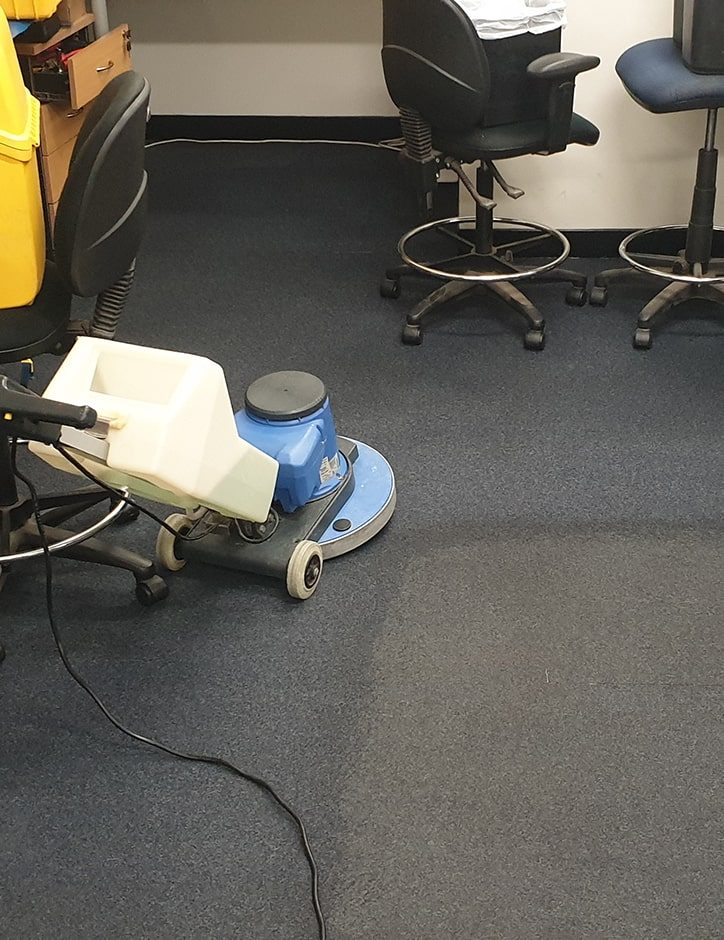
With stains, the order of work decides the result: hot water on blood coagulates the protein and fixes it in the pile, and the wrong product first can set a mark that would have come out. So we follow the same seven steps on every job, in this order. Book the free visit and the seven steps are set for your marks before the date is fixed.
We never spray an unknown mark. You'll usually know what was spilt and when, and that narrows the treatment straight away: coffee, cola and red wine can look alike on a dark carpet, yet each needs a different chemistry.
Just as important is what's been tried since. A mark that's been scrubbed, rinsed with hot water or sprayed with a supermarket product behaves differently from a fresh one, so we read the label of anything used. Some leave a residue that has to come out first; some have already set the stain.
Next we establish what the carpet is made of, wool or a wool blend, nylon, polypropylene or polyester, and how its colour was put in. That answer sets the limits for every product we use, and we know those limits from experience, our IICRC training and our certificates in spot removal and carpet construction.
Wool is damaged by high-alkaline products and chlorine bleach, so it only gets gentle, wool-safe chemistry. Nylon dyed after manufacture can lose colour to strong oxidisers. Solution-dyed nylon and polypropylene carry their colour right through the fibre, so they can take far stronger treatments. We test on a hidden spot only when there's genuine doubt, such as a dye we don't recognise.
Solids are scooped and blotted up, working from the outside in so nothing spreads. Printer toner is vacuumed out dry first, because water sets it into the fibre.
Fresh chewing gum is frozen brittle and cracked out. Old, hardened gum is softened with a gel remover and worked out a little at a time, and some pieces take fibres with them.
Every stain family needs its own chemistry: water-based, solvent, enzyme for proteins such as blood and vomit, a urine treatment for the salts urine leaves behind, tannin, rust or dye. We carry them all, water-based and solvent, so the right one is on hand rather than the nearest one.
Layered stains, like coffee with milk, need more than one product, used in the right order, and each within what the fibre allows.
The product gets its full dwell time to loosen the stain. Then it's worked from the edges towards the centre with a soft brush and blotted with clean white cloths, so the stain doesn't spread.
We never scrub. Scrubbing frays the pile and leaves a fuzzy patch that can look worse than the stain. While the cloth keeps picking up colour, the stain is still coming out.
Whatever lifted the stain has to leave with it. Every treated area is rinsed and extracted, because product left in the pile stays sticky, attracts dirt and comes back as a darker patch.
Larger or heavily saturated spills get repeated extraction and controlled drying, so less is left to wick back up as the carpet dries.
Once the treated spots are dry enough to judge, we look at every mark again under good light and compare it with the view we gave you at the quote. A mark that has lifted but still shows gets a second treatment where the fibre allows it, and a mark that has proven permanent is left alone rather than worked until the fibre is damaged.
The spots are left to dry with nothing on them, and the floor is ready for your team. If anything isn't right after your clean, tell us within 14 days and we'll come back and set it right, at no extra charge.
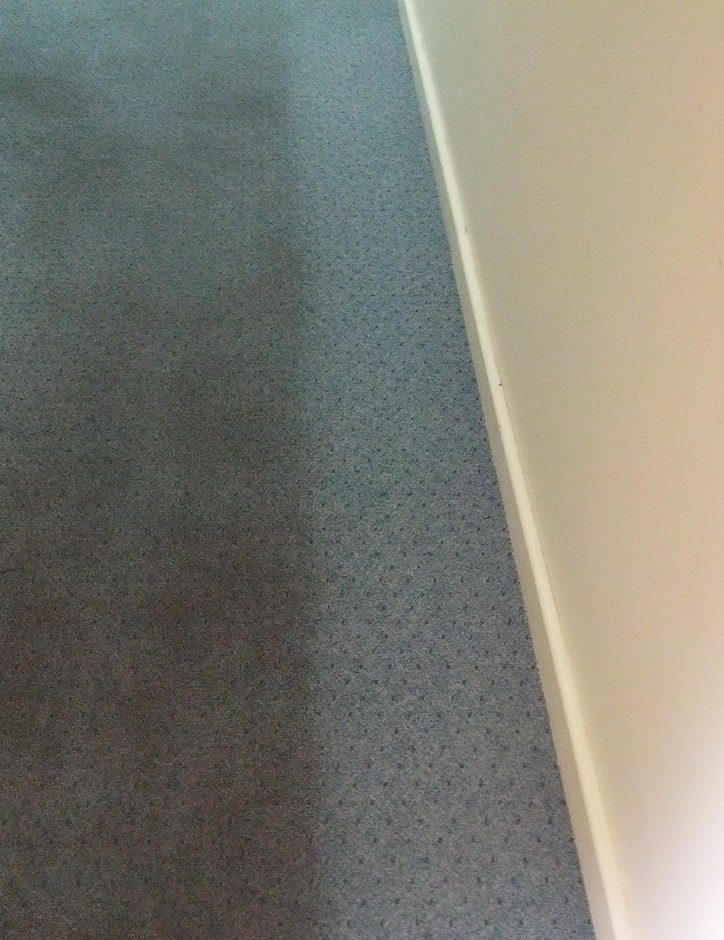
A mark that looks gone when we finish can show again as the carpet dries, or darken over the following weeks. It looks like the stain returning, but the cause is one of two things, and each has its own fix.
Call us when a mark comes back and describe it. From your description we tell you which of the two it is and what it needs, and where it needs a visit, we check it on site.
A large spill soaks past the pile into the backing, and between carpet tiles it runs onto the floor beneath. Drying draws that moisture back up the fibres, a process called wicking, and the dissolved stain comes up with it and dries at the surface as the same mark. Our answer is repeated extraction of a large or saturated spill and controlled drying, and where a spill has run under carpet tiles, we extract it back up through the tile in repeated passes until the extraction runs clear.
Many supermarket spot cleaners and detergents, and products left from earlier cleans, leave a sticky residue in the pile. Once dry, it attracts soil from shoes and foot traffic, so the patch gradually darkens and looks like the old stain is back. In the trade, that's called rapid re-soiling. We remove the stain itself, then rinse out every trace of product, ours and anything used before us.
Permanent staining or fibre damage
Cleaning can't remove every mark you can see. Some dyes, chemicals and bleaches, strongly coloured spills and long-standing contamination permanently change the colour of the fibre itself, so cleaning removes the contaminant and some discolouration stays. We judge this as we treat, and when a mark looks permanent, we tell you so, rather than going over it again and again with stronger chemicals that would damage your carpet.
Reception, boardrooms, open-plan floors, lunchrooms and end-of-lease handovers each bring their own marks. Here is what we treat in each, and how. Tell us which rooms carry the marks and each one is priced on the same visit.
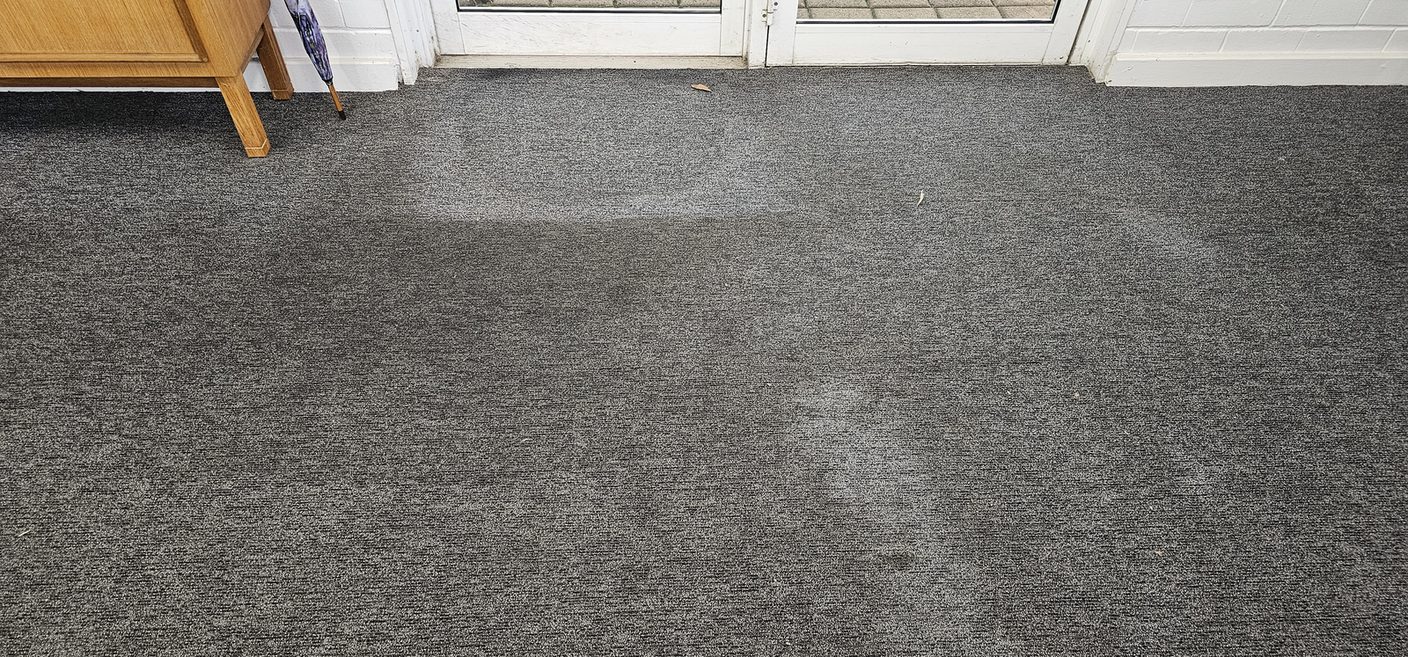
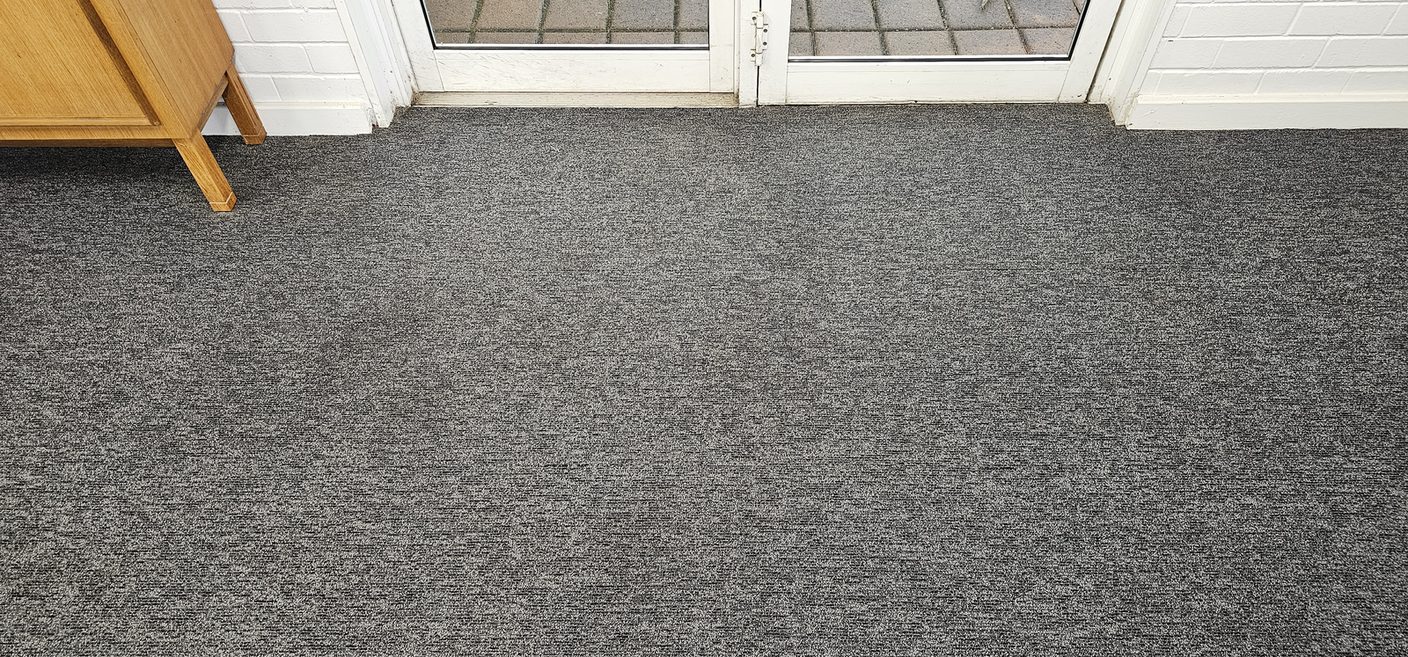
Reception carpet takes the drips from takeaway coffees carried through the door and the grit walked in off the path, and it is where planters, display stands and metal-legged seating leave rust marks once the carpet under them has been wet. These marks sit in full view of the people you most want to impress.
Coffee marks are tannin stains, and they lift with an acidic tannin spotter; rust needs a specialist rust remover, because alkaline products and bleach set it into the fibre. Both are rinsed out, and reception is treated after hours like the rest of the floor. Rust returns wherever metal stands on damp carpet, so a saucer under each planter and the stands lifted until the carpet is dry after a clean keep it away.
Ask for reception first on the visit; it's the floor your visitors read, so it's the one we quote to come up best.
Boardroom marks are usually small, coffee or red wine most often. They sit where your most important guests look down, so a small mark here matters more than a large one behind a storeroom door.
Boardroom carpet is often the best in the building, sometimes wool, so we identify the fibre first and use WoolSafe-approved products that suit it. We book around your meeting calendar, so the room is never out of action when you need it.
Tell us when the room is next booked and we clean it so it's dry and ready before anyone sits down.
Lunch at the desk, a rushed toner change, a spilt drink: open-plan floors collect dozens of small marks. Stain removal suits them well: each mark is treated where it is, after hours, and the floor is dry and back in use before your team arrives.
Save the marks up and book them together: we treat a dozen in one visit, for one price, instead of booking a visit for each mark as it appears.
Give us the floor area and the worst lanes, and the quote covers the marks and the walkways in one figure.
Kitchen doorways turn grey-brown from grease and food oil carried out of the kitchen on shoes, together with the detergent film a wet mop leaves on the kitchen floor. Foot traffic grinds this oily soil a little deeper into the pile each day, and because it builds up slowly, it looks permanent.
A degreaser breaks that oily soil down and extraction rinses it out, and the doorway stays clean for longer when the kitchen floor is mopped with a product that rinses clean rather than one that leaves a film.
Point us to the lunchroom carpet at the quote and its spills get the degreasing step priced in.
Treating marks before the final inspection costs you less than disputing them with the agent afterwards. We walk the floor the way the agent will, tell you which marks are worth treating, and treat them before handover.
Allow time before handover, since a deep mark sometimes needs a second visit with a gap between the two. If the agent queries a mark later, you'll have our invoice showing it was professionally treated before the keys went back.
Send us the inspection date and we book the treatment early enough for the marks to be checked dry.
A medical practice in the Perth CBD asked us to look at the carpet in its entry, waiting area and reception room. The carpet tiles were in decent condition, with stains here and there, and in a waiting room a stain reads as a hygiene problem to every patient who sits beside it, however often the floor is vacuumed.
We identified the fibre and the type of each stain at the inspection, and told the practice in the written quote that most of the marks would come out. At the practice's request, the clean was booked after standard business hours, so no patient or staff member was disturbed.
About 60 square metres of carpet tiles at the front of the practice, the floor every patient walks across.
Every mark was pre-treated with the spotter matched to it, then rinsed and extracted, so the treated areas match the carpet around them.
We started once the practice had closed for the day, so no patient was in the room while we worked, and the carpet had the night to dry with nobody walking on it.
The waiting room came back clean and even, and the practice called us back for a second clean.
Book the clean around your patients
Tell us where the marks are and what time the practice closes. We inspect for free, tell you which stains will come out, and the written price is with you before we set a date.
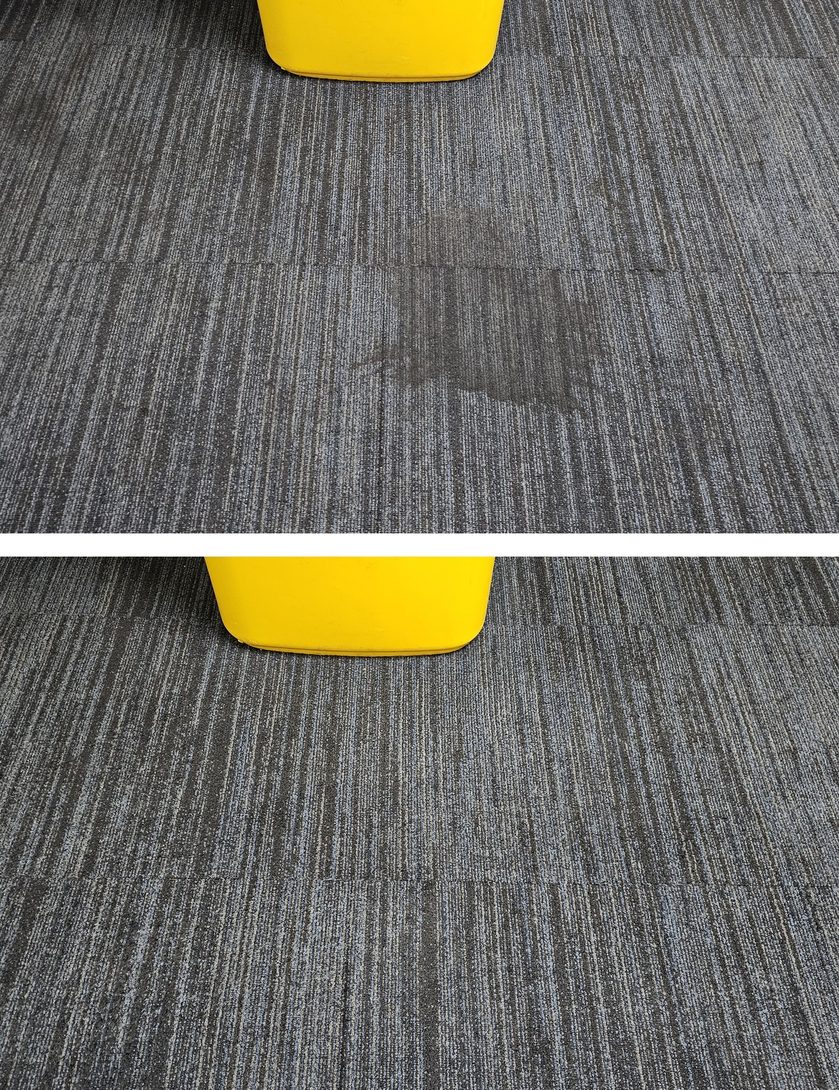
These are real Google reviews, quoted in full, with each reviewer's name and star rating exactly as Google shows them. Want the same on your floor? Ask for a free quote below, or see the gallery first.
★★★★★
I received an excellent service to remove some difficult stains, Zoran was punctual and lovely and I highly recommend him!
★★★★★
Zoran is a master at his profession. 2nd to none. I rang a few others before contacting CCCP and all of them wanted well in excess of $500 to do the job. Zoran gave me a quote which I found to be very reasonable and so I booked him in. He knew everything about stain removal and answered every questions I had. The job was completed in a timely manner and he even worked along side another contractor that was there for another job. I am 100% satisfied with the work from Zoran. Highly recommended.
★★★★★
An exceptional service! I didn't know carpet cleaning could be done so professionally, and Zoran's knowledge of the correct chemical combinations to remove stains from various fibres/fabrics was quite surprising. No chit-chat, no problems, just the relevant questions and explanations. I would recommend Zoran's services to anyone. Thank you.
★★★★★
Hi everyone I would like to thank Zoran for a wonderful job you did cleaning the carpets. Very meticulous, efficient, nice natured person. Would use you again in the future and recommend you to anyone looking for a very very good carpet cleaner.
Pricing follows the time your marks need. A handful of marks in one office is a short job and a floor carrying dozens is a longer one, and in both cases you receive one price for the whole job, never a count of marks.
A fresh coffee spill takes little time. The same stain a year later, scrubbed and treated with retail spotters, means undoing those attempts before reaching the original mark.
Wool takes WoolSafe-approved chemistry and longer dwell and working times than solution-dyed nylon, so the fibre sets both the products we use and the hours on your floor.
Six marks in one reception take a fraction of the time of six spread over three floors and a stairwell. How spread out they are, access and timing all show in your quote.
Our professional stain removal starts at $385, GST inclusive. On a larger job that minimum is the first part of the price, never a charge on top of it. Every site and every set of marks is different, so call Zoran on 0460 815 038 to discuss what you need, and you will have the price for the job in writing before we start. Ask for yours below, or call Zoran, and the marks are looked at on a free visit. For carpet in a home, the same number gets you a free cost estimate by phone instead of a site visit.
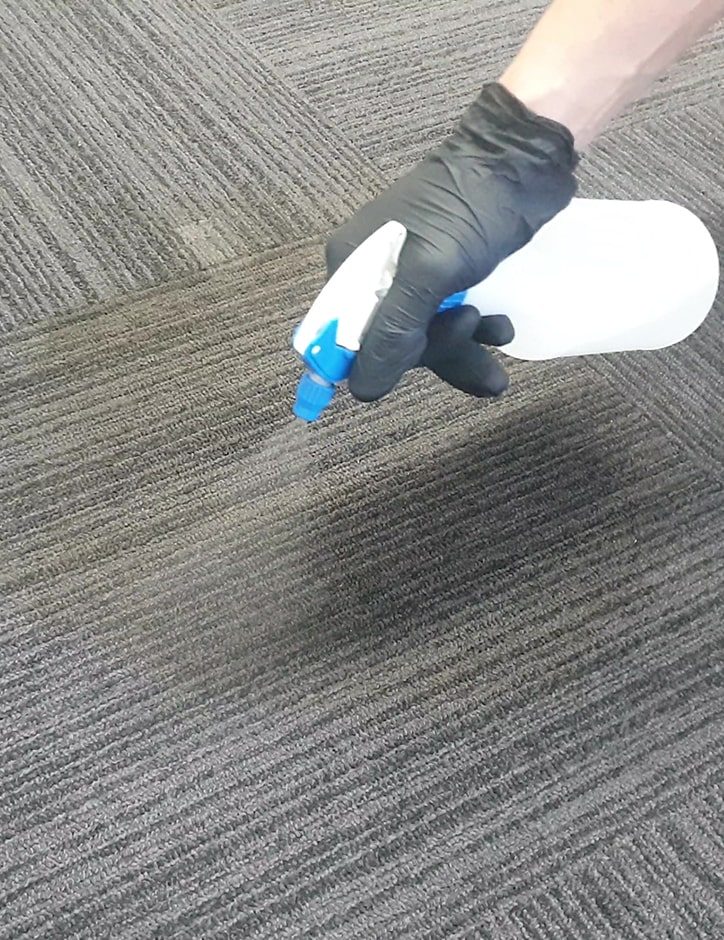
A spill is most removable while it remains liquid in the pile, before it dries onto the fibre or migrates into the backing. Three measures keep it there until we arrive.
Lift solid material with a spoon or the edge of a card, working from the perimeter of the spill towards its centre so nothing spreads.
Press a clean white cloth or paper towel straight down, lift, refold to a dry section and repeat until no further colour transfers. Rubbing drives the liquid sideways and deeper into the pile, and a coloured cloth can transfer its own dye.
Heat sets protein and tannin stains. Retail spotters commonly leave a residue that attracts soil, and some contain oxidisers that remove the carpet's colour along with the stain.
Call us while the spill is still wet
A spill treated within the first hour has the best chance of complete removal. Call us, describe what was spilt and the carpet it is on, and we will advise the immediate action and whether the spill needs a visit today.
Carpet, chairs and tiles that need a full clean rather than spot treatment go into the same visit. Say so at the quote and the full clean is priced in the same visit.
Hot water extraction or encapsulation across the whole floor, at the time you choose, before soil and marks build up.
Read about commercial carpet cleaning →Whole-floor hot water extraction, for carpet that needs more than its marks treated.
Read about carpet steam cleaning →When marks are spread across a wool floor, the whole carpet gets a WoolSafe-approved steam clean and a mildly acidic rinse.
Read about wool carpet cleaning →Your seating can match the carpet: we clean chairs, lounges and booths on site, choosing the method for each fabric.
Read about upholstery cleaning →Hot water at high pressure brings darkened grout in kitchens, foyers and washrooms back to its colour.
Read about tile & grout cleaning →Wool, Persian and synthetic rugs, each cleaned for its fibre and construction.
Read about rug cleaning →Water on the floor needs extraction and drying first, and an early call saves more of the carpet.
Read about water damage restoration →Ask us directly
If your question isn't answered here, call us. You'll get a straight answer about your carpet and your premises, with no obligation.
No. We price carpet stain removal per job, never per stain. Every job starts from our $385 minimum, GST inclusive, which pays for getting to you, setting up and the first marks we treat; a larger job is priced on the total time your marks need:
We inspect the marks free of charge and send one written price for the whole job, and the figure only changes if the job does. See how our pricing works for what the minimum charge covers.
No one can guarantee that before the stain has been treated. How far a mark comes out depends on what was spilt, the carpet's fibre and colour, how long the mark has been there and what has been tried on it since.
What you do get is our overall view when we quote. Our experience on commercial carpet is that most marks come out and some turn out to be permanent. Every mark gets the product and technique that suit its stain and fibre. Once treated, some lift completely, some fade to a light shadow and a few won't shift at all. Bleach spots, sun fade, burns and worn pile are losses, not stains: the colour or the fibre itself has gone, so there is nothing to lift, and we flag each one before any work starts.
What we guarantee is our workmanship. If anything isn't right after your clean, tell us within 14 days and we'll come back and set it right, at no extra charge.
Straight away, ideally while the spill is still wet. Most stains are easiest to remove in the first few hours, before they dry, oxidise or get walked deeper into the pile. Coffee and tea turn brown as their tannin oxidises, and hot water sets blood and other protein spills.
When you ring, tell us what was spilt, when it happened and anything that's been tried on it. From that we tell you whether it needs a visit today and what to do with the spill in the meantime. We're open 7 days, so there's no need to wait until Monday.
Old gum is softened first with a gel remover, then eased out of the tufts a piece at a time. Freezing makes fresh gum brittle enough to crack out cleanly, but it does nothing to gum that has been walked in for years, because by then it is black, hard, packed with soil and bonded to the fibres. Once each piece is out, we rinse and extract the spot so no remover is left in the pile to attract fresh dirt.
Most old gum comes out. It is slow, careful work: some pieces leave a faint mark, and a few are bonded so firmly that a little fibre comes away with them, which is why each piece is eased out rather than pulled. For more on the method, see our guide to removing chewing gum and adhesive.
Most do, completely or most of the way. Much of what you see on an old mark is soil held by the sticky remains of the original spill, or of whatever was used on it since, and removing that soil makes a real difference on its own.
The marks most likely to stay are the ones that have changed the carpet's colour. The classic case is red cordial on nylon: nylon is acid-dyeable, so the food colouring bonds to the fibre the way a carpet dye would. Old urine is the other. As it breaks down it turns alkaline, and over time it can strip or shift the carpet's dye for good. Many other old marks come out completely or end up much lighter. A deep, long-standing mark sometimes needs a second treatment on a later visit.
We'd rather you called us first. Most permanent marks started out removable and were set by scrubbing, heat or the wrong product. Some supermarket sprays contain oxidisers or bleaching agents that strip colour from wool and dyed nylon along with the stain. Others leave a sticky residue that holds onto dirt from shoes, so the spot slowly darkens and looks as if the stain has come back.
While you wait, blot the spill with a clean white cloth, without rubbing it or spraying anything on it. If something has already been tried, keep the bottle so we can read the label, because some products have to be rinsed out before the stain itself can be treated. For small everyday spills, our guide to an office spot-cleaning kit covers what's safe to keep on hand.
Usually, by swapping the damaged tile. A key advantage of carpet tiles over broadloom is that one tile can be lifted and replaced, so a bleach spot, burn or worn patch can disappear completely. A good match often comes from one of these:
Your facilities team or flooring contractor can normally do the swap, and we'll point out which tiles are worth replacing. A spare that has sat in a box for years can look brighter than the worn tiles around it, so lay it the same way round as the tile it replaces and have the surrounding area cleaned at the same time to help it blend in.
Not on its own. Treating spots on a floor that is soiled all over leaves bright patches on a dull background, and we'll tell you that at the quote.
A tired floor needs cleaning across the whole area. We choose between carpet steam cleaning, encapsulation, and agitation followed by steam cleaning for heavy soil, according to the carpet's fibre and how heavily it is soiled. Any mark that needs its own spotter is treated on the same visit, so the whole floor ends up an even colour.
It is, and it's urgent, because spreading water is water damage rather than a stain. It needs water damage restoration: the water extracted and the floor dried before mould takes hold, which can happen within one to three days. Under carpet tiles, water spreads across the slab out of sight. Under glued-down broadloom it sits against the backing, and a long soak can loosen the adhesive.
Call Zoran on 0460 815 038 rather than using the quote form, and tell us where the water came from. The IICRC S500 standard treats a leaking supply pipe as clean Category 1 water, while sewage or storm water from outside is Category 3, and carpet soaked by it is normally replaced. Until we arrive:
Our flood guide covers the days that follow.
Rarely. Treating a mark puts far less moisture into the carpet than a full clean, so the spots are usually dry before your team is back, and nothing needs closing off.
A large or deep spill that needs repeated rinsing and extraction is the exception. We name those spots at the quote and dry them with an air mover where needed. Keep chairs and furniture off them until they're dry: metal feet can leave rust marks in damp pile, and stained timber legs or cardboard boxes can bleed brown colour into it.
Spills on fabric and vinyl office chairs, lounges, booth seating and fabric partitions are treated on site too. Fabric sits over foam that soaks up liquid, so we work with less moisture, and where the label carries the manufacturer's cleaning code, we follow it: W fabric takes water-based spotters, S fabric only solvent-based products, and W/S either. Cotton, linen and other cellulose fabrics are prone to cellulosic browning and shrinkage when too much water goes in, so we treat them with as little moisture as the mark allows. Vinyl is wiped clean, never soaked.
If the seating looks dull all over rather than marked in places, a full upholstery cleaning gives an even result, and the fabric takes 3 to 8 hours to dry, according to the material, the cleaning method and the conditions. Chairs can be booked in the same visit as the carpet.
Stains turn up in medical rooms, in venues between bookings, in offices before a client visit and just before a handover for property managers. The page for your industry shows how we fit the work around it.
Not on the list? Tell us about the building and the marks, and we quote it after a free look.
Give us the basics: what was spilt, where and how long ago. We inspect the marks on site at no charge, name the stain family and the treatment each needs, and send you one written price. If the spill is still wet, call Zoran now on 0460 815 038.
A free inspection gets you our professional view of how your marks will respond, with the price in writing before anyone starts.